 Sudden Valley
 Why Alger Roofs Wear Differently Than Roofs Inland
Alger sits close enough to the water and to the wet, wooded terrain around Sudden Valley that its roofs face a specific combination of stresses: salt-laden air moving in off the water, long stretches of driving rain, and a moss season that can run from late fall through spring. None of these factors is dramatic on its own, but together, over years, they shorten the life of a roof that wasn't installed with them in mind. A shingle roof that would perform fine in a drier, inland part of Washington can start showing granule loss, soft spots, or moss intrusion years earlier here if the installation cut corners on ventilation, flashing, or underlayment.
This page is about one job, done right, in one place: asphalt shingle roofing for homes in and around Alger. We're not going to sell you on every roofing product we carry — we're going to walk through what actually matters for a shingle roof in this specific corner of Whatcom County.
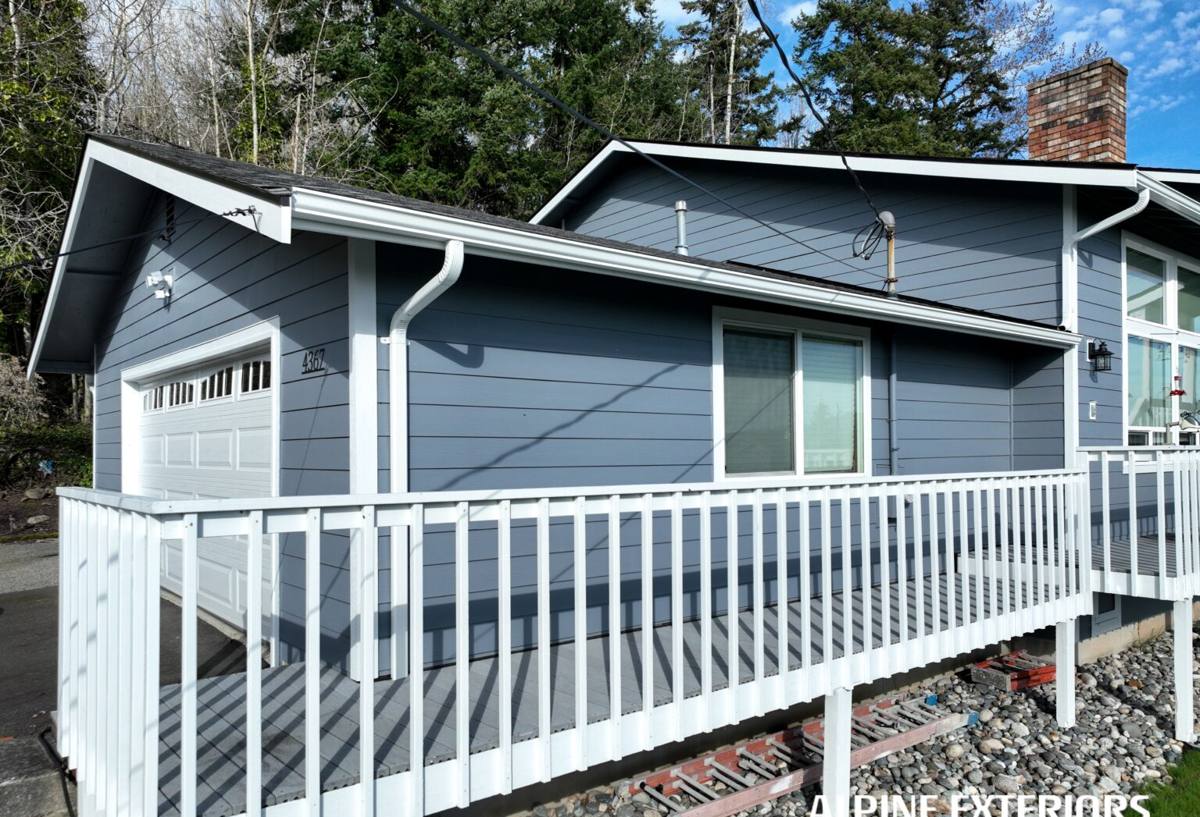
What Alger's Climate Actually Does to a Shingle Roof
Salt Air and Metal Fatigue
Salt-bearing moisture in the air accelerates corrosion on exposed metal — flashing, nail heads, drip edge, and vent stacks. On a roof where the metal components were chosen or installed without that in mind, you'll often see rust streaks and early flashing failure well before the shingles themselves are due for replacement. The fix isn't complicated, but it does mean being deliberate about metal selection and coating, not just using whatever was on the truck.
Driving Rain and Wind-Driven Water
Rain in this part of Whatcom County rarely falls straight down. Wind pushes it sideways and up under shingle edges, valleys, and anywhere the roof plane changes. That's a water-intrusion problem, not just a shingle problem — it's solved with proper underlayment coverage, correctly lapped flashing, and attention to how water is meant to shed at every transition, not just on the open field of the roof.
Moss and Sustained Dampness
Shade from surrounding trees, combined with a long damp season, gives moss and algae a real foothold on north-facing slopes and anywhere debris collects. Moss isn't just cosmetic — its root structure holds moisture against the shingle surface and can lift shingle edges over time, which is exactly what invites the wind-driven rain problem above to get underneath.
What a Correct Installation Actually Involves
A lot of roofing problems in this area trace back not to bad shingles, but to an installation that skipped a step that doesn't show up until year three or four. Here's what we consider non-negotiable on an Alger re-roof.
Tear-Off and Deck Inspection
We remove the old roofing down to the deck rather than layering over it. That's the only way to actually see the condition of the sheathing — soft, delaminated, or water-stained decking gets replaced before anything new goes down. Roofing over a compromised deck just hides a problem that will resurface as a sag or soft spot later.
Ice and Water Barrier, Not Just Felt
Given how much wind-driven rain this area sees, we use a self-adhering ice-and-water membrane at eaves, valleys, and roof penetrations — not just standard felt underlayment. This is the layer that actually stops water that gets past the shingles from reaching the deck, and it matters more here than in a drier climate.
Flashing Details
Step flashing at walls, counter-flashing where a roof meets siding or masonry, and properly lapped valley flashing are where most leaks originate on an otherwise sound roof. Given the salt air factor, we pay close attention to the metal itself — corrosion-resistant flashing and fasteners hold up better than standard galvanized in this environment.
Ventilation
A roof with poor attic ventilation traps moisture underneath the deck, which shortens shingle life from below while moss works on it from above. Balanced intake and exhaust ventilation isn't an upsell — it's part of a correctly built roof system, and it's one of the most common things missing on older homes in this area.
Choosing a Shingle for This Environment
Not every asphalt shingle product is built the same way, and the differences matter more here than in a mild, dry climate. The table below is a general comparison to help frame the conversation — actual product lines and pricing depend on current manufacturer offerings and your specific roof.
| Shingle Tier | Typical Lifespan | Wind Rating | Best Fit For |
|---|---|---|---|
| 3-Tab (economy) | 15-20 years | Lower wind resistance | Budget-focused projects on simpler roof shapes |
| Architectural / Laminate | 25-30 years | Higher wind resistance | Most Alger homes — better performance in driving rain and gusts |
| Premium / Designer | 30+ years | Highest available | Steep-slope or highly visible roofs wanting a heavier, dimensional look |
For most homes in Alger, we steer people toward architectural shingles rather than 3-tab. The thicker laminate construction and higher wind rating are a better match for sustained wind-driven rain, and the added mass helps the shingle lie flatter and resist the lifting that lets moisture and moss get a foothold at the edges.
Algae-Resistant Granules
Many manufacturers offer a shingle line with copper- or zinc-infused granules designed to slow algae and moss growth. Given how much shade and dampness Alger roofs deal with, this is one upgrade we think is worth discussing on almost every project here — it doesn't eliminate the need for maintenance, but it slows the growth cycle.
Keeping a New Roof Performing Over Time
A well-installed roof still needs some basic upkeep in this climate. None of this is complicated, but skipping it is how a 30-year shingle underperforms its rating.
- Keep gutters and valleys clear of needles and debris, especially heading into the wet season
- Trim back overhanging branches to reduce shade and let the roof dry out between rain events
- Have moss growth addressed early with proper cleaning methods rather than pressure washing, which can strip protective granules
- Schedule a visual inspection after any major windstorm to check for lifted or missing shingles
- Check attic ventilation isn't blocked by insulation, especially after any attic work
- Address small flashing rust or gaps before they become active leaks
Signs an Alger Roof Needs Attention Now
Some warning signs are easy to miss from the ground, especially on a shaded or steep roof. Watch for these:
- Dark streaking or thick moss growth concentrated on north-facing slopes
- Granules collecting in gutters or at downspout outlets
- Shingle edges that look curled, lifted, or cupped
- Rust staining running down from flashing or vent stacks
- Any soft spots noticeable when walking the attic, or daylight visible through the roof deck
- Interior water stains on ceilings, especially after a windy rainstorm
Any one of these on its own might be minor. Several together, or moss combined with granule loss, usually means it's time for a closer look before a small problem becomes a deck repair.
How Our Process Works
We keep the process straightforward, since a roof project is disruptive enough without added uncertainty.
- On-site assessment — we walk the roof (or use a lift where the pitch requires it), check the deck condition where accessible, and look at ventilation and flashing, not just shingle wear.
- Written estimate — a clear scope covering tear-off, deck repair allowances, underlayment type, flashing work, shingle selection, and ventilation, so there's no ambiguity about what's included.
- Scheduling around weather — given how much rain this area sees, we plan installation windows with realistic weather buffers rather than rushing a job into a forecast that doesn't support it.
- Tear-off and deck inspection — old roofing comes off, the deck gets inspected in daylight, and any needed repairs are addressed before new materials go down.
- Installation — ice-and-water barrier at vulnerable areas, correct underlayment across the field, proper flashing at every transition, and shingles installed to manufacturer nailing and exposure specs.
- Final walkthrough and cleanup — we review the finished roof with you, cover ventilation and any warranty registration steps, and make sure the site is cleared of debris and nails.
Why It Matters That We Already Work in Alger
Roofing crews that mainly work in drier or more sheltered parts of Washington sometimes treat underlayment upgrades, algae-resistant granules, or extra flashing attention as optional add-ons. In Alger, we treat them as standard practice, because we've seen what happens to a roof here without them. Knowing the local wind patterns, the typical shade cover on lots in this area, and how the wet season actually behaves means fewer surprises during installation and a roof that's built for the conditions it will actually face — not a generic spec sheet.
We're also familiar with permitting and inspection expectations for Whatcom County, which keeps the project moving instead of stalling on paperwork.
Get a Straightforward Estimate
If your roof is showing moss, granule loss, or you're just planning ahead for a home in Alger, we're happy to come take a look and give you an honest read on what it needs — no pressure, no obligation. Use the form below to request a free estimate and we'll get back to you to schedule a time.