 Sudden Valley
 Exterior Work in South Hill: What Makes This Area Different
South Hill sits in the kind of Whatcom County terrain that keeps exterior contractors honest — a mix of tree-shaded lots, sloped driveways, and homes that catch weather from more than one direction depending on where they sit relative to the hill and the lake. If you live here, you already know your house doesn't behave like a house in a flat, open subdivision. Shade patterns are uneven, wind can funnel unpredictably through gaps in the tree line, and moisture tends to linger in spots that never quite get a full day of sun. None of that is exotic or alarming, but it does mean the exterior materials on your home are working harder than a manufacturer's spec sheet usually accounts for.
We work on homes throughout the Sudden Valley and South Hill area regularly, and the patterns repeat: siding that looks fine from the street but is soft at the bottom courses, trim that's held paint everywhere except the north-facing wall, and roofs with moss establishing itself in the shaded valleys years before the rest of the field shows wear. This page walks through why that happens here specifically, and what we do differently as a crew that treats this area as home turf rather than just another stop on a route.
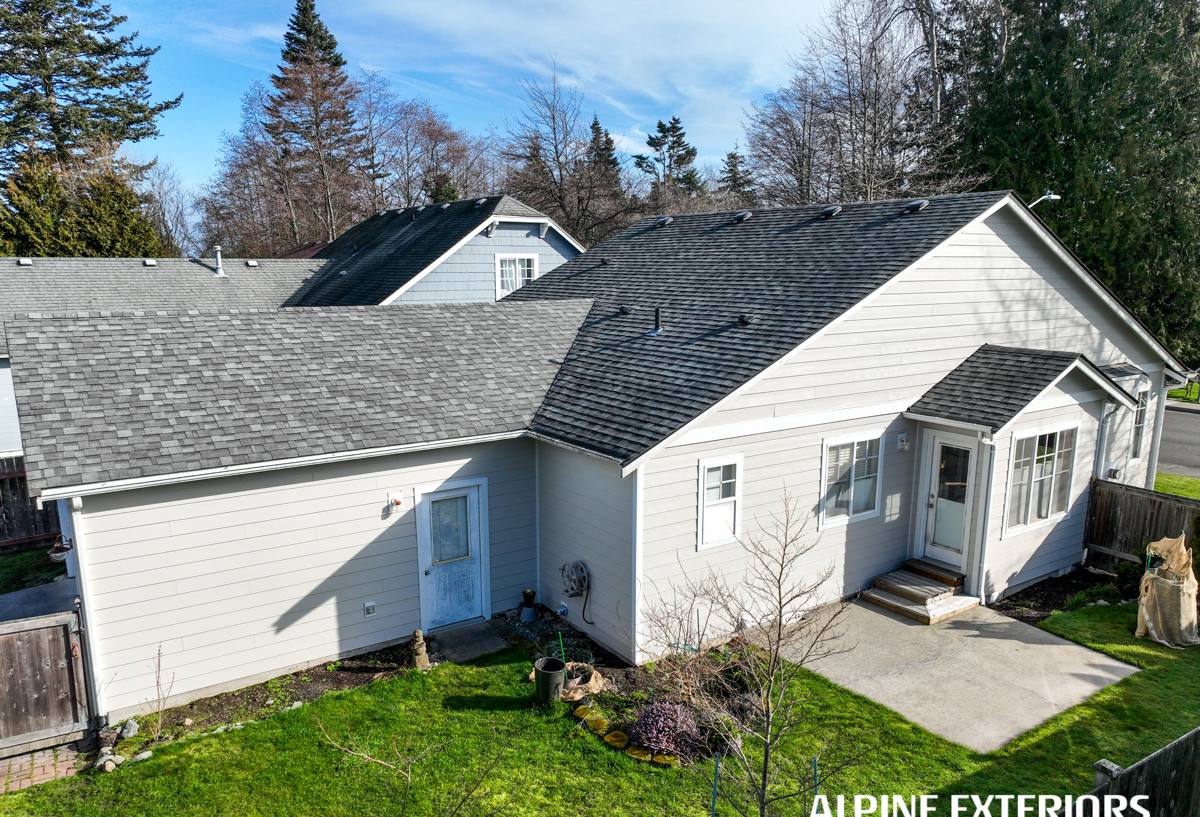
Terrain, Tree Cover, and What They Do to a Building Envelope
Elevation changes and heavy tree cover are part of what makes this area desirable to live in, but they create real maintenance considerations for exteriors:
- Shade slows drying time. Walls and roof sections under conifer canopy stay damp longer after rain, which is exactly the condition moss, algae, and moisture-driven wood rot need to get established.
- Needle and debris buildup collects in roof valleys, gutters, and against lower siding courses, holding moisture against the building longer than open sky exposure would.
- Grade and drainage on sloped lots mean water doesn't always sheet away from the foundation the way it would on flat ground — splash-back and standing water at the base of walls is a common finding on hillside homes.
- Wind funneling through breaks in tree cover can drive rain sideways into wall assemblies that were only designed to shed water falling straight down.
None of this means South Hill is a hard place to keep a house looking good. It means the materials and details matter more here than they would somewhere drier and more open.
Salt Air, Driving Rain, and a Long Moss Season
Whatcom County's proximity to the Salish Sea means a degree of salt-laden air moves through the region even well inland, and it's a slow but steady contributor to corrosion on fasteners, flashing, and any metal components on a home's exterior. Combine that with the driving rain typical of a Pacific Northwest winter — rain that doesn't just fall, it gets pushed sideways against west- and south-facing walls during storms — and you have two separate stresses working on the same building at the same time.
Then there's moss. In this part of Washington, moss season isn't really a season — it's most of the year. Roofs, shaded siding, and anything with a rough or absorbent surface will host moss and algae growth if it isn't shedding water quickly and drying out between rain events. Left alone, moss holds moisture against roofing and siding materials, works into seams and laps, and accelerates whatever deterioration process is already underway underneath it.
These conditions are exactly why material choice on this job matters more than it does in a milder climate, and it's a big part of why we standardized on one siding product rather than offering the full menu of options most contractors carry.
Why We Only Install James Hardie Fiber Cement Siding
We get asked fairly often why we don't offer vinyl, LP SmartSide, cedar, or other fiber cement brands like most siding contractors do. The honest answer is that we used to install a broader range of products, and the callbacks and long-term performance differences in exactly this kind of climate are what pushed us to standardize on James Hardie.
What Hardie Gets Right for This Climate
James Hardie fiber cement is non-combustible, dimensionally stable, and engineered specifically for wet, rain-heavy climates through its HZ5 product line, which is formulated for the moisture and freeze-thaw conditions common to the Pacific Northwest. It doesn't absorb water the way wood-based products do, which matters directly in a shaded, damp environment like South Hill where materials rarely get a long, uninterrupted dry stretch.
What We're Honest About
Fiber cement isn't magic. It still needs to be installed to Hardie's published specifications — correct clearances above grade and roof lines, proper fastening, and factory-cut or properly sealed field cuts — or it will develop the same moisture problems any siding can. The material's advantage is that it gives a well-trained crew a much wider margin for error against Northwest weather than wood-based alternatives do, not that it's immune to bad installation.
ColorPlus Finish and Warranty
We install Hardie's ColorPlus factory-baked finish rather than field-painted siding wherever possible. The finish is cured under controlled conditions and backed by its own finish warranty separate from the substrate warranty, which matters in a climate that's hard on paint — that north-facing wall that never quite dries out is exactly where a weaker field-applied finish shows its age first.
Why We Don't Install Vinyl, LP SmartSide, or Cedar
Each of these products has legitimate uses and plenty of contractors install them well. Our decision not to is specific to the trade-offs that matter most in a marine, moss-heavy climate:
- Vinyl siding expands and contracts significantly with temperature swings, can warp or deform under sustained heat or impact, and its seams and laps give moisture more opportunities to work behind the cladding over time.
- LP SmartSide is an engineered wood product, and wood-based substrates are more sensitive to sustained moisture exposure than fiber cement — a real consideration on shaded, slow-drying walls.
- Cedar and primed spruce require ongoing maintenance — refinishing, caulking, and vigilance against rot — that's a much bigger commitment in a climate where the material rarely gets a long dry window to work with.
We'd rather stand behind one product system we know performs well here than offer a menu and let a homeowner unknowingly pick the option that's going to give them the most grief in ten years.
Full Exterior Services for South Hill Homes
Siding is our specialty, but exteriors don't fail in isolation — a compromised roof, leaking window, or rotting deck ledger can undermine even correctly installed siding. We handle all four as connected systems:
| Service | What We Look At |
|---|---|
| Siding | James Hardie fiber cement installation and replacement, clearances, flashing details, moisture-damaged sheathing behind existing siding |
| Roofing | Moss and algae exposure, valley and flashing condition, drainage into gutters that affect wall moisture below |
| Windows | Flashing and integration with the wall assembly, since a poorly flashed window is one of the most common sources of hidden water intrusion |
| Decks | Ledger board attachment and flashing where the deck meets the house, since this is a frequent rot point on hillside homes with limited underside airflow |
Because these systems interact, we look at the whole exterior during an estimate rather than quoting siding in isolation and missing a roofing or flashing issue that will undercut the new siding within a few years.
What a Local Crew Actually Brings to the Job
There's a practical difference between a crew that drives in from outside the county for a job and one that works this area regularly. A local crew already knows which wall orientations in South Hill tend to hold moisture, how moss establishes differently on a shaded lot than an open one, and what drainage and access challenges are common on the area's sloped driveways and tree-lined lots. That translates into fewer surprises during the job and a scope that accounts for conditions before they become change orders.
It also means accountability. A crew based in the region has a reputation to maintain with neighbors, not just a single homeowner, and is available for warranty service or a follow-up question without the travel time and scheduling friction of an out-of-area company.
How a Siding Project Actually Goes
For homeowners who haven't been through a full siding replacement before, the process generally follows this sequence:
- On-site assessment. We walk the exterior, check for moisture damage behind existing siding where accessible, and look at roofing, window flashing, and deck connections that interact with the wall assembly.
- Written estimate. A clear scope covering material, tear-off, any sheathing repair contingencies, and the Hardie product line and color recommended for the home's exposure.
- Tear-off and sheathing check. Removing old siding is when hidden moisture damage typically surfaces — we address it before anything new goes on the wall, not after.
- Weather-resistive barrier and flashing. This layer, installed correctly around every window, door, and penetration, does as much work against driving rain as the siding itself.
- Hardie installation. Installed to manufacturer clearances and fastening specs, with attention to the details — like ground and roof clearance — that matter most in a wet climate.
- Final walkthrough. Reviewing the finished work and warranty coverage together before we consider the job done.
Cost Factors Homeowners Should Understand
Every home is different, but the factors that move a siding estimate up or down are consistent:
| Factor | Why It Matters |
|---|---|
| Existing sheathing condition | Moisture-damaged sheathing found during tear-off needs repair before new siding goes on, which affects scope |
| Home size and wall complexity | Multiple stories, dormers, and cut-up wall lines take more labor and material than simple rectangular walls |
| Access and site conditions | Sloped lots and tree-lined driveways common in South Hill can affect staging and equipment access |
| Trim and detail work | Board-and-batten accents, window trim upgrades, and similar details add labor beyond flat panel installation |
| Color and finish selection | Factory ColorPlus finishes versus field-painted options carry different material and labor costs |
We don't publish blanket per-square-foot pricing because these variables genuinely change the number from house to house — an accurate estimate requires seeing the specific home.
A Simple Maintenance Checklist for South Hill Homes
Whatever siding is currently on your home, these habits help in this specific climate:
- Keep tree branches and shrubs trimmed back from siding to improve airflow and drying time on shaded walls.
- Clean gutters at least twice a year — clogged gutters send water directly down the wall behind and below them.
- Check for moss or algae growth on north- and shade-facing wall sections each fall and address it before it spreads.
- Inspect caulking around windows, doors, and trim penetrations annually, since gaps here are a leading cause of hidden moisture intrusion.
- Look at the base of exterior walls near grade for splash-back staining or soft material, especially on sloped lots where drainage runs toward the foundation.
Let's Take a Look at Your Home
If you're dealing with moss that keeps coming back, siding that's holding moisture, or you're just planning ahead for a home in the South Hill and Sudden Valley area, we're happy to come take a look. The estimate is free, there's no pressure, and you'll get a straight answer about what your exterior actually needs — not a sales pitch for whatever's easiest to install. Use the form below to get started.