 Sudden Valley
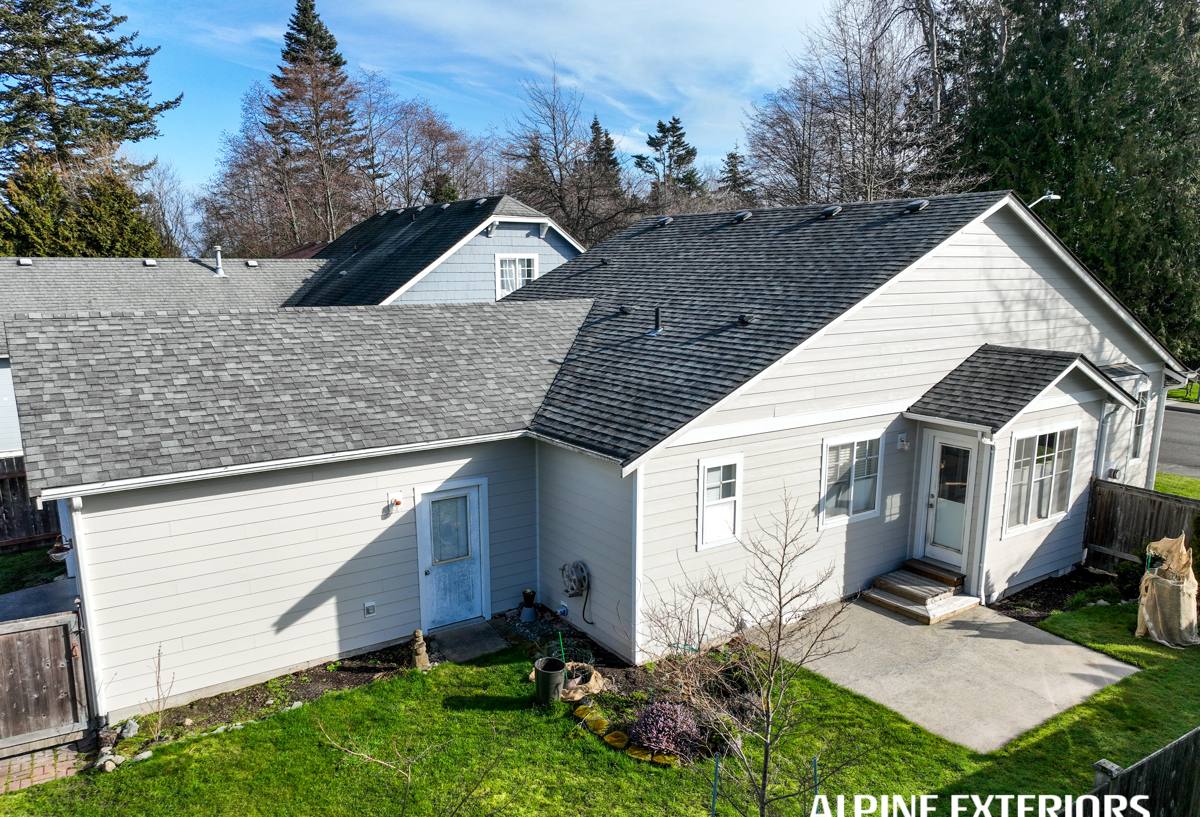
 Yew Street sits inside the Sudden Valley community on Lake Whatcom, one of the more heavily wooded pockets of Whatcom County. That tree cover is part of why people love living there — but it's also exactly why the homes on Yew Street tend to fight a different set of exterior problems than a house out in the open in Bellingham or Ferndale. Shade, standing moisture, and a marine-influenced climate that rarely lets anything dry out completely all add up over the years. If you've noticed moss creeping up your siding, soft trim around your windows, or a roof that never seems to fully dry between storms, none of that is unusual for this area — it's just what Whatcom County weather does to an exterior that isn't built and maintained for it.
What the Sudden Valley Climate Actually Does to a House
Western Washington's marine climate brings long, wet stretches from fall through spring, punctuated by short dry summers. Around Lake Whatcom and inside the Sudden Valley tree canopy, that pattern gets amplified. Homes tucked under fir and cedar canopy get less direct sun, so siding and roofing stay damp longer after every rain. Add in the salt-tinged marine air that moves inland off Bellingham Bay and the broader Puget Sound region, and you've got a climate that's tough on almost every building material in a slightly different way.
The Big Three Local Stressors
- Prolonged moisture exposure — shaded lots and long rainy seasons mean siding and trim can stay wet for days at a time.
- Moss and algae growth — damp, shaded surfaces are ideal breeding ground, and moss holds moisture directly against whatever it's growing on.
- Wind-driven rain — storms coming off the water can drive rain sideways into wall assemblies, which punishes weak seams, poor flashing, and low-quality caulking fast.
None of these are exotic problems. They're just constant, year after year, in a way that a house in a drier climate never has to deal with.
Why Siding Choice Matters More Here Than Elsewhere
In a climate like this, the material on your walls isn't just cosmetic — it's your first and most important line of defense. This is a big part of why we install James Hardie fiber cement siding exclusively and don't offer vinyl, LP SmartSide, or wood products like cedar or primed spruce.
Vinyl siding doesn't rot, but it flexes and gaps with temperature swings, and moss and algae still colonize its surface readily in shaded, damp conditions — and once it's discolored or damaged, individual panels are difficult to color-match or replace cleanly. Engineered wood products like LP SmartSide use wood strand technology with a resin-saturated overlay, which performs reasonably well when installation and maintenance are perfect, but any breach in that outer layer — a missed caulk joint, a scuff during a windstorm, standing debris against the wall — lets moisture into the wood substrate, and swelling or delamination can follow. Cedar and primed spruce are honest, attractive materials, but they're wood: they need re-staining or repainting on a real schedule, and in a climate this wet, skipping even one maintenance cycle can mean rot starting behind the finish where you can't see it.
James Hardie fiber cement doesn't have that vulnerability. It's cement, sand, and cellulose fiber — non-combustible, dimensionally stable, and it doesn't swell, rot, or feed the organisms that thrive in constant shade and moisture the way wood-based products can. That's the whole reason we standardized on it: fewer callbacks, fewer surprises, and a product that's actually engineered for climates like Whatcom County's rather than merely tolerating them.
Siding, Roofing, Windows, and Decks — Treated as One System
A house doesn't fail at one point — it fails where systems meet. Most of the water damage we find on Yew Street homes didn't start with bad siding; it started at a poorly flashed window, a roof edge that was never properly tied into the wall assembly, or a deck ledger board bolted straight to the house without proper flashing behind it. That's why we don't treat siding, roofing, windows, and decks as separate jobs — they're one weatherproofing system, and a weak connection anywhere in that system eventually shows up as a stain, a soft spot, or a mold problem somewhere else.
How the Pieces Work Together
| Component | What It's Protecting Against Locally | Common Failure Point |
|---|---|---|
| Siding | Wind-driven rain, moss/algae growth, UV and moisture cycling | Poor flashing at seams, wrong fastener pattern, wood-based products left unmaintained |
| Roofing | Sustained rain volume, moss buildup on shaded slopes | Inadequate underlayment, moss allowed to hold moisture against shingles |
| Windows | Wind-driven rain intrusion at penetrations | Missing or degraded flashing tape, gaps in the water-resistive barrier |
| Decks | Standing water, ledger board rot, shaded/damp framing | Ledger boards without flashing, insufficient drainage gaps between boards |
When we're on a Yew Street property for a siding job, we're also looking at the flashing details around every window and door, the condition of the roof edge and gutters, and whether a deck ledger is tied in correctly. It's not upselling — it's just how you actually stop water intrusion in a climate that gives you no dry season to hide behind.
Signs a Yew Street Home Needs Exterior Attention
Because so much of Sudden Valley sits under tree canopy, problems can develop quietly. Here's what we'd want a homeowner to check before it turns into a bigger repair:
- Moss or dark green/black streaking on siding, especially on the north side or under overhangs
- Soft or spongy trim boards around windows, doors, or roof edges
- Paint that's peeling or bubbling in a localized area (often a sign of moisture trapped behind the surface)
- Gutters that overflow during heavy rain or visible sagging along the roofline
- A musty smell near exterior walls, particularly in a basement or crawlspace on the shaded side of the house
- Deck boards that stay damp long after the rest of the yard has dried, or a ledger board area that looks discolored
- Gaps or separation at siding seams, corners, or window trim
Any one of these on its own might be minor. Several together, especially on an older home, usually mean it's time for a real inspection rather than a patch job.
What Correct Installation Actually Involves
James Hardie siding performs the way it's rated to perform only when it's installed to the manufacturer's specification — and that's true of every product in this climate, not just fiber cement. Correct installation in an area like Sudden Valley means:
- Proper water-resistive barrier and flashing at every penetration — windows, doors, hose bibs, light fixtures — before a single piece of siding goes up
- Correct fastener type, spacing, and placement per the Hardie installation guide, not generic siding practice
- Appropriate clearance between siding and grade, decks, roofs, and other horizontal surfaces so water has somewhere to go
- Factory-primed or ColorPlus-finished panels, caulked and touched up per spec at cut edges
- Ventilation and drainage plane detailing suited to a shaded, high-moisture wall assembly
Skip any one of these steps and you can end up with a warranty-backed product performing like a much cheaper one. Installation quality is, honestly, as important as the material choice itself.
Why a Local Crew Matters on Yew Street
A crew that works Whatcom County regularly knows which sides of a Sudden Valley home take the worst of the wind-driven rain, how much shade a lakeside lot actually holds through the year, and how differently a house on a wooded interior lot ages compared to one with more sun exposure. That's not something you get from a general contractor passing through the area once. It shows up in small decisions — how flashing details get handled at a shaded window, how much drainage gap gets built into a deck near the lake, whether gutters are sized for the volume of water this area actually sees in a wet winter.
It also matters for warranty support. James Hardie's product warranty and workmanship coverage are only as good as the installer standing behind them, and a local company that's still going to be around in five or ten years is worth more than the lowest bid from outside the area.
Cost Factors Homeowners Should Understand
Every Yew Street property is different — lot size, tree cover, how many stories, how much of the existing exterior needs to come off versus how much can be built around. Rather than quote numbers that don't mean much without seeing the house, here's what actually drives cost on a project like this:
| Factor | Why It Matters |
|---|---|
| Existing siding removal | Full tear-off costs more than installing over a compliant substrate, but hidden rot often forces removal anyway |
| Trim and detail complexity | Homes with more windows, dormers, or architectural detail take more labor per square foot |
| Access and site conditions | Shaded, sloped, or lakeside lots can affect staging, scaffolding, and material handling |
| Underlying moisture damage | Any rot found once old siding comes off needs to be repaired before new material goes on |
| Product line and finish | Hardie's HZ10 vs HZ5 climate zone panels and ColorPlus vs field-painted finishes affect material cost |
An honest estimate walks through each of these on your specific home rather than handing you a number pulled from a national average.
A Straightforward Approach for a Demanding Climate
Nothing about Sudden Valley's climate is going to change, and a wooded, lakeside lot on Yew Street will always hold onto moisture longer than a house out in the open. The goal isn't to fight that — it's to build and maintain an exterior that's actually engineered for it: fiber cement siding that doesn't feed moss or swell with moisture, roofing and flashing details tied together correctly, windows sealed against wind-driven rain, and decks built with real drainage in mind. That's the standard we hold every job to, whether it's a full siding replacement or a roof and window package on a home that's been standing since before Sudden Valley was fully built out.
If you're seeing early signs of moisture trouble on your Yew Street home, or you're just due for an honest look at where things stand, we're happy to come out for a free, no-pressure estimate — walk the property, point out what we see, and explain the options without any obligation.