 Sudden Valley
 A Standard We Set on Purpose, Not by Accident
Every siding contractor gets asked the same question eventually: "Can you just install what I already picked out?" For most products, our answer is no. We install James Hardie fiber cement siding, and only James Hardie fiber cement siding. That's not a marketing angle — it's a decision we made after years of watching how different siding materials actually perform once they're up against a Sudden Valley winter, not just how they look in a brochure.
This page explains the reasoning in plain terms: what our climate does to siding over time, why we walked away from installing several popular products, and what specifically makes Hardie's fiber cement system the one we're willing to put our name behind.
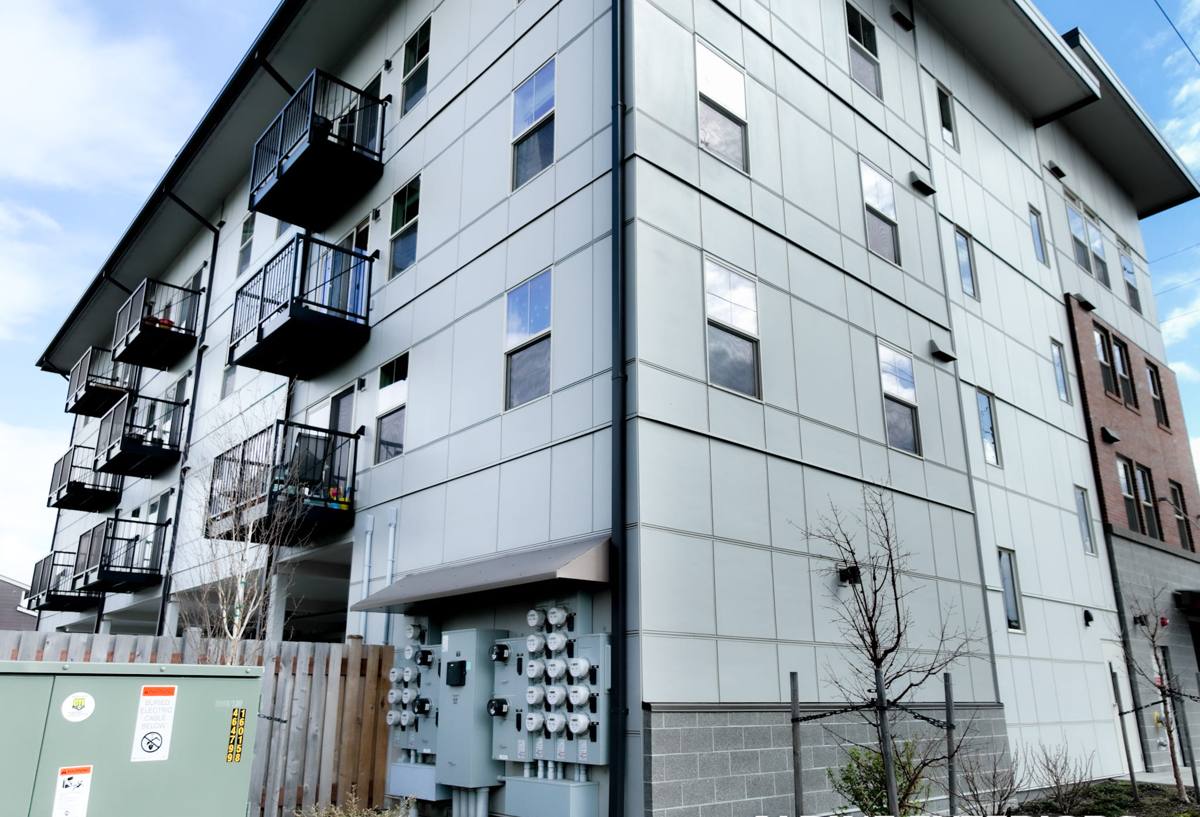
What Sudden Valley's Climate Actually Does to a House
Sudden Valley sits on Lake Whatcom in Whatcom County, and the combination of factors here is tougher on exterior materials than most homeowners realize until they've lived through a few cycles of it.
- Salt air: Proximity to the Salish Sea and Bellingham Bay means airborne salt is a real factor for homes throughout the county, and it accelerates corrosion of fasteners and degrades cheaper finishes faster than an inland climate would.
- Driving rain: Whatcom County storms don't just fall straight down — wind-driven rain gets pushed sideways into seams, laps, and butt joints, which is exactly where a lot of siding failures start.
- A long moss and mildew season: Between the tree cover around the lake and the extended damp stretch from fall through spring, siding here stays wet longer than it does in drier parts of the state. That extended moisture exposure is hard on any material that isn't engineered to shed water and resist organic growth.
None of this makes Sudden Valley an extreme or unusual climate — it's a normal Pacific Northwest lake-adjacent environment. But "normal for here" is still demanding, and it's the baseline every siding product on the market has to survive, not just the baseline it's tested to on paper.
Why We Stopped Installing Certain Products
We used to install a broader range of siding. Over time, watching how different materials held up on real homes in this climate — not in a lab, on an actual roofline exposed to actual weather — narrowed that list down. Here's the honest version of why, product by product.
Vinyl Siding
Vinyl is affordable and low-maintenance in the sense that it doesn't need painting. But it's a thin plastic product that expands and contracts significantly with temperature swings, which stresses fastening and can cause buckling or gapping at seams over time. It also has a lower impact resistance than fiber cement, and in driving rain it relies heavily on a correctly installed water-resistive barrier behind it, since the panels themselves aren't a sealed system. We'd rather not install a product whose long-term performance depends that much on everything behind it being perfect.
LP SmartSide
LP SmartSide is an engineered wood product, and engineered wood is still wood — it's treated and resin-coated to resist moisture, but any cut edge, fastener puncture, or coating failure exposes the wood substrate underneath. In a climate with a long wet season and consistent moisture exposure, that's a maintenance burden we don't think is worth taking on for our clients, especially compared to a product that isn't wood-based at all.
Cemplank and Allura
These are other fiber cement manufacturers, and fiber cement as a category is sound — that's exactly why we build our business around it. But we standardized on one manufacturer for consistency of factory finish, warranty terms, and product engineering across every job we do. Supporting multiple fiber cement brands means multiple installation specs, multiple warranty processes, and less consistency for our crews and our clients.
Primed Spruce and Cedar
Solid wood siding has real aesthetic appeal, and cedar in particular has a long tradition in this region. But raw or primed wood requires an ongoing paint and caulk maintenance cycle to keep moisture out, and in a climate with this much sustained dampness and moss pressure, that maintenance window is narrow and unforgiving. We don't want to sell a homeowner a product that punishes them for missing a repaint cycle by a year or two.
To be clear: these are all legitimate, widely used products, and other contractors install them well. Our decision isn't a claim that they're defective — it's a professional judgment about the trade-offs we're no longer willing to ask our clients to manage, given what this specific climate does to a house.
What Makes James Hardie Different
James Hardie fiber cement is a blend of cellulose fiber, sand, and cement, formed under pressure and cured. That composition gives it a set of properties that line up directly with the problems our climate creates.
| Property | Why It Matters Here |
|---|---|
| Non-combustible | Fiber cement doesn't burn, which matters for wildfire ember exposure and general fire safety, unlike vinyl or wood-based products. |
| Dimensionally stable | It doesn't expand and contract with temperature the way vinyl or wood does, so seams and fastening stay tighter over time. |
| Not wood-based | No cellulose substrate exposed to the elements the way engineered wood siding has, which removes the rot pathway that drives most wood-siding failures. |
| Engineered for climate | Hardie makes region-specific formulations (their HZ5 line is built for climates like ours) rather than one generic product for the whole country. |
| Factory-applied finish | ColorPlus finish is baked on in a controlled environment, rather than field-painted, which produces a more consistent and durable topcoat. |
The Hardie Product Lines We Actually Use
"James Hardie" isn't one product — it's a system of products, and matching the right one to a given house matters as much as the brand decision itself.
HardiePlank Lap Siding
The most common product we install, available in several profiles and textures (smooth, cedarmill, beaded). This is the workhorse siding for most Sudden Valley homes and covers the majority of our jobs.
HardieShingle
Staggered or straight-edge panel siding that replicates a cedar shingle look without the wood-moisture liability. A common choice for accent gables or homes going for a more traditional Pacific Northwest look.
HardiePanel
Vertical panel siding, often used for modern designs or as an accent alongside HardiePlank on the same elevation.
HardieTrim
Fiber cement trim boards used around windows, doors, and corners so the entire exterior envelope — not just the field siding — is a consistent, non-wood material.
Correct Installation Matters as Much as the Product Itself
Fiber cement siding is only as good as the installation behind it. Hardie publishes detailed installation specifications — proper clearance from grade and roofing, correct nailing patterns and fastener depth, proper flashing at every penetration and butt joint, and correct starter strip and weather-resistive barrier detail. Installed off-spec, even the best siding product can trap moisture or fail prematurely.
This is part of why we standardized on one product: it lets our crews build deep, repeated expertise in one installation spec rather than switching methods between five different manufacturers' requirements. Consistency in the field is a quality control decision, not just a branding one.
What to Ask Any Contractor Before They Touch Your Siding
- Are they factory-certified to install the specific product they're quoting?
- Will they follow the manufacturer's published fastening and clearance specs, not just "how we've always done it"?
- Who handles flashing at windows, doors, and roof lines — and can they explain their approach?
- Is the warranty transferable if you sell the home?
- What's their plan for moisture management behind the siding, not just the visible finish?
Warranty and Long-Term Value
James Hardie backs its siding with a non-prorated limited warranty on the substrate, and ColorPlus finishes carry their own finish warranty separate from the product warranty. Warranty terms and coverage details are set by the manufacturer and vary by product line, so we walk every client through the specific paperwork for their project rather than quoting numbers that might not apply to their exact siding selection. What we can say honestly is that a strong, transferable warranty on a non-combustible, dimensionally stable product is a meaningfully different value proposition than the maintenance-dependent warranties that come with wood-based or vinyl siding.
Cost Perspective
Hardie fiber cement typically costs more upfront than vinyl and is often comparable to or somewhat more than engineered wood siding, depending on the product line, profile, and trim package. We won't quote specific numbers here since every home's square footage, trim complexity, and existing wall condition changes the estimate. What matters more than the sticker price is the maintenance math over time: a product that doesn't need repainting on a wood-siding cycle, doesn't develop the moisture issues wood-based products can, and holds a factory finish longer tends to cost less over a 20-30 year ownership window, even with a higher installed price today.
Get a Straight Answer for Your Home
Every house on Lake Whatcom faces this climate a little differently depending on tree cover, sun exposure, and elevation, and the right siding plan should reflect that instead of a one-size answer. If you'd like an honest look at your home's current siding and what a Hardie installation would actually involve, we're happy to walk the exterior with you and put together a free, no-pressure estimate.