 Sudden Valley
 Exterior Wear in Sehome and the Sudden Valley Area
Homes around Sehome and the broader Sudden Valley area sit in a stretch of Whatcom County where weather doesn't let up for long. Proximity to Bellingham Bay means a steady dose of salt-laden air working on anything metal or painted. Add the region's long stretch of driving rain off the Sound, plus tree cover and shade that keep siding damp well after a storm passes, and you get a climate that's genuinely tough on exterior materials. Moss season here isn't a two-month event — on north-facing walls and anything tucked under fir or cedar canopy, it can run most of the year.
None of that is unusual for this part of Washington. But it does mean the siding, trim, and roofing choices that work fine in a drier climate often don't hold up the same way here. We've built our business around exterior systems that are engineered for exactly this kind of exposure.
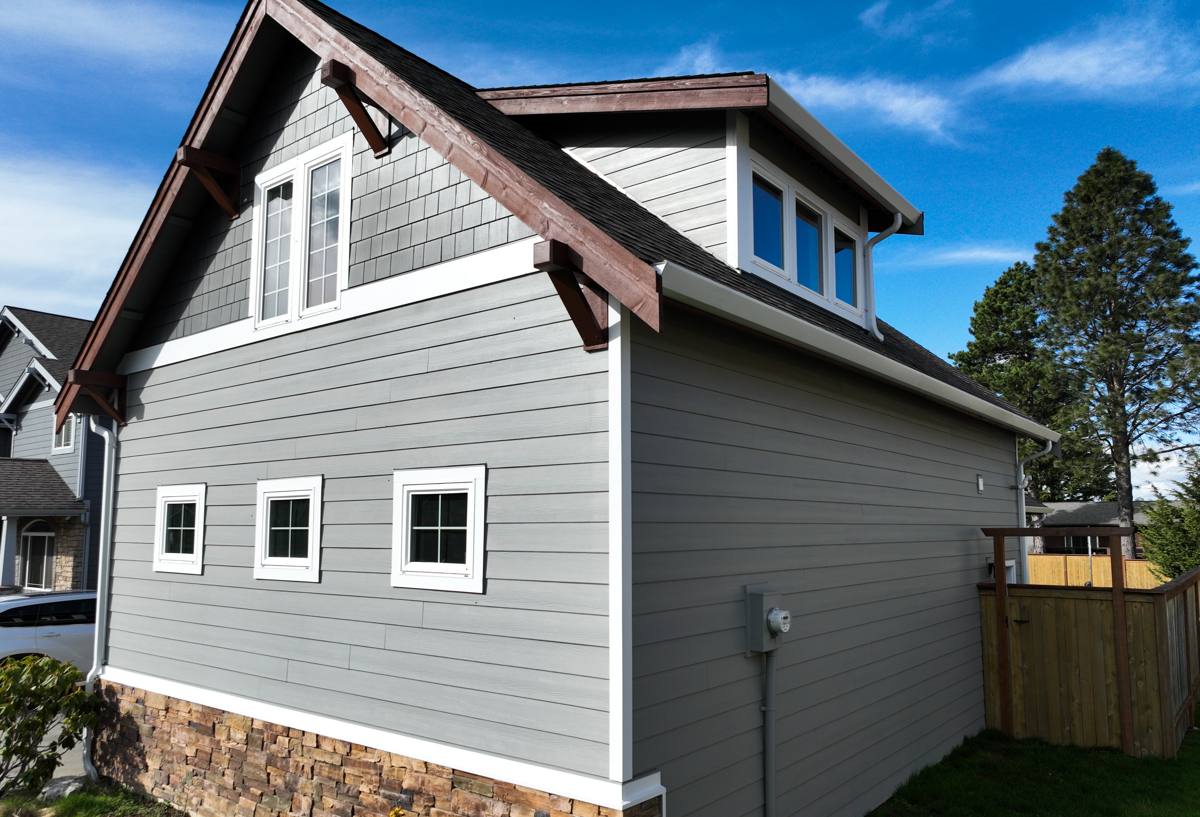
What Salt Air, Rain, and Moss Actually Do to a House
Salt Air
Airborne salt accelerates corrosion on fasteners, flashing, and any metal trim components. It also breaks down cheaper paint films faster than inland weather would, leading to chalking and fading years ahead of schedule.
Driving Rain
Wind-driven rain doesn't just wet the surface of a wall — it pushes moisture into seams, laps, and butt joints. Over time, any siding product that isn't dimensionally stable or properly water-managed behind the surface can trap moisture, leading to swelling, rot, or hidden damage that's expensive to catch early.
Moss and Sustained Dampness
Moss itself isn't usually what damages siding directly — it's what moss indicates. A wall that stays green and damp for weeks at a time is a wall that's not drying out between rain events. That sustained moisture is what shortens the life of wood-based and composite products, and it's why shaded, north-facing elevations in this area often show wear years before the sunnier sides of the same house.
Why We Install Only James Hardie Fiber Cement
We made a deliberate decision as a company: we install James Hardie fiber cement siding, and nothing else. Not vinyl, not LP SmartSide, not Cemplank or Allura, not primed spruce or cedar. That's not a marketing line — it's a standard we hold because of what we've seen these products do (and not do) in exactly this kind of coastal, wet, moss-prone climate.
Fiber cement is non-combustible, which matters for insurance considerations and long-term peace of mind. It doesn't expand and contract with moisture the way wood-based products do, so it's far less prone to the swelling, cupping, and rot that show up on shaded, damp walls after a few Whatcom County winters. James Hardie's factory-applied ColorPlus finish is baked on under controlled conditions, which gives it better fade and chip resistance than field-applied paint — an advantage in an area where salt air is already working against paint film longevity.
James Hardie also engineers specific product lines (their HZ5 line, for example) for climates that see real moisture exposure, which the Puget Sound region qualifies for. Backed by a strong transferable warranty when installed to manufacturer spec, it's the product we're comfortable standing behind on every house we touch — including the shaded, rain-exposed walls that give lesser materials the most trouble.
What We Won't Install, and Why
- Vinyl siding: lightweight and inexpensive, but it can warp in sustained heat and heavy wind exposure, and it doesn't offer the impact resistance or paintable, factory-finished durability of fiber cement.
- LP SmartSide and other wood-strand products: engineered wood performs reasonably in dry climates, but wood-based cores are more vulnerable to moisture intrusion at cut edges and seams over time — a real risk in a climate with this much sustained dampness.
- Cemplank, Allura, and other fiber cement alternatives: these are legitimate fiber cement products, but we've standardized on one manufacturer, one installation system, and one warranty structure so every job we do is consistent and fully backed.
- Primed spruce or cedar: beautiful when new, but real wood siding demands a maintenance schedule — recoating, caulking, spot repairs — that most homeowners underestimate, especially on a house that stays damp as long as ours do here.
Our Installation Process
Correct installation is what determines whether fiber cement performs the way it's supposed to for decades. We start with an on-site inspection of the existing siding, trim, flashing, and any moisture damage already present — which is common to find once old siding comes off a shaded wall. From there, we address the water management layer first: proper weather-resistant barrier, correctly lapped flashing at every window, door, and penetration, and appropriate clearance at grade and roof lines. Only then does the Hardie siding go on, fastened and gapped to manufacturer specification so the panels can move correctly with seasonal temperature and humidity swings.
We treat trim, corners, and butt joints as high-priority detail work, since those are the spots where driving rain finds its way in on a poorly installed job. A technically correct install is the difference between siding that shrugs off forty years of Whatcom County weather and siding that needs attention in year eight.
Roofing, Windows, and Decks — The Rest of the Envelope
Siding doesn't work in isolation. A roof that's shedding water improperly, windows that leak at the flashing, or a deck that's trapping moisture against the house all undermine even a perfect siding job. We handle roofing, windows, and decks alongside siding so the whole exterior envelope is coordinated — flashing details match up, water is directed away from the structure at every transition, and nobody's pointing fingers at another trade if a leak shows up later.
For homes in shaded, moss-prone spots common around Sudden Valley, this coordinated approach matters more than it would in a drier neighborhood. Roof valleys and north-facing wall sections often need the most attention, and treating them as one connected system rather than separate projects tends to produce a longer-lasting result.
Cost Factors to Expect
Every house is different, but the variables that move a siding project's price up or down are fairly consistent. This isn't a quote — it's a guide to what shapes the number you'll eventually see.
| Factor | Why It Matters |
|---|---|
| Existing siding removal | Tear-off and disposal of old material, plus any repair needed to sheathing underneath |
| Moisture or rot found during tear-off | Damaged sheathing or framing found on shaded walls adds material and labor |
| Home size and wall complexity | More corners, dormers, and trim details mean more labor hours |
| Product line and profile | Lap width, texture, and ColorPlus color selection affect material cost |
| Trim and accessory work | Fascia, soffit, and window trim replacement often bundled with siding |
| Access and site conditions | Sloped lots, tree cover, and tight access common in this area can affect labor time |
Choosing a Local Contractor
A crew that works in this specific climate — salt air, sustained rain, heavy shade — knows things a general contractor from a drier region might not: where moisture tends to hide, which details fail first, and how to sequence a job around our weather windows. Local presence also matters for warranty follow-through; a company that's still around and reachable years later is worth more than a slightly lower bid from someone who isn't.
- Confirm they're licensed and insured in Washington, and ask to see current proof
- Ask specifically what siding product and product line they install, and why
- Ask how they handle moisture barrier and flashing detail work, not just the visible siding
- Get the manufacturer warranty terms in writing, including whether it's transferable
- Ask for a written scope that covers tear-off, disposal, and any sheathing repair contingency
- Check how long they've worked specifically in this region, not just in the state generally
Living With Fiber Cement Siding Here
Once James Hardie siding is installed to spec, upkeep is modest compared to wood or vinyl. Periodic rinsing to clear pollen, dust, and moss spores keeps the ColorPlus finish looking sharp, especially on shaded elevations where moss is most likely to take hold. Keeping gutters clear and vegetation trimmed back from the walls goes a long way toward keeping any siding — including fiber cement — drying out properly between rain events.
If you're weighing a siding, roofing, window, or deck project on a home in the Sehome or Sudden Valley area, we're happy to walk the property with you and give you a straight, no-pressure estimate — no obligation, just an honest look at what your house actually needs.