 Sudden Valley
 Why Siding Failure Often Goes Unnoticed
Siding rarely fails all at once. It fails slowly, a few square feet at a time, usually on the sides of the house nobody walks past — the north wall in permanent shade, the gable end that takes the brunt of a southwest storm, the low corner where a downspout has been dumping water onto the same six inches of wall for a decade. By the time a problem is obvious from the driveway, it has usually been developing behind the surface for a year or more.
In Sudden Valley, that timeline gets compressed. Salt-laden air off the lake and Puget Sound corridor, driving rain that hits walls at an angle instead of falling straight down, and a moss season that can run from October through May all put extra load on exterior materials. Siding that would show only cosmetic wear in a drier inland climate can develop real structural problems here if it's not inspected regularly.
This page walks through what to look for, what it usually means, and how to tell the difference between a cosmetic issue and one that needs attention now.
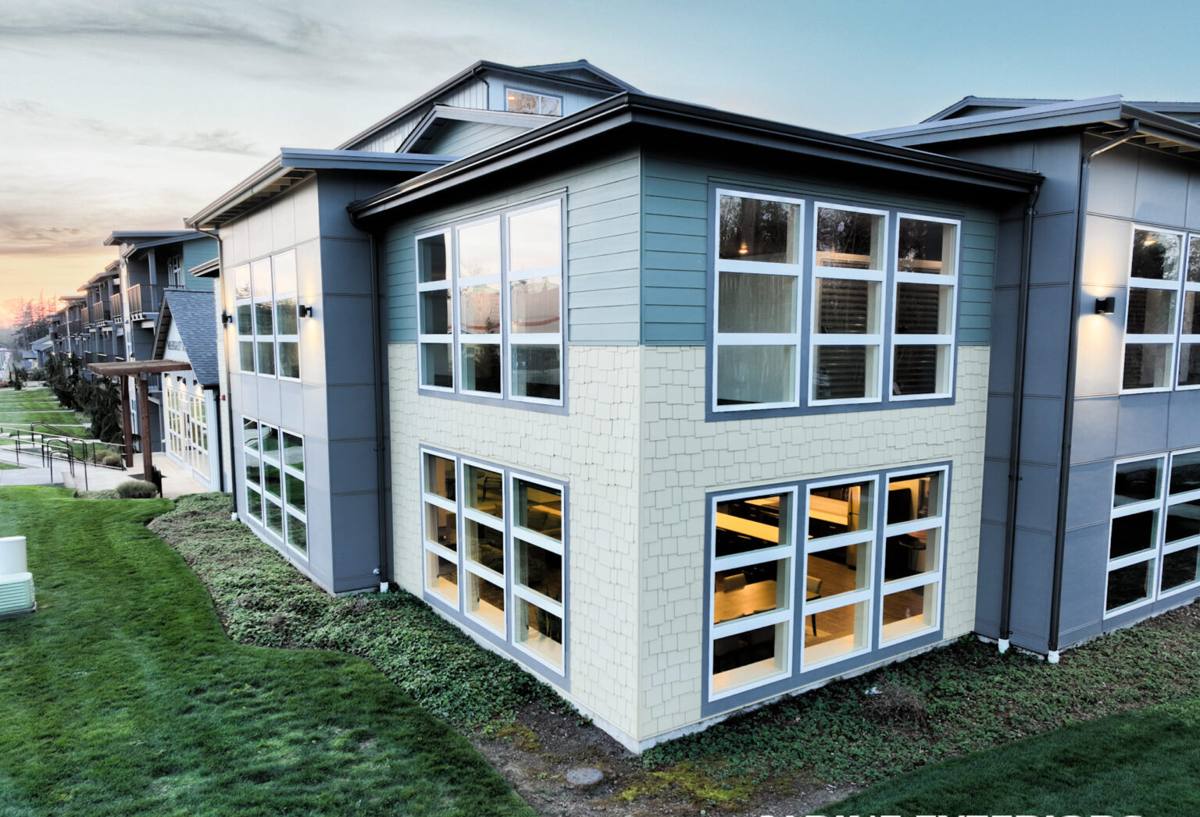
Visual Warning Signs
Cracking, Warping, and Buckling
Cracks running along a board, panels that have started to bow away from the wall, or siding that ripples when you sight down its length are all signs the material is reacting to moisture it wasn't built to handle. Wood-based products swell and shrink with humidity; enough cycles of that and the fibers separate. Vinyl can warp from heat exposure or simply become brittle with age and crack on impact. Once a board has visibly moved, it's no longer doing its job of shedding water — it's collecting it.
Fading, Chalking, and Color Breakdown
Some fading is normal and expected. What's not normal is a powdery residue on your hand after you run it across the surface (called chalking), or color loss that's dramatically uneven from one wall to another. Uneven fading usually points to a finish that's failing faster on the sun- or weather-exposed side of the house, which tells you the coating — not just the color — is breaking down.
Bubbling, Blistering, or Peeling Paint
Paint failure on siding is almost always a moisture problem, not a paint-quality problem. Water trapped behind the surface tries to escape as vapor, and it pushes the paint film off the substrate from underneath. Repainting over active bubbling without addressing the moisture source just buys a year or two before it happens again.
Signs You Can Feel, Hear, or Smell
Some of the most reliable signs of failing siding aren't visible from the ground.
- Soft or spongy spots when you press on the siding with your palm, especially near the bottom courses, around window trim, or below deck ledger boards.
- A hollow or crumbly sound when you tap near seams or corners — a sign the substrate underneath has started to break down.
- Musty or earthy odors in interior rooms along an exterior wall, particularly after a stretch of wet weather.
- Visible staining on interior drywall or trim that lines up with an exterior wall — this is a late-stage sign that water has already made it through.
Any one of these on its own is worth a closer look. More than one at the same location usually means moisture has been getting behind the siding for a while.
Moss, Algae, and the Whatcom County Moisture Cycle
Green or black staining on north-facing walls, under eaves, and anywhere siding stays shaded most of the day is extremely common in this area, and it's not purely cosmetic. Moss and algae hold moisture directly against the siding surface far longer than open air would, which accelerates whatever failure process is already underway underneath. A wall that's growing a steady layer of moss through the wet season is a wall that's staying damp for months at a time.
Light surface growth on sound siding is a maintenance issue — it can be washed off (carefully, without a pressure washer aimed directly at seams) and often kept in check with better gutter and vegetation management. Heavy, recurring growth on siding that's also showing softness or cracking is a different story — it's usually a sign the wall assembly behind it has been wet for a long time.
What's Happening Behind the Siding
Siding is the visible layer of a system that includes house wrap, flashing, and the wood sheathing underneath. When siding fails, water intrusion doesn't stop at the surface — it reaches the sheathing, and wet sheathing is where real damage and real repair costs start. Left long enough, it can mean rot that requires structural repair, not just a re-side.
This is why a siding inspection should never stop at "does it look bad from the street." A contractor pulling a board or two at a suspected trouble spot, checking the sheathing condition, and confirming whether flashing at windows and penetrations is still doing its job tells you far more than a visual walk-around ever will.
How Failure Patterns Differ by Material
Not all siding fails the same way, and knowing what's on your house changes what you should be watching for.
| Material | Typical Early Warning Signs | Common Failure Point |
|---|---|---|
| Cedar / primed spruce (untreated wood) | Cupping, checking, peeling paint, visible grain raise | End grain and fastener points absorb water; repainting cycle every 3-7 years |
| Vinyl | Warping, fading, brittleness, cracking on impact | Heat distortion and age-related brittleness; seams are the weak point |
| Engineered wood (OSB-based products) | Edge swelling, bottom-edge softness, delamination at cut ends | Any unsealed cut edge or sustained moisture contact at the bottom course |
| Fiber cement | Caulk joint failure, paint wear at unpainted cut edges if field-finished | Rare when installed to spec; failures usually trace to installation gaps, not the material |
We only install James Hardie fiber cement siding, and this table is a large part of why. Wood-based and OSB-based products fail through the material itself absorbing water — that's a physical property, not a defect, and it's very hard to design around in a coastal, high-rainfall climate. Fiber cement doesn't absorb and swell the same way, which removes that entire failure pathway. Installation quality still matters enormously — caulking, flashing, and clearances have to be done right regardless of material — but the underlying product is working with the climate instead of against it.
DIY Inspection Checklist
Twice a year — once before the wet season sets in and once after — walk the full perimeter of the house and check:
- Press on siding near the bottom courses, below windows, and near any deck or porch attachment for soft spots
- Look for gaps or cracked caulk at trim boards, window and door casings, and corner boards
- Check for peeling, bubbling, or unevenly faded paint
- Look behind and above the siding at gutters — overflowing or clogged gutters are a leading cause of localized rot
- Note any wall with heavy moss, algae, or persistent green staining
- Check indoor walls that back onto exterior siding for staining, soft drywall, or musty smell
- Confirm downspouts discharge water well away from the foundation and siding base
Repair, Recoat, or Replace?
A single soft board, a failed caulk joint, or isolated moss staining is almost always a repair or maintenance item — there's no reason to replace an entire elevation over a localized problem. The decision tips toward full replacement when soft spots or cracking show up in multiple, unrelated locations; when the sheathing underneath is already compromised in more than one area; or when the siding is old enough and worn enough that repairing it piecemeal is starting to cost more, over a few years, than one properly done replacement.
An honest contractor should be willing to tell you when a repair is genuinely sufficient — replacement isn't the right answer to every problem, and a legitimate inspection sometimes ends with "you've got another five to ten years here if you handle these two spots."
If You Are Replacing, What We Recommend
When a homeowner in Sudden Valley does reach the point of full replacement, our recommendation is James Hardie fiber cement, in the HZ product line engineered for this climate zone, with a factory ColorPlus finish rather than field-applied paint. It removes the two biggest recurring failure modes we see locally — moisture absorption into the material itself, and finish breakdown from years of driving rain and salt air — and it comes with a strong transferable warranty backing that up. It's not the cheapest material on the market, but it's the one we're willing to put our name on in this specific climate.
If you're seeing any of the signs above, or you just haven't had your siding looked at in a few years, we offer free, no-pressure estimates and inspections. Someone can take a look, tell you honestly what's going on, and lay out your options — no obligation either way.