 Sudden Valley
 What "Board and Batten" Actually Means
Board and batten is a look, not a material. Traditionally it meant wide vertical boards with narrow strips (battens) covering the seams between them — a barn-and-farmhouse detail that's found its way onto everything from modern craftsman homes to contemporary builds around Whatcom County. The style reads as clean vertical lines with visible shadow lines at each batten, and it pairs well with horizontal lap siding on the same house for a two-texture exterior.
The confusion homeowners run into is assuming board and batten is automatically a specific product. It isn't. You can get this look in real wood, vinyl, or fiber cement — and the material you pick determines how the house performs, not just how it looks on day one.
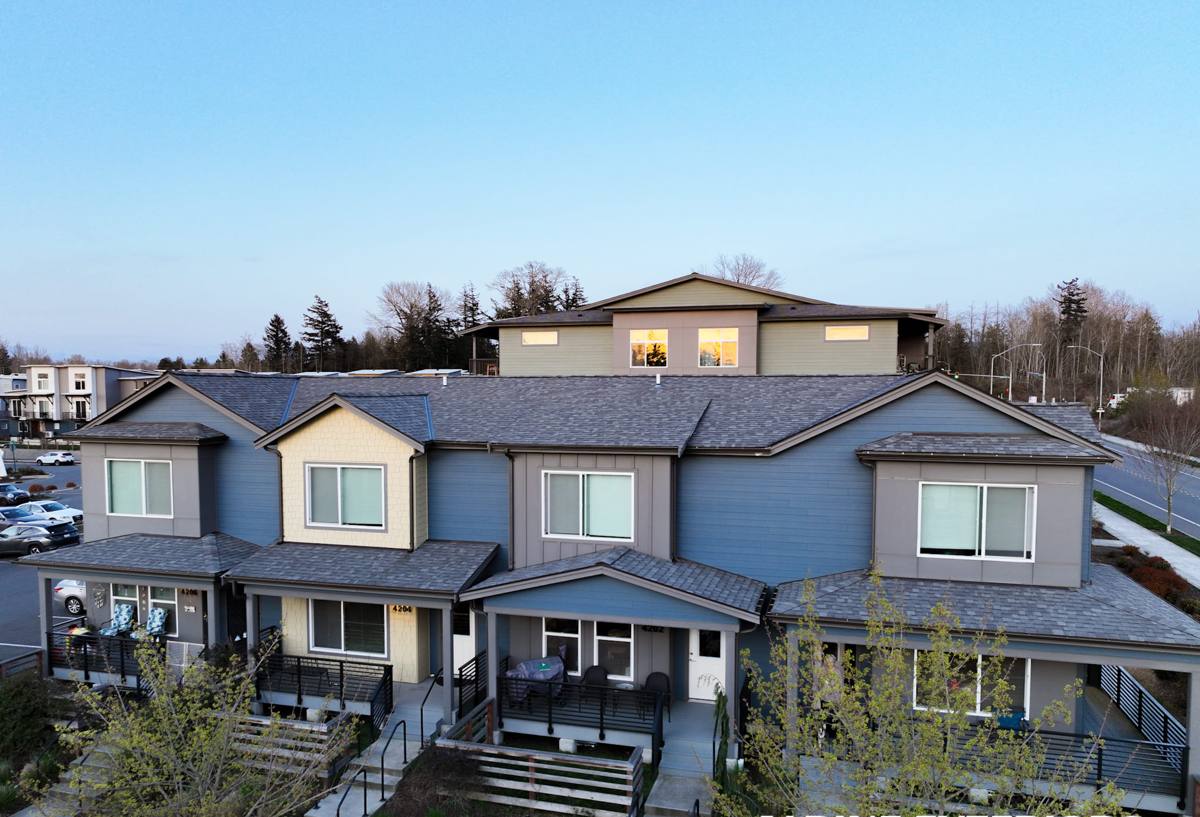
Why We Only Install It in Fiber Cement
Sudden Valley sits close enough to the water that homes deal with salt-laden air, long stretches of driving rain off the Sound, and a moss season that can run most of the wet months. Vertical siding details like board and batten create more seams and more places for water to find a way behind the cladding than a plain lap profile does. That's exactly where the material choice starts to matter more than the style choice.
We install James Hardie fiber cement exclusively, including for board and batten profiles, because it's engineered to handle exactly this kind of exposure without the maintenance cycle that wood or the seam-and-fade issues that vinyl bring to a vertical application. That's the whole reason this page exists — to walk through what the product actually is before you decide on the look.
Real Wood Board and Batten
Cedar board and batten looks great freshly finished, and plenty of older homes in the area still wear it. But real wood battens and boards move with moisture, and every seam is a spot where paint or stain can crack and let water in behind the board. In a climate with this much sustained rain, that means a repainting and caulking schedule that doesn't let up, plus a real risk of rot at the battens if maintenance slips even one season.
Vinyl Board and Batten
Vinyl board-and-batten panels are inexpensive and low-maintenance in the sense that they don't need paint. But vinyl expands and contracts a lot with temperature swings, which is more visually obvious on a vertical profile with long, unbroken batten lines than it is on standard lap siding. It's also a thin, flexible material — impact damage and UV fading over the years are real considerations, and vinyl isn't something we put on a house we're standing behind.
The Hardie Product Line for This Look
James Hardie makes board and batten achievable a few different ways, and the right one depends on the look you're after and the wall it's going on.
- Hardie Panel + Batten: Large vertical fiber cement panels with separate battens fastened over the joints — the closest match to the traditional barn look, often used on gable ends and accent walls.
- Artisan Board and Batten: A premium collection with a deeper, more dimensional batten profile and smoother factory finish, aimed at homes where the vertical siding is a primary design feature, not just an accent.
- HardiePanel with trim boards: A more budget-conscious approach using flat panels with HardieTrim boards installed as the "batten," which gives a similar shadow line at a lower material cost.
All of these are manufactured with Hardie's HZ5 or HZ10 climate-engineered formulations, which control for moisture absorption and freeze-thaw performance based on the region the product ships to — relevant here given how much of the year this area spends wet.
Where Board and Batten Works Best
Board and batten doesn't have to cover an entire house to make an impact, and in most cases it shouldn't. The most common and most durable-looking applications we see are:
- Gable ends, where the vertical lines complement the roofline instead of competing with a lap-sided lower wall
- A single accent wall or entry feature, especially on ranch and craftsman-style homes
- Dormers and small upper-story sections that benefit from a lighter visual weight
- Full-elevation vertical siding on modern and farmhouse-style builds, paired with contrasting trim
Mixing board and batten with standard lap siding on the same house is common and, done well, looks intentional rather than mismatched — it's one of the easier ways to add visual interest without a full custom design.
Color and Finish Options
Board and batten is typically ordered with Hardie's ColorPlus factory finish rather than field-painted, and that matters more here than it might in a drier climate. ColorPlus is baked on in a controlled environment with multiple coats and a UV-cured topcoat, which holds color and resists the streaking and mildew staining that field-applied paint is prone to once it's exposed to a full Pacific Northwest wet season. Board and batten also benefits from contrast — a common approach is a darker or more saturated batten color against a lighter panel, or vice versa, which is easy to spec with ColorPlus since the colors are consistent panel to panel.
Primed fiber cement that you paint yourself is available too, but on a vertical profile with this many trim lines, the labor and long-term touch-up burden of field painting adds up faster than it does on flat lap siding.
Installation Details That Matter More on Board and Batten
Vertical siding is less forgiving of installation shortcuts than horizontal lap siding, because gravity doesn't help water shed off a batten seam the way it does off a lapped horizontal joint. A few things we treat as non-negotiable on every board and batten install:
Rainscreen or Drainage Gap
A ventilated gap behind the siding lets any moisture that does get past the cladding dry out instead of sitting against the wall sheathing. This matters on any Hardie install, but it's especially important on board and batten given the extra seams.
Batten Fastening and Spacing
Battens need to be fastened into structural framing, not just through the panel into sheathing, and spaced to manufacturer specification. Incorrect batten spacing is one of the more common corner-cutting mistakes we see on other installers' work — it's a fast way to save labor time that shows up as problems years later.
Flashing at Transitions
Every point where board and batten meets a roofline, window, or a change in material needs proper flashing. This is standard practice on any siding job, but the visual prominence of board and batten on gables and accent walls means installation mistakes here are also the most visible ones.
Cost Factors to Understand
Board and batten generally costs somewhat more than standard lap siding in the same material, mainly due to the extra labor of installing individual battens or trim boards and the additional flashing detail work. The table below is a general guide to relative cost drivers, not a quote — every home's layout, waste factor, and existing wall condition changes the number.
| Factor | Impact on Cost | Why |
|---|---|---|
| Panel + separate batten vs. flat panel with trim | Higher for true panel + batten | More individual pieces and fasteners to install correctly |
| Full elevation vs. accent wall | Scales with square footage | More material and more batten linear footage |
| ColorPlus finish vs. field paint | Higher material cost, lower long-term cost | Factory finish reduces repainting cycles |
| Existing wall prep needs | Variable, sometimes significant | Rot repair, re-sheathing, or rainscreen retrofit adds labor before siding goes up |
| Number of transitions and trim details | Higher with more architectural features | Each window, corner, and roofline meeting needs flashing and precise cuts |
What to Check Before You Sign a Contract
- Confirm which Hardie board and batten product is being quoted — Panel + Batten, Artisan, or panel-with-trim — since material and labor pricing differ between them
- Ask whether a rainscreen or drainage gap is included, and get it in writing
- Confirm battens will be fastened into framing per Hardie's installation instructions, not just into sheathing
- Ask for the batten spacing and fastener schedule the crew plans to follow
- Verify whether you're getting factory ColorPlus finish or primed material you'll need to paint
- Check that the manufacturer's warranty will actually be honored — that requires installation to spec, which is worth confirming up front
Is Board and Batten Right for Your Home?
Board and batten suits homes with clean architectural lines — gables, dormers, modern farmhouse profiles, and craftsman details all take to it well. It's less of a natural fit on homes with a lot of ornate trim work or a more traditional Cape Cod profile, where it can compete with the existing detailing rather than complement it. If you're not sure whether it fits your home's style, that's a conversation worth having before any material gets ordered.
If you're weighing board and batten against a standard lap profile, or just want to see how it would look on your home, we're happy to walk the property with you and put together a straightforward, no-pressure estimate — no obligation either way.