 Sudden Valley
 Siding Built for Columbia's Corner of Sudden Valley
Columbia is one of the residential pockets that make up Sudden Valley, the lakeside community wrapped around the south shore of Lake Whatcom in Whatcom County. Like the rest of the valley, homes here sit close to water and under a heavy tree canopy, which means the exterior of a house is doing more work here than it would on a dry, open lot across the county. We've built our business around one material system for this reason: James Hardie fiber cement siding, installed correctly, is the product that holds up best against what this specific micro-climate throws at a house year after year.
This page isn't a sales pitch dressed up as an article. It's meant to explain, plainly, what Columbia homeowners are actually dealing with, how we approach siding, roofing, window, and deck work for houses in this area, and why we don't install anything other than Hardie.
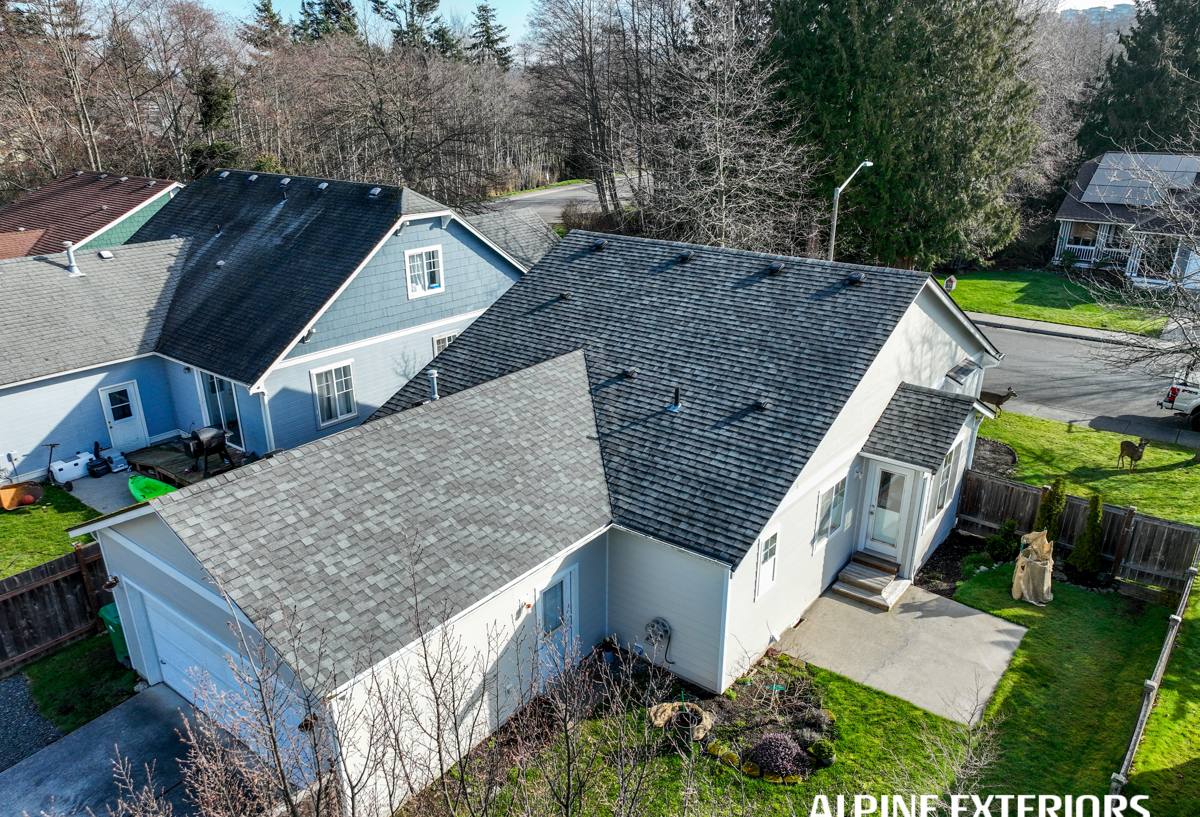
What the Climate Actually Does to a House Here
Moisture Load and a Long Moss Season
Whatcom County gets a long, wet fall-through-spring stretch, and the tree cover around Lake Whatcom keeps humidity high even between rain events. Siding, trim, and roofing in shaded, tucked-away sections of Columbia can stay damp for days at a stretch. That's the environment moss and algae thrive in, and it's not just cosmetic — sustained moisture against a wall assembly is what eventually finds gaps in caulking, fastener holes, or seams that weren't detailed correctly the first time.
Driving Rain and Wind-Driven Exposure
Storms coming off the water can push rain sideways into exposed elevations, particularly on homes with less tree buffer or more open exposure toward the lake. Driving rain finds weak points that vertical rain never would — lap joints, butt seams, corner trim, and anywhere flashing was skipped to save time.
Salt-Tinged Air
Sudden Valley isn't coastal in the ocean-front sense, but the region's air carries enough salt and moisture together that it accelerates wear on materials that aren't built to resist it — particularly untreated wood, fasteners, and coatings that aren't factory-cured. Over a decade or two, that combination is what separates a house that still looks tight from one that's chalking, swelling, or showing rot at the trim.
How These Factors Compare Across Common Siding Materials
| Material | Moisture/moss resistance | Behavior in driving rain | Long-term maintenance in this climate |
|---|---|---|---|
| James Hardie fiber cement | Non-combustible, engineered HZ formulations for wet, moderate climates | Factory-finish and lap design manage water when installed to spec | Repaint cycle is long; ColorPlus finish resists fading and chalking |
| Vinyl | Won't rot, but traps moisture behind panels; moss grows on the surface film | Can flex and gap at seams over time | Low upkeep but limited lifespan and repair options when damaged |
| Cedar / primed spruce | Absorbs moisture readily; classic moss and mildew substrate | Needs consistent sealing at every seam and end cut | Frequent refinishing; highest long-term labor cost |
| LP SmartSide / engineered wood | Better than raw wood but still wood-based and moisture-sensitive at cut edges | Manageable with strict install discipline | Moderate; edge sealing and caulk maintenance matter a lot |
Why We Only Install James Hardie
We used to get asked why we don't offer more options. The honest answer is that we stopped installing several products because we were the ones getting called back when they didn't hold up in this exact climate — not a lab, not a national average, this specific combination of rain, humidity, and tree shade around Lake Whatcom.
- Non-combustible material — fiber cement doesn't feed a fire the way wood-based products can, which matters more every year as wildfire risk expands regionally.
- Factory-cured ColorPlus finish — the color is baked on at the factory rather than field-applied, so it resists the fading and chalking that field-painted products show first in damp, shaded settings.
- Climate-engineered HZ product lines — Hardie's HZ formulations are specifically built for wetter regions like ours, rather than being a one-size-fits-all product.
- Dimensional stability — fiber cement doesn't swell and shrink with moisture cycles the way wood-based sidings do, which is what keeps seams tight over the decades instead of just the first few years.
- A warranty that's actually transferable — this matters in a community like Sudden Valley where homes do change hands, and a buyer inheriting a house wants to know the exterior is still under coverage.
None of that means the alternatives are junk — vinyl, cedar, and engineered wood all have legitimate uses elsewhere. We just won't put our name on an install we don't believe will hold up on a Columbia lot the way we'd want it to.
What Correct Installation Looks Like Here
Hardie siding performs the way it's rated to only when it's installed to the manufacturer's specifications, and that's where a lot of the industry's callback issues actually come from — not the material itself. For homes in this part of Sudden Valley, that means:
- Proper starter strip and clearance off grade, since damp ground-level exposure is common on shaded, tree-lined lots
- Correctly lapped and caulked joints sized for the region's rain load, not a dry-climate spec
- Flashing at every window, door, and roof-wall intersection — the majority of moisture intrusion problems trace back to a skipped or undersized flashing detail
- Fastener patterns and spacing that match Hardie's published requirements for wind and moisture exposure
- Ventilation behind the cladding so trapped moisture has somewhere to go rather than sitting against the wall assembly
Roofing, Windows, and Decks: The Rest of the Envelope
Siding is one piece of a house's defense against this climate, but it doesn't work in isolation. We handle roofing, windows, and decks alongside siding because they all interact at the same vulnerable points — the roof-to-wall transition, window flashing integration, and ledger connections where a deck ties into the house.
Roofing
A roof that's shedding granules, holding moss, or leaking at a valley will eventually push moisture down into the wall assembly below it, regardless of how good the siding is. In a shaded, tree-heavy area like Columbia, roof moss management and proper valley/flashing work matter as much as the shingle choice itself.
Windows
Old or poorly flashed windows are one of the most common paths water takes into a wall. When we replace siding on a home with aging windows, we flag it, because doing the window flashing correctly at the same time as a siding job is far cleaner than retrofitting it later.
Decks
Decks in this area face the same moisture and moss exposure as siding, plus standing water and ledger-board rot risk where the deck attaches to the house. A deck rebuild is also a natural point to correct any flashing issues at that connection before new siding goes up around it.
Why a Local Crew Matters in a Community Like This
Sudden Valley isn't a typical subdivision — narrow, wooded roads, private community access, and lots with real grade and tree exposure that varies house to house even within Columbia itself. A crew that works this area regularly knows what a "typical" Sudden Valley lot actually looks like: where moss builds up first, which elevations take the worst of the wind off the lake, and how tree cover changes the moisture picture from one property to the next. That's not something a crew driving in from outside the county tends to account for the same way.
What a Project Timeline Generally Involves
- An on-site walkaround to assess existing siding, trim, moisture damage, and roofline condition
- A written scope covering material, flashing details, and any roofing, window, or deck work bundled into the project
- Material order and lead time for the specific Hardie profile and ColorPlus color selected
- Installation, including tear-off of existing cladding, moisture barrier and flashing work, and final fastening to spec
- A final walkthrough covering caulking, trim details, and cleanup
Cost Factors Worth Understanding Upfront
| Factor | Why it moves the price |
|---|---|
| Existing wall condition | Rot or moisture damage found during tear-off adds repair work before new siding goes on |
| Home size and complexity | More corners, dormers, and trim detail mean more cutting, flashing, and labor time |
| Siding profile and color | Lap width, panel vs. plank style, and ColorPlus color selections vary in material cost |
| Access and site conditions | Tree cover, slope, and tight lot access common in Sudden Valley can affect staging and labor time |
| Bundled work | Combining siding with roofing, window, or deck work in one project can reduce total disruption and some shared costs |
A Practical Checklist for Columbia Homeowners
- Check north-facing and tree-shaded walls first — that's where moss and moisture problems usually show up earliest
- Look for chalking, fading, or soft spots near the bottom courses of siding and around window trim
- Have gutters and downspouts checked — clogged gutters send water straight down the wall behind the siding
- Ask any contractor what flashing details they use at windows, doors, and roof-wall intersections, not just what siding brand they install
- Confirm whether a warranty is transferable if you plan to sell the home down the road
If you're weighing a siding, roofing, window, or deck project for a home in Columbia, we're glad to come take a look and give you a straightforward, no-pressure estimate — just fill out the form below.