 Sudden Valley
 Exterior Work in Deming: Building for the Nooksack Valley
Deming sits along the Nooksack River on the Mount Baker Highway corridor, east of Bellingham and closer to the foothills than most of the towns we work in around Whatcom County. It's a mix of rural acreage, river-adjacent properties, and homes tucked into second-growth timber, and that setting puts a different set of demands on a house than a lot in town or out along the water. We handle siding, roofing, windows, and decks for homes throughout the Deming area, and the standards we build to here come from what we've actually seen hold up in a river valley that stays wet and shaded for a large part of the year — not from a catalog.
On siding, we install James Hardie fiber cement and nothing else. That's not a manufacturer relationship or a marketing angle. It's a professional standard we settled on after enough tear-offs and service calls on moisture-heavy properties to know which materials actually last out here and which ones just look good on the day they go up.
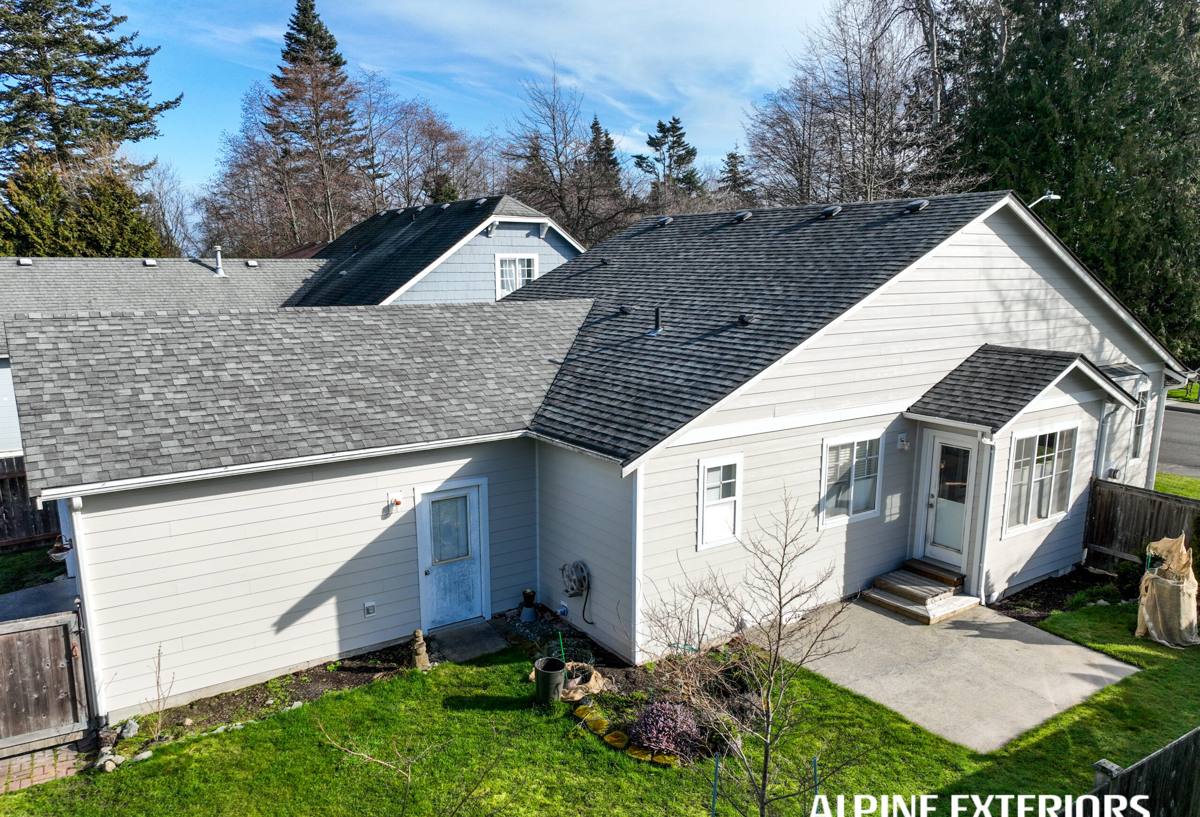
What This Climate Does to a House in Deming
Driving Rain Funneled Up the Valley
Whatcom County sits under a marine-influenced weather pattern for most of the year, and that moisture-laden air moving in off the Puget Sound and Georgia Strait region doesn't stop at the Bellingham city limits — it pushes east along the Nooksack River corridor toward the Cascade foothills, often picking up intensity as it's forced up in elevation near Deming. Homes here can see longer, harder rain events than properties closer to the coast, and the terrain along the river valley means wind-driven rain doesn't hit every wall of a house the same way. Flashing and water management details need to be sized for that variability, not for an average rainfall number.
River-Valley Humidity and Shade
A lot of Deming properties sit close to the Nooksack River or under heavy tree cover along the valley floor, and both of those things add humidity to the air well beyond what a typical in-town lot deals with. Wall surfaces and roof sections that stay shaded through most of the day don't get the drying window that direct sun would give them, so any moisture that gets behind a siding panel or under a shingle has more time to do damage before conditions dry it back out.
A Long Moss and Mildew Season
Shade, dampness, and the mild temperatures typical of this part of Washington are exactly what moss and mildew need, and Deming's tree cover and valley humidity keep that combination active for most of the year. Roofs usually show it first, especially on north-facing slopes and in valleys where needles and debris collect, but siding that holds moisture at the surface — instead of shedding it — picks up growth too. Properties set back under heavier canopy along the river tend to need more frequent attention than an open, sun-exposed lot simply because they never fully dry out between wet spells.
Why We Only Install James Hardie Siding
We used to offer a broader range of siding products, and we stopped. The reason came from what we kept finding on service calls and re-side jobs in exactly this kind of environment — shaded, humid, river-adjacent properties where moisture never really lets up — not from a sales pitch.
- Non-combustible core: Fiber cement doesn't feed a fire the way wood-based siding can, which matters on rural, tree-surrounded properties like a lot of what we see around Deming, and it's often a relevant factor for insurance underwriting as well.
- Factory-applied ColorPlus finish: The color is baked on in a controlled factory process rather than brushed on in the field, and it resists fading, chalking, and moisture intrusion far longer than site-applied paint — especially on shaded walls that stay damp longer between dry spells.
- Climate-engineered HZ product lines: Hardie's HZ5 formulation is built for regions with heavy moisture exposure and freeze-thaw cycling, which fits a river valley like Deming's better than a formulation designed for a drier climate.
- Dimensional stability: Fiber cement doesn't swell, cup, or warp the way engineered wood products can after repeated wetting cycles that never fully resolve on a shaded, humid lot.
- Strong transferable warranty: Hardie backs its products with one of the more substantial warranty structures in the industry, provided the installation follows their published specifications.
We won't install LP SmartSide, vinyl siding, Cemplank, Allura, primed spruce, or cedar. Each of those has a legitimate place in the market, and plenty of homeowners elsewhere are satisfied with them. But on a property that deals with the kind of sustained moisture and shade common along the Nooksack corridor, we've made a professional call: we'd rather stand fully behind one system than offer a cheaper option that quietly shifts long-term maintenance risk back onto the homeowner.
What Correct Hardie Installation Requires
Fiber cement only performs the way it's engineered to when it's installed to Hardie's published specifications — correct fastener type and spacing, proper clearance from grade and roof lines, drainage or rain-screen detailing behind the panels where the assembly calls for it, and properly sealed joints. On a shaded, river-adjacent lot, those details matter even more than on a drier property, because a loosely installed product will still develop moisture problems here no matter how good the underlying material is.
Roofing for Deming Homes
Roofing takes the brunt of this environment. Between debris from surrounding trees, extended damp periods in the shade, and moss that establishes itself quickly on north-facing or low-slope sections, a Deming roof needs to be built and maintained with that specific combination in mind. Correct underlayment, properly lapped flashing at every penetration and roof-to-wall transition, and ventilation that lets the roof deck actually dry between wet spells are the baseline we build to, not optional upgrades.
- Moss buildup in valleys or on shaded slopes that returns quickly after cleaning
- Granule loss showing up in gutters or downspouts
- Debris accumulation in valleys and at roof-to-wall transitions from nearby trees
- Soft spots or visible sagging near penetrations and eaves
- Water staining on interior ceilings near exterior walls after a heavy or prolonged rain
Windows That Hold Up to Valley Moisture
Window performance in a humid, shaded setting comes down to flashing and installation as much as the window unit itself. A well-built window with poor flashing integration will still leak once the surrounding wall assembly stays wet for extended periods, which is common on shaded, river-adjacent lots around Deming. We pay close attention to how new window flashing ties into the surrounding wall and siding, since that transition is one of the most common places moisture finds its way into a wall system that doesn't get much drying sun.
Decks Built for a Wooded, River-Adjacent Property
Decks around Deming deal with a specific combination: shade that slows drying, falling leaves and needles that trap moisture against the surface, and river-valley humidity that keeps wood-based materials damp longer than they'd stay on an open, sunny lot. That combination accelerates rot in lower-grade decking and speeds up corrosion in fasteners and structural connectors that aren't rated for sustained moisture exposure. We use hardware suited to this kind of damp, shaded environment, and we walk homeowners through the real maintenance differences between wood and composite decking for a lot like theirs rather than giving a one-size-fits-all recommendation.
Comparing Common Exterior Materials in This Climate
| Material | Moisture Behavior | Maintenance in Shade & Humidity | Typical Longevity Here |
|---|---|---|---|
| James Hardie fiber cement | Dimensionally stable, resists swelling | Low; factory finish resists moisture-driven fading and chalking | 30+ years with correct install |
| Vinyl siding | Can trap moisture behind panels in shaded, poorly ventilated walls | Low upfront, but seams stay damp longer in humid, shaded conditions | Variable; shorter on consistently shaded elevations |
| LP SmartSide / engineered wood | Wood-based core is moisture-sensitive at cut edges and joints | Moderate to high; edge sealing matters more without sun to dry it out | Depends heavily on installation and upkeep |
| Cedar / primed wood | Absorbs and releases moisture readily | High; needs regular refinishing, especially in shade | Shorter without consistent maintenance |
Why a Local Crew Matters in Deming
Deming isn't downtown Bellingham, and a contractor who mostly works closer to the water doesn't necessarily think about a river-valley lot the same way. A crew that regularly works this stretch of Whatcom County already accounts for the practical side of it — rural driveways and access, septic or well locations to work around, and how shade and proximity to the river change moisture exposure from one part of a property to another even on the same lot. That familiarity shows up in the details that matter most: which walls get extra drainage detailing because they rarely see direct sun, how flashing gets lapped on a steep, shaded roof plane, and which fastener grade holds up in a consistently damp, wooded microclimate. Those choices are what separate an exterior system that lasts one wet season from one that lasts several decades.
A Simple Checklist Before Hiring for Exterior Work in Deming
- Ask what siding material they install and why, and whether they stand behind it with a written warranty
- Confirm they carry current Washington contractor licensing and active liability insurance
- Ask how they handle homes with significant shade, tree cover, or proximity to the river, and what drainage detailing they use on those walls
- Ask about experience working on rural properties, including access for equipment and material delivery
- Get a clear, written scope of work before any contract is signed
Our Process
We start with an on-site assessment of the existing exterior — siding, roofing, windows, or decking, depending on what's being addressed — and pay close attention to how shade, tree cover, and moisture have affected different sides of the home over time, since that can vary more from wall to wall on a Deming property than on a typical open, in-town lot. From there we put together a clear, written scope and timeline before any work begins. Throughout the project, proper flashing, drainage, and moisture management are treated as standard practice for a shaded, river-valley property like this, not as optional add-ons.
If you're weighing options for siding, roofing, windows, or a deck on a property in the Deming area, we're happy to walk the exterior with you and give an honest read on what it actually needs. Reach out below for a free, no-pressure estimate.