 Sudden Valley
 Exterior Work Built for Happy Valley's Climate
Homes around Happy Valley and the broader Sudden Valley area sit close to Lake Whatcom, tucked into the timber and hillside terrain that makes this part of Whatcom County beautiful to live in and hard on a house. The exterior of a home here works overtime compared to a house on the dry side of the state. Between the marine-influenced air moving in off the Salish Sea, long stretches of driving rain through fall and winter, and shaded, tree-covered lots that stay damp well into spring, siding, trim, and roofing systems get tested every single year. We've built our business around exteriors that hold up to exactly that kind of pressure, and this page walks through what we see on Happy Valley homes and how we approach fixing or preventing it.
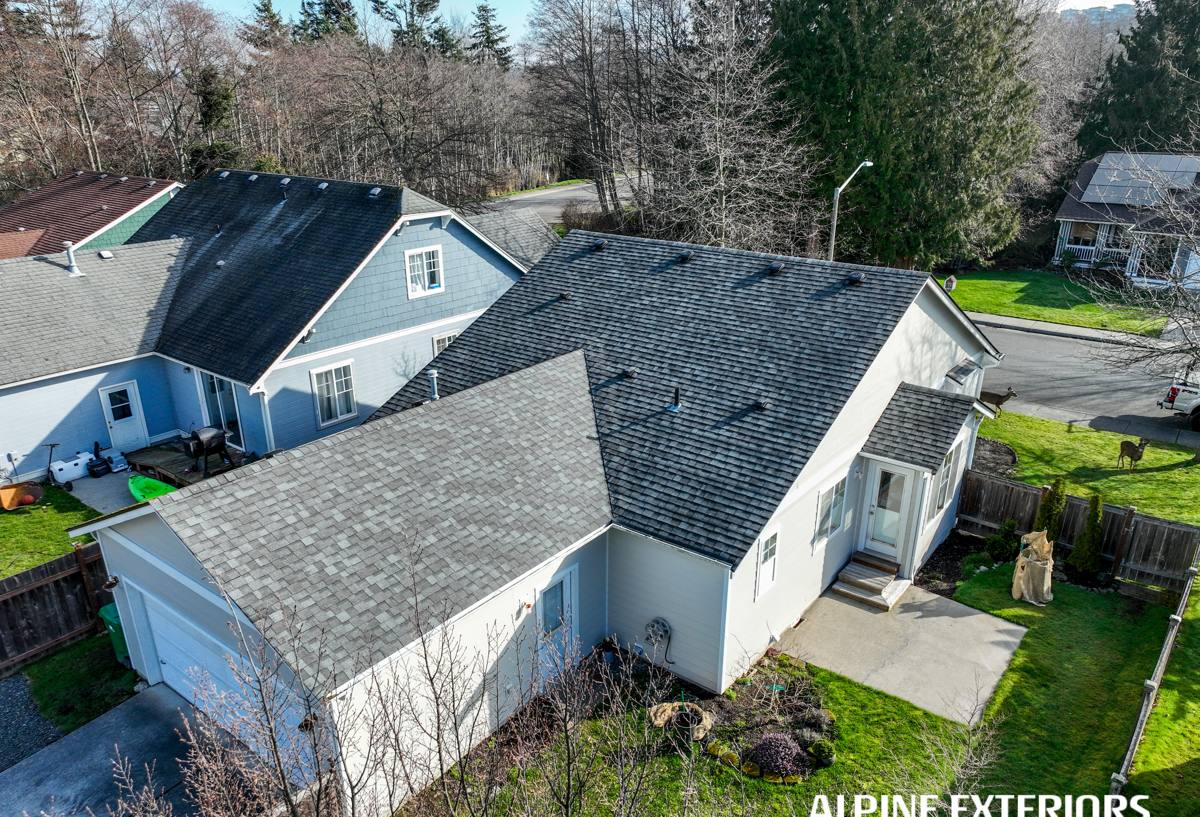
What the Local Climate Does to a House
Salt Air and Moisture
Whatcom County's proximity to Puget Sound and the Strait of Georgia means homes throughout the region, including up around Lake Whatcom, deal with a steady dose of salt-tinged, moisture-laden air. That air doesn't just sit on a house — it works its way into seams, fastener holes, and any spot where a coating has started to fail. Over years, that moisture cycle is what drives rot in wood trim, corrosion in fasteners, and the slow breakdown of paint films that weren't built for it.
Driving Rain
This part of Washington gets rain that doesn't fall straight down. Wind off the water pushes it sideways into walls, especially on west- and south-facing elevations. Siding systems and flashing details that aren't installed with wind-driven rain in mind will eventually let water behind the cladding, and once water gets behind siding, the problem is almost never the siding itself — it's the sheathing, framing, and insulation underneath.
Moss and Shade
Sudden Valley and the surrounding neighborhoods have a lot of tree cover, and tree cover means shade, and shade means surfaces that don't dry out. Roofs, north-facing siding, and anything tucked under an overhang can stay damp for weeks at a stretch during the wetter months. That's exactly the environment moss and algae need to establish themselves, and once organic growth gets a foothold on a roof or wall, it holds even more moisture against the surface underneath it.
How These Conditions Show Up on a Home
- Paint that's chalking, peeling, or blistering on wood or composite trim, especially on the weather side of the house
- Soft or spongy spots at the bottom edges of siding boards or around window and door trim
- Dark streaking or green-black growth on roof slopes, especially the shaded ones
- Caulk joints that have shrunk, cracked, or pulled away from siding and trim
- Windows that fog between panes or feel drafty even when closed and locked
- Deck boards that are cupping, splintering, or showing soft spots near ground contact or fastener holes
None of these are emergencies by themselves, but they're all signs that the exterior envelope is losing the fight against moisture. Catching them early is a lot cheaper than catching them late.
Siding: Why We Only Install James Hardie
We install James Hardie fiber cement siding exclusively. We don't install vinyl, LP SmartSide, Cemplank, Allura, or primed wood species like spruce or cedar, and we think Happy Valley homeowners deserve an honest explanation of why, not just a sales pitch for what we do carry.
Where the Alternatives Fall Short in This Climate
Wood siding, even when it's a quality species, needs a maintained paint film to survive constant moisture exposure. In a climate with this much sustained dampness and shade, that paint film breaks down faster than it does in drier parts of the state, and once it fails, wood starts absorbing water directly. Vinyl siding is low-maintenance in the sense that it doesn't need painting, but it's a thin material that can warp in temperature swings, crack in impacts, and — critically — its seams and panel laps aren't a sealed water barrier, which matters a great deal when rain is coming in sideways. Engineered wood products like LP SmartSide use treated wood strand substrates that resist moisture better than raw lumber, but they're still wood-based, and wood-based products are more sensitive to installation quality and ongoing caulk maintenance than fiber cement is. Competing fiber cement brands like Cemplank and Allura are legitimate products, but we've standardized on one system, from one manufacturer, with one factory finish and one warranty structure, because that consistency lets us install it correctly every time and back it with confidence.
What James Hardie Gets Right for This Area
Fiber cement is a blend of cement, sand, and cellulose fibers — it doesn't rot, it isn't a food source for moss or mildew, and it doesn't expand and contract with moisture the way wood does. James Hardie's ColorPlus factory-applied finish is baked on under controlled conditions, which gives it better adhesion and UV resistance than field-applied paint, and it comes with its own finish warranty. Hardie also engineers regional product lines (HZ5 and HZ10) specifically for climate zones like ours, accounting for moisture exposure in the formulation. It's also non-combustible, which matters more each year as wildfire smoke and dry-season risk become a bigger part of life in Washington, even on the wetter west side.
Siding Product Comparison
| Material | Moisture Behavior in This Climate | Maintenance | Our Position |
|---|---|---|---|
| James Hardie fiber cement | Doesn't rot or absorb moisture like wood; factory finish resists the marine, damp climate well | Occasional washing; repaint only when the homeowner chooses a color change | What we install |
| Vinyl | Won't rot, but panel seams aren't a true water seal; can warp with heat and impact | Low, but limited repair options if damaged | Not installed |
| LP SmartSide / engineered wood | Better than raw wood but still wood-based; sensitive to caulk and paint upkeep | Moderate; needs sealed edges maintained | Not installed |
| Cedar or primed spruce | Attractive but absorbs moisture readily in this level of sustained dampness | High; regular refinishing required | Not installed |
| Cemplank / Allura fiber cement | Similar material science to Hardie | Comparable to Hardie | We standardize on one system for consistency and warranty clarity |
Roofing, Windows, and Decks in the Same Climate
Roofing
A roof over a shaded, damp lot needs attention to ventilation and moss prevention as much as it needs quality shingles. We look at attic ventilation, flashing at every penetration and valley, and drip edge condition, because a roof that traps moisture underneath the shingles will fail from the inside long before the shingles themselves wear out.
Windows
Old or poorly flashed windows are one of the most common places we find hidden water intrusion on Whatcom County homes. Window replacement in this climate isn't just about energy efficiency — it's about getting proper flashing and sealant details right so wind-driven rain can't track behind the frame and into the wall cavity.
Decks
Decks around Lake Whatcom take a beating from shade, ground moisture, and freeze-thaw cycles in the colder months. Fastener corrosion, ledger board rot, and soft decking near the house are the most common issues we find, and they're almost always tied back to water that had nowhere to drain or dry out.
What a Local Crew Actually Means
A crew that works Whatcom County year-round knows which details matter here that wouldn't even come up in a drier climate — how far to hold siding off a deck surface, how to flash a window on a wall that gets driving rain from the southwest, how much ventilation a shaded roof actually needs. That's not knowledge you get from a manual; it's knowledge you get from doing exterior work on homes in this specific weather pattern, season after season. It also means someone answering the phone who knows the area, not a call center reading from a script.
What to Expect From an Estimate
- A walk-around of the exterior looking at siding, trim, roofing, windows, and any decks or attached structures
- An honest read on what's cosmetic versus what's a real moisture or structural concern
- A written scope that says exactly what's being replaced or repaired and with what materials
- Straight talk about James Hardie product lines and colors if siding is part of the conversation
- No pressure to sign same-day — take the estimate, think it over, ask questions
Planning Exterior Work Around the Seasons Here
Because this area gets sustained wet weather for a large part of the year, timing matters more than it might elsewhere. Siding and roofing work generally goes smoother in the drier stretches, but that doesn't mean nothing can happen the rest of the year — it just means scheduling and weather protection during install matter more, and a crew that's used to working around Pacific Northwest weather patterns will plan for that instead of getting caught off guard by it.
If you're noticing paint failure, moss buildup, soft trim, or you're just due for an honest look at how your home's exterior is holding up, we're happy to come out and take a look. The estimate is free, there's no pressure, and you'll get a straight answer about what actually needs attention versus what can wait.