 Sudden Valley
 Barkley's Exterior Climate Challenge
Homes in the Barkley area sit in a stretch of Whatcom County that takes a steady beating from Pacific weather. Moisture rolls in off the water and settles into the tree cover, driving rain comes in sideways during fall and winter storms, and a long, cool moss season keeps north-facing walls and rooflines damp for months at a time. None of that is unusual for this corner of Washington, but it is hard on exterior building materials, and siding is the first line of defense between that weather and the framing underneath it.
Wood-based products swell, crack, and eventually rot when they stay wet as often as siding does here. Vinyl can warp or fade under repeated freeze-thaw cycles and UV exposure, and its seams give moisture a path inward over time. Add in the salt content that rides the marine air this far north, and a lot of exterior products age faster in Whatcom County than their manufacturers' literature suggests. That's the backdrop for how we approach every siding project in Barkley: the goal isn't just a good-looking wall, it's a wall system that holds up to a climate that does not let up.
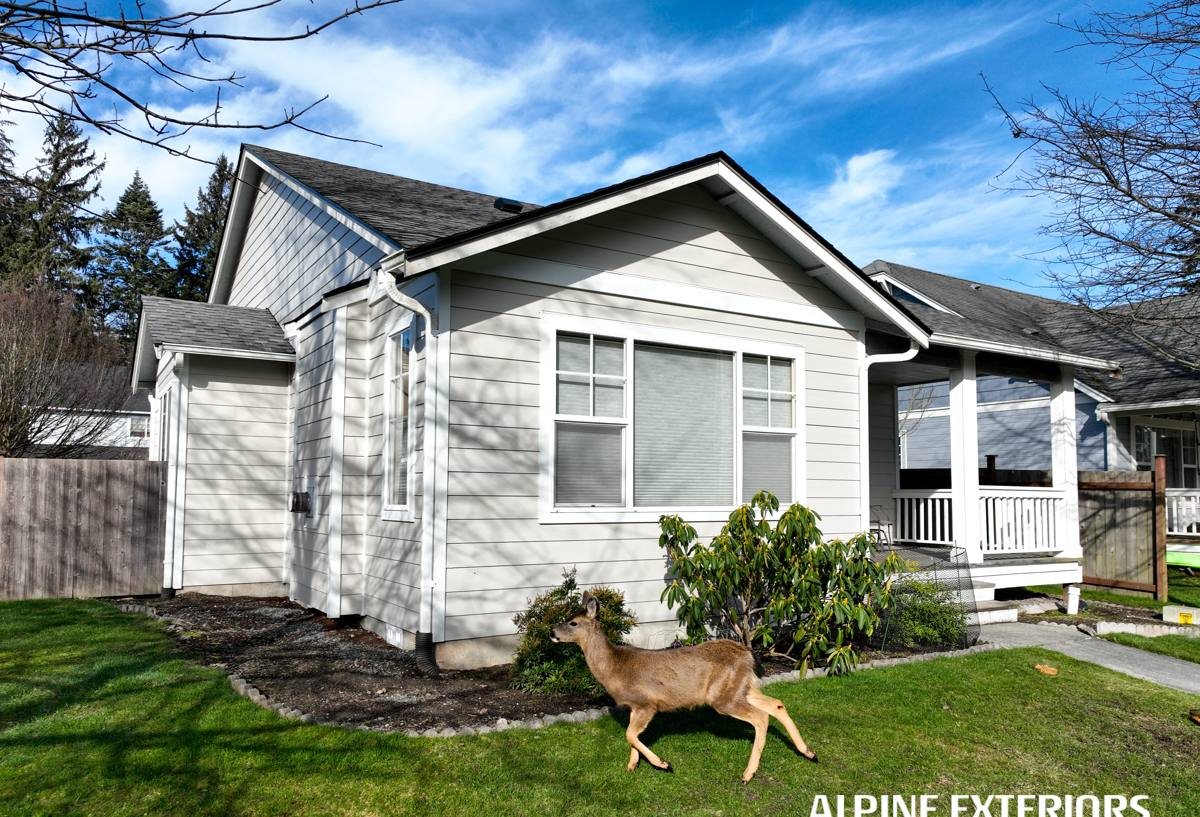
Why We Only Install James Hardie Fiber Cement
We made a decision a while back to install one siding system and stand behind it: James Hardie fiber cement. We don't install LP SmartSide, vinyl, Cemplank, Allura, primed spruce, or cedar. That's not a knock on every homeowner who has one of those products on their house today — plenty of them perform fine when installed and maintained correctly. It's that after years of working on homes in this climate, we decided we didn't want to keep repairing the same moisture, maintenance, and longevity problems on someone else's product when there was a better option for this region.
Fiber cement is a mix of cement, sand, and cellulose fiber, engineered specifically to resist the things that wear out wood and vinyl fastest: moisture absorption, insect damage, and UV breakdown. It's also non-combustible, which matters more every year as wildfire smoke and ember exposure become a bigger part of Pacific Northwest summers, even here in the wetter western part of the state. James Hardie backs its siding with a factory-applied ColorPlus finish that's baked on rather than field-painted, which is a meaningful difference in a climate where paint has to fight moss, mildew, and constant damp to hold its color.
James Hardie also builds region-specific product lines — its HZ5 line, for example, is engineered for the freeze-thaw and moisture patterns of climates like the Pacific Northwest. That's a level of climate-specific engineering the other materials we used to install simply don't offer, and it's a big part of why we standardized on one manufacturer instead of offering a menu of siding options.
What This Means for Your Estimate
When we walk a Barkley property, we're not pricing out three or four different siding brands and letting you pick based on budget alone. We're scoping the right James Hardie product and profile for your home's exposure, and giving you an honest number for doing it once, correctly, with a warranty behind it.
Full Exterior Work: Siding, Roofing, Windows, and Decks
Siding rarely fails in isolation. A roof that's shedding water onto a wall, a window that's letting moisture behind the trim, or a deck ledger board that's trapping water against the house all put stress on siding nearby. Because we handle roofing, windows, and decks in addition to siding, we can look at a Barkley home as one connected system rather than a series of separate trades, and flag problems in one area that are quietly damaging another.
That matters especially around deck attachment points and window flashing, which are two of the most common places we find hidden rot on older homes in this area. A deck ledger that wasn't properly flashed when it was built, or a window that was installed without adequate weather barrier integration, can let water into a wall cavity for years before it shows up as visible siding damage.
Signs a Barkley Home May Need New Siding
- Soft or spongy spots when you press on the siding, especially near the bottom courses or around windows
- Persistent moss or dark streaking that comes back within weeks of cleaning
- Visible cracking, warping, or separation at seams and corners
- Paint that's peeling or bubbling rather than just fading
- Rising energy bills that suggest the wall assembly is no longer keeping conditioned air in
- Bulging or wavy sections that can indicate moisture trapped behind the siding
James Hardie Product Lines for This Climate
James Hardie offers several siding profiles, and the right one depends on the look you want and how the home is exposed to wind and moisture. Here's a general comparison of the lines we most often recommend for homes in this part of Whatcom County:
| Product Line | Look | Best Suited For |
|---|---|---|
| HardiePlank Lap Siding | Traditional horizontal lap | Most Barkley homes; the standard workhorse profile |
| HardieShingle | Staggered or straight-edge shingle | Accent areas, gables, or a more textured look |
| HardiePanel | Vertical panel with battens | Modern facades or mixed with lap siding for contrast |
| HardieTrim | Trim boards | Corners, window and door surrounds, fascia |
All of these are available with ColorPlus factory finishes, which reduces how often the exterior needs repainting compared to field-finished materials — a real advantage in a climate where scaffolding and paint crews have a short weather window to work in.
What Drives Siding Project Cost
Every Barkley home is different, so we won't quote a number without seeing the property, but these are the main factors that move a siding project's cost up or down:
| Factor | Why It Matters |
|---|---|
| Amount of hidden damage | Rotted sheathing or framing found during tear-off adds repair scope |
| Home size and wall complexity | More corners, dormers, and roof lines mean more labor and trim work |
| Product line and profile chosen | Lap, shingle, and panel siding carry different material and install costs |
| Access and site conditions | Steep lots, mature landscaping, or tight setbacks can slow the work |
| Existing moisture barrier condition | Whether the weather-resistive barrier can be reused or needs replacement |
Why a Local Crew Matters Here
Siding installation in a climate like this isn't just about the material — it's about the details underneath it: house wrap laps, flashing sequencing at windows and penetrations, and rain screen gaps that let a wall dry out between storms. Crews who install in dry climates or who split time across very different regions don't always build those habits the same way. A crew that works Whatcom County homes regularly, in the actual weather this area gets, tends to catch the small things that prevent callbacks five years down the road.
Local also means we're not disappearing after the invoice clears. If a question comes up during the next wet season, we're the same crew that installed it, working in the same county.
Maintenance in a Moss and Rain-Heavy Climate
Even durable siding needs some upkeep here. A rinse-down once or twice a year knocks back moss and mildew before it takes hold, particularly on north- and west-facing walls that stay shaded and damp longest. Keeping gutters clear and downspouts directed away from the foundation reduces splash-back onto lower siding courses, which is one of the most common places we see premature wear. Trimming back vegetation that holds moisture against the wall also goes a long way — a few inches of clearance lets a wall actually dry out between rains instead of staying damp for weeks.
Because James Hardie's ColorPlus finish is factory-cured rather than field-painted, it holds up to this maintenance routine better than a field-painted surface, and it typically won't need repainting on the same schedule wood siding does.
What to Look for When Hiring a Siding Contractor
- Proper Washington state contractor licensing and current insurance
- Manufacturer training or certification on the specific siding product being installed
- A written scope that spells out house wrap, flashing details, and fastening method — not just "siding replacement"
- Willingness to explain how they'll handle any rot or damage found once old siding comes off
- Local references and a crew that's familiar with this region's weather patterns
- A clear warranty that covers both material and workmanship
If you're weighing your options for a home in the Barkley area, we're happy to take a look and walk you through what we're seeing — no pressure, no obligation. Fill out the form below for a free estimate.