 Sudden Valley
 Exterior Work in Edgemoor: A Different Kind of Climate Test
Edgemoor sits close to the water in Whatcom County, and that proximity shapes everything about how a home's exterior ages. Salt-laden air moves off the bay and settles on siding, trim, gutters, and fasteners day after day. Add the region's driving rain — rain that comes in sideways during winter storms rather than falling straight down — and you have two forces working together against whatever material is on the outside of a house. Neither one is dramatic on its own. It's the accumulation, year after year, that separates exteriors that hold up for decades from exteriors that start showing problems in year eight or ten.
We've worked on homes throughout Whatcom County long enough to know that a siding, roofing, window, or deck job done for a house a few miles inland doesn't automatically translate to a house closer to the water. Edgemoor's wooded, waterfront-adjacent lots bring their own combination of moisture, shade, and salt exposure, and the materials and installation details need to account for that combination specifically.
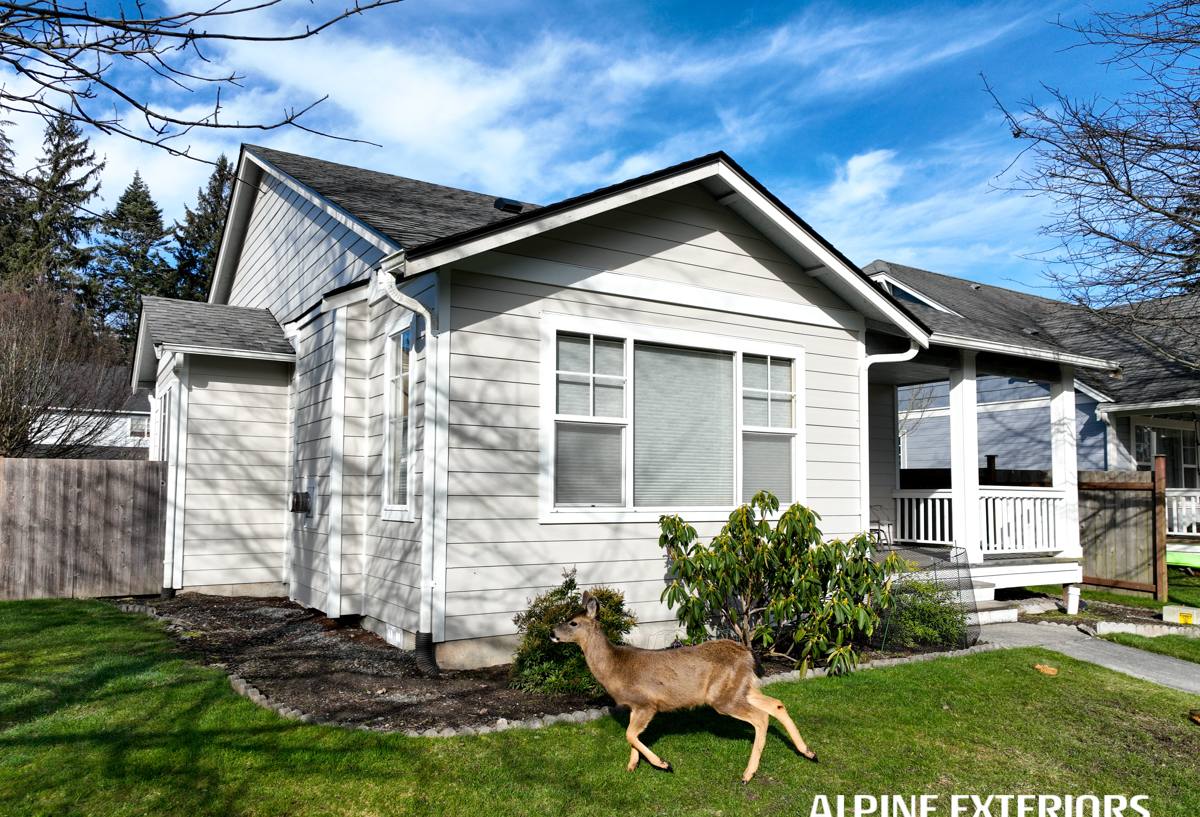
Salt Air: Slow, Steady, and Easy to Underestimate
Salt air doesn't destroy a house overnight. What it does is corrode metal fasteners and flashing faster than inland exposure would, and it can accelerate the breakdown of finishes that weren't engineered to resist it. Paint film that would last eight or nine years inland may start chalking, fading, or peeling sooner on a home with regular salt exposure. Caulk joints dry out and crack faster. Even a well-built house can look tired ahead of schedule if the exterior materials and hardware weren't chosen with that exposure in mind.
This is one of the practical reasons we standardized on James Hardie fiber cement siding rather than offering a menu of products. Hardie's ColorPlus finish is a factory-applied, baked-on coating engineered to hold color and resist the kind of UV and moisture stress that coastal air produces — it's a fundamentally different approach than field-applied paint on wood or engineered wood substrates, which depends heavily on how well it was primed and maintained after installation.
Driving Rain and Whatcom County's Wet-Weather Pattern
Whatcom County gets a lot of rain, but it's the wind-driven rain events — the ones where water is pushed horizontally into wall assemblies rather than sheeting straight down — that cause the most damage to siding systems over time. Water finds gaps: unsealed seams, poorly lapped joints, trim that wasn't flashed correctly, or house wrap that was compromised during installation. Once moisture gets behind siding and can't dry out, you're looking at rot, mold, and eventually structural repair, regardless of how good the siding material itself is.
This is why installation quality matters as much as material choice. Fiber cement siding installed with the wrong fastener pattern, insufficient clearance at grade, or missing kick-out flashing at roof-wall intersections can still fail — not because the product is bad, but because the assembly wasn't built to shed water correctly. We install to James Hardie's published specifications: proper starter strips, correct nailing patterns, sealed and flashed joints, and clearance at the foundation and roofline. That discipline matters more in a wet, wind-exposed area like Edgemoor than it does somewhere drier.
The Long Moss Season
Whatcom County's cool, damp climate and heavy tree cover — common on Edgemoor's wooded lots — create ideal conditions for moss and algae growth on roofs, decks, and north-facing siding for much of the year. Moss holds moisture against whatever it's growing on, which is a problem for wood decking, wood-based siding products, and asphalt roofing alike. On a roof, moss under shingles traps water and can shorten the roof's service life. On a deck, moss makes boards slick and accelerates surface wear. On siding, sustained moisture behind a moss or algae layer is exactly the kind of slow, hidden damage that's expensive to catch late.
Fiber cement doesn't feed moss and mildew the way wood-based products can, and it doesn't absorb moisture into the material itself. That doesn't mean an Edgemoor home is maintenance-free — shaded roofs and decks still need periodic cleaning — but it does remove one of the bigger long-term liabilities that comes with wood siding or engineered wood siding in a shaded, moisture-heavy environment.
Why We Only Install James Hardie
We get asked why we don't offer vinyl, LP SmartSide, cedar, primed spruce, or other fiber cement brands like Allura or Cemplank. The honest answer is that after years of doing exterior work in this climate, we settled on one product line because it consistently performs the way we need it to in conditions like Edgemoor's:
- Non-combustible core — fiber cement doesn't burn, unlike wood-based siding products, which matters for wildfire-adjacent risk in the broader region as well as everyday fire safety.
- Climate-engineered product lines — Hardie manufactures HZ10 and HZ5 formulations specifically for different moisture and freeze exposure zones, rather than a single formulation for the whole country.
- Factory-applied ColorPlus finish — a baked-on finish that resists fading and chipping better than field-applied paint, backed by its own finish warranty separate from the substrate warranty.
- Moisture resistance — fiber cement doesn't swell, rot, or delaminate the way some wood-based composite sidings can when water gets behind them or into cut edges.
- Transferable warranty — a real asset if a home changes hands, which matters in a desirable, waterfront-adjacent neighborhood where resale is often part of the picture.
That doesn't mean the products we don't install are worthless — vinyl is inexpensive and low-maintenance in mild conditions, and cedar has genuine aesthetic appeal that some homeowners specifically want. But we'd rather stand behind one product system we trust completely in this specific climate than offer several and let a homeowner guess which one is right for a house near the water.
Roofing, Windows, and Decks: The Rest of the Exterior Envelope
Siding is only part of how a house handles Edgemoor's weather. We also handle roofing, window replacement, and deck construction, because an exterior only performs as a system — a new roof means nothing if water is getting in around old, failed window flashing, and new siding won't stop moisture problems caused by a compromised roof.
Roofing
In a shaded, moss-prone area, roof material choice and ventilation matter as much as the shingle brand. We look at attic ventilation, underlayment quality, and flashing details around chimneys and valleys — the places where driving rain and moss-trapped moisture cause the most trouble.
Windows
Older windows are a common source of the drafts and moisture intrusion homeowners notice long before they think to blame the windows themselves. Replacement windows with proper flashing integration into fiber cement siding close off one of the more common leak points in an older exterior.
Decks
Wooded, waterfront-adjacent lots mean decks deal with shade, moss, and moisture more than sun exposure. Proper board spacing, ledger flashing, and material choice all affect how well a deck sheds water and resists the moss buildup that's common under tree cover in this part of Whatcom County.
What It Costs and What Drives the Number
Every Edgemoor home is different — lot size, tree cover, access, and the condition of what's being replaced all affect the final number. The table below outlines the main factors that move a project's cost up or down, without pretending to give a one-size-fits-all price.
| Factor | Why It Matters |
|---|---|
| Home size and wall complexity | More square footage and more corners, gables, and trim details mean more material and labor |
| Existing siding removal | Tear-off and disposal of old siding, especially if it concealed water damage, adds time and cost |
| Site access | Wooded or sloped lots common in Edgemoor can slow staging and material handling |
| Trim and detail level | Board-and-batten, shakes, or custom trim profiles cost more than standard lap siding |
| Underlying repairs | Rot, damaged sheathing, or flashing failures found during tear-off need to be fixed before new siding goes on |
| Paired projects | Combining siding with roofing, windows, or a deck can reduce total mobilization and access costs versus separate projects |
What to Expect From the Process
A siding project on a home in Edgemoor generally follows the same core steps, though the sequence and pace depend on the scope of work and what's found once the old siding comes off.
- On-site evaluation of existing siding, trim, flashing, and any signs of moisture damage
- Written estimate outlining scope, product selection, and timeline
- Tear-off of old siding and inspection of the sheathing and house wrap underneath
- Repair of any rot or damaged framing found during tear-off, before anything new goes on
- Installation of house wrap, flashing, and James Hardie siding per manufacturer specification
- Final trim, caulking, and touch-up work
- Walkthrough to review the finished work
Why a Local Crew Matters
A crew that works regularly in Whatcom County understands things a traveling or out-of-area contractor might not: how the wind typically drives rain against a wall on a waterfront-adjacent lot, which roof-wall intersections tend to trap moss and moisture, and how tree cover on a wooded property affects drying time after a job. That local knowledge shows up in the small decisions — flashing details, fastener choice, clearance at grade — that determine whether an exterior holds up for thirty years or needs attention again in ten.
It also means being reachable after the job is done. If a question comes up two years down the road, you're calling a company that's still working in the same neighborhood, not chasing down a contractor who moved on to another region.
If you're weighing siding, roofing, window, or deck work on an Edgemoor home, we're glad to take a look and talk through what we see — no pressure, no obligation. Reach out below for a free estimate.