 Sudden Valley
 Siding in Acme: Built for a Wet, Wooded Corner of Whatcom County
Acme sits in the foothill country of Whatcom County, where the South Fork Nooksack drainage, dense timber, and the damp marine air moving in off Puget Sound combine to create some of the more demanding exterior conditions in the region. Homes here don't just get rained on — they sit under tree canopy for months at a stretch, catch runoff and splashback off saturated ground, and rarely get a hard, fast dry-out between storms. That combination is exactly what breaks down exterior siding faster than almost anything else in the Pacific Northwest.
Sudden Valley Siding works throughout this part of Whatcom County, and Acme's climate profile — driving rain, long moss seasons, and persistent moisture load — shapes how we approach every siding, roofing, window, and deck project we take on out here. We install one siding product on homes in this area: James Hardie fiber cement. That's not a marketing position, it's a response to what we've seen happen to other materials in exactly this kind of environment.
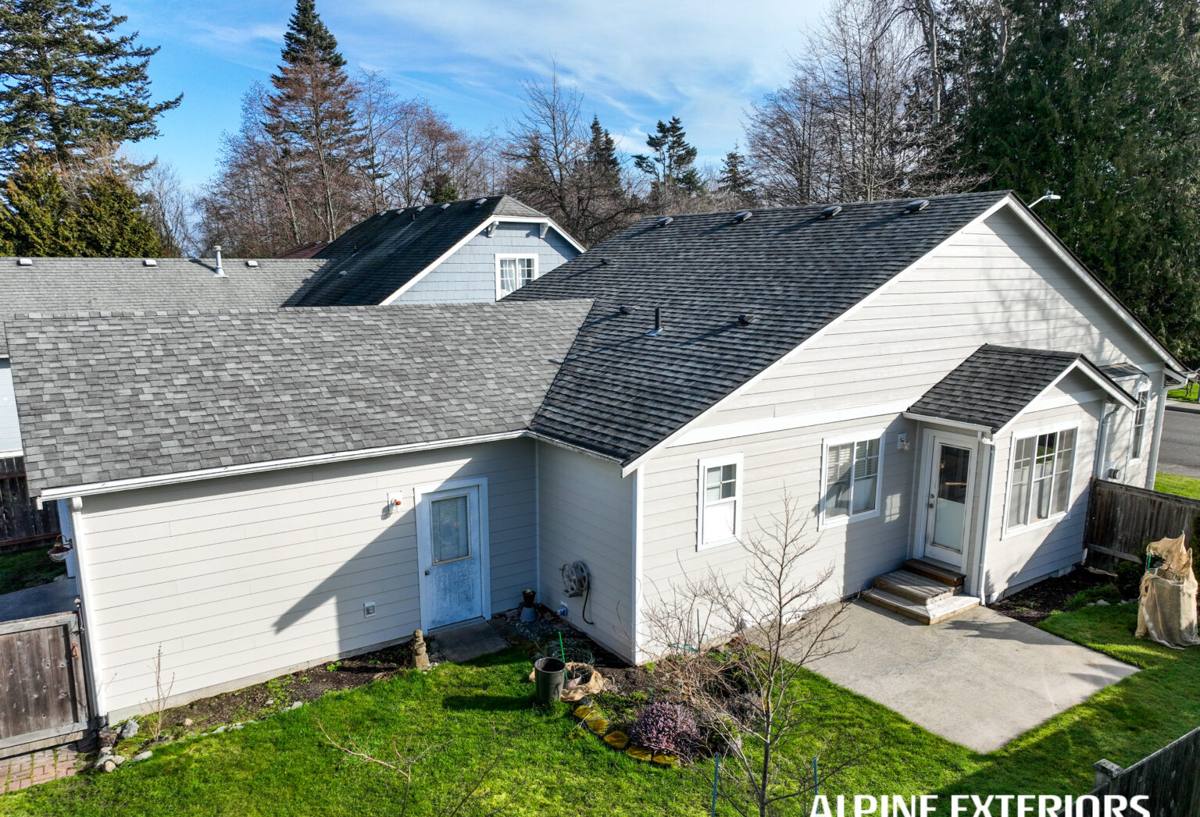
What Acme's Climate Actually Does to a House
Driving Rain and Wind-Driven Moisture
Storms moving through the foothills don't fall straight down — wind pushes rain sideways into wall assemblies, especially on the west- and south-facing elevations of a home. Over years, wind-driven rain finds every seam, lap joint, and fastener penetration that wasn't detailed correctly. Siding material matters less here than installation quality, but the material still has to be able to tolerate repeated wetting without swelling, warping, or losing its bond to whatever finish is on it.
The Moss and Algae Problem
Acme's tree cover and valley humidity mean surfaces that don't get direct sun for much of the year stay damp far longer than open, exposed sites. That's ideal growing conditions for moss, algae, and mildew. On porous or textured siding, organic growth can work into the surface itself, not just sit on top of it — which means cleaning it off can also mean scrubbing away the finish underneath. A siding product that resists moisture absorption at the surface holds up dramatically better under this kind of pressure.
Slow Dry-Out Between Storms
In a lot of the country, siding gets wet, then gets several dry, sunny days to fully release that moisture. In Acme's forested, valley-shaded lots, that dry-out window is often shorter and less complete. Materials that absorb water and hold onto it are working against a losing battle here — repeated wet/dry (or worse, wet/never-fully-dry) cycling is what drives rot, delamination, and paint failure over time.
Why We Standardized on James Hardie for Homes Like These
James Hardie fiber cement is engineered specifically around moisture resistance and dimensional stability — it doesn't absorb water the way wood-based products do, and it won't swell, cup, or delaminate from repeated wetting the way some engineered wood sidings can. For a property in Acme sitting under tree cover with a long annual moss season, that's the single most important performance trait a siding product can have.
Hardie's ColorPlus factory finish is baked on under controlled conditions, which gives it stronger, more consistent adhesion than field-applied paint — meaning the color layer itself resists the kind of moisture-driven peeling and cracking that shows up first on shaded, damp-prone walls. Hardie also offers HZ5 product lines engineered for harsher climate zones, which is a relevant option for properties in exposed or particularly wet parts of the Acme area.
None of this means Hardie is maintenance-free. Fiber cement still needs to be installed to spec — correct clearances, proper flashing, factory-cut and factory-primed edges sealed where required — and it still benefits from periodic washing to keep moss and algae from taking hold. But the material itself isn't the weak link in that system the way some alternatives are.
Products We Don't Install, and Why
We get asked from time to time about vinyl siding, LP SmartSide, and other engineered wood or fiber cement alternatives like Cemplank or Allura. We don't install any of them, and we're upfront about why:
- Vinyl siding can warp, crack, or become brittle with age, and it doesn't hold paint or take repair well — on a property with heavy tree fall and physical impact risk from limbs, that's a real durability concern.
- LP SmartSide and other engineered wood products use a wood-strand core. Under sustained moisture exposure — exactly what a shaded, valley-bottom lot delivers — any breach in the factory coating or field-cut edge sealing becomes a path for water into that core, and swelling or edge deterioration can follow.
- Cemplank and Allura are also fiber cement, and they're reasonable products in general terms — but we've standardized our crews, our install details, and our warranty relationship around one manufacturer so we can guarantee consistency, rather than splitting expertise and inventory across several product lines.
This is a professional standard we hold ourselves to, not a claim that every other product is unusable everywhere. In Acme's specific climate, though, we think the trade-offs tip clearly in favor of fiber cement with a factory finish, and specifically toward the manufacturer we trust to back it.
Roofing, Windows, and Decks in the Same Conditions
Siding is only one piece of how a home in Acme holds up. The same moisture load that drives our siding recommendation affects the rest of the exterior:
- Roofing: Moss on a roof isn't just cosmetic — root structures can lift shingle edges and hold moisture against the roof deck, shortening the life of the system underneath. Roofs under heavy canopy need attention to ventilation and moss prevention as much as the shingle material itself.
- Windows: Wind-driven rain finds poorly sealed window flashing fast. Old or improperly flashed windows are one of the most common sources of hidden wall moisture we find when we open up siding on older homes in this area.
- Decks: Ground-level and shaded decks in Acme deal with the same slow dry-out problem as siding. Material choice, gapping, and drainage underneath the deck all matter more here than they would on a sun-exposed, open lot.
We look at these systems together, not in isolation, because on a property like the ones common in Acme, moisture problems rarely stay contained to a single component.
Comparing Siding Options for an Acme Property
| Factor | Vinyl | Engineered Wood (LP SmartSide) | James Hardie Fiber Cement |
|---|---|---|---|
| Moisture absorption | Low, but seams/gaps let water behind panels | Wood-strand core vulnerable if coating is breached | Very low; cement-based core doesn't swell |
| Moss/algae resistance | Surface growth, can be pressure-washed but panels are impact-fragile | Growth can hold moisture against coated surface | Resists surface growth well; periodic washing keeps it clean |
| Finish durability | Can fade, chalk over time | Field or factory finish, variable long-term adhesion | Factory-baked ColorPlus finish, strong long-term adhesion |
| Fire performance | Combustible | Combustible (wood-based) | Non-combustible |
| Typical warranty structure | Varies widely by manufacturer | Manufacturer warranty, terms vary | Strong transferable manufacturer warranty |
What a Siding Project Looks Like in This Area
Every home we look at in Acme gets evaluated for the specific conditions of its lot — how much canopy cover it has, which walls take the most wind-driven rain, and what shape the existing siding, flashing, and trim are already in. A rushed estimate that skips this step tends to produce a rushed installation, and in a climate this unforgiving, installation quality is at least as important as the material itself.
What to Expect from a Local Crew
- An on-site walk-around that looks at drainage, tree cover, and existing moisture damage, not just a measurement for panels
- Clear explanation of where and why flashing, house wrap, or trim details need attention before new siding goes up
- A written estimate that separates material, labor, and any repair work uncovered once old siding comes off
- Installation to James Hardie's published specifications — correct fastening, clearances, and joint treatment
- A realistic maintenance conversation: what upkeep (if any) the home will need going forward, and how often
Why a Local Crew Matters Here
Whatcom County's foothill communities aren't interchangeable with a subdivision on flat, open ground. A crew that mostly works in dry, exposed conditions can miss the details that matter in a shaded valley lot — the extra care around ground clearance, the flashing details that matter more under constant drip-edge moisture from overhanging trees, the timing considerations for working around a longer wet season. We work this area regularly, which means we're not guessing at how a project needs to be sequenced around Acme's weather patterns, and we're not learning on the job what this climate does to an exterior over time.
Get a Straightforward Estimate
If your home in Acme is dealing with moss buildup, moisture staining, or siding that's simply reaching the end of its useful life, we're happy to take a look and give you an honest assessment — no pressure, no inflated urgency. Use the form below to request a free estimate, and we'll walk you through what we see and what we'd recommend.