 Sudden Valley
 Building Exteriors for Life on Lake Whatcom
Homes around Lake Whatcom sit in one of the more demanding microclimates in Whatcom County. The lake moderates temperatures but also holds moisture in the air long after a storm has passed, and the surrounding tree cover means many homes spend a good part of the year in shade. Add in the driving rain that comes off the Puget Sound lowlands and the salt-tinged marine air that reaches inland from Bellingham Bay, and you have an exterior environment that punishes weak siding, trim, and roofing choices faster than it would in a drier part of the state.
We work on homes throughout Sudden Valley and the Lake Whatcom shoreline regularly enough to know the patterns: north-facing walls that never fully dry out, roof valleys that collect needle litter and hold water, and window trim that takes on moss and mildew years before the rest of the house shows its age. None of this is unusual for the area. It's just what a lake, a forest canopy, and a wet regional climate do to a building envelope over time.
What the Lake Whatcom Climate Does to Siding
Moss and Algae Season Runs Long
In much of the country, moss is a minor cosmetic issue. Around Lake Whatcom, it's a structural consideration. Shaded, moisture-retentive walls and roof lines can grow moss and algae for eight or nine months of the year. On wood-based siding products, that moss holds water directly against the substrate, and sustained moisture contact is what eventually leads to soft spots, delamination, and paint failure. On fiber cement, moss is still a maintenance item, but it isn't a structural threat, because the material itself doesn't absorb and swell the way wood or wood-fiber composites do.
Driving Rain and Wind-Driven Moisture
Storms that track through the Puget Sound lowlands often hit Whatcom County at an angle, driving rain sideways into wall assemblies rather than letting it run straight down. That matters more than most homeowners realize. Wind-driven rain finds every gap in caulking, every undersized flashing detail, and every seam where two pieces of siding meet. A siding installation that looks fine on a calm day can still leak during a windstorm if the water management details underneath weren't done correctly.
Salt Air and Corrosion
Lake Whatcom itself is fresh water, but the broader region isn't far from Bellingham Bay and the Salish Sea, and salt-laden air does travel inland, especially during winter storm patterns. Salt accelerates corrosion on fasteners, flashing, and any metal trim components. It also speeds up the breakdown of lower-grade paint films on siding, which is one of the reasons factory-applied, baked-on finishes hold up so much better here than field-applied paint.
Why We Standardized on One Siding Product
We install James Hardie fiber cement siding exclusively. We don't offer vinyl, LP SmartSide, cedar, primed spruce, Cemplank, or Allura, and that's a deliberate decision based on what we've seen happen to exteriors in this specific climate over years of service work, not a sales preference.
Vinyl siding is inexpensive and low-maintenance in dry climates, but it expands and contracts significantly with temperature swings, and in a region with sustained damp conditions and long moss seasons, seams and J-channels tend to trap moisture rather than shed it. Wood-based products, including engineered wood siding, depend on an intact factory coating and careful field caulking to keep water out. Once moss or algae gets a foothold and the coating is compromised, wood-fiber substrates can swell, and that damage is often hidden until it's advanced. Cedar is a beautiful, traditional choice, but it requires ongoing staining or sealing, and in a shaded, moisture-heavy environment like the lake, that maintenance schedule gets demanding fast.
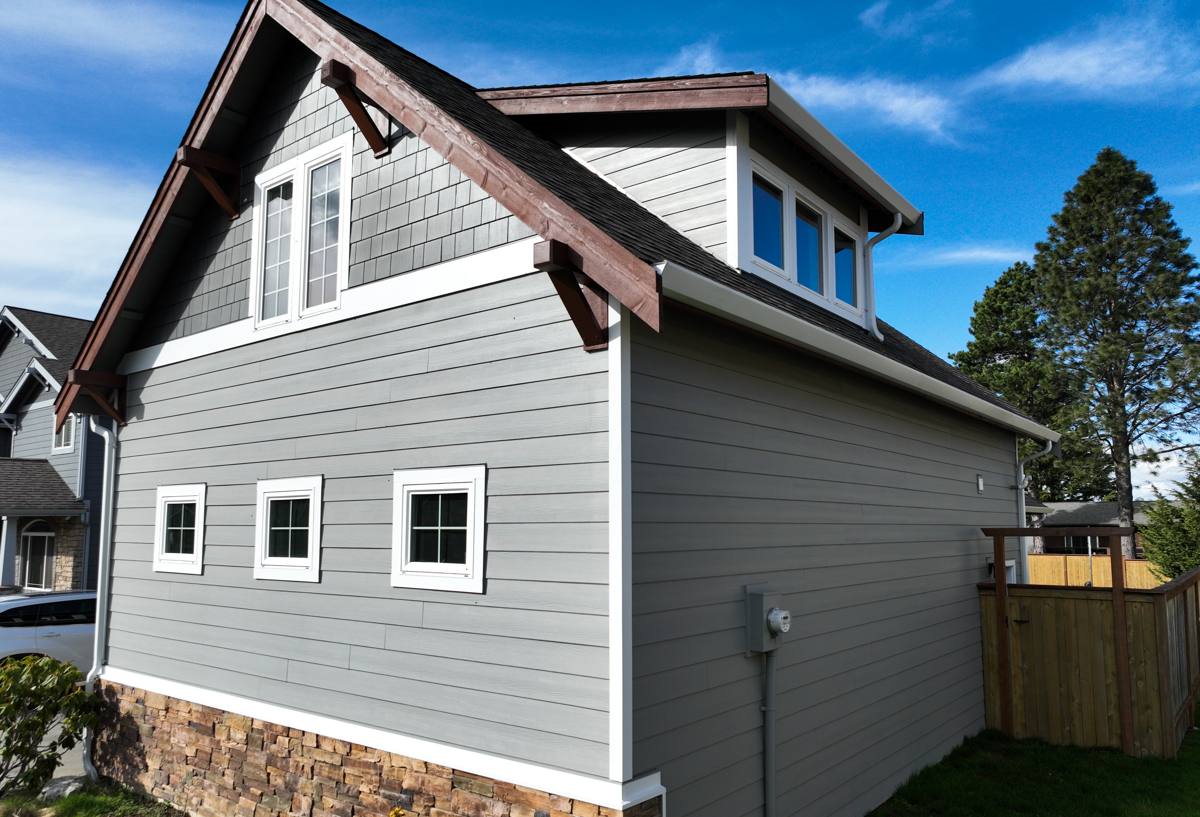
James Hardie fiber cement is cement, sand, and cellulose fiber. It doesn't absorb moisture the way wood does, it doesn't support rot, and it's non-combustible, which matters given the wildfire risk that's become part of summers in this region. The ColorPlus factory finish is baked on in a controlled environment, so it resists fading and chipping better than field-applied paint, and it's backed by a real manufacturer warranty on both the substrate and the finish. For a climate that combines moss, driving rain, and salt air, it's the product we're willing to put our name behind.
How the Main Siding Options Compare
| Product | Moisture Behavior | Maintenance | Fire Resistance |
|---|---|---|---|
| James Hardie fiber cement | Does not absorb or swell; sheds water | Occasional wash; factory finish holds color | Non-combustible |
| Vinyl | Seams can trap moisture; expands/contracts | Low, but seams degrade over time | Melts/deforms under heat |
| Cedar | Absorbs moisture without upkeep | Regular staining or sealing required | Combustible |
| Engineered wood (LP SmartSide) | Vulnerable if coating is compromised | Coating and caulk need monitoring | Combustible |
Roofing, Windows, and Decks Around the Lake
Siding is only part of the exterior envelope, and around Lake Whatcom the same climate pressures show up in roofing, windows, and decking. We handle all four trades, which matters here because moisture problems rarely respect trade boundaries.
Roofing
Shaded roof planes hold moss longer, and moss on a roof does more than look bad. It lifts shingle edges and holds water against the roof deck, which is how leaks start well before a homeowner sees a stain on the ceiling. Roof valleys under overhanging trees need regular attention, and flashing at chimneys, skylights, and wall intersections has to be done right the first time, because re-flashing after a leak has already gotten into the wall is a much bigger job.
Windows
Window flashing and the seal between window frames and siding are common leak points anywhere, but the driving rain that hits homes around the lake makes proper window flashing detail non-negotiable. We integrate window replacement and repair with our siding work so flashing and water management are handled as one continuous system rather than two separate jobs meeting at an unsealed edge.
Decks
Decks around Lake Whatcom face the same moss and moisture exposure as siding and roofing, plus standing water on horizontal surfaces, which is harder on materials than water running down a wall. Ledger board attachment and flashing where a deck meets the house are common failure points if not built or maintained correctly, and they deserve the same attention as any other part of the exterior envelope.
Why a Local Crew Matters Here
Lake Whatcom homes aren't all built the same way. Older cabins converted to year-round residences, newer construction on steeper shoreline lots, and homes tucked under heavy tree cover all have different exposure profiles even within the same small area. A crew that works this specific part of Whatcom County regularly knows which walls need extra attention to moss and moisture, how local permitting and shoreline considerations affect exterior work, and what actually holds up here versus what looks fine on a spec sheet from a drier climate. That local knowledge shows up in the details: flashing choices, fastener selection, and where we recommend extra water management even when it isn't strictly required by code.
What to Look for When Hiring for Exterior Work Near the Lake
- Manufacturer certification for the specific siding product being installed, not just general contracting experience
- A written scope that specifies flashing and water management details, not just "install siding"
- Local references or work history in Whatcom County, ideally around similar lake or shoreline conditions
- Clear communication about how moss, shade, and moisture were factored into the installation plan
- A real manufacturer warranty on materials, plus a workmanship warranty from the installing contractor
- Straight answers about maintenance expectations for the specific product being installed
Cost Factors for Lake Whatcom Properties
Every property around the lake is different, but a few factors consistently affect the scope and cost of exterior work here more than they might elsewhere.
| Factor | Why It Matters Locally |
|---|---|
| Tree canopy and shade | Increases moss growth and moisture retention, affecting prep work and long-term maintenance planning |
| Slope and lake access | Steeper shoreline lots can affect staging, scaffolding, and material access |
| Existing siding condition | Hidden moisture damage behind old siding sometimes isn't visible until removal begins |
| Window and trim integration | Coordinating siding with window flashing adds labor but prevents future leak points |
| Roof and deck condition | Addressing all exterior elements together avoids repeating scaffolding and access costs later |
If you're weighing exterior work on a home near Lake Whatcom, we're glad to come take a look and give you an honest read on what your specific property needs. Reach out for a free, no-pressure estimate using the form below.