 Sudden Valley
 Bellingham's Climate Is Hard on Siding — Here's Why
Homes around Bellingham sit in a tough spot for exterior cladding. You've got marine air rolling in off the water carrying salt, long stretches of driving rain from fall through spring, and shaded, damp conditions that keep moss and algae active for most of the year. Add in temperature swings between summer sun and winter cold snaps, and you have a climate that finds every weakness in a siding system — every unsealed seam, every panel that traps moisture, every finish that wasn't built to take a beating.
This isn't a theoretical concern. It's the reason certain siding products perform fine in drier inland climates but struggle here, and it's the reason we made the decision years ago to install only one product system on Bellingham homes: James Hardie fiber cement siding. Everything below explains what that decision is based on and what correct installation actually involves.
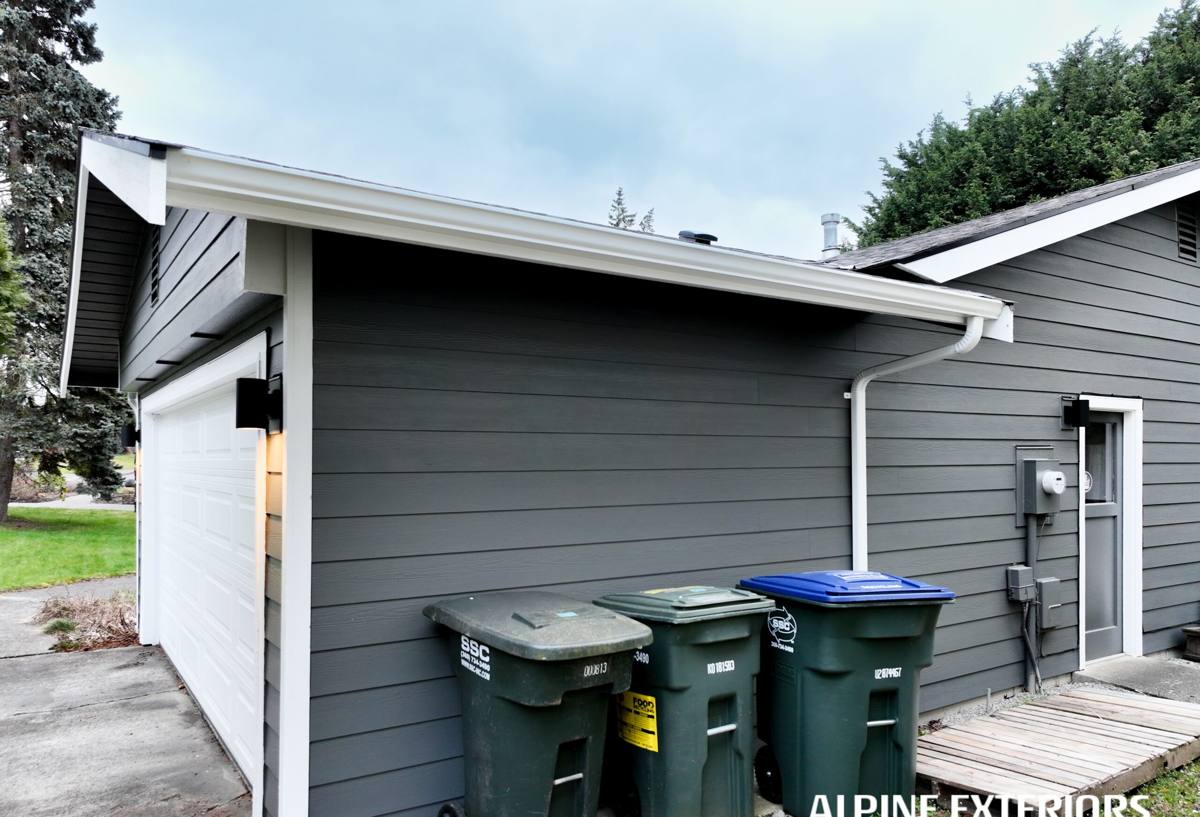
What Bellingham Homes Actually Need From Their Siding
Siding on a Whatcom County home isn't just a cosmetic layer — it's the first and most important line of defense against moisture intrusion, which is the single biggest threat to a building envelope in this region. A siding system here needs to do four things well:
- Resist moisture absorption over years of sustained damp exposure, not just shed a single rainstorm
- Hold paint and color without excessive fading, chalking, or peeling under UV and salt air exposure
- Stay dimensionally stable through freeze-thaw cycles and seasonal humidity swings
- Resist the buildup of moss, algae, and mildew that thrives in shaded, moist conditions
Wood-based and wood-fiber siding products can meet some of these requirements but tend to fall short on long-term moisture resistance, especially at cut edges, seams, and fastener penetrations — exactly the spots where Bellingham's rain finds a way in. Vinyl holds up to moisture fine but expands and contracts significantly with temperature swings and can crack or warp over time, and it doesn't hold paint at all if you ever want to change the look. James Hardie fiber cement is engineered specifically around moisture performance, which is why it's become the standard we build every Bellingham installation around.
Why We Only Install James Hardie Fiber Cement
We don't install LP SmartSide, vinyl siding, Cemplank, Allura, primed spruce, or cedar. That's a deliberate professional standard, not a lack of familiarity with those products — we know their strengths and their trade-offs, and for this climate the trade-offs matter more than the upfront savings.
James Hardie fiber cement is made from cement, sand, and cellulose fibers, which makes it non-combustible and dimensionally stable in a way that wood-based products can't match. It doesn't swell, rot, or provide a food source for pests. Hardie's HZ5 product line is specifically engineered for climates with sustained moisture exposure, and their ColorPlus factory-applied finish is baked on under controlled conditions rather than field-applied, which gives it far better adhesion and UV resistance than a job-site paint job. That finish carries a transferable limited warranty, which matters if you ever sell the house — a fresh paint job doesn't carry that kind of backing.
None of this means other products are junk. LP SmartSide has real advantages in weight and ease of handling. Cedar has a natural look many homeowners love. But when we weigh moisture behavior, maintenance burden, and long-term warranty coverage against Bellingham's specific climate, Hardie fiber cement is what we're willing to put our name behind.
How Hardie Compares to Other Common Options
| Factor | James Hardie Fiber Cement | Vinyl | Wood / Wood-Fiber (LP, Cedar) |
|---|---|---|---|
| Moisture resistance | Engineered for sustained damp climates | Sheds water well, but seams can trap moisture behind panels | Vulnerable at cut edges and fastener points over time |
| Fire resistance | Non-combustible | Can melt or deform near heat sources | Combustible |
| Finish durability | Factory-baked ColorPlus finish | Color is through-body but limited to lighter tones | Requires field-applied paint or stain, reapplied regularly |
| Dimensional stability | Minimal expansion/contraction | Expands and contracts noticeably with temperature | Swells and shrinks with moisture absorption |
| Typical maintenance | Occasional wash, repaint on a much longer cycle | Low, but cracks/fades and can't be repainted well | Regular repainting, moisture and pest monitoring |
What Correct Siding Installation Actually Involves
The siding itself is only part of the equation — how it's installed determines whether it performs for twenty-plus years or starts causing problems within five. On a Bellingham home, correct installation means:
Weather-Resistive Barrier and Drainage Plane
Before a single piece of siding goes up, the wall needs a properly lapped weather-resistive barrier and, ideally, a drainage plane that lets any moisture that does get behind the siding escape rather than sit against the sheathing. This is the step that matters most in a climate with as much sustained rain exposure as ours, and it's the step that gets rushed or skipped most often on lower-quality installs.
Flashing at Every Penetration
Windows, doors, vents, hose bibs, light fixtures — every penetration through the siding is a potential entry point for water. Proper flashing, installed and lapped correctly with the weather-resistive barrier, is non-negotiable. This is detail work that takes time, and it's exactly the kind of step that separates a durable installation from one that looks fine for a year or two and then starts showing rot at the trim.
Fastening and Clearances to Hardie Spec
James Hardie publishes specific installation requirements — fastener type and spacing, minimum clearance from grade, roof lines, and decks, and gapping at butt joints. Installing outside of spec doesn't just risk cosmetic issues; it can void the manufacturer's warranty. We install to Hardie's published specifications on every job, which is also part of why we're comfortable standing behind the work.
Field-Cut Edge Sealing
Any time a Hardie board is cut on site — around a window, at a corner, at the end of a run — that cut edge needs to be sealed per Hardie's guidance before it's installed. Skipping this step is a common shortcut that undermines the product's moisture resistance right at the seams, which is exactly where Bellingham's driving rain tests a wall hardest.
Moss, Algae, and the Long Wet Season
Whatcom County's moss season isn't a minor cosmetic issue — sustained moisture and organic growth on siding can hold dampness against the wall assembly for extended periods, which accelerates wear on trim, caulking, and paint. A few things help manage this over the life of the siding: keeping vegetation trimmed back from exterior walls so airflow and sunlight can reach the siding, maintaining gutters so runoff isn't sheeting down the wall face, and periodic gentle washing to keep organic growth from establishing. Hardie's factory finish resists staining better than field-applied paint, but no siding product is immune to moss in a climate this wet — good site conditions and basic upkeep still matter.
Our Installation Process
We approach every Bellingham siding installation the same methodical way:
- Assessment: We walk the exterior, check the condition of the existing wall assembly, and identify any moisture damage, rot, or drainage issues that need to be addressed before new siding goes up — installing over hidden problems just locks them in.
- Product and color selection: We walk you through Hardie's plank, shingle, and panel options and ColorPlus color range so the final look fits the home and the neighborhood.
- Prep and weather barrier installation: Removal of old siding where needed, sheathing repair if called for, and correct installation of the weather-resistive barrier and flashing details.
- Siding installation to spec: Fastening, clearances, joint treatment, and edge sealing all done to Hardie's published requirements.
- Final walkthrough: We review the finished work with you and make sure everything meets both our standard and yours.
Why Hiring a Crew That Works Bellingham Already Matters
Siding installation isn't a one-size-fits-all trade. A crew that regularly works Bellingham and the wider Sudden Valley area already understands the local conditions — how much rain exposure a given wall orientation typically sees, where moss tends to establish first, how coastal air affects fastener and flashing choices over time. That local pattern recognition shows up in the small decisions made on site, the ones that don't show up on a quote but show up in how the siding performs ten years down the road. It also means we're a known, local business if you ever need warranty support or have a question after the job is done — not a crew that did one job in your area and moved on.
Get a Free, No-Pressure Estimate
If your Bellingham home's siding is showing its age, or you're planning ahead for a replacement, we're happy to take a look and walk you through what James Hardie fiber cement siding would involve for your specific home — no pressure, no obligation. Use the form below to request a free estimate.