 Sudden Valley
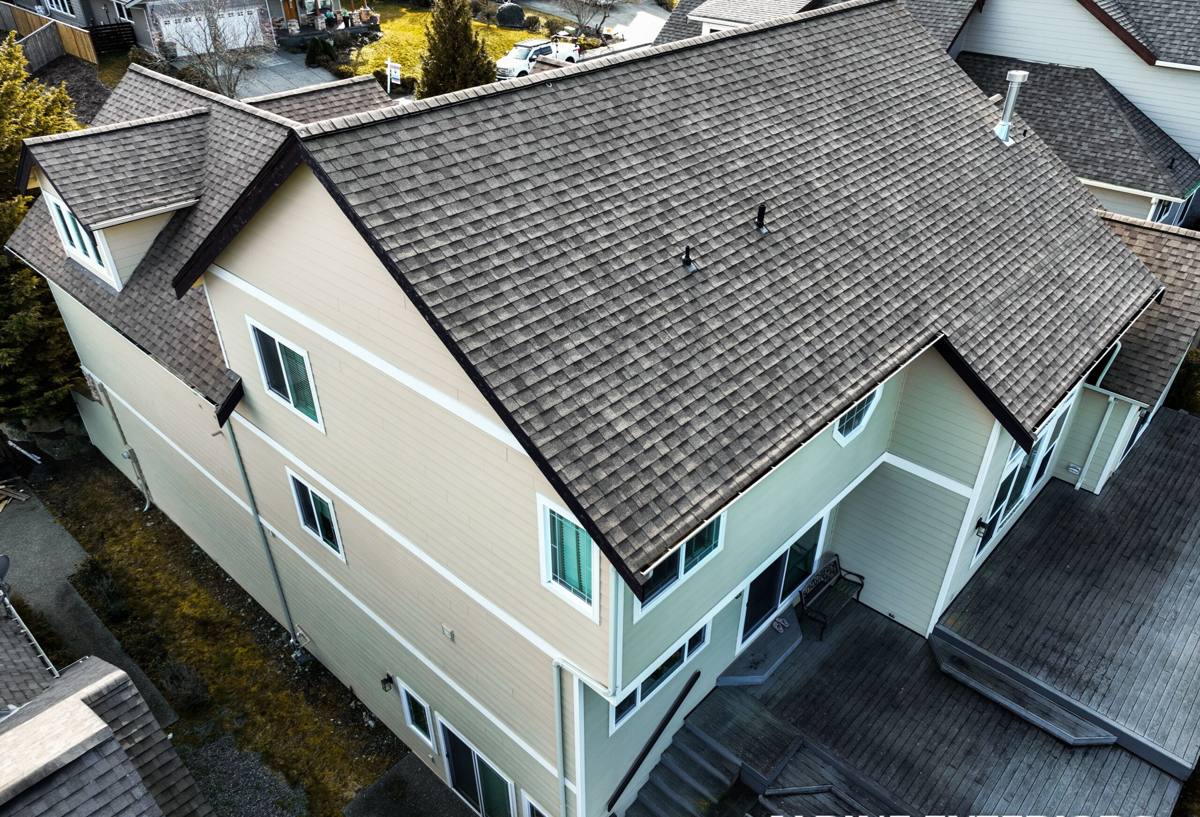
 Happy Valley sits in the same shaded, lake-influenced pocket of Whatcom County as the rest of the Sudden Valley area, and that setting shapes what a window replacement actually needs to hold up to here. Homes tucked under tree cover, set at odd angles to catch what light does reach the lot, or added onto over the years rarely have window openings that match a manufacturer's standard size chart. When that's the case, "custom" isn't an upsell — it's the only way to get a window that actually fits the opening and seals correctly against the weather this area sees.
We treat custom window work as its own category of job, separate from a straightforward stock swap. The measuring, the structural check, the flashing sequence, and the lead time all change once a window isn't a standard off-the-shelf size or shape. In a neighborhood like Happy Valley, where driving rain and a long moss season put real pressure on anything that isn't sealed and flashed correctly, those details are what decide whether a window performs for decades or starts showing problems in a few years.
Why Homes in Happy Valley Often Need Custom Windows, Not Stock Replacements
A handful of patterns show up again and again in this part of Whatcom County. Older homes were framed to whatever dimensions made sense at the time, long before manufacturers settled on today's common sizes, so a true like-for-like replacement often means ordering custom rather than forcing a stock unit into an opening it wasn't made for. Additions and remodels create new rough openings that don't match anything original to the house. And on lots with tree cover or a partial lake view, it's common to find picture windows, bay windows, or oversized units that were sized for the sightline rather than for what happens to be easy to stock.
None of that makes a project unusual for us — it's routine work in this community. It does mean the job starts with an honest look at the actual opening and a clear conversation about lead time, since a true custom unit is built to order rather than pulled off a shelf the next day.
What the Local Climate Does to a Window Installation
Driving Rain and Wind Exposure
Whatcom County's rainfall pattern is steady rather than dramatic, but the terrain around Sudden Valley and Happy Valley means wind can push that rain sideways into a wall rather than letting it run straight down. On a hillside lot, different elevations of the same house can take very different amounts of wind-driven moisture depending on orientation and how exposed a given wall is to the prevailing weather. That matters most at the window opening itself, since flashing has to shed water outward and downward even when it's arriving at an angle instead of falling straight.
Heavy Shade and a Long Moss Season
Tree cover is heavy through much of this area, and it's common for a home to have at least one wall face that gets very little direct sun for most of the year. Shaded surfaces stay damp longer after every rain, which is exactly the condition that supports moss, algae, and mildew growth on trim, sills, and siding for a large part of the calendar. A window installation that doesn't account for that — sills without enough slope, caulk used in place of proper flashing, trim that traps moisture against the wall — tends to show soft wood or staining well before it should.
Where the Real Risk Lives
The glass and frame on a well-made custom window are rarely the first thing to fail. It's the transition points: where a bay window's roof ties into the main wall, where a wide sill meets the siding below it, where a reframed or resized opening meets the original wall assembly. Those spots take real time to flash correctly, and they're also the spots that get shortcut on a rushed job, because doing them right doesn't show up in a walkthrough — only in how the wall performs three or four winters later.
The Types of Custom Window Work We See in This Part of Whatcom County
- Non-standard replacement sizes — matching an opening in an older home that predates today's standard sizing
- Bay and bow windows — projecting units that add interior space and a wider view, but need their own roof, support, and flashing system
- Picture and large-format windows — fixed units used to open up a lake or tree-line view, with more glass area to manage structurally
- Reframed or resized openings — where the existing rough opening needs correction before any new unit will fit and seal properly
- Matched sets for additions — new windows sized to line up correctly with the sightlines of existing windows on an older home
- Egress and code-driven openings — bedroom or living space additions where the minimum opening size is set by code, not preference
What a Correct Custom Window Installation Involves
Field Measurement and Ordering
Custom work starts with precise measurement of the actual opening, not a catalog lookup. We check for out-of-square or out-of-level conditions, which are common in older homes in this area, and account for what the finished trim and flashing will need for clearance. Because a true custom unit is built to order, this is also where we set realistic expectations on lead time — custom windows generally take longer to arrive than stock sizes, and we'd rather say that upfront than have it come as a surprise mid-project.
Opening Prep and Structural Considerations
Larger custom units, and bay windows especially, sometimes need structural support beyond what a standard opening was built for, since they carry more weight and project outward from the wall. We evaluate that during the initial assessment, not after demolition has already started. On older homes in this area, this step often turns up framing or flashing around the original opening that needs repair before a new unit can go in cleanly.
Flashing and Weatherproofing Sequence
This is the step that matters most given the exposure in Happy Valley. Every custom shape changes how flashing has to be sequenced — a bay window's roof needs its own weatherproofing separate from the wall flashing below it, a wide sill needs to shed water outward instead of letting it pool, and a resized opening needs new flashing tied cleanly into the surrounding wall rather than patched around the old detail. We build the flashing plan around the specific opening in front of us, not a generic template pulled from a manufacturer's installation sheet.
Trim and Finish Integration
Custom windows often sit in visually prominent spots on a home — a bay window facing the yard, a picture window centered on a tree line or lake glimpse — so the trim and finish work has to match the rest of the exterior cleanly. We plan that integration before the window arrives so the finished result looks intentional rather than added on as an afterthought.
Comparing Window Frame Materials for a Shaded, Wet Climate
There's no single "best" frame material for every custom window — it depends on the opening, the budget, and how exposed that particular wall is. Here's how the common options actually compare for a climate like this one:
| Material | Moisture Behavior | Maintenance | Cost Position | Where It Fits Best |
|---|---|---|---|---|
| Vinyl | Won't rot; performs well in damp, shaded conditions | Low — no painting or sealing needed | Most budget-friendly | Standard and moderately custom sizes on most homes |
| Fiberglass | Very stable through wet-dry and temperature swings | Low | Mid to upper range | Larger custom units and bay/bow windows needing dimensional stability |
| Wood, clad exterior | Good if the cladding is intact and detailed correctly; unclad wood struggles in constant shade | Moderate — cladding is low-maintenance, but any exposed wood needs attention | Upper range | Homes prioritizing a traditional interior wood look with an exterior that can take the weather |
| Aluminum | Durable frame but conducts cold, which can lead to interior condensation in a damp climate | Low | Varies | Specific architectural styles more than general residential replacement |
For most custom work in Happy Valley, we lean toward vinyl or fiberglass because they hold up to the moisture load here without the added maintenance burden of an exposed wood exterior. Where a homeowner wants a wood-look interior, we detail the exterior cladding carefully rather than leaving any wood surface exposed to a shaded wall.
What Drives the Cost of a Custom Window Project
Custom window pricing has more moving parts than a stock replacement, and the range is wide enough that a generic number isn't useful. What actually moves the price:
- Opening size and shape — a non-standard rectangle costs less to custom-order than a true bay, bow, or arched unit
- Frame material — vinyl sits at the lower end, fiberglass and clad-wood run higher
- Structural work — headers, bracing, or reframing add labor beyond the window unit itself
- Number of units — ordering several custom windows together on one project can improve per-unit pricing versus one-off orders
- Site access — homes with longer driveways or tighter staging areas, which is common on hillier lots in this area, can affect crew logistics and time on site
We walk through these factors on-site rather than quoting a number sight unseen, since two openings that look similar from the street can call for very different scopes of work once we're actually measuring and checking structure.
Why a Crew That Already Works Happy Valley and Sudden Valley Matters
A manufacturer's installation guidance is written for average conditions in a moderate climate. Custom windows in Happy Valley rarely fit that description, and neither does the exposure here — heavy shade, driving rain, and a long moss season stack the deck against a shortcut installation more than they would somewhere drier and more open. A crew that has actually measured odd-sized openings, framed bay windows, and flashed large view windows on this specific stretch of Whatcom County knows which parts of a manufacturer's guidance are non-negotiable here, and where extra time on flashing or sealant is worth it even when it isn't strictly required elsewhere.
It also matters on the paperwork side. Many properties in this area fall under a homeowners association with its own review process for exterior changes, and code-driven openings like egress windows need to meet Whatcom County requirements regardless of style preference. Sorting that out before ordering a custom unit — not after it arrives — saves real time and avoids paying twice for a window that doesn't clear approval.
Practical Checklist Before You Order
- Have the actual opening measured on-site rather than estimating from an old spec sheet or builder plan
- Ask how the contractor sequences flashing for your specific opening shape
- Check whether your property falls under an HOA or architectural review process before finalizing style or color
- Confirm current Washington contractor licensing and insurance
- Get a written scope of work and a realistic lead time before signing anything
- Ask how the window unit and the installation labor are each covered under warranty
If you're weighing a custom window for an older home in Happy Valley, planning an addition, or looking at a bay or picture window to make the most of a wooded or lake-adjacent lot, it's worth having someone look at the actual opening before you start pricing units. We offer free, no-pressure estimates for custom window projects in Happy Valley and the surrounding Sudden Valley area — use the form below to get a time on the schedule.