 Sudden Valley
 Deck Repair Built for Cordata's Wet Side of Whatcom County
Cordata homes sit in one of the wetter pockets of Whatcom County, and decks here take a beating that decks in drier climates never see. Between the driving rain that blows in off the water, the long stretch of gray, damp months that let moss get a foothold, and the salt-tinged air drifting through this part of Washington, an outdoor deck ages faster than most homeowners expect. A repair job that ignores those realities tends to fail again within a couple of seasons. One that accounts for them can add another decade or more of solid use to a deck that's currently showing its age.
We repair decks throughout the Sudden Valley Siding service area, and Cordata is a neighborhood we know well — the drainage patterns, the shade cover that keeps certain decks damp longer than others, and the kind of rot and fastener corrosion that tends to show up first in this climate. This page covers what a correct deck repair looks like here, how to weigh repair against replacement, and how our process works.
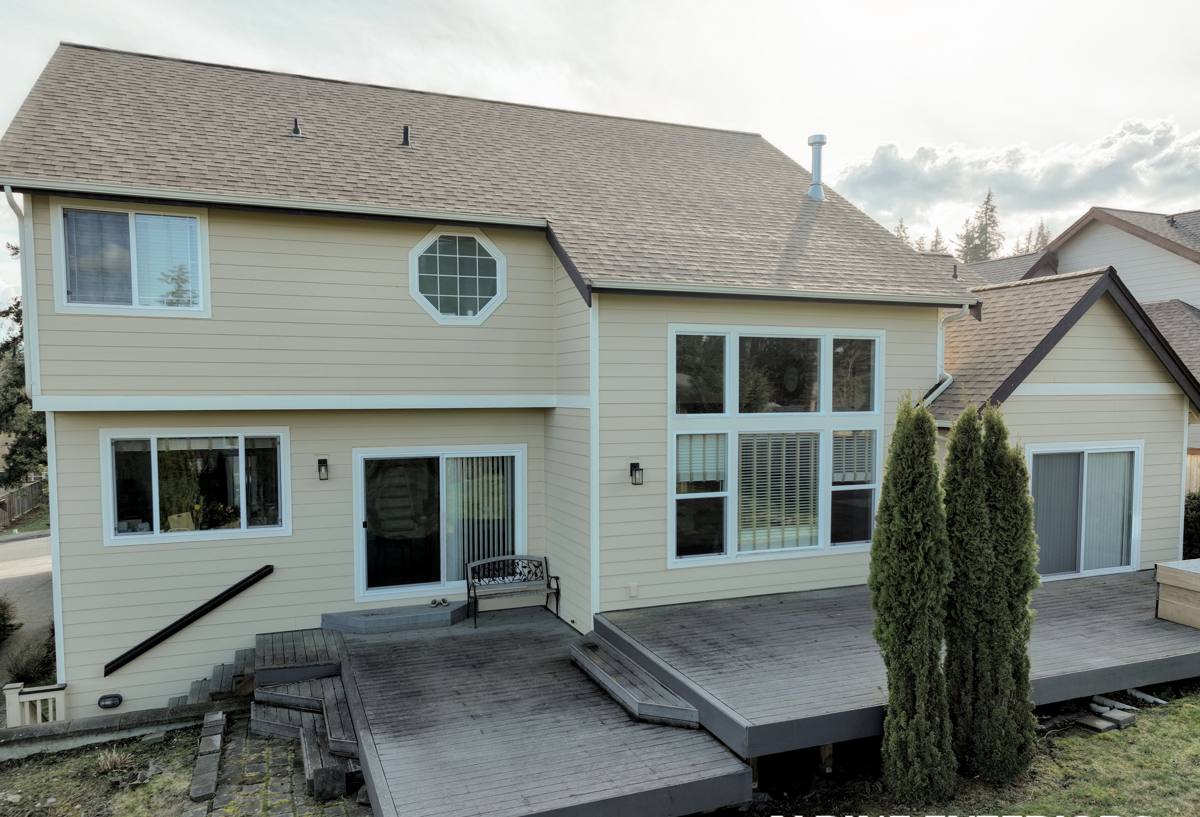
How Whatcom County Weather Attacks a Deck
Moisture and Rot
Whatcom County gets a long wet season, and a deck spends months at a time absorbing moisture it never fully dries out from between rain events. Water works into end grain, around fastener holes, and under any spot where two boards sit tight against each other. Once it's in, rot spreads from the inside out — which is why a deck can look fine on the surface while the framing underneath is already compromised.
Moss and Algae
The long moss season here isn't just a cosmetic problem. Moss and algae hold moisture against the wood surface, block the sunlight and airflow that would otherwise help boards dry, and make decking dangerously slick underfoot. Left alone through a few wet seasons, a mossy deck surface accelerates the exact rot process described above.
Salt Air and Fastener Corrosion
Homes closer to the water pick up salt-tinged air that speeds up corrosion in exposed metal — nails, screws, joist hangers, and railing hardware all corrode faster here than they would further inland. Corroded fasteners lose their grip long before the surrounding wood fails, which is a common reason a deck starts to feel spongy or slightly loose even when the boards themselves look okay.
Freeze-Thaw and Wood Movement
Whatcom County doesn't get brutal winters, but it gets enough freeze-thaw cycling to matter. Water that's soaked into a board expands when it freezes, working joints and fastener holes wider over time. Combined with the repeated wet-dry swelling and shrinking typical of this climate, that movement is what eventually loosens railings, cups boards, and opens gaps that let even more water in.
Signs Your Cordata Deck Needs Repair
Most deck problems in this climate start small and stay hidden until they're serious. Walk your deck and check for the following:
- Boards that feel soft, spongy, or spring back slowly when you step on them
- Visible moss, algae, or dark staining across the decking surface
- Nails or screw heads that have popped up or are visibly rusted
- Railings or stair posts that wiggle or feel less solid than they used to
- Gaps opening up between boards, or boards that have cupped or crowned
- A musty smell coming from underneath the deck
- Visible daylight or water staining where the deck ledger meets the house
- Peeling or flaking finish that hasn't been touched in several years
Any one of these on its own might be minor. Several at once usually means the moisture problem has been building for a while.
What a Correct Deck Repair Actually Involves
Structural Framing and Ledger Board
The ledger board — where the deck attaches to the house — is the single most important connection on the whole structure, and it's also the one most exposed to water running off the siding above it. A repair that only replaces surface boards while ignoring soft or rotted framing underneath is a repair that will need to be redone. We check joists, beams, and the ledger connection before we touch a single decking board.
Decking Boards and Fasteners
Individual boards get replaced on their own merits — there's rarely a reason to tear out an entire deck surface if only a portion of it has failed, as long as the framing underneath is sound. We use corrosion-resistant fasteners rated for the exposure this climate demands, since standard hardware is exactly what leads to the rust and popped nail heads described above.
Railings and Stairs
Railings and stair stringers take constant load and constant weather exposure, and they're a safety item, not a cosmetic one. A loose post almost always traces back to a rotted post base or a corroded fastener rather than a problem with the railing itself, so we address the connection point, not just the wobble.
Drainage and Moss Prevention
A repair that doesn't fix the underlying drainage or airflow problem is a repair that invites the same damage back. That can mean adjusting board spacing, clearing debris that's trapping moisture against the framing, or making sure water sheds away from the house rather than pooling near the ledger.
Repair or Replace? Cost Factors to Weigh
Not every deck problem calls for a full replacement, and not every deck is worth repairing. The table below covers the factors that typically decide which way it goes.
| Factor | Favors Repair | Favors Replacement |
|---|---|---|
| Framing condition | Joists and beams are solid; rot is limited to boards or railings | Structural rot in joists, beams, or the ledger connection |
| Deck age | Under 12-15 years, built to a reasonable standard | Original construction is old, undersized, or poorly built |
| Extent of damage | Isolated to specific boards, posts, or one section | Widespread across most of the surface and substructure |
| Footings and posts | Set properly, no movement or settling | Undersized, poorly set, or showing settlement |
| Budget goal | Extend usable life for a moderate cost | Want a longer-term fix and are open to a different layout or material |
As a broad range, targeted repairs on an otherwise sound deck often run a few hundred to a couple thousand dollars depending on scope, while a full deck replacement is a much larger project. We'll give you a straight answer on which category your deck falls into during the estimate, not an upsell.
Materials We Use for Deck Repairs
Material choice matters more here than in a drier climate, because whatever goes into a repair has to hold up to the same rain, moss, and salt air that damaged the original deck.
Pressure-treated lumber is our standard for framing and structural repairs — it's rated for ground and weather exposure, and it's the material most decks in this area were originally built with, which makes matching existing framing straightforward.
Cedar holds up well and looks good, but it's a softer wood that needs more consistent maintenance — regular sealing and cleaning — to keep performing in a climate this wet. We're upfront about that maintenance commitment before recommending it.
Composite decking is a solid option for surface board replacement where moss and moisture are the main recurring problem, since it doesn't absorb water or rot the way wood does. The trade-off is a higher upfront material cost and the fact that it can't be sanded, stained, or refinished the way wood can if the color fades or you want a different look down the road.
We'll walk through the honest trade-offs of each option for your specific repair rather than defaulting to whatever's easiest to install.
Our Deck Repair Process in Cordata
- Inspection. We check framing, the ledger connection, footings, decking, and railings — not just the visible problem you called about.
- Honest assessment. We tell you what's actually needed: a targeted repair, a larger repair, or whether replacement makes more sense.
- Written estimate. Scope and cost laid out clearly before any work starts.
- Repair work. Structural issues get fixed first, then decking, railings, and hardware.
- Cleanup and walkthrough. We clear debris and walk the finished repair with you before we consider the job done.
Why a Crew That Already Works in Cordata Matters
A deck repair done right the first time depends on understanding the conditions it has to survive, and that's local knowledge as much as it is carpentry skill. A crew that's worked on decks throughout this part of Whatcom County already knows which fastener grades hold up, where moss tends to build up fastest based on shade and slope, and what a ledger connection exposed to this much driving rain actually needs to hold up long-term. That's the difference between a repair that lasts and one you're calling someone back for in two years.
It also means faster, more accurate estimates. We're not guessing at how this climate treats a deck — we're working from what we've already seen on homes near yours in Cordata.
Keeping Your Repaired Deck in Good Shape
A good repair buys you time, but a little seasonal upkeep buys you a lot more of it in this climate:
- Sweep leaves and debris off the deck surface regularly, especially in fall
- Treat or clean moss buildup before it has a chance to spread across the whole surface
- Check railings and stair connections once a year for looseness
- Reseal or restain wood decking on the schedule appropriate to the product
- Keep gutters and downspouts clear so runoff isn't draining directly onto the deck or ledger
If you're not sure whether your Cordata deck needs a repair or you just want a second opinion before the wet season sets in, we're happy to take a look. Fill out the form below for a free, no-pressure estimate.