 Sudden Valley
 Building Decks for Edgemoor's Waterfront Climate
Edgemoor sits close enough to the water that homeowners deal with a different set of deck problems than someone building inland. Salt-laden air off the bay accelerates corrosion on fasteners and hardware. Driving rain off Bellingham Bay gets pushed sideways into ledger connections and railing posts that a calmer climate wouldn't stress the same way. And the long moss season here — often stretching from October through April — turns any deck surface that doesn't shed water and get sunlight into a slick, green problem within a year or two. A deck built without those three factors in mind will look fine the first summer and start failing by the third winter.
We've built and repaired decks all over Whatcom County, but Edgemoor's mix of exposure, tree cover, and slope toward the water means the details matter more here than in a lot of neighborhoods. This page covers what a correctly built custom deck in Edgemoor actually requires — not just the general advice you'd get from a national deck-building guide.
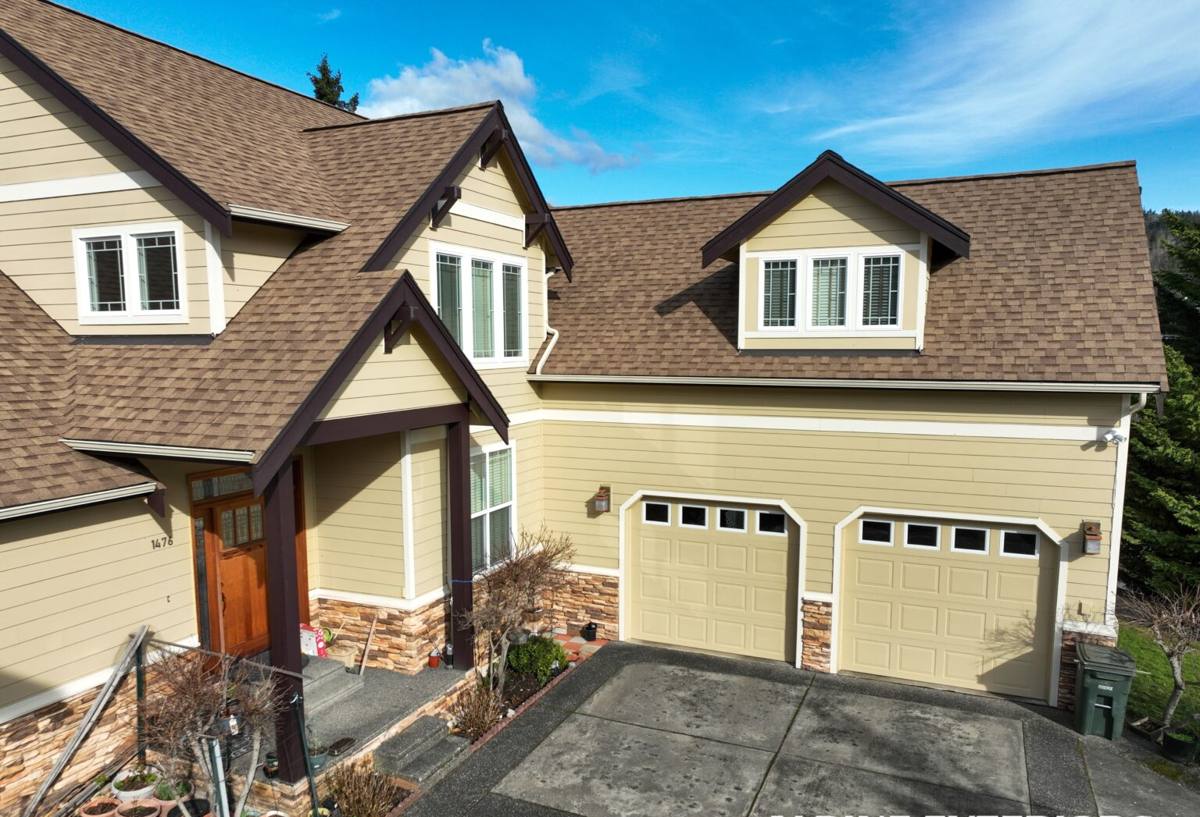
What Edgemoor's Climate Does to a Deck
Salt Air and Metal Fatigue
Even a few blocks back from the water, salt-carrying air accelerates rust on exposed fasteners, joist hangers, and hidden fastener systems. Standard electro-galvanized hardware corrodes faster near the coast than it would in a landlocked town twenty miles east. Once a fastener starts to rust, it loses holding strength long before the rust is visible from the surface, which is part of why structural connections deserve better hardware than code minimums require.
Driving Rain and Water Intrusion
Rain in this part of Whatcom County doesn't always fall straight down — wind off the water pushes it sideways into ledger boards, under railing base plates, and into any gap where flashing was skipped or done poorly. The ledger connection, where the deck attaches to the house, is the single most common failure point we find on older decks in this area, and it's almost always a flashing or fastening issue rather than a wood problem.
Moss, Shade, and Slow Drying
Tree cover and cooler, damp air mean deck surfaces here take longer to dry out after a storm than they would in a sunnier part of the county. That extended damp period is exactly what moss and algae need to take hold. On boards with tight grain or minimal gapping, moss can establish within a season and make the surface genuinely slippery — a real concern on stairs and near door thresholds.
What a Correctly Built Deck Requires Here
- Stainless steel or heavy hot-dip galvanized fasteners and hardware at all structural connections, not standard electro-galvanized hardware that wasn't rated for coastal exposure
- Proper ledger flashing that integrates with the house's existing water management, not just a bead of caulk behind the board
- Deck board spacing sized to allow real airflow and drainage, not tight-gapped for looks at the expense of drying time
- Footings sized and set below frost depth with attention to the actual soil and drainage on the lot, since slope toward the water can mean different runoff patterns than the lot next door
- Railing posts through-bolted to framing rather than face-mounted with lag screws alone, especially on any deck with meaningful elevation
- A decking material chosen for how it performs wet and shaded, not just how it looks on a sunny showroom sample
Choosing Decking Material for This Location
There's no single "best" decking material — the right choice depends on how much shade and moss exposure the specific site has, what upkeep the homeowner is willing to do, and budget. Here's how the common options actually perform in Edgemoor's conditions.
| Material | Moss/Algae Resistance | Maintenance | Typical Lifespan Here |
|---|---|---|---|
| Pressure-treated wood | Low — needs regular cleaning and sealing | Annual cleaning, re-sealing every 2-3 years | 15-20 years with upkeep |
| Cedar | Moderate — natural oils help but fade over time | Periodic cleaning and oil/stain renewal | 15-25 years with upkeep |
| Composite (capped) | Good — smooth cap sheds moisture, resists staining | Occasional washing, no sealing | 25-30+ years, manufacturer warranty backed |
| PVC decking | Very good — non-porous surface | Occasional washing | 25-30+ years, manufacturer warranty backed |
In heavily shaded Edgemoor lots close to mature trees, we lean toward capped composite or PVC for main deck surfaces — the non-porous, capped surface simply doesn't give moss and algae the foothold that raw wood grain does. Cedar and pressure-treated lumber are still good options for homeowners who prefer natural wood and are willing to keep up with cleaning and sealing on a real schedule, not just when it starts looking bad.
Structural Details We Don't Skip
Ledger Attachment
This is where we spend the most care on any Edgemoor deck. The ledger board needs proper flashing that sheds water away from the house band board, correct fastener spacing rated for the deck's load, and a gap or flashing detail that keeps water from wicking between the ledger and the siding. We treat this connection as the foundation of the deck's long-term integrity because it is.
Post and Beam Sizing
Beam and post sizing has to account for actual span and load, not just what looks proportionate. We size these to current code requirements and the specific footprint of the deck, factoring in any elevation change that's common on Edgemoor's sloped lots toward the water.
Footings on Sloped or Damp Ground
Lots with any slope toward the water can have drainage patterns that keep soil damp longer near footings. We evaluate each site's soil and grade before setting footing depth and size rather than using a one-size answer across every job.
Railing and Stair Safety
Railings get through-bolted into framing, not just screwed to the decking surface, and stair stringers are sized and supported to hold up under repeated wet-weather use. Given how slick a mossy stair tread can get in this climate, we also talk with homeowners about board spacing and finish choices specifically for stairs.
Our Process for a Custom Deck Build
- On-site assessment — we walk the property, look at sun/shade exposure, existing drainage, proximity to the water, and how the deck will tie into the house.
- Design and material conversation — we talk through layout, decking material trade-offs, railing style, and budget, with honest input on what performs well in Edgemoor specifically.
- Written estimate — a clear scope and price before any work starts, no surprise add-ons buried in the fine print.
- Permitting — we handle the permit process with Whatcom County or the relevant jurisdiction so the deck is built to code, not just built to look right.
- Construction — footings, framing, ledger flashing, decking, and railing installed in sequence with inspections at the required stages.
- Final walkthrough — we go over the finished deck with the homeowner, including basic care guidance suited to the material chosen.
Repair, Replace, or Rebuild?
Not every deck problem in Edgemoor requires a full rebuild. We look at three things before recommending a direction:
- The ledger and structural frame — if these are sound, a resurface or partial rebuild can extend the deck's life significantly
- The decking surface itself — cupping, soft spots, or persistent moss staining that won't clean off usually means the boards have reached the end of their useful life even if the frame is fine
- Age and code compliance — older decks built before current railing and attachment codes sometimes need upgrades regardless of surface condition
We'll tell you honestly if a repair makes more sense than a full rebuild — a smaller job done right is worth more to us long-term than talking a homeowner into more work than they need.
Maintenance That Actually Works in This Climate
- Sweep leaves and debris off the deck regularly through fall, since trapped organic matter holds moisture and feeds moss growth
- Clean the surface at least once a year with a deck-safe cleaner, timed for early spring before the dry season sets in
- Check fastener heads and railing connections annually for early rust or looseness, especially on wood decks with standard hardware
- Keep gutters and downspouts near the deck clear so runoff isn't draining directly onto or under the structure
- Reseal wood decking on the schedule the product actually requires, not just when it visibly needs it
Why a Crew That Already Works Edgemoor Matters
A deck built by a crew unfamiliar with this specific stretch of Whatcom County coastline tends to default to generic specs — standard hardware, standard flashing details, standard board spacing — because that's what works most places. Those defaults hold up fine inland. They don't hold up as well here, where salt air, sideways rain, and a long wet-shade season are working against the deck year-round. We build in this area regularly, which means we're not guessing at what fails first — we've seen it, and we build to avoid it from the start.
If you're planning a new deck or need an honest look at an existing one, we're happy to come out and take a look. Use the form below for a free, no-pressure estimate.