 Sudden Valley
 Siding Built for Edgemoor's Waterfront Exposure
Edgemoor sits close enough to open water that homes here take a different kind of weathering than siding jobs a few miles inland in Sudden Valley proper. Salt-laden air off the water accelerates corrosion on fasteners and trim, wind-driven rain gets pushed sideways into laps and butt joints that would stay dry on a more sheltered lot, and the tree cover common to this part of Whatcom County keeps siding shaded and damp for long stretches of the year. None of that is exotic — it's just what coastal Pacific Northwest exposure does to a wall over 15-20 years. The point of this page is to walk through what that means for a siding installation done right in Edgemoor, not to sell fear.
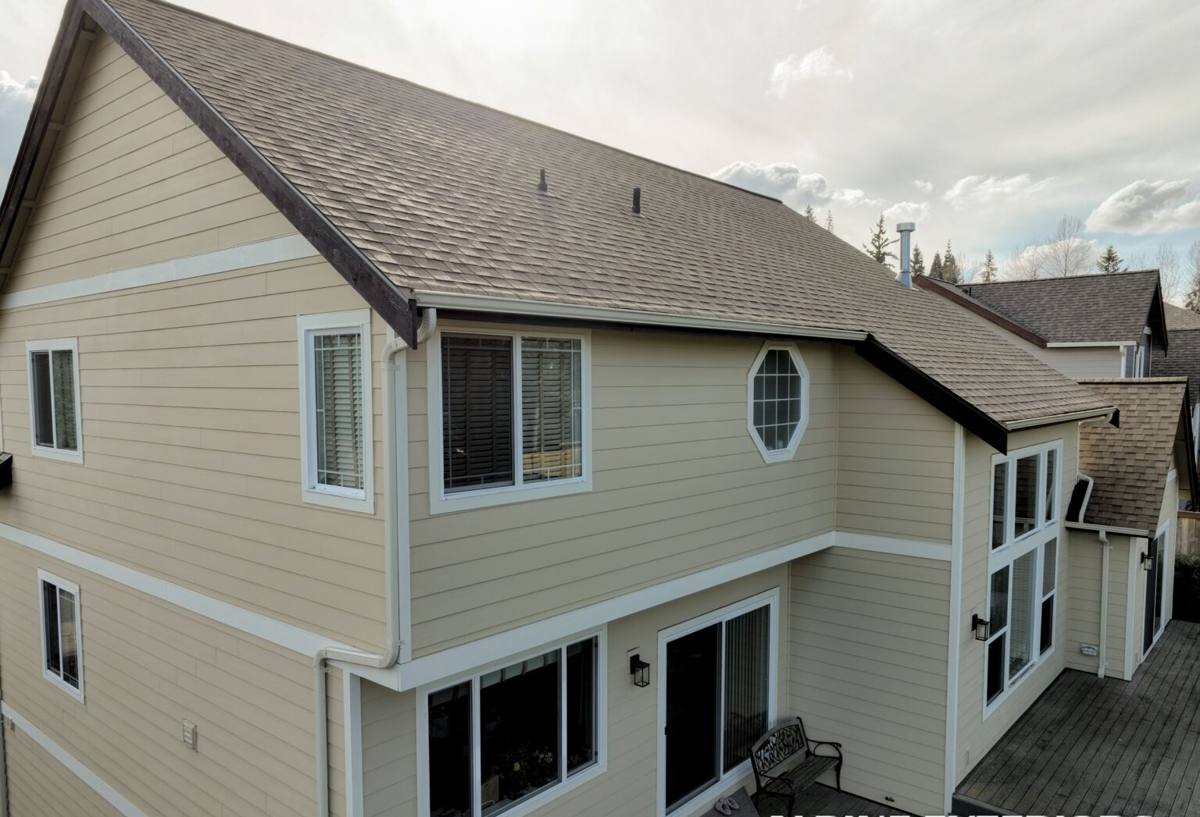
We install one product system — James Hardie fiber cement — on every job we take, including the ones in Edgemoor. That's not a marketing line, it's an operational decision we made after years of watching which siding systems actually hold up under salt air and constant moisture cycling, and which ones need babysitting.
What Salt Air and Moss Season Actually Do to a Wall
Salt Air
Airborne salt is corrosive to exposed metal — nail heads, flashing edges, trim fasteners — and it accelerates the breakdown of coatings that aren't formulated to resist it. On a home close to the water, that means fastener corrosion and coating failure show up years earlier than they would on the same product installed twenty miles inland. It's also why fastener choice matters as much as the siding product itself: stainless or coated fasteners rated for coastal exposure aren't optional here, they're the baseline.
Driving Rain
Wind off the water doesn't just fall on a wall, it drives into it. That pushes water into any gap at a lap joint, a butt seam, or a poorly flashed window and door opening. A siding product that swells, delaminates, or wicks water when it gets wet at a seam is a liability in this kind of exposure — it's not a matter of if water finds a weak point, it's when.
Moss and Sustained Dampness
Whatcom County's wet season runs long, and shaded, tree-covered lots like a lot of the ones in Edgemoor stay damp well after the rain stops. Moss and algae growth on siding isn't just cosmetic — sustained moisture against a wall surface is exactly the condition that punishes any siding product with weak moisture tolerance. A siding system needs to shed water fast and resist organic growth on the surface, or it's fighting a losing battle nine months a year.
Why We Only Install James Hardie
We get asked fairly often why we don't offer vinyl, LP SmartSide, or other fiber cement brands like Allura or Cemplank. The honest answer: we standardized on James Hardie because it's the product we've seen perform consistently in exactly the conditions Edgemoor homes face.
- Non-combustible fiber cement — doesn't feed a fire the way wood-based or vinyl products can.
- Engineered for this climate — Hardie's HZ5 product line is specifically formulated for the moisture and freeze-thaw patterns of the Pacific Northwest, not a one-size-fits-all national spec.
- ColorPlus factory finish — baked-on color that resists fading and chipping far better than field-applied paint, which matters when a home is fighting salt air and UV exposure at the same time.
- Dimensionally stable — fiber cement doesn't swell, rot, or attract moisture-loving insects the way wood-fiber composite products can when a seam takes on water.
- Strong transferable warranty — backed by decades of the product actually being in the ground in coastal climates, not just lab testing.
We're not going to tell you other products are junk — that's not fair or accurate. LP SmartSide has real advantages in some climates, vinyl is cheap and low-maintenance in dry regions, and other fiber cement brands make a legitimate product. But we install exteriors in Whatcom County, where salt air and sustained dampness are the norm, not the exception, and Hardie is the system we're willing to put our name behind here.
What a Correct Installation Involves
The product is only half the equation. Fiber cement siding fails prematurely almost exclusively because of installation mistakes, not product defects — gaps that should be caulked and aren't, fasteners driven wrong, flashing skipped or done wrong. In an exposure like Edgemoor's, those mistakes get punished faster than they would somewhere drier.
The non-negotiables on every job
- Weather-resistant barrier installed correctly behind the siding, lapped shingle-style so water sheds outward, not inward
- Proper flashing at every window, door, and roof-wall intersection — this is where the majority of hidden water intrusion starts
- Correct fastener placement and depth per Hardie's installation spec — over-driven or under-driven nails both cause problems
- Minimum clearance from grade, decks, and roof lines so the siding never sits in standing water or gets buried by landscaping over time
- Caulked and sealed butt joints and trim intersections, using sealants rated for the exposure
- Corrosion-resistant fasteners appropriate for near-water, salt-air conditions
Skip any one of these and you can have the best siding product on the market and still end up with rot, staining, or premature coating failure within a few years.
Our Process for an Edgemoor Project
1. On-Site Assessment
We look at existing siding condition, wall sheathing, current flashing details, and anything specific to the lot — shade cover, proximity to water, drainage patterns — that affects how the new siding needs to be detailed.
2. Tear-Off and Sheathing Check
Removing old siding is also when we find out what's actually happening behind the wall — soft sheathing, prior water damage, or flashing that was never installed correctly. We flag anything that needs repair before new siding goes up; covering a problem doesn't fix it.
3. Weather Barrier and Flashing
This is the step that determines whether the wall stays dry for the next 30 years or not. It's not glamorous work and it's invisible once the siding is up, which is exactly why it's where corners get cut on jobs that fail early.
4. Hardie Installation to Spec
Panels or lap siding installed per manufacturer spec, with attention to fastener schedule, joint treatment, and clearances — no shortcuts on the details that matter in this exposure.
5. Trim, Caulk, and Final Detail
Every seam and penetration sealed, trim finished, and a final check for anything that could become a water entry point down the road.
Why a Crew That Already Works Edgemoor Matters
Siding installation isn't identical everywhere in Whatcom County. A crew that's used to installing on dry, inland lots doesn't automatically know to over-build flashing details or upgrade fastener corrosion resistance for a home two blocks from the water. We've worked in Edgemoor and around Sudden Valley enough to know what this exposure does to a wall over time, and we build accordingly — not as an upsell, but because it's what holds up here.
Cost Factors for an Edgemoor Siding Job
Every home is different, but these are the factors that most affect the scope and cost of a siding installation in this area:
| Factor | Why It Matters Here |
|---|---|
| Home size and wall complexity | More corners, gables, and window/door openings mean more flashing detail and labor |
| Existing siding condition | Rotted sheathing found during tear-off adds repair scope before new siding can go up |
| Accessibility | Tree cover, slope, and tight lot lines common in Edgemoor can affect staging and labor time |
| Trim and detail work | Corner boards, window trim, and fascia detail add material and labor beyond flat wall coverage |
| Moisture/mold remediation | Homes with long-neglected moss or algae buildup sometimes need additional prep before install |
Signs Your Edgemoor Home May Need New Siding
- Persistent moss or algae staining that returns quickly after cleaning
- Soft or spongy spots when you press on the siding, especially near the base of walls
- Paint that's peeling, bubbling, or failing faster than it used to
- Visible gaps, warping, or separation at seams and corners
- Musty smell or staining on interior walls that share an exterior wall
- Siding that's original to a home built more than 20-25 years ago
If you're seeing any of these, it's worth having someone look at the wall assembly, not just the surface — in this climate, surface symptoms usually mean something's been happening behind the siding for a while.
If you own a home in Edgemoor and want a straight answer on whether your siding needs attention, we're happy to take a look and walk you through what we'd actually recommend — no pressure, no upsell. Reach out for a free estimate using the form below.