 Sudden Valley
 South Hill's Climate Is Hard on Windows — Here's Why
Homes on South Hill sit in a stretch of Whatcom County that takes a steady beating from moisture. The salt-tinged air moving in off the water accelerates corrosion on hardware, fasteners, and metal window components. Driving rain, pushed sideways by wind more often than most homeowners expect, finds every gap in flashing and caulking that a builder-grade window install left behind. And the long moss season here — often eight months or more of the kind of damp, low-light conditions moss thrives in — means anything organic (wood trim, unsealed sills, shaded siding around a window opening) is under constant pressure to hold moisture instead of shedding it.
None of this is unique to any one house. It's the baseline condition every window on South Hill has to perform against, year after year. A window that's rated well on paper but installed without accounting for this climate will underperform here faster than the same product would in a drier part of the state.
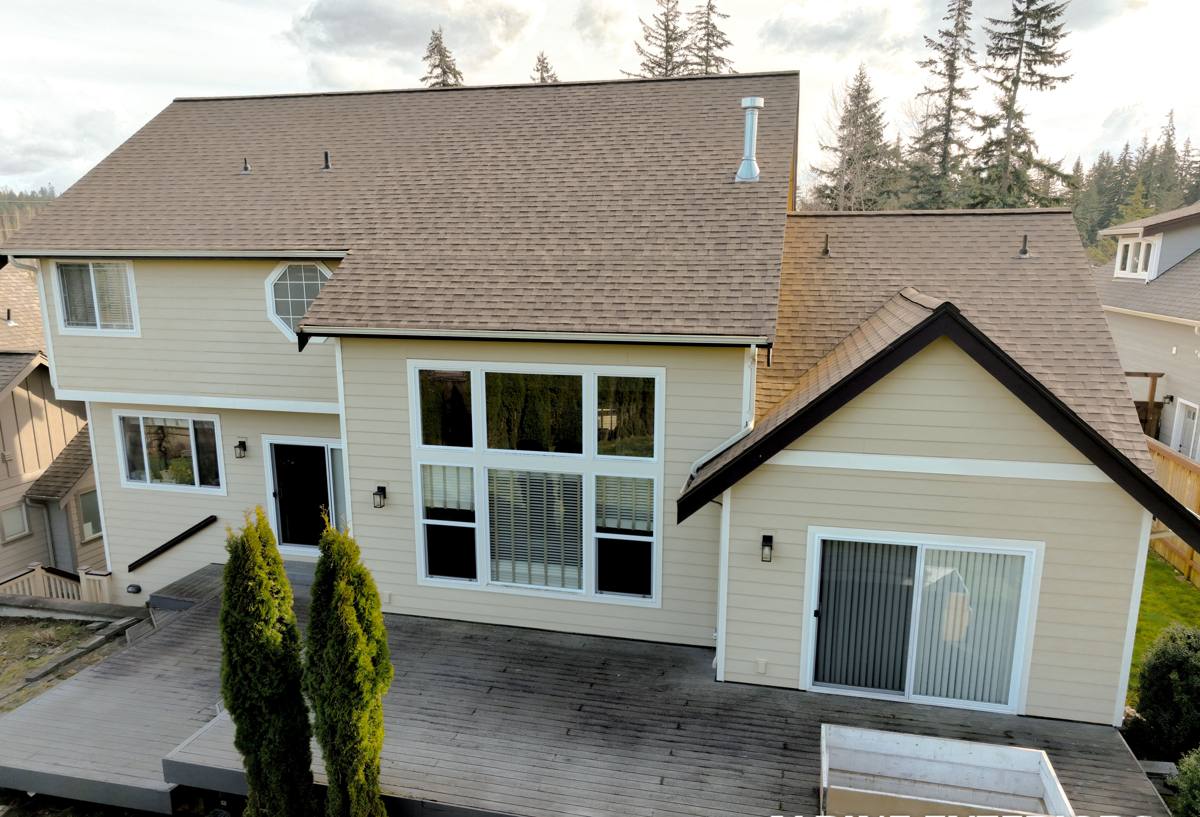
What "Energy-Efficient" Actually Means for This Region
Energy efficiency isn't just a U-factor on a spec sheet. In this climate, a genuinely efficient window has to do three things at once: resist heat loss through the glass and frame, seal tightly enough to block wind-driven rain and drafts, and keep doing both after a few winters of expansion, contraction, and moisture exposure. A window can be efficient the day it's installed and mediocre three years later if the seal fails or the frame starts absorbing water.
The Numbers That Actually Matter
- U-factor: measures heat loss — lower is better for our heating-dominated climate. Look for something in the 0.27–0.30 range or better for whole-window performance, not just center-of-glass.
- Air infiltration rate: how much air leaks through the assembly under pressure. This matters more here than in calmer inland climates because of the wind-driven rain and gusts we get off the water.
- Condensation resistance: a window that fogs or drips on the inside during cold snaps is telling you something about its insulating performance, not just the weather.
A window with a great U-factor but poor air infiltration numbers will still leak heat and let moisture find its way into the wall assembly. We look at the whole picture, not one flattering number.
Signs Your Current Windows Are Costing You Money
Most homeowners don't replace windows because they woke up one day wanting new ones — they replace them because something started bothering them. Here's what we typically hear about before a South Hill homeowner calls:
- Noticeable drafts near the frame, especially during wind events
- Condensation or fogging between panes (a sign the seal has failed on a double- or triple-pane unit)
- Wood trim or sills that feel soft, discolored, or show early rot near the corners
- Windows that are hard to open, close, or lock — frames can swell or warp with sustained moisture exposure
- Visible moss or dark streaking on the siding directly below a window, which usually points to water tracking off the sill instead of shedding away from the wall
- A heating bill that's crept up without an obvious reason
Any one of these on its own isn't necessarily an emergency. Several of them together, especially on a home that's had its original windows for 15–20+ years, usually means the assembly has reached the point where repair is a stopgap and replacement is the real fix.
Window Materials and Types We Work With
There's no single "best" window material — the right choice depends on the home's exposure, budget, and how much upkeep the owner wants to take on. Here's how the common options actually compare for this climate:
| Frame Material | Moisture Performance | Maintenance | Typical Lifespan Here |
|---|---|---|---|
| Vinyl | Good — won't rot, handles rain exposure well | Low — occasional cleaning | 20–30 years |
| Fiberglass | Excellent — very stable, resists expansion/contraction | Low | 30+ years |
| Wood-clad | Good on the exterior face, but vulnerable if cladding is breached | Higher — exterior clad protects, but sills need monitoring | 20–25 years with upkeep |
| Aluminum | Poor thermal performance, prone to condensation in this climate | Low, but corrosion risk near salt air | Varies widely |
For most South Hill homes, we steer conversations toward vinyl or fiberglass frames with dual- or triple-pane, low-E glass and argon or krypton gas fill. We're not against wood-clad windows on the right project — they have a place — but we're upfront that they carry a higher maintenance burden in a climate this wet, and we won't sell someone a product without explaining what keeping it looking good actually requires.
How We Approach a Window Installation
1. On-Site Assessment
Before we talk product, we look at the actual opening: existing flashing condition, sill pitch, any signs of past water intrusion, and how exposed that particular wall is to prevailing wind and rain. A north-facing window under an overhang and a west-facing window catching direct weather off the water need different attention to detail, even on the same house.
2. Removal Without Collateral Damage
We remove the old unit carefully and inspect the rough opening, sheathing, and framing underneath before anything new goes in. This is where hidden rot or past water damage shows up — and it's better to find it now than to seal a new window over a problem.
3. Flashing and Weather Barrier Detail
This step is where most window failures actually start, and it's also the step that's invisible once the job is done. Proper flashing — sill pan, jamb flashing, head flashing integrated correctly with the house wrap — is what keeps wind-driven rain from tracking behind the window and into the wall cavity. We follow a shingle-lap sequence (each layer overlapping the one below it) so water is always directed outward, never trapped.
4. Setting, Shimming, and Sealing
The window gets shimmed level and plumb, fastened per the manufacturer's schedule (not just "wherever's convenient"), and insulated around the perimeter with a product that won't compress or degrade over time. Exterior sealant goes on last, in the right locations — not as a substitute for good flashing, but as a second line of defense.
5. Final Check
We test operation, check for square, and confirm the seal is tight before we consider the job done.
Installation Mistakes That Cause Early Failures
A quality window installed poorly will underperform a mid-grade window installed correctly. The most common failure points we see when we're called in to fix or replace someone else's earlier work:
- Flashing skipped or installed out of sequence, letting water get behind the window instead of around it
- Caulk used as the primary water barrier instead of proper flashing
- Rough openings not checked for rot or damage before the new window went in
- Improper shimming causing the sash to bind, sag, or fail to seal fully over time
- Nailing fins or fasteners over-driven, compressing the frame out of square
These aren't rare mistakes — they're the predictable result of a rushed install. On a home exposed to as much rain and wind as South Hill sees, a flashing shortcut that might go unnoticed for years in a milder climate shows up here in a single wet winter.
Cost Factors to Understand Before You Get Quotes
We don't publish flat pricing because window jobs vary too much house to house, but here's what actually drives the number up or down:
| Factor | Why It Matters |
|---|---|
| Frame material | Vinyl is typically the most budget-friendly; fiberglass and wood-clad cost more upfront |
| Glass package | Dual-pane vs. triple-pane, low-E coatings, and gas fill all affect price and performance |
| Number and size of openings | Larger or custom-sized units cost more than standard replacement sizes |
| Condition of the existing opening | Rot repair or sheathing replacement found during removal adds cost but prevents a bigger problem later |
| Access and site conditions | Second-story or hard-to-access windows take more time and labor |
We give a firm, itemized estimate after the on-site assessment — not a phone-quote guess — because the flashing detail and any hidden repair needs can't be priced accurately without seeing the opening.
Maintaining Your Windows After Installation
Even the best window benefits from a little seasonal attention in this climate. A short checklist we give every South Hill customer after installation:
- Wipe down tracks and weep holes each fall to keep drainage paths clear of debris and moss buildup
- Inspect exterior caulking annually — hairline cracks are easier to catch and reseal than to repair after they've let water in
- Check for moss or algae developing on sills or nearby siding and address it early rather than letting it hold moisture against the frame
- Operate each window at least a few times a year, even ones you rarely open, to keep hardware and seals functioning properly
- Watch for condensation between panes — it's the clearest early sign of a failed seal on an insulated glass unit
Why It Matters to Hire a Crew That Already Works This Area
A window installer who works across a wide range of climates has to relearn local conditions on every job. A crew that regularly works South Hill and the surrounding Sudden Valley area already knows how the wind hits certain exposures, how long moss season really runs here, and where flashing details need extra attention because of it. That familiarity shows up in fewer callbacks, not just faster quotes. Whatcom County's mix of coastal moisture and persistent rain isn't a minor variable — it's the main thing a window installation here has to be built to handle, and it's worth working with a crew that treats it that way from the first assessment through the final seal.
If you're noticing drafts, fogged glass, or just want an honest read on whether your current windows are still doing their job, we're happy to take a look. Reach out for a free, no-pressure estimate using the form below — we'll assess your home's specific exposure and walk you through real options, not a sales pitch.