 Sudden Valley
 Siding Replacement Built for Fairhaven's Coastal Exposure
Fairhaven sits close enough to the water that its homes take on a different kind of weathering than houses just a few miles inland. Salt-laden air, wind-driven rain off Bellingham Bay, and long stretches of gray, damp weather each year put steady pressure on exterior siding. Add Whatcom County's extended moss season — shaded lots, moisture that lingers on north-facing walls, and slow-drying corners under mature trees — and you've got a climate that punishes any siding material with weak points in its moisture management or its finish.
When we replace siding in Fairhaven, we're not treating it like a generic siding job. We're accounting for salt exposure on trim and fasteners, checking how water sheds off walls that face the bay-driven wind, and making sure the new siding system won't become a moss magnet within a couple of seasons. This page walks through what that actually means for a Fairhaven home, and why we install only James Hardie fiber cement to do it.
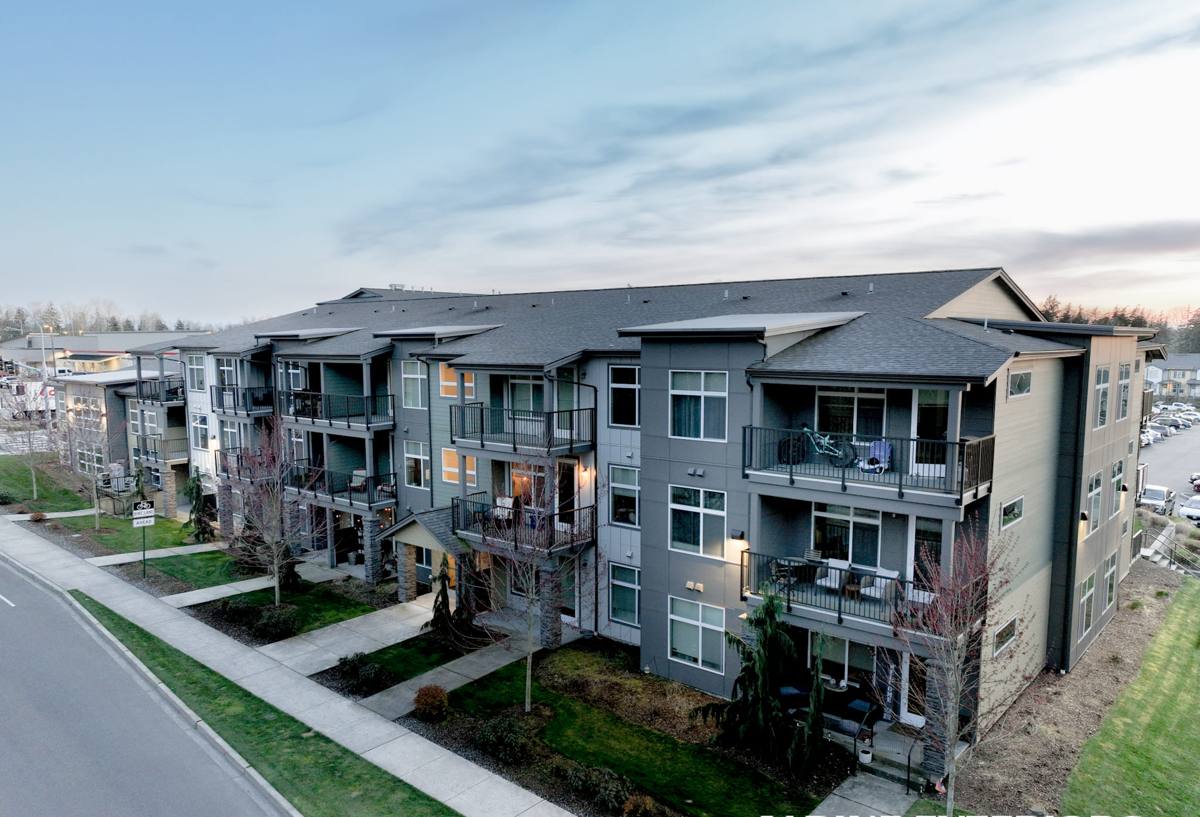
What Salt Air and Driving Rain Actually Do to Siding
Coastal exposure isn't just cosmetic wear. It's a combination of a few specific mechanisms that add up over years:
- Salt deposition: Airborne salt settles on exterior surfaces and accelerates corrosion of exposed metal fasteners, flashing, and hardware — especially on walls facing open water or prevailing wind.
- Wind-driven rain: Rain that comes in at an angle, rather than falling straight down, gets forced under laps, around trim, and into seams that would stay dry in a calmer climate.
- Slow drying cycles: Shaded or north-facing walls near the water often stay damp longer between storms, which is exactly the environment moss, algae, and mildew need to establish themselves.
- UV and moisture cycling: Repeated wet-dry cycles stress paint films and substrates, especially on siding materials that swell or wick moisture.
None of this is unique to Fairhaven, but the combination — salt, wind exposure, and shade-driven dampness — is more concentrated here than on drier, more inland Whatcom County lots.
Why We Install Only James Hardie Fiber Cement
We standardized on James Hardie fiber cement siding company-wide, and a coastal neighborhood like Fairhaven is exactly the kind of environment that decision was made for.
Non-combustible and dimensionally stable
Fiber cement doesn't expand and contract with moisture the way wood-based products do, and it holds up to repeated wet-dry cycling without swelling at the edges or delaminating at seams — a real concern on walls that take direct rain exposure.
ColorPlus factory finish
Hardie's ColorPlus finish is baked on in a controlled factory process, not brushed on at the jobsite. That matters in a salt-air environment because factory-cured finishes generally resist fading and hold their color better than field-applied paint exposed to the same UV and moisture cycling.
Climate-engineered HZ product lines
James Hardie makes HZ5-rated products specifically engineered for the wetter, more moisture-exposed climate zones of the Pacific Northwest. That's a meaningful distinction from a one-size-fits-all siding product — it's built with this region's rain and humidity in mind.
A warranty that reflects confidence in the system
Hardie backs its siding with a strong, transferable warranty. That's worth something to a homeowner who may sell in the next decade — a warranty that transfers to a new owner is a tangible selling point in a coastal market where buyers ask about siding condition.
We don't install LP SmartSide, vinyl, Cemplank, Allura, primed spruce, or cedar. Each of those products has legitimate uses elsewhere, but for the moisture and salt exposure profile we see on Fairhaven jobs, we've made fiber cement — specifically Hardie — our standard, and we'd rather turn down a job than install something we don't believe will hold up here.
What a Correct Siding Replacement Involves
Replacing siding correctly is not just pulling off old panels and nailing up new ones. On a coastal-exposed home, the sequence matters as much as the material.
Tear-off and inspection
Once the old siding is off, we inspect the sheathing and framing underneath for any moisture damage, soft spots, or rot — common on walls that have taken years of wind-driven rain. This is the point where hidden problems get caught, not covered up.
Water-resistive barrier and flashing
A correctly lapped weather-resistive barrier, properly integrated window and door flashing, and careful attention to every penetration (vents, hose bibs, light fixtures) is what actually keeps wind-driven rain out of the wall assembly. Siding is the visible layer; the barrier and flashing underneath it do the real work.
Fastening and corrosion resistance
In a salt-air environment, fastener choice matters. We use fasteners and hardware appropriate for coastal exposure so trim and panel attachment don't become the weak point a few years down the road.
Installing to Hardie's fastening and clearance specifications
James Hardie's warranty depends on installation to their published specs — proper nail placement, correct clearances from grade, decks, and roof lines, and appropriate gaps at butt joints. Skipping these details is one of the most common ways a Hardie installation underperforms, and it has nothing to do with the product itself.
Trim, caulking, and paint-grade detailing
Corner boards, window trim, and caulking joints get finished to shed water, not trap it. On a bay-exposed wall, a poorly caulked joint is an invitation for wind-driven rain to work its way behind the siding.
Comparing Siding Options for a Fairhaven Home
| Factor | James Hardie Fiber Cement | Vinyl | Wood / Cedar |
|---|---|---|---|
| Salt air / coastal exposure | Engineered for wet climates, HZ5 line | Can become brittle over time with UV/temperature cycling | Requires ongoing sealing/refinishing to resist moisture |
| Moss and moisture resistance | Dimensionally stable, doesn't swell or wick like wood | Resists moisture but can trap it behind panels if installed poorly | Absorbent surface, prone to moss and mildew in shaded areas |
| Finish durability | Factory-baked ColorPlus finish | Color molded through material, can fade or chalk | Field-applied paint/stain, needs recoating on a regular cycle |
| Fire resistance | Non-combustible | Combustible, can melt or deform near heat sources | Combustible |
| Warranty | Strong, transferable | Varies by manufacturer | Typically no manufacturer warranty on the material's weather performance |
Cost Factors for a Fairhaven Siding Replacement
Every home is different, so we won't quote a number without seeing the house, but these are the variables that actually move the price:
- Square footage and wall complexity: More corners, dormers, and cutouts mean more labor and trim work.
- Condition of the sheathing underneath: Rot or moisture damage found during tear-off adds repair scope before new siding goes up.
- Siding profile and accessories: Lap width, trim style, and any architectural detailing (shakes, board-and-batten accents) affect material and labor cost.
- Access and site conditions: Tight lots, tall walls, or heavy landscaping near the house can add setup time.
- Existing paint or finish removal: Some tear-offs are more involved than others depending on what's currently on the wall.
Why Hiring a Crew That Already Works Fairhaven Matters
A crew that regularly works this stretch of Whatcom County has already seen how these homes behave in this specific climate — which walls take the worst of the wind-driven rain, where moss tends to establish first, and how salt exposure shows up on fasteners and trim over time. That's not something you can fully substitute with a generic install checklist. It shows up in small decisions: where extra flashing attention is warranted, which corners need closer caulking detail, and how a home's orientation relative to the water should inform the job.
It also matters for accountability. A local, established crew is easy to reach if a question comes up after the job — not a phone number tied to a project two states away.
Signs Your Fairhaven Home May Need Siding Replacement
- Visible moss or algae buildup that returns quickly after cleaning, especially on shaded or north-facing walls
- Soft spots, warping, or bubbling in the siding surface
- Paint that's peeling, chalking, or failing faster than expected
- Cracked or separating caulk joints around trim and windows
- Visible gaps at panel seams or corners
- Rising energy bills that may point to compromised wall insulation behind failing siding
- Rust staining around fasteners or hardware
Our Process for a Fairhaven Siding Project
We keep the process straightforward and transparent from the first visit to final walkthrough:
- On-site assessment: We walk the exterior, note wall orientation, moisture patterns, and any visible problem areas.
- Written scope and estimate: You get a clear breakdown of what's included — tear-off, barrier and flashing work, materials, and finish details.
- Tear-off and sheathing inspection: Old siding comes off and we check what's underneath before anything new goes up.
- Weather barrier and flashing installation: The moisture-management layer goes in correctly, before the new siding.
- Hardie installation to spec: Fastening, clearances, and joints follow James Hardie's published installation requirements.
- Trim, caulking, and final finish: Details get closed out to shed water, not trap it.
- Final walkthrough: We go over the finished work with you before calling the job done.
If your Fairhaven home is showing signs of wear from salt air, driving rain, or persistent moss, we'd be glad to take a look. Reach out for a free, no-pressure estimate — we'll walk the exterior with you, explain what we find, and give you a straight answer on what the home actually needs.