 Sudden Valley
 Why Silver Beach Homes Need Siding Built for This Climate
Silver Beach sits in a stretch of Whatcom County where the weather doesn't do anything in half measures. Homes here take on salt-laden air moving in off the water, long stretches of driving rain through the fall and winter, and shaded, damp conditions that keep moss and algae established on north- and west-facing walls for most of the year. None of that is unusual for this part of Washington, but it means siding gets tested here in ways that a product spec sheet written for a dry climate doesn't account for.
Salt air is corrosive to unprotected fasteners and trim edges over time. Driving rain finds every gap in flashing and caulk that a calmer climate would never expose. And moss doesn't just look bad — its root structure holds moisture against a wall surface, which is exactly the condition that causes rot, coating failure, and paint breakdown in lesser siding materials. A siding job in Silver Beach has to be evaluated against all three of these stresses at once, not just against how the material looks on the day it goes up.
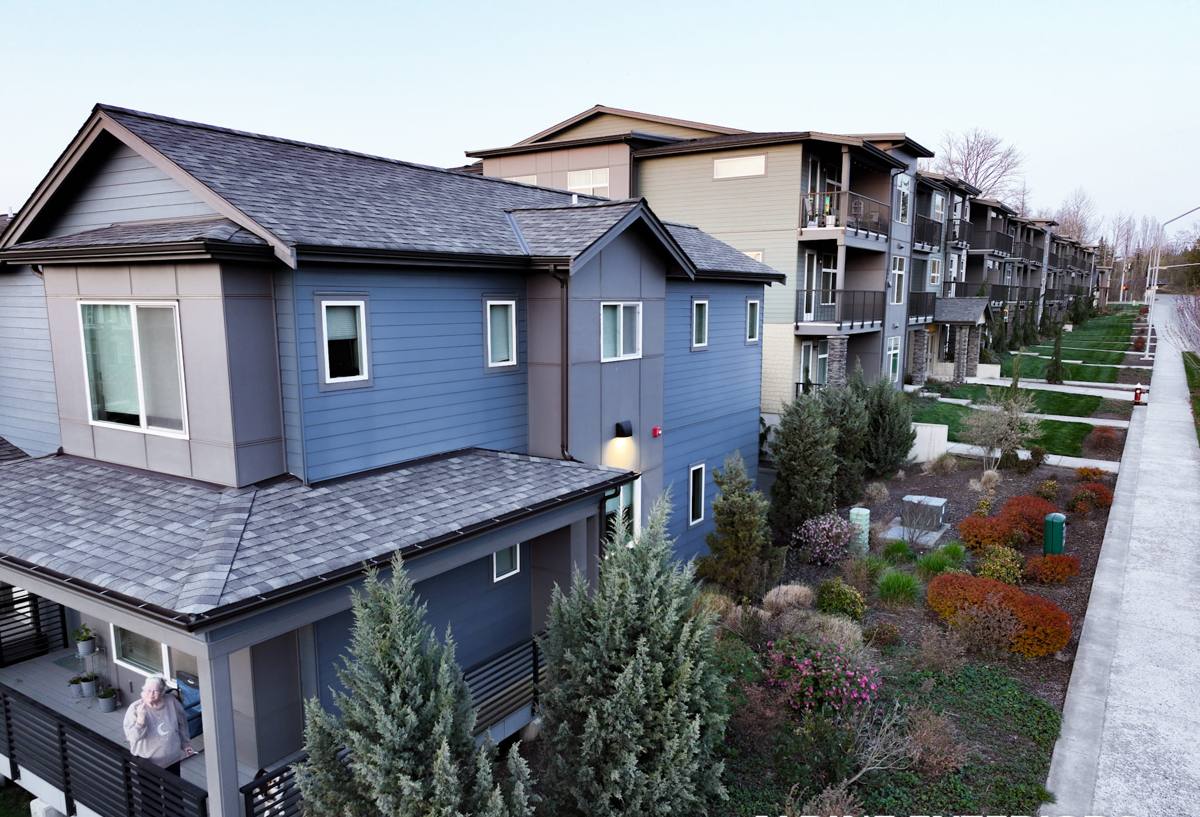
What a Correct Fiber Cement Installation Actually Involves
Fiber cement is a forgiving material in a lot of ways, but it is not a forgiving product to install carelessly. The material itself resists moisture, fire, and pests far better than wood-based alternatives, but almost every long-term fiber cement failure we get called out to inspect traces back to installation shortcuts, not the siding itself.
Moisture Management Behind the Siding
Correct installation starts with what you never see once the job is done: a properly lapped weather-resistive barrier, correctly integrated flashing at windows, doors, and every horizontal trim break, and a drainage plane that gives bulk water somewhere to go. In a rain-heavy climate like ours, this layer matters more than the siding profile on top of it. Skipping or rushing it is the single biggest reason siding fails early in Western Washington.
Fastening and Clearances
Fiber cement has manufacturer-specified nailing patterns, fastener types, and minimum clearances from grade, roofing, and decks. Those clearances exist specifically to keep the bottom edge of the siding out of standing water and splashback — a real risk anywhere close to grade in a wet climate. Fasteners that aren't corrosion-resistant will telegraph rust stains through the finish within a few seasons of exposure to salt air, which is a cosmetic problem that's expensive to fix after the fact and cheap to avoid up front.
Joint and Trim Detailing
Every butt joint, corner, and trim intersection is a potential water entry point. Correct detailing means factory-primed or pre-finished cut edges, proper caulking (or intentionally leaving a joint open to drain, where the manufacturer specifies it), and trim that's flashed rather than just caulked and hoped for. This is the kind of detail that's invisible on installation day and very visible five years later if it was done wrong.
Why We Only Install James Hardie Fiber Cement
We standardized on James Hardie products for every fiber cement job we take on, including work in Silver Beach and the rest of the Sudden Valley area. That's not a brand preference for its own sake — it comes down to three things that matter directly in this climate.
Climate-Engineered Product Lines
Hardie makes region-specific formulations rather than a single one-size-fits-all board, engineered for the moisture exposure typical of the Pacific Northwest. That matters here specifically because our exposure profile — near-constant damp, salt air, and limited direct sun on shaded walls — is harder on siding than a drier climate's equivalent product.
Factory-Applied ColorPlus Finish
ColorPlus finish is baked on at the factory under controlled conditions, rather than field-painted on site. That gives a more consistent, harder finish that resists fading and holds up better against the kind of grime and biological growth that a shaded, damp lot produces. It also comes backed by its own finish warranty separate from the substrate warranty, which is worth understanding before you assume all "factory finish" claims mean the same thing.
A Warranty That Transfers
Hardie's product warranty is transferable to a subsequent homeowner under its terms, which matters for resale in a market where buyers increasingly ask what the siding is and how old it is. It's also a long-standing, well-documented warranty structure, which counts for something when you're making a decision meant to last decades, not one remodel cycle.
We don't install vinyl, LP SmartSide, or other fiber cement brands such as Cemplank or Allura. Each of those products has legitimate use cases elsewhere, but we've made a professional decision to standardize on one system we can install to spec, warranty with confidence, and stand behind on every home we touch — rather than juggling different installation requirements and warranty terms across multiple product lines.
Cost Factors for a Silver Beach Fiber Cement Project
Every home is different, so we won't quote a number without seeing the job, but these are the variables that actually move the price on a Silver Beach fiber cement project:
| Factor | Why It Matters Here |
|---|---|
| Existing siding removal | Tear-off costs more when moisture damage or rot is found underneath, which is more common on shaded, moss-prone walls |
| Water-resistive barrier condition | A compromised barrier needs full replacement, not a patch, given our rain volume |
| Trim and fascia scope | Salt-air corrosion and moss staining often extend beyond the field siding into trim, fascia, and soffit |
| Siding profile and plank size | Lap width and texture affect material cost and installation time |
| Wall complexity | Dormers, multiple gables, and tight setbacks common on sloped Sudden Valley lots add labor time |
| Access | Steep driveways or limited staging area around some Silver Beach properties can affect equipment and crew logistics |
Our Process for a Silver Beach Fiber Cement Project
Assessment and Moisture Check
We start by inspecting the existing siding and, where accessible, checking for hidden moisture damage — especially on shaded elevations and anywhere moss has been established for a long time. This tells us whether we're looking at a straightforward re-side or whether sheathing repair needs to be scoped in before siding goes back on.
Tear-Off and Substrate Prep
Old siding and damaged material come off, the sheathing is inspected and repaired as needed, and the water-resistive barrier and flashing details are installed or corrected before a single piece of Hardie board goes up. This step is where a rushed job and a correct job diverge the most, and it's the one homeowners can't easily verify once the siding is on.
Installation to Manufacturer Specification
Fastening patterns, clearances, joint treatment, and trim integration follow James Hardie's published installation requirements — not a generalized "how we've always done it" approach. This is also what keeps the manufacturer's product warranty intact; installation that deviates from spec can affect warranty coverage.
Final Detailing and Cleanup
Caulking, touch-up paint on cut edges, and a final walk-through close out the job. We also make a point of walking the property to point out any drainage or grading issues we noticed during the tear-off, since those affect how the new siding performs over time, particularly with the rainfall totals typical of Whatcom County.
Living With Fiber Cement in a Moss-Heavy, Salt-Air Climate
Fiber cement is low-maintenance compared to wood siding, but "low-maintenance" doesn't mean "no maintenance," especially in this environment. A little seasonal attention keeps a correctly installed job looking and performing the way it should for decades.
- Rinse siding annually, especially shaded and north-facing walls where moss and algae establish fastest
- Keep gutters clear so overflow doesn't run directly down the siding face during heavy rain
- Trim back vegetation and tree cover that keeps walls damp and shaded longer than necessary
- Check caulking at trim joints and penetrations every couple of years and re-caulk if it's cracked or pulling away
- Address any fastener staining or trim discoloration early — it's usually a quick fix, not a sign of a bigger problem, if caught soon
- Avoid pressure-washing at close range or high pressure, which can force water behind panels or damage the factory finish
Why Local Experience in Silver Beach Matters
A crew that already works in and around Sudden Valley knows what this specific stretch of Whatcom County throws at a house — the rainfall patterns, the shaded lots, the salt-air exposure, and how those combine to age a wall over ten or twenty years, not just how it looks the day it's finished. That local pattern recognition shows up in small decisions: where to be extra careful with flashing, which elevations need the most attention to moss and moisture, and how to sequence a job around our wetter months so materials and substrate aren't compromised before the siding ever goes up.
It also means fewer surprises with permitting and inspection expectations specific to this area, and a crew that isn't learning the region's quirks on your project. Familiarity with the actual conditions a home faces here is worth more than a generic installation checklist applied the same way everywhere.
If you're weighing a fiber cement project on a Silver Beach home, we're happy to take a look and walk you through what your specific house needs — no pressure, no obligation. A free estimate gets you a straight answer on scope and condition before you decide anything.