 Sudden Valley
 Custom Decks for the Geneva Area Near Sudden Valley
Geneva sits close enough to Sudden Valley that homes here deal with the same weather patterns we see across our Whatcom County service area: long wet stretches, salt-laden air moving in off the water, and a moss season that seems to start earlier every year. A deck built for a dry climate simply doesn't hold up the same way out here. We build and repair decks for this specific area, and this page covers what actually matters when you're planning a custom deck for a Geneva-area home — not generic advice pulled from a national franchise playbook.
We're not going to invent statistics about deck failure rates or quote you a price before we've seen your site. What we can tell you, honestly, is what we've learned building and re-building decks in this climate: most problems trace back to a handful of decisions made before the first board was ever installed.
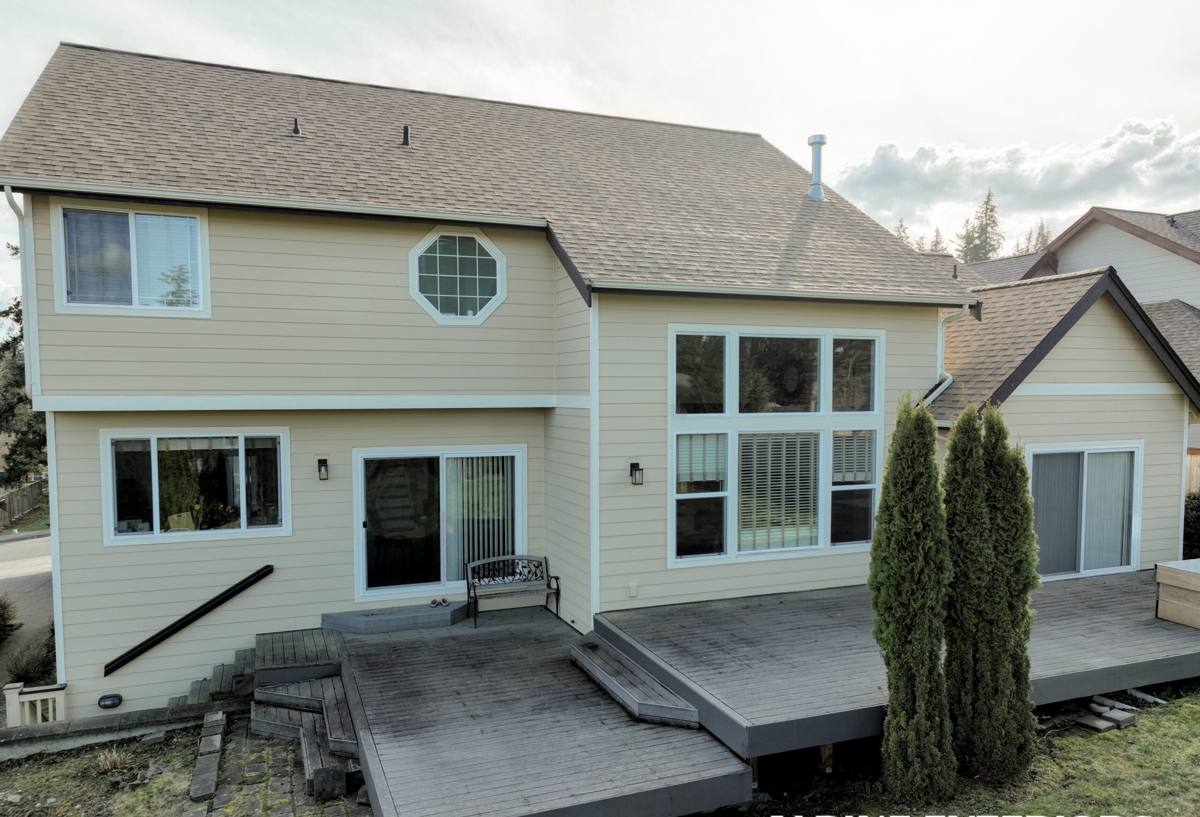
What This Climate Actually Does to a Deck
A deck is exposed to more weather than almost any other part of a house. It has no roof overhang protecting it (usually), it sits low to grade where moisture collects, and it takes direct hits from rain, wind, and sun all at once. In this part of Whatcom County, three things do most of the damage over time.
Salt Air and Metal Fasteners
Homes near the water deal with airborne salt that accelerates corrosion on anything metal — nails, screws, joist hangers, bolts. A deck that's structurally sound on the day it's built can develop hidden problems years later if the fasteners holding it together weren't rated for this kind of exposure. Once a joist hanger or ledger bolt starts to corrode, it's not a cosmetic issue — it's a load-bearing one.
Driving Rain and the Ledger Connection
The ledger board — where the deck attaches to the house — is the single most important connection on any deck, and it's also the spot most vulnerable to driving rain. Wind-driven rain pushes water sideways and up under flashing that wasn't detailed correctly. When water gets behind a ledger board, it rots the rim joist and sometimes the house framing behind it before anyone notices, because it's hidden.
Moss and a Long Wet Season
Moss doesn't just look bad on a deck surface — it holds moisture against the wood (or against composite decking) far longer than open air would, and it makes stairs and walking surfaces genuinely slippery. In this region, moss season can run from fall through spring. Deck boards that don't allow water to drain and dry between them will grow moss faster, no matter what material they're made from.
Choosing the Right Decking Material for a Geneva-Area Site
There isn't one "best" decking material — there's a best material for your budget, your maintenance appetite, and your specific site conditions (sun exposure, tree cover, proximity to the water). Here's how the common options actually compare in this climate, in plain terms.
| Material | Moisture & Moss Behavior | Maintenance | Typical Lifespan Here |
|---|---|---|---|
| Pressure-treated lumber | Absorbs water readily; needs gaps and airflow to dry between rain events | Annual cleaning, periodic sealing/staining | 15–20 years with upkeep |
| Cedar | Naturally rot-resistant but still needs to dry out between soakings | Regular oiling or staining to prevent graying and moss | 15–25 years with upkeep |
| Composite decking | Doesn't absorb water into the board itself, but moss and algae can still grow on the surface film | Occasional washing; no staining or sealing | 25–30+ years, manufacturer-dependent |
| PVC decking | Fully water-resistant board material; drainage still matters for the structure underneath | Low — occasional washing | 25–30+ years, manufacturer-dependent |
Composite and PVC boards have gotten a lot better over the past decade, and for a lot of Geneva-area homeowners they're worth the higher upfront cost simply because they remove the yearly maintenance cycle. But they're not maintenance-free — a composite deck in a shaded, damp spot still needs to be washed off periodically or it will grow the same moss and algae film as anything else. We'll walk you through the honest tradeoffs for your specific site rather than pushing whatever has the best margin.
What a Correctly Built Deck Involves
The visible decking is maybe a third of what actually determines how long a deck lasts. The parts underneath matter more.
Footings and Framing
Footings need to go below frost depth and bear on undisturbed, stable soil — not fill dirt. On sloped Geneva-area lots, that sometimes means deeper or more numerous footings than a flat-lot deck would need. Joists should be sized and spaced for the actual span and load, not just "what's been done before on this street."
Ledger Attachment and Flashing
This is where we spend extra time. A correctly flashed ledger uses proper step flashing or a manufactured ledger flashing system installed over housewrap, with the siding detailed to shed water away from the connection — not just caulked and hoped for. Structural screws or through-bolts rated for exterior use, sized to the load, not just whatever's on hand.
Drainage and Airflow Underneath
Decking boards need consistent gapping so water drains through instead of pooling. Low decks close to grade need enough clearance underneath for air to actually move — a deck built tight to the ground in a shaded, damp part of a Geneva-area yard is set up for moss and rot problems from day one, regardless of what decking material sits on top.
Railings and Code
Guardrail height, baluster spacing, and stair rail requirements are set by code for a reason — they're the difference-maker in a fall. We build to current code as a baseline, not a suggestion, and we're happy to walk you through what applies to your specific deck height and layout.
Our Process, Start to Finish
- On-site visit — we look at your slope, sun/shade pattern, existing structure (if any), and how the deck will actually be used before we talk material or layout.
- Design and material selection — we walk through the tradeoffs (like the table above) so you're choosing based on what matters to you, not guessing.
- Written estimate — clear scope, materials, and price before any work starts. No surprise change orders for things we should have caught upfront.
- Permitting — most new decks and many deck rebuilds require a permit; we handle that process rather than leaving it to you.
- Build — footings, framing, ledger flashing, decking, and railings, in that order, with inspections at the stages that require them.
- Final walkthrough — we go over care and maintenance for whatever material you chose before we consider the job done.
Maintenance Checklist for Geneva-Area Deck Owners
Whatever material your deck is built from, a few habits make a real difference in how long it lasts in this climate:
- Sweep leaves and debris off the deck surface regularly through fall — trapped leaves hold moisture and feed moss growth
- Wash the deck surface at least once a year (more often in heavily shaded spots) to remove algae and moss film before it takes hold
- Check and clear the gaps between boards so water can still drain through them
- Inspect metal fasteners and hardware yearly for rust or corrosion, especially on decks with water exposure
- Reseal or restain wood decking on the schedule the product actually calls for, not "whenever it looks bad"
- Check the ledger board area at the house connection for any signs of water staining, soft wood, or peeling flashing
- Keep vegetation trimmed back from the underside and edges of the deck to improve airflow
Common Problems We Find on Older Decks in This Area
When we're called out to repair or replace an existing deck near Sudden Valley and Geneva, the same issues come up again and again: ledger boards attached without proper flashing, undersized or corroded fasteners, decking installed with no gap for drainage, and low clearance underneath that never lets the framing dry out. None of these are visible from the top of the deck — they show up as soft spots, sagging, or a "bouncy" feeling underfoot, usually well after the damage has already started. If your deck is more than 10-15 years old and you haven't had the structure looked at, it's worth having someone check the framing and ledger connection specifically, not just the surface boards.
Why It Matters That We Already Work This Area
A crew that builds decks across a lot of different climates has to relearn local conditions every job. We already know how Whatcom County inspectors expect ledger flashing detailed, how footing depth plays out on the sloped lots common around Sudden Valley and Geneva, and which decking materials actually hold up against the moss and moisture patterns here versus which ones just look good in a showroom. That's not a marketing point — it's fewer mistakes, fewer callbacks, and a deck that's built right the first time because we've seen what goes wrong when it isn't.
Get a Straight Answer About Your Deck
If you're planning a new custom deck, replacing an aging one, or you're just not sure whether your current deck's framing is still sound, we're happy to come take a look. The estimate is free, there's no pressure, and we'll give you an honest read on what your project actually needs — use the form below to get started.