 Sudden Valley
 Siding Installation for Geneva Homes in Sudden Valley
Geneva sits close to the water on Lake Whatcom, inside the larger Sudden Valley community in Whatcom County. Homes here deal with a specific combination of stresses that a lot of siding products simply weren't built to handle over the long term: near-constant moisture, shaded lots under mature evergreens, and long stretches of the year where surfaces just don't fully dry out. If you're planning a siding installation or full replacement in Geneva, the product choice and the installation details matter more here than they would in a drier, more open part of the county.
We install James Hardie fiber cement siding exclusively. This page walks through what Geneva's climate actually does to exterior walls, what a correct installation looks like, and how we handle the job from first look to final walkthrough.
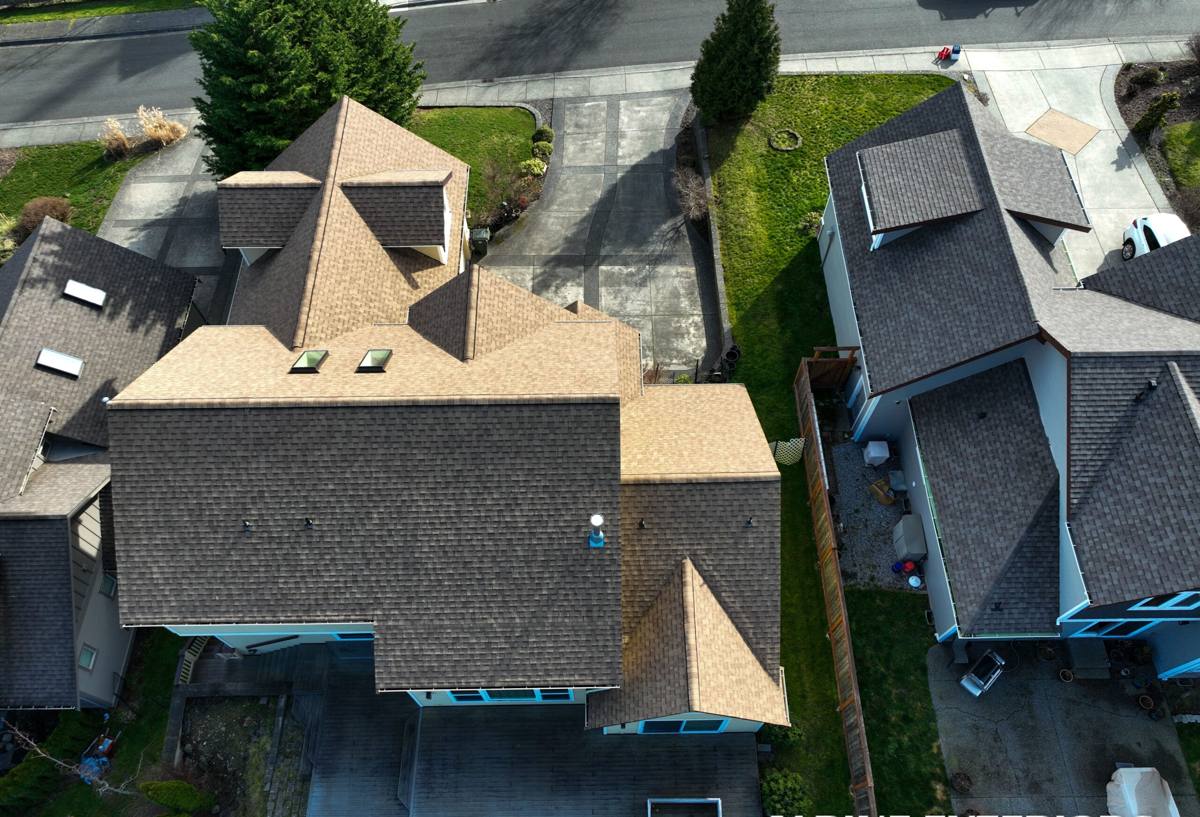
What Geneva's Climate Does to Siding
Geneva's location near Lake Whatcom means homes get lake-effect moisture on top of the normal Pacific Northwest rain pattern. That combination shows up in a few predictable ways:
- Driving rain: Wind off the lake pushes rain sideways into wall assemblies, not just straight down. Siding and flashing details that only handle vertical rain well enough tend to leak at laps, corners, and penetrations over time.
- Moss and algae season: Shaded lots under fir and cedar canopy stay damp for months at a stretch. Moss and algae growth on north- and west-facing walls is a near-constant maintenance issue for porous or absorbent siding materials.
- Salt-tinged air: Proximity to Puget Sound weather systems and lake humidity accelerates corrosion on fasteners, flashing, and any metal trim that isn't properly rated or protected.
- Limited direct sun exposure: Tree cover reduces the drying window siding gets between rain events, which matters a great deal for any product that relies on paint film or surface coatings to shed water.
None of these factors are unique to Geneva, but together they add up to a tougher-than-average environment for exterior cladding. A siding job that would hold up fine in a sunny, open lot elsewhere in Whatcom County can fail years early here if the product or the installation cuts corners.
Why This Matters More in Geneva Than in Drier Neighborhoods
The core issue is dry time. Siding that stays damp longer is siding that's under more sustained stress — moisture cycling through wood-based products causes swelling and softening, paint and coatings degrade faster under constant film, and any gap in flashing or caulking has more opportunity to let water into the wall assembly before it ever gets a chance to dry out. Geneva's tree cover and lake proximity mean less sun, more ambient humidity, and a longer moss season than you'd see on a more exposed lot a few miles away.
Why We Only Install James Hardie Fiber Cement
We made a deliberate decision years ago to install one siding system: James Hardie fiber cement. We don't install vinyl, LP SmartSide, primed wood, cedar, or other fiber cement brands. That's not a marketing position — it's a standard we hold because of what we've seen hold up in this exact climate.
Fiber cement is non-combustible, dimensionally stable, and doesn't swell or rot the way wood-based products can when they stay wet for extended periods. James Hardie's ColorPlus factory-applied finish is baked on under controlled conditions, which gives it better adhesion and UV resistance than field-applied paint — a real advantage in a neighborhood where siding doesn't get much direct sun to help cure and dry a site-applied coat. Hardie also engineers regional product lines (HardiePlank, HardiePanel, and trim) with formulations suited to different climate zones, and the Pacific Northwest falls squarely into their wet-climate engineering considerations.
None of this means other products are junk — vinyl and engineered wood sidings have real advantages in the right application (cost, weight, ease of repair). But for a lake-adjacent, shaded, high-moisture site like Geneva, we've settled on fiber cement as the product we're willing to warranty and stand behind.
What a Correct Installation Involves
The siding material is only part of the equation. Most siding failures we get called out to inspect trace back to installation shortcuts, not the product itself. A correct James Hardie installation in a climate like Geneva's includes:
- A weather-resistive barrier (house wrap) installed shingle-style so every seam sheds water downward
- Proper rainscreen or drainage gap furring where the wall assembly and site conditions call for it, so moisture that does get behind the cladding can drain and dry
- Correctly lapped and sealed window and door flashing, integrated with the water-resistive barrier — not just caulked over the surface
- Fasteners at the manufacturer-specified spacing and depth, driven flush without over-driving (over-driven nails crack the board's fastening zone and create failure points)
- Minimum clearances from grade, roof lines, and decks so siding isn't sitting in a moisture trap
- Factory-cut and factory-primed edges wherever possible, with any field cuts properly sealed before installation
- Corrosion-resistant flashing and trim hardware, given the salt-air exposure this area gets
Skipping any one of these doesn't necessarily cause an immediate problem — it causes a slow one. Water finds the weak point over several wet seasons, and by the time it's visible from outside, there's often already damage to sheathing or framing behind the siding.
Common Mistakes We Find on Existing Homes
When we're called out to look at siding problems on existing Geneva homes, a handful of issues show up repeatedly: caulk used as a substitute for proper flashing, siding installed tight to grade or decking with no clearance, missing or reversed house wrap laps, and fastener patterns that don't match the manufacturer's spec. These aren't Hardie-specific problems — they're installation problems that would compromise any siding product, but fiber cement's dimensional stability at least means the material itself isn't compounding the issue the way a swelling or absorbent product would.
Our Process for a Geneva Siding Project
- On-site assessment: We walk the exterior, check for existing moisture damage, evaluate the current wall assembly, and note site-specific concerns like tree shading, drainage patterns, and grade clearance.
- Scope and product selection: We recommend the appropriate James Hardie profile (lap, panel, shingle-style) and trim package based on the home's style and exposure, and explain the reasoning.
- Written estimate: A clear, itemized quote — material, labor, tear-off if applicable, and any sheathing repair contingencies identified during assessment.
- Prep and tear-off: Removal of failing siding, inspection of sheathing and framing underneath, and repair of any water damage found before new material goes on.
- Weather barrier and flashing installation: House wrap, window/door flashing integration, and drainage detailing done to manufacturer spec before a single piece of siding goes up.
- Hardie installation: Correct fastening, spacing, and clearances, with factory-primed cuts sealed in the field.
- Final walkthrough: We review the completed work with you, cover care and maintenance basics, and go over the warranty paperwork.
Cost Factors for a Geneva Project
Every home is different, so exact pricing depends on a site visit — but the main factors that move the number are consistent across most Geneva jobs:
| Factor | Why It Matters |
|---|---|
| Tear-off vs. new construction | Removing failing siding and repairing any hidden water damage adds labor before new material can go up |
| Wall complexity | Dormers, multiple gables, and cut-ins around a lake-view home increase trim and flashing work |
| Product profile chosen | Lap, panel, and shingle-style Hardie products carry different material and install costs |
| Access and site slope | Many Geneva lots slope toward the lake, which can affect staging, scaffolding, and material handling |
| Drainage/rainscreen detailing | Adding a drainage gap where the existing assembly lacks one is a worthwhile upgrade in this climate, and adds some labor |
| Trim and accessory package | Corner boards, frieze boards, and window trim selections affect both material cost and finished appearance |
Maintenance After Installation
One of the practical benefits of fiber cement in a moss-prone environment is that it doesn't feed algae and moss growth the way porous wood-based sidings can, and it won't swell or rot if moss does take hold on a shaded wall. That said, no siding is maintenance-free in this climate. A simple annual routine goes a long way:
- Rinse siding (especially shaded north- and west-facing walls) with a garden hose or soft wash once a year to keep moss and algae from establishing
- Keep gutters clear so overflow isn't running down the wall face
- Trim back vegetation and tree branches that hold moisture against the siding
- Inspect caulking at trim joints and penetrations every couple of years and touch up as needed
- Watch for any staining or streaking near flashing points, which can signal a detail that needs attention before it becomes a bigger repair
Why Hire a Crew That Already Works in This Area
Geneva and the surrounding Sudden Valley area have real site conditions that generic siding crews from outside the region don't always account for: lake-effect wind direction, extended shade and moss season, and lots with slope and access challenges. A crew that regularly works this specific area already knows to build in drainage detailing, use corrosion-resistant hardware, and plan around limited dry-time between rain events. That local familiarity shows up in fewer callbacks and a siding job that's actually built for the conditions it has to survive, not just the conditions on a spec sheet.
If you're planning a siding project in Geneva or elsewhere in Sudden Valley, we're happy to walk your property and give you a straightforward, no-pressure estimate — just fill out the form below to get started.