 Sudden Valley
 Metal Roofing in Ferndale: Built for What This Climate Actually Does to a Roof
Ferndale sits close enough to the water that homes here take a different kind of weather beating than roofs twenty miles inland. Salt-laden air moves through on a regular basis, driving rain comes in sideways off winter storms, and the shaded, damp conditions that define a Whatcom County winter give moss months to establish itself before anyone notices. A roof here isn't just shedding water — it's fighting corrosion, wind-driven moisture intrusion, and organic growth all at once, often at the same time.
Metal roofing holds up well against all three of those pressures when it's specified and installed correctly for this environment. It doesn't when it's treated like a generic product dropped onto a house without regard for what the coastal Pacific Northwest actually throws at it. This page is about doing that installation right for a Ferndale home specifically — not metal roofing in general.
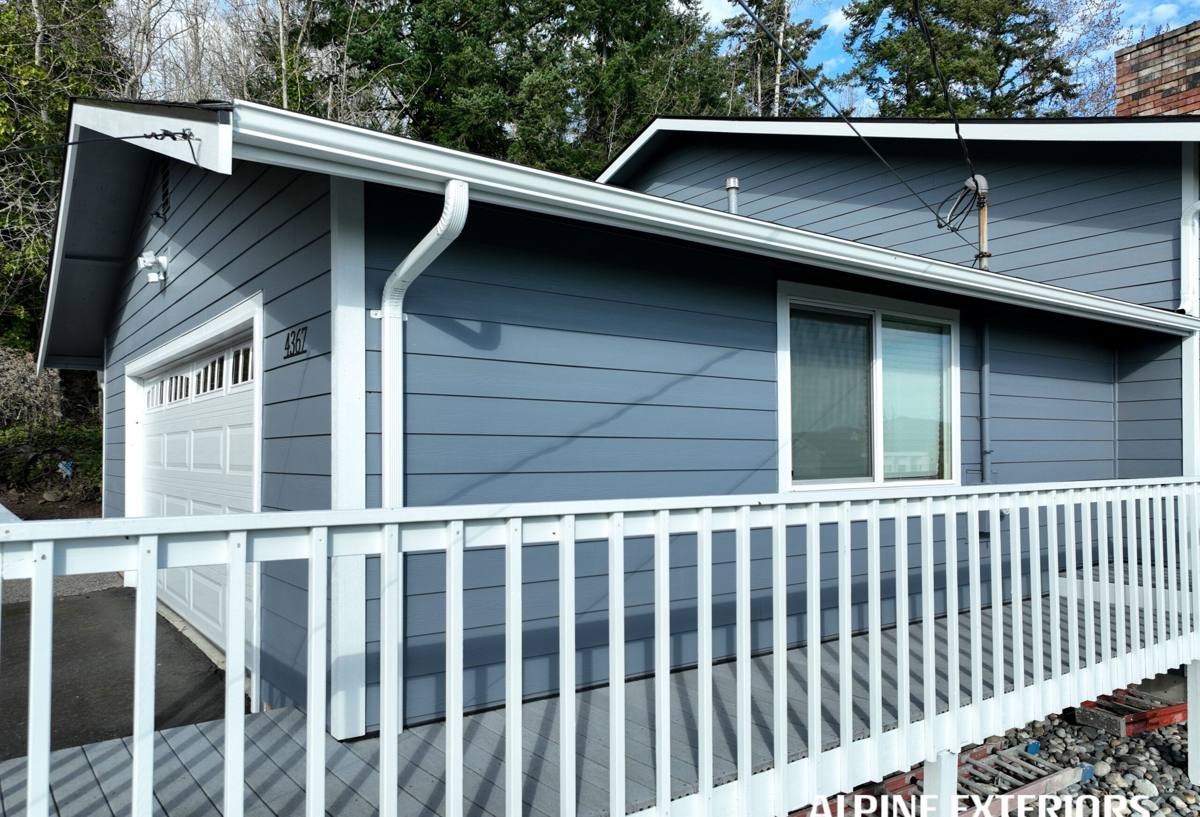
Why Salt Air, Rain, and Moss Change the Job
Salt Air and Corrosion
Coastal and near-coastal air carries salt that accelerates corrosion on any exposed metal — fasteners, flashing, cut edges, and panel finishes included. It's not dramatic or fast, but it's constant. A roofing system chosen without that in mind will show premature rust at fastener heads and cut edges years before it should, usually starting at the details rather than the open field of the roof.
Driving Rain
Wind-driven rain off Georgia Strait and the surrounding lowlands doesn't fall straight down — it gets pushed sideways under panels, around penetrations, and into any gap in flashing or underlayment. A metal roof's resistance to water intrusion comes almost entirely from the details: seam design, underlayment quality, and flashing at every valley, wall, and penetration. The panels themselves rarely fail; the connections between them do.
Moss and Organic Growth
Shaded rooflines, tree cover, and a long wet season give moss and algae plenty of time to take hold on any roofing surface that holds moisture or has a rough texture for spores to grip. Metal roofing gives moss far less to hold onto than shingles, but it isn't immune — moss and debris can still accumulate in valleys, behind chimneys, and anywhere water sits or panels overlap poorly.
Metal Roofing Systems: What's Actually Available
Not all metal roofing is the same product wearing different colors. The two systems homeowners run into most often behave very differently over time, especially in a wet, salty climate.
| Feature | Standing Seam | Exposed Fastener |
|---|---|---|
| Fasteners | Hidden, clipped beneath panels | Visible screws through the panel face |
| Long-term weak point | Seam and flashing detailing | Fastener gaskets wear and loosen over time |
| Expansion/contraction handling | Floats on concealed clips, moves freely | Fixed at every screw, more stress on panel |
| Upfront cost | Higher | Lower |
| Typical service life before major maintenance | Longer | Shorter — gasket and fastener maintenance needed |
| Best suited for | Homeowners planning to stay long-term, coastal exposure | Outbuildings, budget-driven projects |
Exposed-fastener panels aren't a bad product — they're a legitimate lower-cost option that works fine on the right structure. But every screw through the panel face is a future maintenance point, and in salt air those gaskets and fastener heads are exactly where corrosion starts first. For a primary residence in this area, we walk homeowners through both options honestly rather than defaulting to whichever is easier to install.
What a Correct Installation Actually Involves
The panels get most of the attention, but the layers underneath and around them are what determine whether the roof performs for the next several decades or starts leaking in five years.
- Deck inspection and repair — any soft, rotted, or delaminated sheathing gets replaced before anything goes down, not covered up.
- Underlayment — a synthetic or high-temp ice-and-water-type membrane suited to metal, not a leftover felt product meant for shingles.
- Fastener and clip selection — corrosion-resistant hardware matched to the panel material, not mismatched metals that cause galvanic corrosion.
- Flashing at every transition — valleys, walls, chimneys, and roof penetrations, formed and layered so water is directed out, not trapped.
- Ventilation — intake and exhaust that keep moisture from condensing on the underside of the deck, especially important on a well-sealed metal roof.
- Panel layout and seam direction — run and lapped to work with prevailing wind and rain direction on that specific roof, not just installed in the fastest order.
Signs a Ferndale Roof Needs Attention
Homeowners usually call us for one of two reasons: the current roof is visibly failing, or they're getting ahead of a replacement before it becomes an emergency. Either way, these are the signs worth acting on:
- Rust streaking at fastener heads, flashing, or panel edges
- Moss or dark streaking building up in valleys or shaded slopes
- Loose or backed-out fasteners on an existing exposed-fastener roof
- Water stains on interior ceilings after wind-driven rain events
- Oil-canning (visible waviness) developing across panel faces
- Granule loss or curling on an aging asphalt roof you're considering replacing with metal
Our Process for a Ferndale Metal Roof
1. On-Site Evaluation
We look at the existing roof structure, deck condition, ventilation, and how the house is exposed to wind and rain — a roof tucked behind trees on one side and open to weather on the other often needs different detailing on each slope.
2. System Recommendation
Based on that evaluation, budget, and how long the homeowner plans to be in the house, we recommend standing seam or exposed fastener honestly, with the trade-offs explained rather than upsold or downsold.
3. Tear-Off and Deck Prep
Old roofing comes off, the deck gets inspected, and any damaged sheathing is replaced before underlayment goes down. This step gets skipped by crews in a hurry — it's the one that determines whether the new roof has a sound base.
4. Installation
Underlayment, panels, and flashing go in as a system, with attention to seam direction, fastener spacing, and every penetration and transition point.
5. Final Walkthrough
We walk the finished roof and the details with the homeowner, so there's a clear picture of what was done and what maintenance, if any, to expect going forward.
Cost Factors on a Metal Roofing Project
Pricing on any metal roof depends on more than square footage. These are the variables that actually move the number:
| Factor | Why It Matters |
|---|---|
| Panel system (standing seam vs. exposed fastener) | Standing seam costs more upfront but reduces long-term maintenance |
| Roof complexity | Valleys, dormers, and multiple planes require more flashing and labor |
| Deck condition | Rot or damage found during tear-off adds repair cost |
| Existing layers to remove | Tear-off of old shingles or roofing adds disposal and labor time |
| Ventilation upgrades | Adding or correcting intake/exhaust ventilation affects scope |
| Panel finish and gauge | Heavier gauge and higher-grade coatings cost more but resist corrosion and fading longer |
We don't quote a price without seeing the roof — anyone who does is guessing. What we can say honestly is that a correctly detailed metal roof costs more upfront than the cheapest asphalt option and less over time than repeatedly patching or replacing a roof that wasn't built for this climate in the first place.
Maintenance: What a Metal Roof Actually Needs
One of the real advantages of metal roofing is how little ongoing maintenance it needs compared to shingles — but "little" isn't "none," especially with moss pressure and salt air in the mix.
- Clear debris and moss buildup from valleys and behind chimneys or vents once or twice a year
- Check fastener heads on exposed-fastener systems periodically for backing out or gasket wear
- Keep gutters clear so water isn't backing up under drip edges
- Trim back tree limbs that keep sections of roof shaded and damp
- Have flashing and sealant points inspected after any major windstorm
Why It Matters That We Already Work in Ferndale
A roofing crew that only occasionally works this far north treats every job as a one-off. A crew that regularly works Ferndale and the surrounding Whatcom County communities has already seen how salt air, driving rain, and moss season play out on real roofs over real years — which fastener types hold up, which flashing details actually shed wind-driven rain, and where moss tends to build up first on a given roof orientation. That familiarity shows up in the details, not in the sales pitch.
It also matters for accountability. A local contractor is still around next year and the year after — not just for warranty claims, but for the kind of quick follow-up visit that keeps a small issue from becoming a bigger one.
Get a Straight Answer for Your Roof
If you're weighing metal roofing for a Ferndale home — whether you're replacing an aging asphalt roof or dealing with an existing metal roof that wasn't installed right the first time — we're happy to take a look and give you a straightforward assessment. There's no pressure and no obligation, just an honest read on what your roof actually needs. Request a free estimate using the form below.