 Sudden Valley
 Building New in Alger: What the Regional Climate Asks of Your Windows
New construction is the one chance to get window installation right from the start. There's no old flashing to work around, no rot to discover mid-project, no compromise forced by an opening that's already framed wrong. But that also means every mistake made during a new build — a skipped flashing step, the wrong fastener, a sealant joint rushed at the end of a long day — gets sealed behind siding and drywall before anyone notices. In the Sudden Valley area of Whatcom County, the climate doesn't forgive those mistakes quietly. Between salt-laden air, wind-driven rain off the water, and a moss season that runs longer here than in drier parts of the state, a window that's installed even slightly wrong tends to show it within a few winters, not a few decades.
This page is about one job, done right, in one area: new-construction window installation for homes going up in and around Alger. Not a general overview of window brands, not a replacement-window pitch — the specific work of setting windows correctly into new framing before the building is closed in.
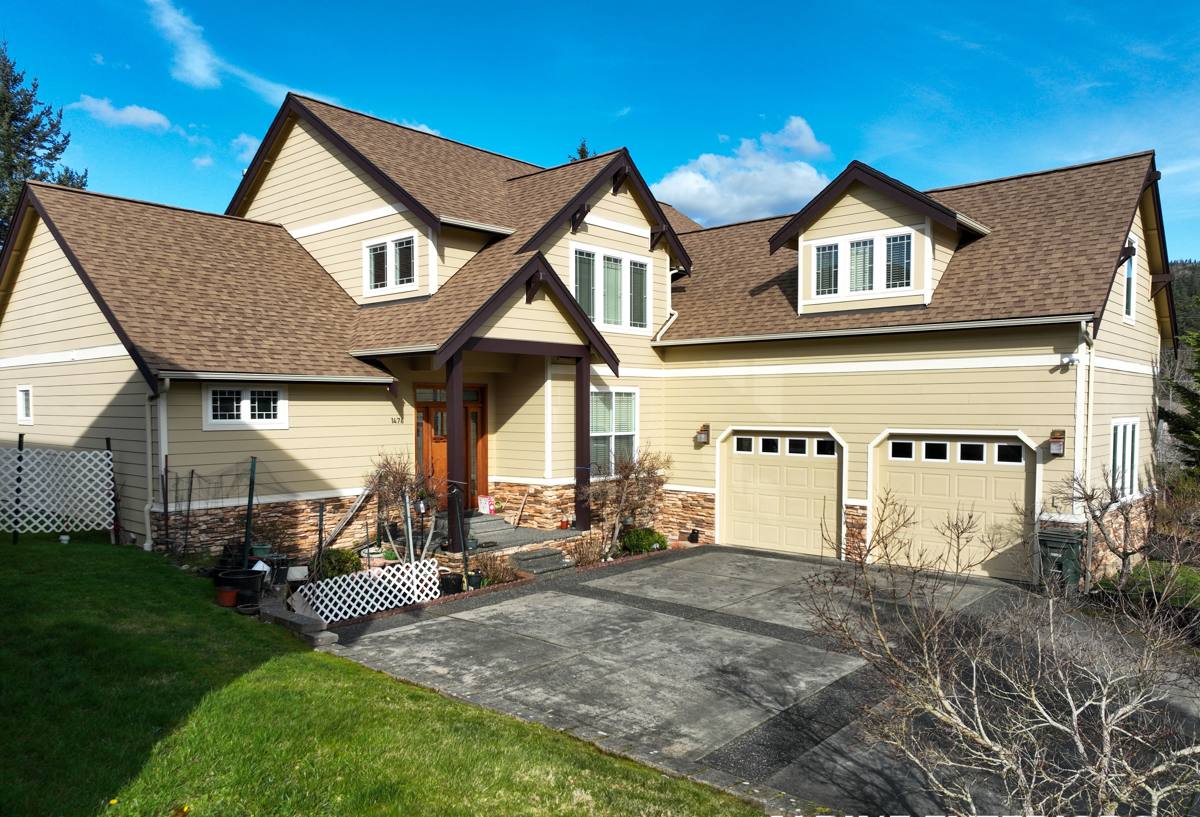
Salt Air, Driving Rain, and a Long Moss Season
Three regional conditions drive most of the decisions we make on a new-construction window job out here, and they're worth understanding before framing even starts.
Salt Air and Hardware Corrosion
Proximity to open water means airborne salt is a real factor on fasteners, flashing, and window hardware — not just on the coastline itself but well inland as prevailing winds carry it. Standard zinc-coated fasteners and untreated aluminum trim pieces corrode faster here than they would in a dry inland climate. We spec corrosion-resistant fasteners and flashing metals for new builds in this area as a matter of course, not as an upcharge someone has to ask for.
Driving Rain and Water Management
Whatcom County gets rain that doesn't just fall straight down — fall and winter storms push it sideways into wall assemblies, especially on exposed elevations. A window opening that relies on caulk alone to keep water out will eventually leak. The wall assembly around every opening needs a real drainage plane: water-resistive barrier, sill pan, and flashing that work together so any water that does get past the window sheds back outward instead of pooling in the rough opening or running down into the wall cavity.
Moss, Algae, and Drainage Tracks
Shaded lots and long stretches of damp, low-light weather mean moss and algae growth on north- and east-facing surfaces isn't a maintenance afterthought here — it's expected. On windows, that shows up in weep holes and sill tracks clogging with organic growth, which backs up water that's supposed to drain away. We account for this in sill design and orientation from the start, and we'll flag which elevations of a new build are going to need more frequent homeowner attention once landscaping matures.
What Correct New-Construction Window Installation Actually Involves
"Set the window in the hole and screw it in" is roughly what happens on a rushed job, and it's exactly what fails first in this climate. A correct install follows a specific sequence, and skipping steps doesn't save real time — it just moves the cost to whoever owns the house when a wall gets opened up later.
Flashing Order Matters More Than the Window Itself
Water management in a wall assembly is entirely about layering — each material has to lap over the one below it, like shingles on a roof, so water is always directed outward and down. Sill pan flashing goes in first, sloped to drain any water that reaches it back out over the wall surface. The window's side flanges get integrated next, then the head flashing goes in last, lapping over the water-resistive barrier above the opening. Get that order backwards even once and you've built a place for water to collect instead of escape.
Nail-Fin vs. Block-Frame Installation
Most new-construction windows in this region use a nail-fin (flange) frame, fastened directly to the sheathing and integrated with the WRB and flashing before siding goes on. Block-frame windows, set into a rough opening and secured through the jambs, show up more often on masonry or specific architectural details. The method has to match how the wall is built — mixing them up, or having the window trade and the siding trade working off different assumptions about which method is being used, is a common source of gaps and leaks on new builds.
Choosing Frame Material for This Microclimate
There's no single "best" frame material — every option is a trade-off between upfront cost, maintenance, and how it holds up to salt air and constant moisture. Here's how the common choices compare for a new build in this area.
| Frame Material | Coastal/Salt-Air Durability | Moisture Behavior | Maintenance | Relative Cost |
|---|---|---|---|---|
| Vinyl | Good — won't corrode | Doesn't absorb water; seams need to stay well-sealed | Low | Lower |
| Fiberglass | Very good — dimensionally stable, resists corrosion | Excellent; minimal expansion/contraction | Low | Higher |
| Wood-clad | Depends heavily on the cladding and joinery quality | Vulnerable if cladding is breached; interior wood can take on moisture | Moderate to high | Higher |
| Aluminum | Prone to corrosion near salt air unless properly coated | Conducts heat/cold; condensation risk without thermal break | Moderate | Mid-range |
For most new builds in and around Alger, we steer clients toward vinyl or fiberglass for anything on an exposed or salt-air-facing elevation, simply because they hold up with the least ongoing attention. Wood-clad can look great and perform well, but it asks more of both the installation (perfect cladding and flashing) and the homeowner (regular inspection) — that's a fair trade for some clients and not for others, and we'll walk through it honestly rather than push one direction.
Our Process for Alger New-Construction Projects
- Plan review: We look at the window schedule, rough opening sizes, and elevations before framing is final, so any conflicts get caught on paper instead of on site.
- Rough opening check: Before any window goes in, we verify each opening is square, plumb, and sized correctly — a framing error caught here takes minutes to fix; caught after siding, it takes days.
- Sill pan and flashing installation: Sloped sill pans go in first, followed by jamb and head flashing integrated with the wall's water-resistive barrier in the correct shingle-lap order.
- Window setting and shimming: Each unit is set, shimmed to level and plumb, and fastened per the manufacturer's schedule — over- or under-fastening both cause problems down the line.
- Sealant and backer rod: Exterior sealant joints get backer rod where called for and the right sealant type for the substrate, not just a bead of whatever's on the truck.
- Interior and exterior trim: Trim is set once flashing and sealant are fully cured and inspected, not before.
- Final walkthrough: Every window operates, locks, and drains correctly before we call the job done.
Cost Factors to Expect
Every new-construction window job is priced around the specifics of the build, but the same handful of factors move the number up or down on most projects in this area.
| Factor | Why It Matters |
|---|---|
| Number and size of openings | More or larger windows means more labor and material, straightforwardly |
| Frame material chosen | Vinyl, fiberglass, wood-clad, and aluminum carry different unit costs |
| Glazing package | Higher-performance glass for energy code compliance or noise/glare control costs more than basic dual-pane |
| Flashing complexity | Multi-story walls, dormers, and windows near roof intersections take more time to flash correctly |
| Site access and staging | Difficult lot access or limited staging area can add labor time |
| Elevation exposure | Openings on wind- or rain-exposed elevations may call for upgraded flashing details |
We'll walk through which of these apply to your specific plans during the estimate, in plain numbers — not a vague range that leaves you guessing until the invoice.
Why a Crew That Already Works This Area Matters
Whatcom County's building department has its own permitting rhythm and inspection expectations, and Washington's state energy code sets minimum performance requirements for new-construction glazing along with separate egress and safety-glazing rules for bedrooms and areas near doors. A crew that's already pulled permits and passed inspections on other builds in this area isn't learning that process on your project.
There's also the site-specific knowledge that only comes from working the area repeatedly: which lots sit exposed to wind off the water and need extra attention to head flashing, which shaded parcels are going to fight moss on the north elevation from year one, and how local framing crews typically size rough openings — so window measurements and framing plans line up the first time instead of requiring rework. That familiarity doesn't show up as a line item on an invoice, but it shows up in fewer surprises during the build.
A Pre-Drywall Checklist for New-Construction Window Installs
Before interior finishes close up the wall for good, these are the things worth confirming — whether we're doing the work or you're checking behind another crew.
- Sill pan flashing is sloped to drain outward, not flat or pitched inward
- Flashing layers overlap in the correct order: sill, then jambs, then head, each lapping the one below
- Window is shimmed level, plumb, and square — not just fastened and left as-framed
- Fasteners and flashing metals are corrosion-resistant, appropriate for a salt-air climate
- Backer rod and sealant are used at exterior joints, not sealant alone spanning a wide gap
- Weep holes and drainage tracks are clear and unobstructed
- Window operates smoothly and locks fully before trim goes on
- Rough opening dimensions match the window schedule with no field-cut surprises
Getting Started
If you're building new in Alger or elsewhere around Sudden Valley and want windows installed by a crew that already knows this climate and this permitting process, we're happy to walk through your plans. Reach out for a free, no-pressure estimate — there's a form right below this page.