 Sudden Valley
 Why Bellingham Roofs Take a Beating
Bellingham sits right where the marine climate of the Salish Sea meets the hills and rain shadow effects of Whatcom County, and that combination is hard on roofing. A roof here doesn't fail because of one dramatic storm — it fails from years of steady, low-grade exposure to moisture, salt-tinged air, and shade-grown moss that most drier parts of the country never have to deal with. Understanding what's actually working against your roof is the first step to repairing it correctly instead of just patching the symptom.
Salt Air and Corrosion
Homes closer to Bellingham Bay and the surrounding shoreline deal with airborne salt that accelerates corrosion on exposed metal — flashing, fasteners, gutter hangers, and vent caps in particular. Corrosion doesn't announce itself; it shows up as rust streaking, pinhole leaks in flashing, or fasteners that back out and loosen shingles over several seasons. A repair that ignores the metal components and only replaces shingles is treating half the problem.
Driving Rain and Wind
Whatcom County gets a lot of rain, but it's the wind-driven rain off the water that causes the most repair calls. Rain that comes in sideways finds every weak seam, lifted shingle tab, and under-lapped flashing joint that a straight-down rain would never reach. Roof edges, valleys, and anywhere two roof planes or a roof and wall meet are where wind-driven rain does its damage first.
The Long Moss Season
Western Washington's moss season isn't really a season here — on shaded, north-facing, or tree-covered roof sections, moss and algae can grow nearly year-round. Moss holds moisture against the shingle surface long after the rest of the roof has dried, which accelerates granule loss and shingle curling, and it works its way under tabs and around fasteners, lifting them just enough for water to get underneath.
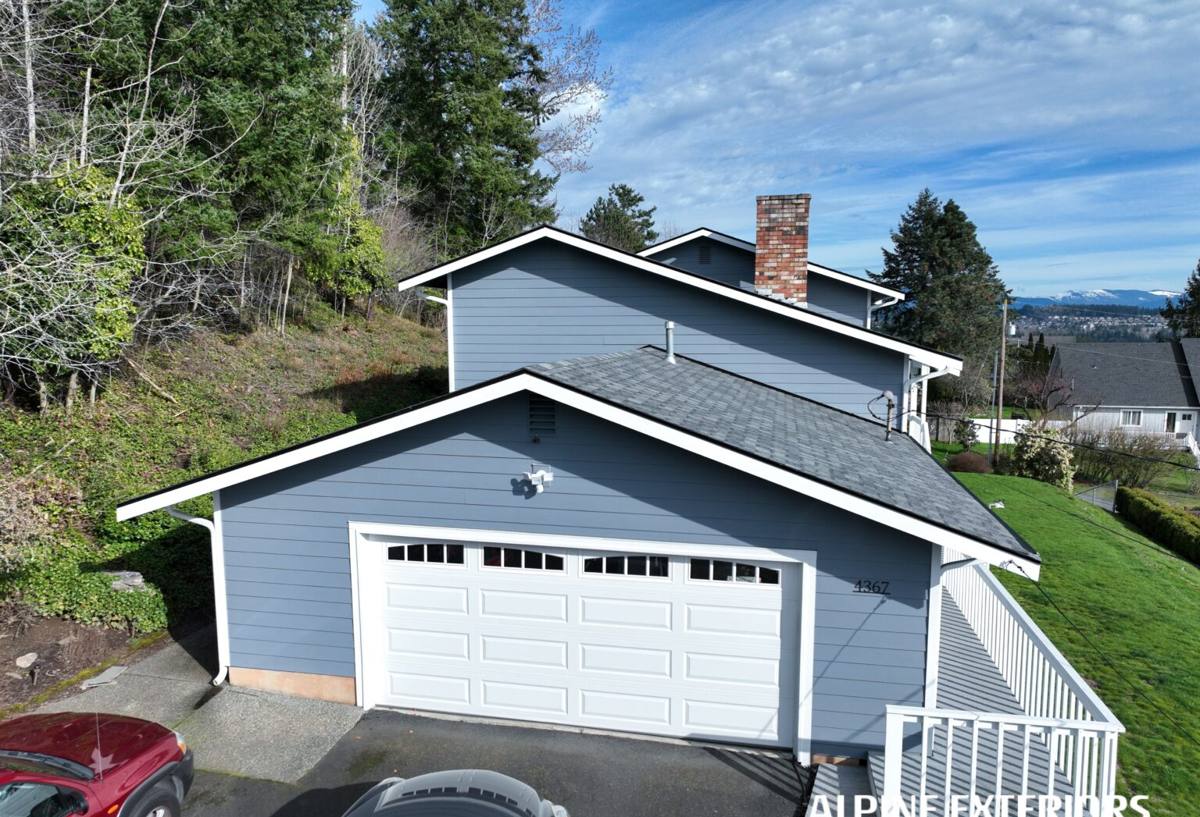
Common Roof Repair Issues We See Around Bellingham
Most of the repair calls we get in this area fall into a short list of recurring problems. None of them are unusual, but each one gets worse the longer it's left alone:
- Moss and algae growth breaking down shingle granules and lifting shingle edges
- Cracked, corroded, or improperly lapped flashing around chimneys, skylights, and vent pipes
- Clogged or undersized valleys and gutters causing water to back up under roofing material
- Wind-lifted or missing shingle tabs along ridges and rakes exposed to prevailing weather
- Soft, spongy, or discolored roof decking from long-term slow leaks that went unnoticed
- Fastener and flashing corrosion in areas closer to the bay or open exposure
Individually, most of these are straightforward repairs. The trouble is that they're rarely found in isolation — a homeowner calls about one visible leak and we find two or three contributing issues nearby, which is exactly why a proper inspection matters more than a quick patch.
Where the Roof Meets the Siding: The Leak Point Most Repairs Miss
As a siding contractor that also handles roof repair, we spend a lot of time at the transition where a roof plane meets a wall — dormers, roof-to-wall junctions above porches and additions, and anywhere a lower roof section ties into a taller wall. This is where step flashing and kickout flashing do their job, directing water off the roof and away from the wall rather than letting it run down behind the siding.
When that flashing is missing, undersized, or was never properly bent to kick water outward, the leak doesn't always show up on the roof at all — it shows up as staining, rot, or bubbling siding several feet below the actual point of entry. A roofer who only thinks in terms of shingles can miss this entirely, and a siding contractor who doesn't understand roof flashing can end up replacing siding that will just get wet again. Because we work on both sides of that junction, we diagnose it as one system instead of two separate trades pointing at each other.
What a Correct Roof Repair Actually Involves
Diagnosis Before Repair
A repair that starts with a caulk gun instead of a real inspection usually buys a homeowner a year or two before the same leak comes back, often worse. A proper diagnosis means getting on the roof, checking the attic or interior side of the roof deck where accessible for moisture and staining, and tracing the leak path — because water rarely drips straight down from where it enters.
Matching Materials and Technique
Once we know what's actually failing, the repair itself needs to use compatible materials and correct technique — matching shingle type and, where possible, color and profile; using flashing metal and underlayment that will hold up to this climate rather than whatever is cheapest; and tying new material into old the way it was designed to be layered, shingle over flashing over underlayment, so water sheds the way it's supposed to. Repairs that skip steps to save time tend to fail at the seams first.
Our Roof Repair Process
- Inspection. We look at the roof, the flashing, the gutters and valleys, and any interior signs of moisture before recommending anything.
- Written estimate. You get a clear explanation of what's actually wrong, what we recommend fixing, and what it will cost — no pressure to bundle in work that isn't needed.
- Repair. We remove damaged material back to sound decking, replace flashing and underlayment as needed, and install matching roofing material correctly layered and fastened.
- Cleanup and check. Debris and old material are hauled off, and we do a final check of the repair area and surrounding sections before we consider the job done.
Repair or Replace? How to Tell the Difference
Not every roof problem in Bellingham needs a full replacement, but some do. Here's a general guide to which category your roof is likely in:
| Sign | Usually Points to Repair | Usually Points to Replacement |
|---|---|---|
| Age of roof | Under 15–20 years, isolated issue | Near or past the material's expected lifespan |
| Extent of damage | One or two localized areas | Widespread granule loss, curling, or moss across most of the roof |
| Decking condition | Solid, no soft spots | Soft, spongy, or visibly rotted decking in multiple areas |
| Leak history | First occurrence, clear single cause | Recurring leaks in different spots over several seasons |
| Flashing condition | Isolated corrosion or gaps | Flashing failing throughout, especially at multiple wall junctions |
When a roof falls in the middle of this table, we'll tell you honestly — sometimes the right call is a solid repair now with a plan to budget for replacement in a few years, rather than either extreme.
What Affects the Cost of a Roof Repair
Roof repair costs vary a lot based on scope, and we'd rather explain the factors than throw out a number that doesn't apply to your roof:
| Repair Scope | What's Typically Involved | General Cost Range |
|---|---|---|
| Minor | A few shingles, a small flashing gap, minor moss cleanup | Low hundreds of dollars |
| Moderate | A valley section, larger flashing run, multiple isolated repair points | High hundreds to a couple thousand dollars |
| Major | Deck repair, multiple flashing systems, extensive tear-back | Several thousand dollars, approaching replacement cost |
Access and roof pitch also factor in — a steep roof or one with limited access takes longer and requires more safety setup than a simple, low-slope section. We account for this in the estimate up front, not as a surprise afterward.
Keeping Your Roof Ahead of the Next Repair
Most of the repair calls we get could have been smaller, cheaper jobs if they'd been caught earlier. A little regular attention goes a long way in this climate:
- Clear moss and debris from shaded and north-facing roof sections at least once a year
- Clean gutters and valleys before the fall rains start and again mid-winter if trees are nearby
- Have flashing around chimneys, skylights, and vents visually checked every couple of years
- Look for granule buildup in gutters, which signals accelerating shingle wear
- Address small leaks as soon as they're noticed rather than waiting for a bigger storm
- Keep tree branches trimmed back from the roof surface to reduce shade and debris
None of this replaces a professional inspection, but it does reduce how often you need one, and it keeps small issues from turning into deck rot or interior damage.
Why Hire a Crew That Already Works Bellingham and Whatcom County
A roof repair that's correct for Spokane or Eastern Washington isn't necessarily correct here. Crews who don't work this climate regularly sometimes underestimate how much moss and moisture matter, or use flashing details that aren't built for sustained wet exposure and salt air near the water. We work on homes throughout Bellingham and the surrounding Whatcom County area regularly, which means we're not guessing at how local weather patterns behave against a particular roof orientation or exposure — we've already seen how these repairs hold up a year or two later, and we build repairs to match.
Being local also means realistic response times when a leak shows up mid-storm, and a crew that's still around and reachable if a question comes up after the work is done — not a name that only shows up for one season and moves on.
If you're dealing with a leak, missing shingles, or a roof that just needs a second opinion, we're happy to take a look. Fill out the form below for a free, no-pressure estimate, and we'll tell you honestly what we find.