 Sudden Valley
 Roofing Around Lake Whatcom Is Its Own Job
A roof on the Lake Whatcom side of Sudden Valley works harder than a roof in a dry, open subdivision. The lake sits in a bowl of forested hills that traps moisture, and marine air pushing in off the Sound keeps humidity high for months at a time. Add heavy tree cover, steep driveways that make staging materials harder, and a long wet season, and you get roofs that age faster than their warranty paperwork suggests. Replacing a roof here isn't just swapping old shingles for new ones — it's addressing the specific ways this microclimate attacks a roof system.
We've replaced roofs throughout Sudden Valley and along the Lake Whatcom shoreline enough times to know the failure patterns before we climb the ladder: moss colonizing north-facing slopes, soffit rot from trapped humidity, valleys that hold debris and fail early, and fascia boards that look fine from the ground but are soft to the touch. This page covers what a correct roof replacement looks like for this specific area — not a generic overview.
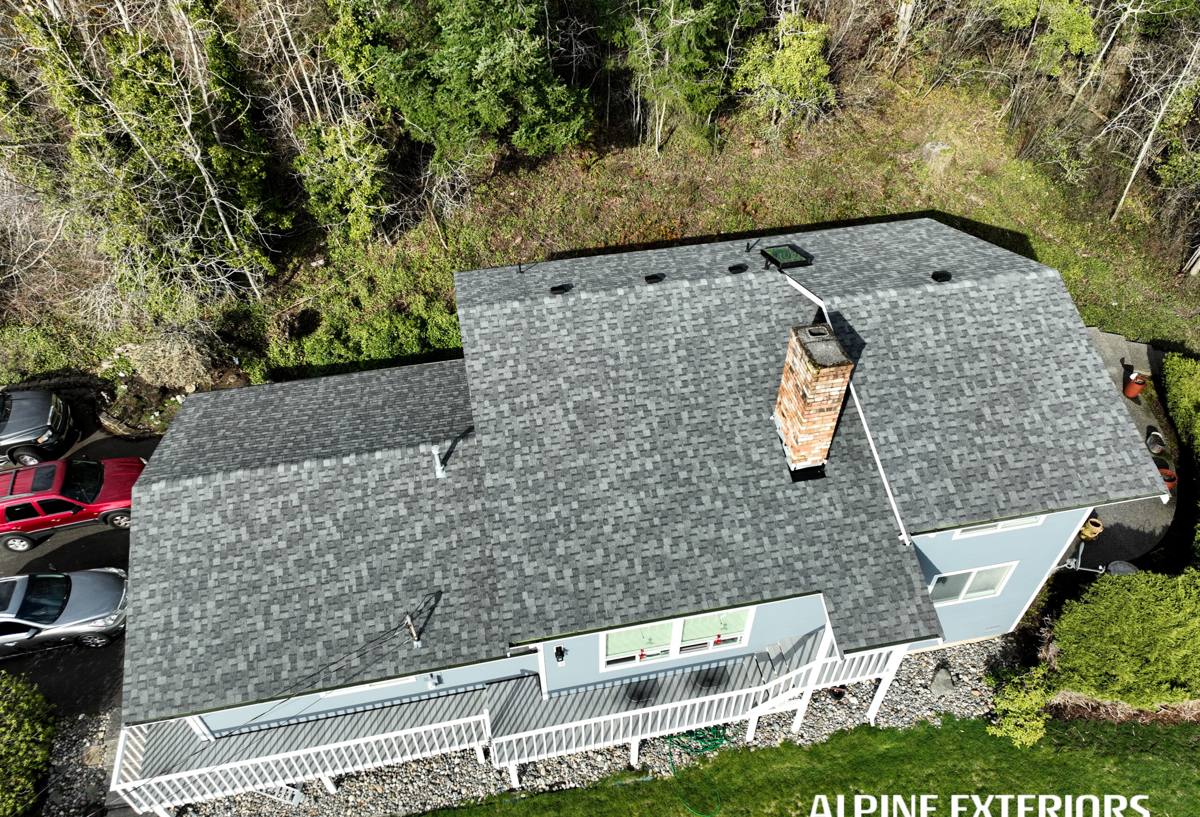
What Lake Whatcom's Climate Does to a Roof
Moisture That Never Fully Dries Out
Whatcom County gets a long wet season, and the tree canopy around Lake Whatcom keeps roof surfaces shaded and damp well after a storm has passed elsewhere. Shingles that stay wet for extended stretches lose granules faster, and the plywood decking underneath is at higher risk of soaking through if the underlayment or flashing isn't doing its job.
Moss and Organic Growth
Moss is the single most common roof complaint we hear from Sudden Valley homeowners. It's not just cosmetic — moss holds moisture against the shingle surface, lifts shingle edges as it grows, and works its way under tabs and flashing over a few seasons. A roof that's been fighting moss for years often has more hidden damage than the surface growth suggests.
Driving Rain and Wind Off the Lake
Lake Whatcom creates its own local wind patterns, and driving rain off the water can push moisture sideways under poorly sealed shingle tabs, around chimney flashing, and into roof-wall intersections. Roofs here need attention paid to lateral water intrusion, not just water running straight downhill.
Salt-Laden Marine Air
Prevailing weather moving inland off the Sound carries salt-laden marine air into the Lake Whatcom basin. Over years, that air accelerates corrosion on exposed metal — flashing, fasteners, gutter hardware — which is one more reason we spec corrosion-resistant metal on every replacement in this area rather than treating it as optional upgrade.
Signs a Lake Whatcom Roof Needs Replacing, Not Patching
- Moss covering more than a quarter of a slope, especially if it's returned after a cleaning
- Granules collecting in gutters or at downspout outlets
- Shingles that are cupping, curling, or cracking, particularly on south and west-facing slopes
- Soft spots in the decking you can feel when walking the roof
- Daylight visible through the attic roof boards
- Water stains on interior ceilings, especially near valleys or chimneys
- A roof past 20-25 years old with asphalt shingles, even if it looks okay from the ground
- Soffit or fascia rot, which usually points to trapped attic moisture affecting the whole system
Any one of these alone might be a repair. Two or three together, especially on an older roof, usually mean replacement is the more honest recommendation — patching a roof that's failing systemically just delays a bigger bill and risks interior damage in the meantime.
What a Correct Roof Replacement Includes Here
Tear-Off and Deck Inspection
We remove the old roofing down to the deck rather than layering over it. That's the only way to find soft or delaminated plywood, which is common on this side of the lake given the moisture exposure. Any damaged decking gets replaced before anything new goes down — this is where a roof replacement is won or lost, and it's not visible once the job is finished.
Ice and Water Barrier at Vulnerable Points
Valleys, eaves, and roof-wall intersections get self-adhering ice and water barrier, not just felt. Given how much wind-driven rain this area sees, these are the spots where a standard underlayment alone tends to fall short over time.
Synthetic Underlayment
Across the rest of the deck we use synthetic underlayment rather than traditional felt. It holds up better to the extended damp periods common here and gives the roof a second line of defense if wind ever drives water past the shingle surface.
Corrosion-Resistant Flashing and Fasteners
Every roof gets new flashing at chimneys, walls, valleys, and penetrations — we don't reuse old flashing, even if it looks serviceable. With marine air in the mix, we spec corrosion-resistant metal and fasteners as standard practice, not an upsell.
Ventilation That Actually Balances
Poor attic ventilation is one of the quieter causes of premature roof failure around Lake Whatcom, because it lets warm, moist attic air condense against the underside of the deck. We check intake (soffit vents) against exhaust (ridge or roof vents) and correct the balance where needed, rather than just replacing what was there.
Moss-Resistant Shingle Options
For homes with heavy tree cover, we discuss shingles with algae- and moss-resistant granules (copper or zinc-infused). They cost a bit more up front but meaningfully slow regrowth on shaded, north-facing slopes — a real trade-off worth having, not an automatic upsell.
Material Options and How They Hold Up Here
| Material | Typical Lifespan | How It Handles Lake Whatcom Conditions |
|---|---|---|
| Standard 3-tab asphalt | 15-20 years | Budget-friendly but least resistant to moss and moisture; needs the most maintenance here |
| Architectural (dimensional) asphalt | 25-30 years | Our most common recommendation — better wind rating and, with algae-resistant granules, meaningfully better moss resistance |
| Metal roofing (standing seam or panel) | 40-50+ years | Sheds moisture and moss buildup very well; higher upfront cost but low long-term maintenance in a shaded, damp setting |
| Cedar shake | 20-30 years with upkeep | Natural look homeowners like, but requires the most active maintenance to manage moisture and moss — we're upfront about that maintenance burden before recommending it |
There's no single "right" material for every home on the lake — a heavily shaded lot under mature trees changes the calculus versus a more open, sun-exposed roof plane. We walk through the trade-offs specific to your roof rather than defaulting to one product for every job.
Our Process for a Lake Whatcom Roof Replacement
- On-site inspection. We get on the roof (not just a ground-level look) and check the deck, flashing, ventilation, and any interior signs of past leaks.
- Written estimate. You get a clear scope of work and price — what's included, what materials, and what the timeline looks like — before any commitment.
- Material selection. We talk through options based on your home's sun/shade exposure, roof pitch, and budget, including the moss-resistance question if it applies.
- Scheduling around the weather. Given how much rain this area gets, we plan installation windows carefully and keep the deck protected if weather shifts mid-job.
- Tear-off and deck repair. Old roofing comes off, decking gets inspected and repaired as needed, documented before we cover it back up.
- Installation. Underlayment, flashing, ventilation corrections, and final roofing material go on per manufacturer specs — this is also where warranty compliance is earned, not assumed.
- Cleanup and final walkthrough. Site cleared of debris and nails (magnetic sweep included), and we walk the finished roof with you.
Access and Site Considerations Specific to Sudden Valley
Many lots around the lake have steep driveways, limited staging space, or tree canopy right up against the roofline. We plan material delivery and dumpster placement around these constraints ahead of time rather than discovering the problem on install day — it's a small thing that avoids a lot of wasted time on tricky sites.
What Roof Replacement Typically Costs Here
Every roof is different, but homeowners in this area should expect a range roughly influenced by the following factors:
| Cost Factor | Why It Matters Here |
|---|---|
| Roof size and pitch | Steeper roofs, common on lakeside lots, take longer and require more safety setup |
| Deck condition | Moisture-related deck repairs are more common here than in drier areas and add material and labor cost |
| Material choice | Standard asphalt vs. architectural vs. metal creates a wide cost spread |
| Tree cover and access | Heavy canopy or difficult driveway access can add setup and cleanup time |
| Ventilation corrections | Adding or rebalancing intake/exhaust venting is often worth the modest added cost for long-term roof health |
We don't publish a flat number because it would be misleading — the honest answer only comes from seeing the roof. What we can promise is a written estimate that spells out exactly what's driving the price, with no vague allowances.
Why Local Experience on This Lake Matters
A crew that hasn't worked around Lake Whatcom before will often treat this like any other roof job — standard felt, minimum-code venting, whatever shingle is cheapest. That approach tends to under-serve homes dealing with this much shade, moisture, and moss pressure. Because we already work this specific area, we know which slopes tend to hold moss, which valley designs shed debris poorly, and which attic ventilation setups actually keep up with the humidity here. That local pattern recognition shows up in fewer callbacks and a roof that's built for the conditions it actually faces, not generic conditions.
Maintaining Your Roof After Replacement
- Have gutters cleared at least twice a year — clogged gutters back water up under the shingle edge
- Trim back tree limbs that overhang the roof to cut down on shade, debris, and moss spores
- Schedule a moss treatment or gentle cleaning if growth returns, rather than waiting until it's heavy
- Check attic ventilation isn't blocked by insulation or storage items
- Have the roof inspected after any major windstorm, particularly ones with heavy rain off the lake
- Keep an eye on flashing around chimneys and skylights, which are the first places small leaks tend to start
If your roof around Lake Whatcom is showing moss, wear, or you're just not sure how much life it has left, we're happy to take a look and give you a straightforward assessment. Estimates are free, there's no pressure, and you'll get a clear answer about what your roof actually needs — use the form below to get started.