 Sudden Valley
 Roofing Built for Yew Street's Weather, Not Just Any Roof
Homes on Yew Street sit inside the Sudden Valley community in Whatcom County, close enough to Lake Whatcom and the marine air moving in off the Salish Sea that roofs here take a different kind of beating than roofs twenty miles inland. It isn't one dramatic storm that wears a roof out — it's the steady combination of salt-tinged moisture, driving rain that comes in at an angle instead of straight down, and a moss season that can run from fall through spring in a shaded, tree-heavy neighborhood like this one. A roof replacement here has to account for all three, not just swap old shingles for new ones.
We've worked on enough roofs in this part of Whatcom County to know the failure patterns are predictable. Understanding them before the tear-off starts is what separates a roof that looks good for a season from one that actually holds up.
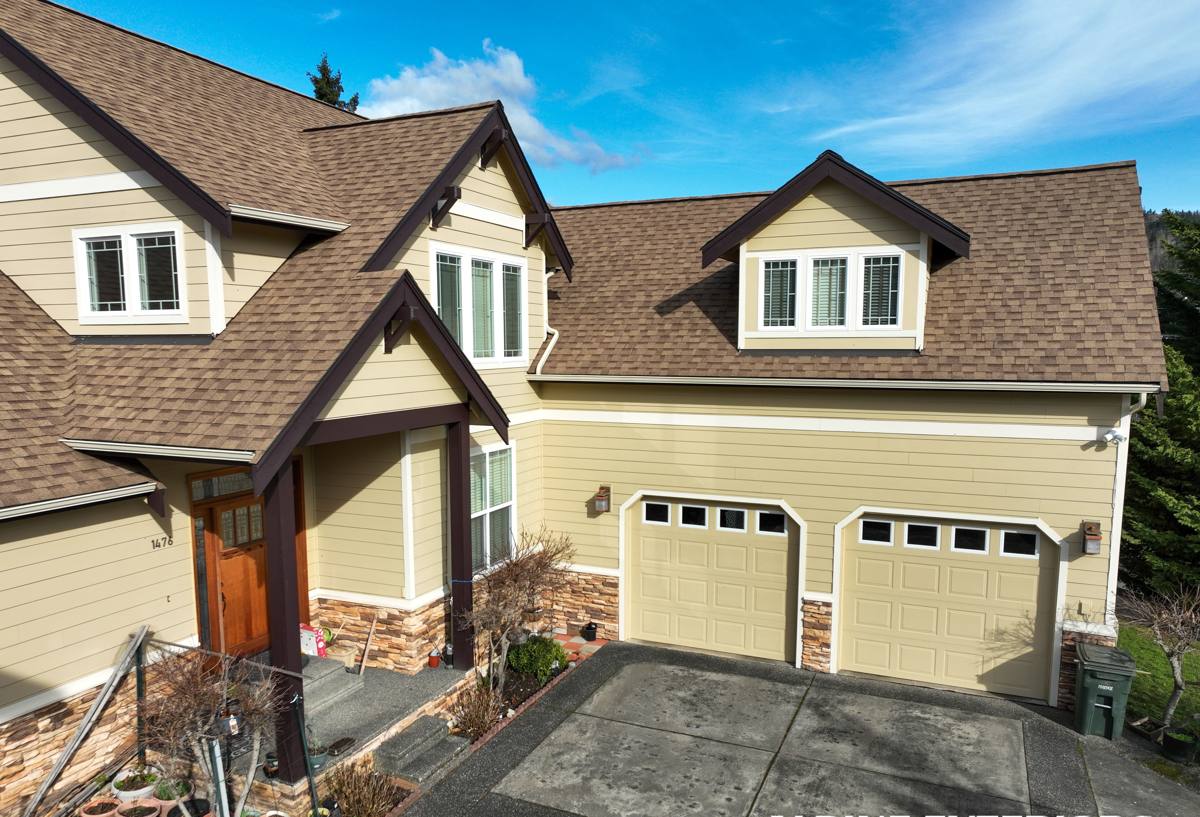
Why Roofs on Yew Street Age Differently
Salt Air and Slow Corrosion
Coastal and near-lake air carries fine salt and moisture that settles on metal flashing, fasteners, and vents. Over years, this accelerates corrosion on anything that isn't properly coated or rated for the exposure. It's rarely the shingles themselves that fail first around here — it's the metal components holding the system together.
Driving Rain and Wind-Driven Moisture
Wind off the lake and the surrounding valley pushes rain sideways more often than homeowners expect. That matters because a roof designed only to shed water straight down can still let moisture creep under shingle edges, around vents, and along ridge lines during a sustained blow. Proper lap direction, fastener placement, and flashing detail work all matter more in wind-driven rain than in calm weather.
A Long Moss Season
Tree cover and shade are part of what make Sudden Valley attractive, but they also mean roofs stay damp longer after rain and get less direct sun to dry out. That combination is exactly what moss and algae need to establish. Once moss takes hold under shingle tabs, it lifts them slightly and holds moisture against the roof deck — which is how a cosmetic problem turns into a structural one over a few seasons.
Signs a Yew Street Roof Is Ready for Replacement
Not every roof problem means a full replacement — but on a street like this, certain signs point clearly toward it rather than another round of patching.
- Granule loss heavy enough that shingles look patchy or bare in spots, especially on south- and west-facing slopes
- Shingles curling, cupping, or lifting at the edges — often where moss has been growing underneath
- Dark streaking or thick moss growth returning within a year of cleaning, a sign the shingles are already degraded
- Soft spots or sagging when walked on, which usually means deck damage underneath
- Rusted, cracked, or missing flashing around chimneys, skylights, and vent pipes
- Daylight visible through the roof deck from the attic, or water stains on attic sheathing
- A roof approaching or past the manufacturer's rated lifespan, especially if it was installed with builder-grade materials
If you're seeing two or more of these, it's worth a real inspection rather than another repair. Patching a roof that's structurally tired usually costs more over time than replacing it once, correctly.
What a Correct Roof Replacement Actually Involves
Full Tear-Off and Deck Inspection
We don't install new roofing over old layers. A full tear-off is the only way to actually see the deck — and on homes with a moss history, that's where damage hides. Soft, delaminated, or rotted decking gets replaced before anything new goes down. Skipping this step is the single most common reason a "new" roof fails early.
Underlayment Suited to Wind-Driven Rain
Given how often rain arrives at an angle here, we pay close attention to underlayment coverage and lap direction, with extra protection — typically a self-adhered membrane — at eaves, valleys, and any low-slope transitions where wind-driven moisture is most likely to find a way in.
Flashing That Won't Corrode Early
Every penetration — chimneys, vent stacks, skylights — gets new flashing rated for the exposure, not just whatever matches the old profile. This is where salt-air corrosion does its damage over time, so it's not a place to reuse old metal to save a step.
Ventilation That Actually Dries the Deck
A shaded, damp roof needs airflow to dry out between rain events. We check intake and exhaust ventilation as part of every replacement — a roof that can't breathe stays damp longer, which shortens shingle life and feeds moss growth regardless of how good the shingles themselves are.
Roofing Material Options for This Climate
There's no single "best" roofing material for every home — the right choice depends on tree cover, roof pitch, budget, and how much ongoing maintenance a homeowner wants to take on. Here's how the common options compare for a shaded, damp street like this one.
| Material | Moss & Algae Resistance | Wind-Driven Rain Performance | Typical Maintenance |
|---|---|---|---|
| Standard asphalt shingle | Moderate — improves with algae-resistant granules | Good with proper installation | Periodic moss removal recommended |
| Architectural (laminate) shingle | Good, especially with copper or zinc strips | Very good — thicker profile sheds wind rain well | Lower than standard shingle, still benefits from cleaning |
| Standing seam metal | Excellent — moss struggles to hold on smooth metal | Excellent | Low, mainly fastener and sealant checks over time |
| Cedar shake | Poor without diligent upkeep in shaded, damp conditions | Moderate — depends heavily on installation detail | High — regular treatment needed to avoid moisture issues |
We're upfront that we steer most homeowners on shaded lots away from untreated cedar shake — not because it's a bad-looking product, but because the maintenance commitment needed to keep it performing well in a damp, shaded environment is more than most people want to keep up with year after year. Architectural asphalt with algae-resistant granules or standing seam metal are the two options we install most often on streets like this, based on how they actually hold up here.
Our Process, Start to Finish
1. On-Site Inspection and Honest Assessment
We walk the roof and attic, check the deck condition where accessible, and tell you plainly whether you need a full replacement or if repair is a reasonable option. We don't upsell a replacement someone doesn't need yet.
2. Written Estimate
You get a clear, itemized estimate covering materials, tear-off, deck repair contingencies, and labor — no vague lump-sum numbers.
3. Scheduling Around the Weather
Given how much rain this area sees, we plan tear-off and dry-in around forecast windows so your home isn't exposed longer than necessary.
4. Tear-Off, Deck Repair, and Installation
Old roofing comes off, the deck gets inspected and repaired as needed, and the new system goes on with the underlayment, flashing, and ventilation detail work described above.
5. Cleanup and Final Walkthrough
We magnet-sweep for stray fasteners, clear debris, and walk the finished roof with you before calling the job done.
What Drives the Cost of a Yew Street Roof Replacement
Every roof is different, but the same handful of factors move the price up or down on most homes in this area.
| Factor | Why It Matters Here |
|---|---|
| Roof size and pitch | Steeper pitches and larger footprints take longer and require more material and safety setup |
| Deck condition | Moss-related moisture damage often means some sheathing replacement, which isn't always visible until tear-off |
| Material choice | Standing seam metal and premium architectural shingles cost more upfront but need less maintenance long-term |
| Accessibility and tree cover | Tight lots and heavy tree canopy can add setup time and require extra care around landscaping |
| Flashing and ventilation scope | More penetrations (skylights, multiple vents, chimneys) mean more detail work to do correctly |
We'd rather walk your roof and give you real numbers than throw out a broad range that doesn't mean much for your specific home. That's what the estimate visit is for.
After Installation: Keeping Moss and Algae from Coming Back
A correctly installed roof with the right materials resists moss far better than an old one, but this street's shade and moisture mean some ongoing care still pays off.
- Keep gutters clear so water doesn't back up under the shingle edge, especially heading into fall
- Trim back overhanging branches where practical to let more light and airflow reach the roof
- Have moss or algae growth removed gently (not pressure-washed, which can strip granules) as soon as you notice it starting
- Check flashing and sealant around penetrations once a year, since that's where small leaks usually start
- Watch for granules collecting in gutters — a sign the shingle surface is wearing down
Why It Matters to Hire a Crew That Already Works This Neighborhood
Roofing crews that only pass through Sudden Valley occasionally don't always account for how differently this street's shade, moisture, and salt-air exposure treat a roof compared to a dry, open lot elsewhere in Whatcom County. A crew that regularly works this specific area already knows which flashing details tend to fail first here, how much ventilation a shaded roof actually needs, and which materials hold up rather than just which ones are cheapest to install. That local pattern recognition is worth more than it sounds like on paper — it's the difference between a roof that needs attention again in five years and one that goes the distance.
If your roof is showing wear, or you just want a straight answer on whether it needs replacing yet, we're happy to come take a look. Reach out for a free, no-pressure estimate using the form below.