 Sudden Valley
 Decks in This Corner of Whatcom County Wear Out on a Different Timeline
A deck built the same way in Arizona or eastern Washington simply doesn't face what a deck near Sehome and the greater Sudden Valley area faces every year. This is a marine climate — moist air off the water, long stretches of overcast and drizzle, and a moss season that can run from early fall through late spring. Add in salt-laden air on breezy days and driving rain that comes in sideways during winter storms, and you have conditions that quietly attack fasteners, ledger boards, and framing long before the surface boards look bad.
Most homeowners don't think about deck replacement until something visibly fails — a soft spot underfoot, a railing that wiggles, or boards that stay damp for days after a storm. By that point, the damage is often well past the surface. We've built our process around catching what's happening underneath, not just refinishing what's on top.
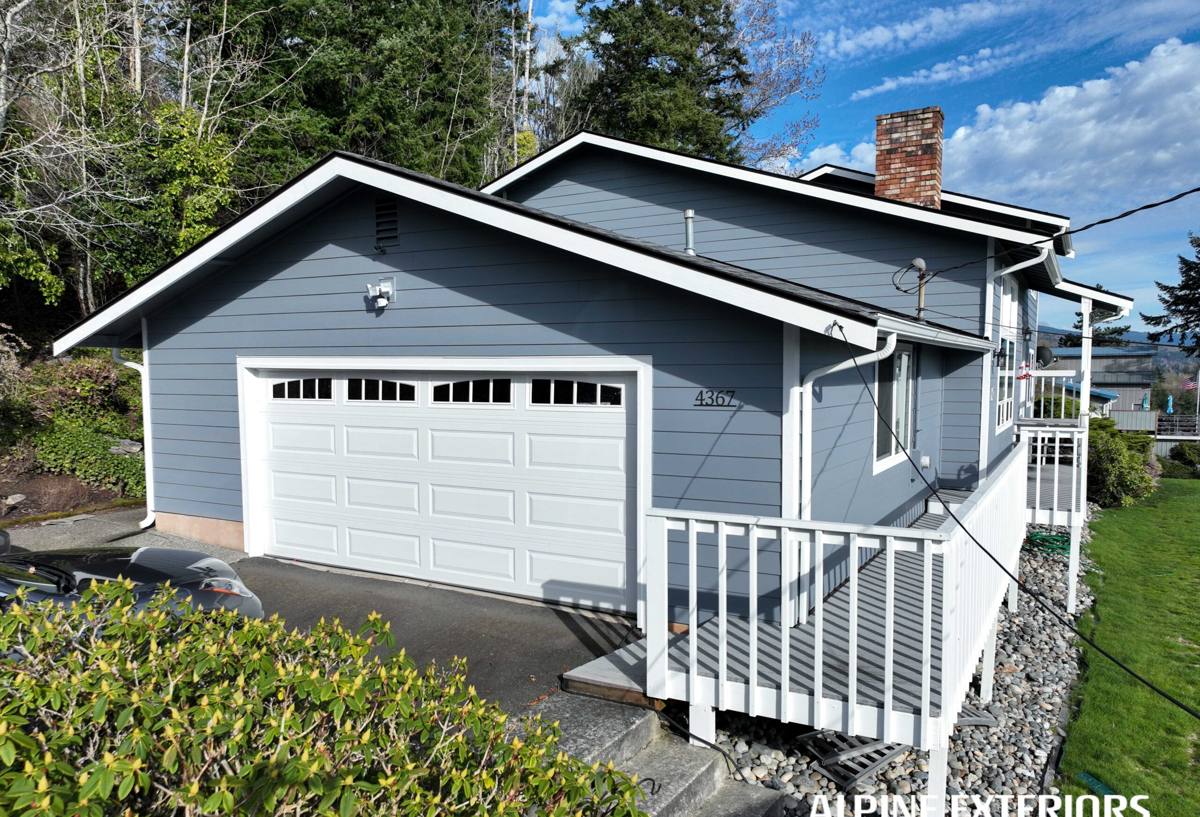
Why "Repair" Isn't Always the Honest Answer
Plenty of decks can be repaired — a few rotted boards swapped, a loose post reset, hardware upgraded. But there's a point where patchwork repairs start costing more than they're worth, both in dollars and in risk. Here's how we tell homeowners to think about it.
Signs You're Looking at Replacement, Not Repair
- Soft, spongy decking in multiple areas rather than one isolated spot
- Rot or splitting at the ledger board where the deck attaches to the house
- Support posts or beams with visible checking, crushing, or moisture staining
- Persistent moss or algae growth that returns within weeks of cleaning
- Railings or stair stringers that flex or feel unstable under normal use
- A structure built before current fastener and flashing standards were common practice
If only one or two of these apply, a targeted repair may genuinely be the right call, and we'll say so. If several apply together, it usually means moisture has been working its way into the structure for years, and a repair would just be treating a symptom.
What Actually Happens During a Correct Deck Replacement
A deck replacement is more than pulling old boards and screwing down new ones. In a climate this wet, the parts nobody sees are what determine whether the new deck lasts 10 years or 30.
The Structural Layer
This is where most shortcuts happen, and where they cause the most damage down the road. A correct rebuild includes:
- Inspecting and, where needed, replacing the ledger board connection to the house with proper flashing and structural fasteners — this single connection is the most common failure point on older decks in wet climates
- Confirming footings meet current frost depth and bearing requirements rather than reusing undersized or shifted footings
- Using joist and beam spacing rated for the actual decking material and expected loads, not just matching what was there before
- Installing joist tape or flashing on top of framing members to keep standing water from wicking into the wood grain
- Corrosion-resistant fasteners and hardware rated for ground contact and marine-air exposure, not standard interior-grade hardware
Drainage and Airflow
Water that can't drain or evaporate is the real enemy here, more than the rain itself. A well-built deck sheds water away from the house, allows airflow underneath to dry out framing between storms, and slopes decking slightly so puddles don't sit on the surface. Decks tucked against hillsides or under heavy tree cover — common around this area — need extra attention to airflow since they dry out slower after every rain.
Choosing Decking Material for a Wet, Mossy Climate
There's no universally "best" decking material — there's a best fit for your budget, your maintenance appetite, and how much sun versus shade your deck actually gets. We walk every homeowner through the honest trade-offs rather than pushing whatever has the best margin.
| Material | Moisture Behavior | Maintenance | Typical Lifespan Here |
|---|---|---|---|
| Pressure-treated wood | Absorbs moisture; needs sealing to resist swelling and checking | Annual cleaning, re-sealing every 1-2 years | 10-15 years with upkeep |
| Cedar | Naturally rot-resistant but still needs finish protection in constant damp | Regular cleaning and periodic refinishing | 15-20 years with upkeep |
| Composite decking | Doesn't absorb water like wood, but shaded/damp spots still grow moss and algae on the surface | Periodic washing; no sealing or staining | 25-30 years |
| PVC/capped polymer | Fully water-resistant surface, best moisture performance of the group | Occasional washing | 25-30+ years |
Composite and PVC boards handle standing moisture and moss better than wood, but they still need real airflow underneath and proper framing — no decking material fixes a structure that's trapping water. And in heavily shaded, damp spots, even the best composite will grow surface moss if it never gets sun or air movement; the fix there is design and drainage, not just material choice.
Our Process From First Call to Final Walkthrough
- On-site assessment. We look underneath the deck, at the ledger connection, and at footings — not just the surface — before quoting anything.
- Honest scope and options. You get a clear answer on repair versus replacement, and material options that fit your budget and how the space is used.
- Permitting. Deck replacements of meaningful size or height typically require a permit through the local jurisdiction; we handle that paperwork so it's not on your plate.
- Tear-off and structural rebuild. Old decking, and any compromised framing, footings, or ledger connections, come out and get rebuilt to current standards.
- Decking, railing, and stairs. Installed to manufacturer spec for whichever material you've chosen, with attention to drainage slope and fastener spacing.
- Final walkthrough. We go over the finished deck with you, including basic care so it holds up through the next wet season.
Permits and Local Building Requirements
Whatcom County and local jurisdictions require permits for most deck replacements, especially anything attached to the house, elevated, or involving structural changes. This isn't red tape for its own sake — it's what triggers inspection of the ledger connection and footings, the two things most likely to fail quietly in this climate. Skipping permits to save time can create real problems at resale, since an unpermitted structural project often has to be disclosed and can complicate a home sale. We pull permits as a standard part of the job rather than treating it as optional.
What Deck Replacement Actually Costs
Exact pricing depends on square footage, material, height off the ground, and how much of the substructure needs rebuilding — but the biggest cost swings usually come down to a handful of factors.
| Cost Factor | Why It Matters |
|---|---|
| Decking material chosen | Pressure-treated wood costs less upfront; composite and PVC cost more but need far less maintenance over time |
| Extent of structural rebuild | Reusing sound footings and framing costs less than a full rebuild from the ground up |
| Deck height and stairs | Elevated decks and multi-flight stairs add railing, code, and labor requirements |
| Ledger and flashing condition | A compromised ledger connection to the house adds scope but is not optional to fix correctly |
| Size and layout complexity | Multiple levels, angles, or built-in features add labor beyond a simple rectangular footprint |
We'd rather walk your specific deck and give you real numbers than quote a range that doesn't mean much for your situation. A free estimate covers exactly that.
Keeping a New Deck Healthy Through Whatcom County Winters
Even a well-built deck needs some seasonal attention in a climate that stays damp for months at a stretch. A short annual routine goes a long way toward protecting the investment.
- Sweep leaves and debris off the deck surface regularly in fall — trapped organic matter holds moisture and feeds moss
- Clean moss and algae off the surface at least once a year, before it gets a foothold in board grooves or fastener heads
- Check that gutters and downspouts near the deck are directing water away, not onto the deck or into the space underneath
- Walk the deck each spring and check railings, stair connections, and any spots that stay damp longer than the rest
- Re-seal wood decking on the manufacturer's recommended schedule — don't wait until it looks gray and dry
- Keep vegetation trimmed back from the deck edges so airflow underneath isn't blocked
Why It Matters That We Already Work in Sudden Valley and the Surrounding Area
A crew that works this area regularly already understands what a Whatcom County winter does to a deck — the salt air, the moss, the weeks of rain that don't let framing dry out between storms. That's not something you learn from a manual; it's something you learn from replacing decks in this exact climate season after season. It shows up in small decisions: where extra flashing gets added, how much slope a deck needs to actually shed water here versus in a drier region, and which materials hold up to conditions instead of just looking good on a showroom sample.
It also matters for the practical side of the job — knowing the local permitting process, showing up when we say we will, and standing behind the work because we're not driving in from somewhere else. If something needs a follow-up look after the first real winter storm tests it, we're close enough to come back out.
If your deck is showing its age, or you just want an honest opinion on repair versus replacement, we're happy to take a look. The estimate is free, there's no pressure, and you'll get a straight answer either way — use the form below to get started.