 Sudden Valley
 Siding Replacement for Sehome: What Makes This Neighborhood Different
Sehome sits close enough to Bellingham Bay that salt-laden air is a real factor in how siding ages here, and Sehome Hill's tree cover means a lot of homes get shaded, damp exposures that never fully dry out between Whatcom County's rainy stretches. Add in the older housing stock common to this part of Bellingham — plenty of homes built well before fiber cement siding was even an option — and you get a neighborhood where siding failure patterns look different than they do out in a drier, more open subdivision. We've replaced siding on enough Sehome homes to know what to look for before we ever pull the first board.
This page is specifically about siding replacement in Sehome — not a general overview of siding. If you're trying to figure out whether your home needs a full replacement, what that job actually involves, and why the crew you hire matters as much as the material, this is written for you.
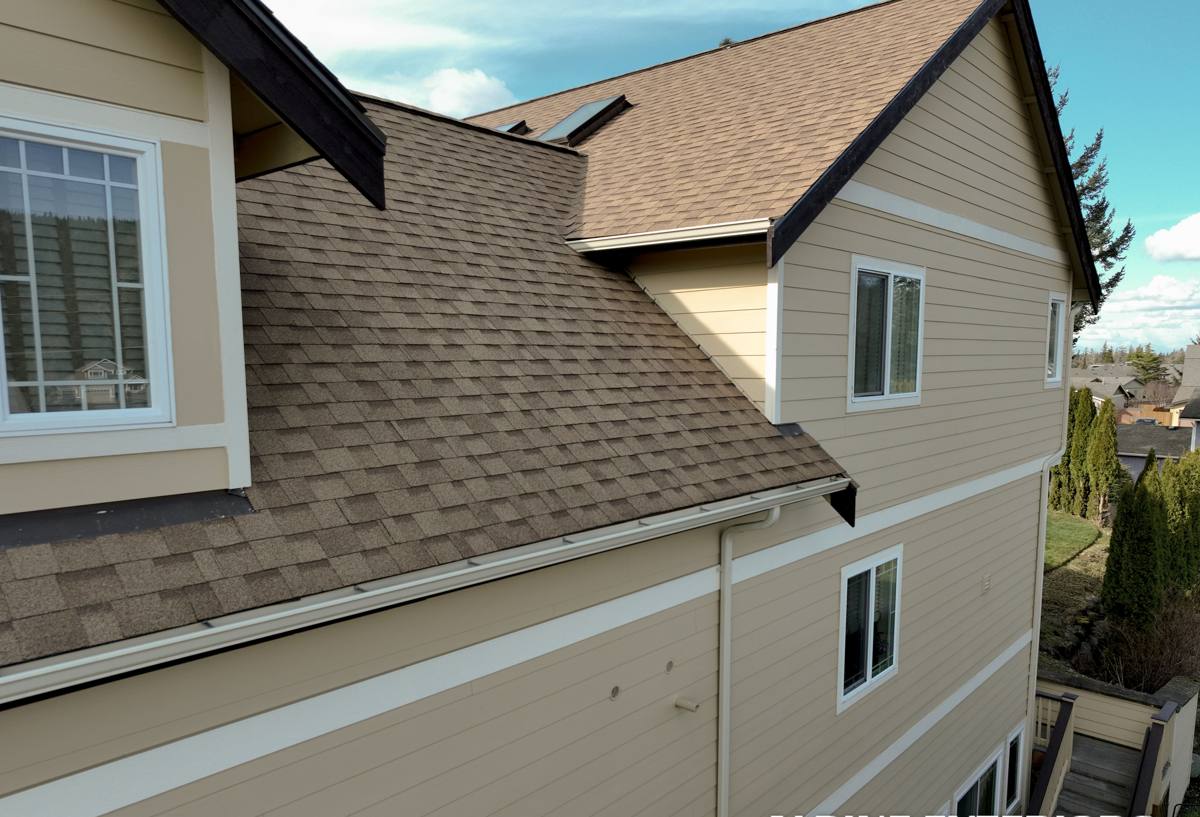
Why Sehome's Climate Is Hard on Siding
Salt Air
Homes within a few miles of Bellingham Bay take on airborne salt that accelerates corrosion of fasteners, flashing, and any metal trim tied into the siding system. It also speeds up the breakdown of lower-grade paint films, which is part of why we see chalking and fading show up faster on Sehome homes than on siding installed further inland.
Driving Rain
Whatcom County doesn't just get a lot of rain — a good portion of it comes in sideways off the water during winter storms. Wind-driven rain finds every gap in a siding installation: unsealed butt joints, undersized flashing, caulk used where flashing should have been. On a well-installed home this isn't a problem. On a home where shortcuts were taken, it's exactly how water gets behind the cladding and starts rotting sheathing nobody can see until the siding is already failing.
Moss Season
Sehome's tree canopy and north-facing exposures on some lots mean moss and algae have a long growing season — often close to nine months out of the year. Moss holds moisture against the siding surface far longer than open air would, which is hard on any organic or fiber-based product and is a major reason older wood and OSB-based siding in this neighborhood shows soft spots and delamination before homeowners expect it to.
Signs a Sehome Home Needs Siding Replacement, Not Just Repair
- Soft or spongy spots when you press on the siding, especially near the bottom courses and around window trim
- Persistent moss or algae growth that comes back within weeks of cleaning
- Visible cracking, buckling, or separation at panel joints
- Peeling or bubbling paint that keeps recurring in the same spots year after year
- A musty smell in an adjacent interior wall or a noticeable rise in heating bills
- Siding that's original to a home built before the late 1990s and has never been replaced
- Visible fastener corrosion or rust streaking down from nail heads
Any one of these can sometimes be handled with a repair. Two or more together, especially on a home with older siding, usually means the water intrusion has moved past what a patch can fix.
What a Correct Siding Replacement Involves
Full siding replacement is not just pulling off old boards and nailing up new ones. On a Sehome home, given the rain and moss exposure this area sees, the work underneath the siding matters as much as the siding itself.
Tear-Off and Sheathing Inspection
Once the old siding is off, we inspect the sheathing for rot, soft spots, and any water damage that was hidden. This is often the point where a homeowner learns why their siding was failing in the first place — and it's the point where problems need to be fixed before anything new goes up, not covered over.
Weather-Resistive Barrier
A correctly lapped, sealed weather barrier is what keeps wind-driven rain from ever reaching the sheathing, even if some moisture gets past the siding itself. This step is invisible once the job is done, which is exactly why it's the step that gets skipped by crews trying to move fast.
Flashing at Every Penetration
Windows, doors, hose bibs, vents, and any place two rooflines or wall planes meet all need proper flashing — not caulk as a substitute. In a neighborhood that gets driving rain off the bay, flashing details are the single biggest factor in whether a siding job holds up over the next twenty years.
Siding Installation to Manufacturer Spec
Correct fastener spacing, proper clearance from grade and roof lines, factory-specified gaps at joints, and ventilation behind the cladding where called for. This is also where the choice of material starts to matter — which brings us to what we install and what we don't.
Why We Only Install James Hardie Fiber Cement
We made a decision as a company to install James Hardie siding exclusively — not vinyl, not LP SmartSide, not cedar, not primed spruce, not other fiber cement brands. That's not a marketing position, it's a practical one, and it matters most in a climate like Sehome's.
| Factor | Why It Matters in Sehome |
|---|---|
| Non-combustible material | Fiber cement doesn't feed a fire the way wood-based siding can — a real consideration anywhere in Whatcom County with wildfire smoke seasons becoming more common |
| Moisture resistance | Engineered to resist the swelling, delamination, and rot that wood-based and OSB-core products are prone to under sustained damp exposure like Sehome's moss season |
| Factory-applied ColorPlus finish | Baked-on finish resists the fading and chalking that salt air and UV accelerate on field-applied paint |
| Climate-engineered HZ product lines | Hardie's HZ5 line is formulated for wetter, cooler climates like the Pacific Northwest rather than a one-size-fits-all product |
| Warranty structure | A strong, transferable manufacturer warranty backs the material — valuable if you sell the home down the road |
We're not going to tell you other products are worthless — vinyl, LP SmartSide, and cedar all have legitimate uses and plenty of homes carry them without issue. But when we weigh long-term performance in a climate that combines salt air, driving rain, and a long wet season against a shorter warranty, more maintenance, or more sensitivity to moisture, James Hardie is what we're willing to put our name on. It's why we standardized on one product instead of offering a menu of options with different trade-offs we'd have to explain on every job.
Our Process for a Sehome Siding Replacement
- Free on-site estimate — we walk the home, check for soft spots and existing damage, and give you a straight answer on whether you need a full replacement or targeted repair
- Detailed written proposal — scope of work, product line and color, and a clear price, not a vague range
- Tear-off and inspection — old siding comes off, sheathing gets checked, and we flag anything found before covering it back up
- Weather barrier and flashing — installed and sealed to manage the wind-driven rain this area gets
- Hardie installation — installed to manufacturer spec, including fastener pattern, clearances, and joint treatment
- Final walkthrough — we go over the finished job with you before calling it done
What Siding Replacement Typically Costs
Every home is different, but the factors that move the price are consistent. We won't quote a number without seeing the house, but here's what drives cost up or down on a typical Sehome project.
| Cost Factor | Impact |
|---|---|
| Home size and number of stories | More square footage and taller walls mean more material and labor, plus scaffolding or lift access on multi-story homes |
| Condition of the sheathing underneath | Rot repair found during tear-off adds cost but is far cheaper to fix now than after new siding goes over it |
| Trim and detail complexity | Homes with lots of window trim, dormers, or roofline transitions take more time to flash and finish correctly |
| Siding profile and color | Lap siding, shingle-style panels, and board-and-batten each price differently, as do standard versus premium ColorPlus colors |
| Access and site conditions | Steep lots, tight setbacks, or mature landscaping near the house can add labor time |
Why Hiring a Crew That Already Works in Sehome Matters
A crew that's replaced siding elsewhere in Whatcom County but hasn't worked Sehome specifically can still do a fine job — but there's real value in a contractor who already understands how this neighborhood's tree cover, hill exposure, and proximity to the bay affect where water and moss actually collect on a house. We know which north-facing walls tend to hold moisture longest, why moss shows up faster here than in drier parts of the county, and how to detail flashing for wind-driven rain coming off the water. That's the kind of local knowledge that shows up in how long a siding job lasts, not just how it looks the day it's finished.
We also don't sell a product menu — we install one system, James Hardie fiber cement, and we've built our process around doing that one thing correctly rather than spreading attention across several products with different installation quirks.
Maintaining Your New Siding in Sehome's Climate
- Rinse siding annually to clear moss spores before they take hold, especially on shaded, north-facing walls
- Keep gutters clear so overflow doesn't run down the siding face during heavy rain
- Trim back vegetation and tree limbs that keep siding shaded and damp
- Inspect caulking at trim and penetrations every couple of years and have gaps resealed
- Watch for any soft spots or discoloration and address them early rather than waiting
If you're seeing signs of siding failure on a Sehome home, or your siding is simply old enough that replacement is the responsible next step, we're happy to come take a look. The estimate is free, there's no pressure, and you'll get a straight answer about what your home actually needs.