 Sudden Valley
 Storm Damage Roof Repair for Acme Homes
Acme sits back in the trees east of the main Whatcom County corridors, and that setting cuts both ways. The tree cover is part of why people live out here, but it also means storm damage looks different on an Acme roof than it does on a roof in a wide-open subdivision. Falling limbs, wind-driven rain forced sideways under shingle tabs, and debris that piles up in valleys and behind chimneys are the calls we get most after a hard blow moves through. We repair storm-damaged roofs in this area on a regular basis, and the goal of this page is to explain what actually needs to happen after a storm hits your roof, not just to sell a repair.
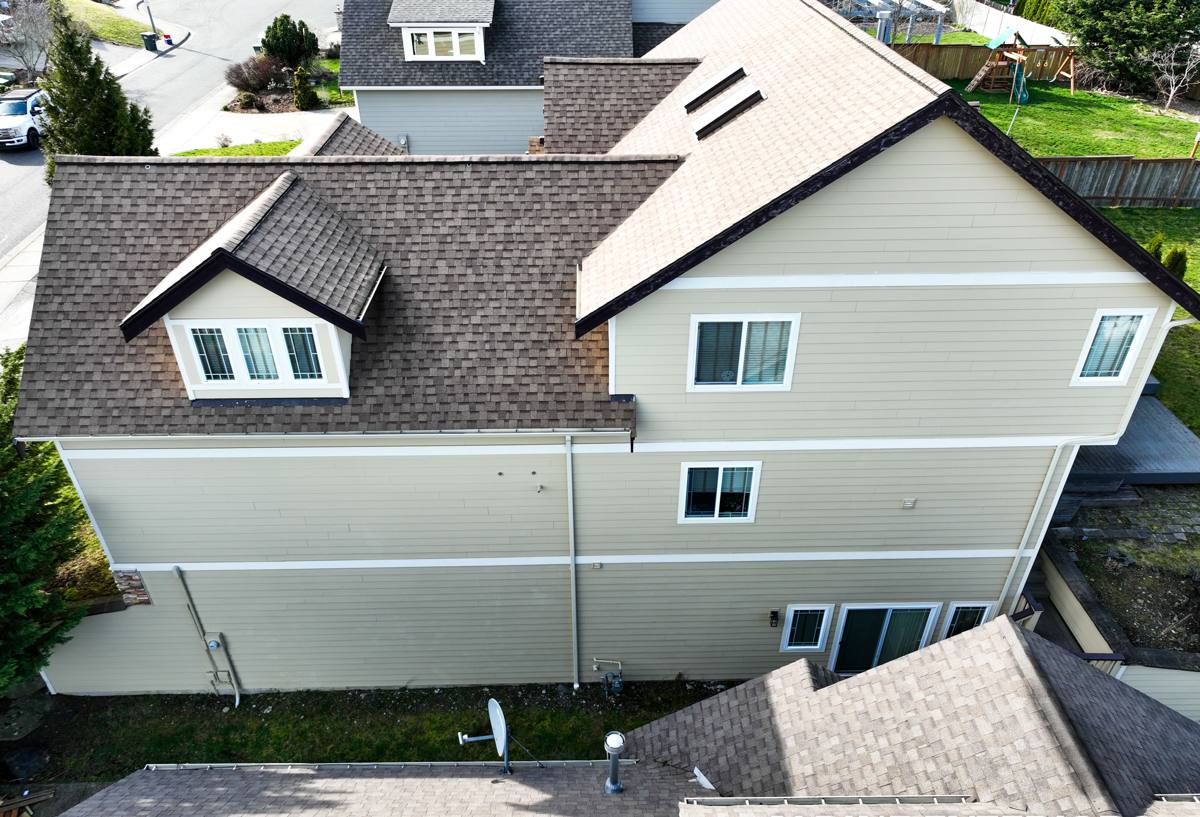
What Storm Damage Actually Looks Like Here
Homeowners often expect storm damage to be obvious - a missing shingle, a hole, a branch through the roof deck. Sometimes it is that dramatic. More often, the damage is quieter and takes weeks or months to show up as a stain on a ceiling or a soft spot in the sheathing.
Wind Damage
Sustained wind and gusts lift shingle tabs, break the sealant strip that holds them flat, and loosen or bend flashing at roof-to-wall transitions. A shingle that got lifted and re-settled without resealing can look fine from the ground and still leak the next time it rains.
Debris and Impact Damage
With mature trees close to a lot, falling branches and cones are a routine part of storm cleanup here. Smaller debris can bruise or crack shingles without punching all the way through, which is damage you can miss on a quick visual check but that shortens the life of the roof underneath it.
Water Intrusion
Driving rain that comes in sideways during a storm will find any gap in flashing, any lifted shingle edge, or any spot where sealant has aged out. Once water gets under the roofing material, it can travel a surprising distance before it ever shows up as a visible leak inside the house.
Why Acme's Conditions Make This Worse Over Time
Whatcom County weather is hard on roofs generally, and Acme's mix of tree cover, damp air, and driving rain during storms adds up faster than most homeowners expect. Salt air moving inland off the Sound corrodes exposed fasteners and metal flashing over the years, driving rain during storms tests every seam and transition on the roof, and the long moss season here means organic growth is working on the roofing material even in the months between storms. A roof that's already carrying moss and holding moisture is more vulnerable when the next storm hits it - the sealant strips are weaker, the granules are thinner, and small storm damage turns into a real leak faster than it would on a clean, well-maintained roof.
None of that means every roof in Acme is in bad shape. It means storm damage repair here has to account for what the roof was dealing with before the storm, not just the storm itself.
What a Correct Storm Damage Repair Involves
A Real Inspection First
We walk the roof, not just look at it from a ladder at the eave. That includes checking flashing around chimneys, vents, and any roof-to-wall transitions, checking the ridge, and checking valleys where debris and water both collect. If there's an attic access, we'll check the underside of the deck for staining or soft spots, because that tells us whether water has already gotten past the roofing material.
Matching the Repair to the Damage
Not every storm-damaged roof needs a full replacement, and we're not going to tell you it does. A localized repair - replacing a section of shingles, resealing lifted tabs, replacing a damaged flashing run - is the right call when the rest of the roof is sound. We'll also tell you honestly when a repair is just delaying a replacement that's coming soon anyway, because patching a roof that's near the end of its service life usually costs money without buying much time.
Flashing and Underlayment, Not Just Shingles
A lot of storm leaks trace back to flashing, not the shingles themselves. Any storm repair we do includes checking and, where needed, replacing flashing and the underlayment beneath it - not just laying new shingles over a compromised layer underneath.
Cleanup That Doesn't Leave New Problems
Storm repair work generates debris, and roofs with tree cover already have enough organic material collecting in valleys and gutters. We clear old debris as part of the repair, not just the material from the repair itself, since leftover debris is exactly what feeds moss growth going into the next wet season.
Our Process, Start to Finish
- Call or request an estimate. Tell us what you noticed - a leak, missing shingles, debris on the roof - and roughly when the damage happened.
- On-site inspection. We assess the roof in person, document what we find, and check for related issues like flashing wear or moss buildup that could complicate the repair.
- Honest scope and estimate. We explain what's damaged, what's not, and what it will take to fix it correctly - repair or replacement, with the reasoning behind that recommendation.
- The repair itself. Work is scheduled around weather, since storm repair on a wet or windy day is neither safe nor durable.
- Final check. We confirm the repair is sealed and sound before we consider the job done.
Repair vs. Replacement: What Drives the Decision
The right call depends on the extent of the damage, the age and condition of the existing roof, and how much of the roof the storm actually affected. Here's a general breakdown of the factors we weigh:
| Factor | Favors Repair | Favors Replacement |
|---|---|---|
| Extent of damage | Isolated to one area or a few shingles | Spread across multiple sections or slopes |
| Roof age | Roof is mid-life with plenty of service left | Roof is near or past its expected lifespan |
| Underlying condition | Deck and underlayment are sound | Deck shows rot, staining, or soft spots |
| Moss and organic buildup | Minimal, well-maintained roof | Heavy moss or granule loss across the field |
| Flashing condition | Flashing is intact aside from the storm damage | Flashing is corroded or failing in multiple spots |
We'll walk through where your roof falls on these points during the inspection - this table is meant to give you a sense of the reasoning, not a substitute for someone actually looking at your roof.
Working With Your Insurance
Storm damage is often a covered claim, but every policy is different and we're not adjusters. What we can do is document the damage clearly - photos, notes on cause and extent - so you have solid information to bring to your insurer. We'll give you a straightforward, honest assessment of what happened and what it will take to fix, and you can use that however it's useful for your claim.
Why Hire a Crew That Already Works in Acme
A roofer who works this part of Whatcom County regularly knows what storm damage tends to look like on homes with heavy tree cover, understands how moss and moisture accumulate here between storms, and isn't guessing about how driving rain and salt air affect roofing material over time in this area. That local experience shows up in small ways - knowing to check certain flashing details more closely, or recognizing when moss has already done more damage than the storm did. It also means someone who can respond promptly when a storm has left your roof exposed, rather than a crew unfamiliar with the area figuring it out on the fly.
After a Storm: What to Check
- Look for shingles on the ground or in gutters after a windstorm
- Check ceilings and attic spaces for new stains, even faint ones
- Note any branches or debris that landed on the roof, even if they didn't visibly break anything
- Check gutters and downspouts for granules, which can indicate shingle wear or impact damage
- Look at flashing around chimneys and vents for anything visibly bent or lifted
- Avoid climbing onto the roof yourself, especially on wet or mossy surfaces
- Get an inspection soon after the storm rather than waiting for a visible leak
Get an Honest Look at Your Roof
If a recent storm has left you wondering whether your roof took damage, we're glad to come take an honest look. There's no pressure and no obligation - just a clear assessment of what we find and what, if anything, needs to be done about it. Fill out the form below to request your free estimate.