 Sudden Valley
 Why Ferndale Roofs Take a Different Kind of Beating
Ferndale sits close enough to the water that salt-laden air is a regular visitor to every roof in town, and squarely enough in Whatcom County's storm track that fall and winter systems roll through with real wind behind them. That combination — driving rain, gusty wind off the water, and a moss season that stretches through most of the wet months — wears on a roof differently than it does further inland. A roof here can look fine from the ground and still be quietly failing at the flashing, the fasteners, or the underlayment.
Storm damage repair in this area isn't just about patching a hole after a bad windstorm. It's about understanding how wind, moisture, and organic growth work together over a Whatcom County winter, and knowing what to check that a homeowner in a drier climate would never think to look for.
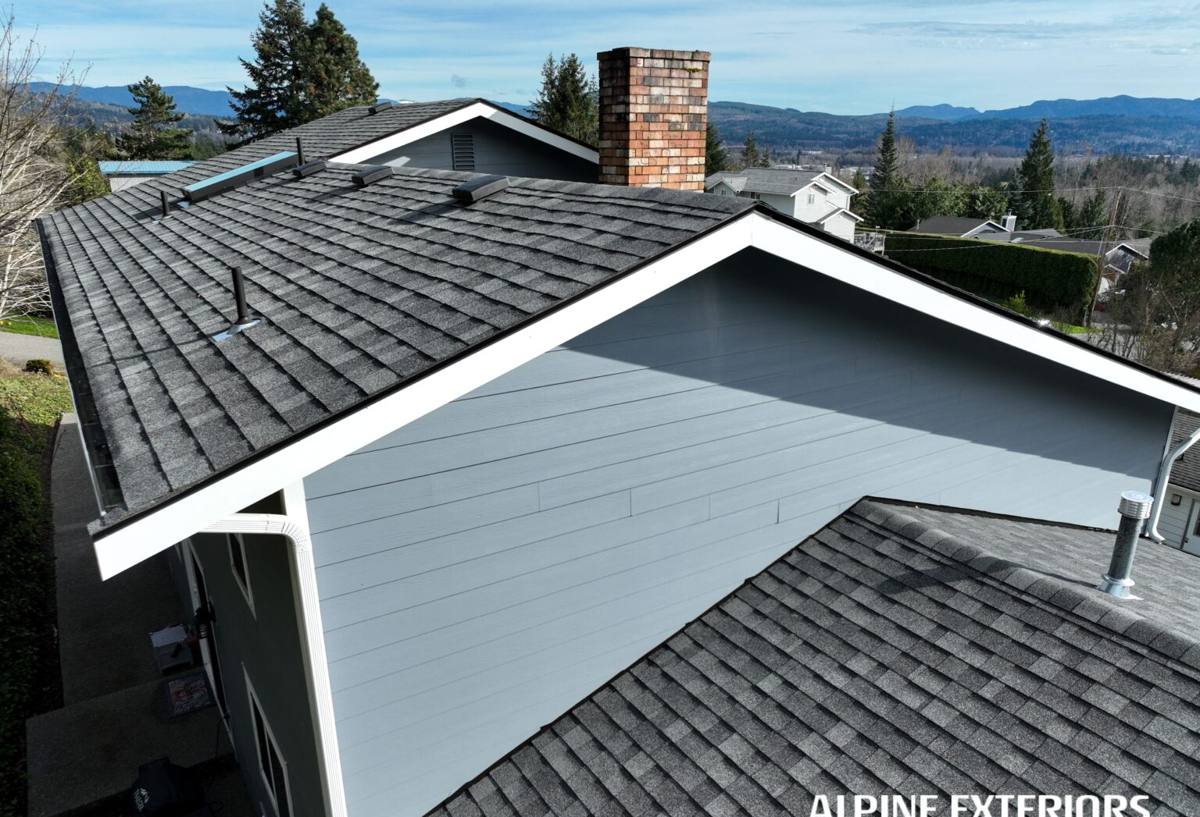
What Storm Damage Actually Looks Like in Ferndale
Wind Lift and Creased Shingles
Strong gusts off the water don't just tear shingles off outright — more often they lift a corner or an edge just enough to break the seal underneath without fully detaching the shingle. From the ground it looks untouched. Up close, the seal is broken, the shingle is creased or cracked at the tab, and the next rain gets underneath it. This is the most common storm-damage call we see after a wind event, and it's also the easiest to miss during a homeowner's own visual check.
Moss and Trapped Moisture
A long moss season means moss isn't a once-a-year problem here — it's closer to a constant. Moss holds water against the shingle surface, works its way under tabs and around fasteners, and keeps sections of the roof damp long after the rest has dried out. Storm damage and moss damage often show up in the same spot, because a section already weakened by trapped moisture is the first place a storm pushes water through.
Salt Air and Corroded Metal
Flashing, fasteners, and gutter hardware take the brunt of salt exposure. Galvanized fasteners that would last decades in a dry inland climate can start showing rust streaks and weakening within a handful of years this close to the water. When a storm hits a roof with already-corroded flashing or fasteners, the damage tends to be worse than the wind alone would explain — the hardware was the weak point, not just bad luck.
Debris Punctures and Gutter Damage
Wind-driven branches and debris cause the damage most people expect: punctures, torn shingles, dented or pulled-loose gutters. These are usually the most visible and the easiest to diagnose, but they're rarely the only damage a storm leaves behind — which is why we always inspect the whole roof, not just the obvious spot.
How We Assess Storm Damage the Right Way
A rushed inspection misses things, and in this climate what gets missed usually turns into a bigger repair six months later. Our process on a storm call covers the roof surface, the flashing details, and the parts of the system that don't show damage until water has already gotten in.
- Full roof walk (not just a look from the driveway or a ladder peek at the edge)
- Check every penetration — chimneys, vents, skylights — where flashing is most likely to have shifted
- Inspect valleys and eaves for granule loss and shingle creasing from wind lift
- Check the attic or roof deck from underneath for water staining, which shows up before ceiling stains do
- Photograph and document findings for the homeowner and, when relevant, for an insurance claim
- Give a plain-English explanation of what's storm damage versus what's pre-existing wear
That last point matters. Not everything found after a storm was caused by the storm, and a straight answer about that distinction is part of doing the job honestly — it's also usually what an insurance adjuster is going to want to know.
Our Repair Process, Start to Finish
- Initial call and scheduling. We ask what happened, when, and what you've noticed, so we come prepared for the likely damage type.
- Emergency mitigation if needed. If there's active leaking or an open section of roof, the first priority is a tarp or temporary seal to stop water intrusion before anything else happens.
- Full inspection and written scope. We document what's damaged, what caused it, and what the repair involves — in writing, not a verbal estimate you have to remember.
- Repair or replace decision. Based on the scope, age of the roof, and extent of damage, we recommend the least disruptive fix that actually solves the problem.
- The repair itself. Matching materials where possible, correcting flashing and fastener issues that contributed to the damage, not just patching over them.
- Final walk-through. We show you what was done and why, and flag anything else worth keeping an eye on.
Repair or Replace: How We Make That Call
Storm damage doesn't automatically mean a new roof, and it doesn't automatically mean a quick patch either. The right call depends on a few factors working together.
| Factor | Leans Toward Repair | Leans Toward Replacement |
|---|---|---|
| Roof age | Under 10-12 years, otherwise in good condition | Nearing or past its expected service life |
| Extent of damage | Isolated to one slope or section | Spread across multiple slopes or the whole roof |
| Underlying condition | Deck and underlayment sound | Existing moisture damage or soft decking found underneath |
| Moss/salt exposure history | Recently maintained, minimal buildup | Years of moss growth or corroded fasteners throughout |
| Shingle availability | Matching shingles still available | Discontinued product, visible mismatch unavoidable |
We'll tell you honestly which side of that table your roof falls on. A repair that's going to need another repair in a year isn't a favor to anyone, and a full replacement recommended when a solid repair would do isn't either.
Materials and Fasteners Built for This Environment
Given the salt air and driving rain a Ferndale roof deals with, we're deliberate about what goes back on during a repair. Standard galvanized fasteners are a known weak point this close to the water — they can start corroding well before the shingles around them are due for replacement, which leads to exactly the kind of hidden vulnerability that turns a normal storm into a bigger repair bill. Stainless or hot-dip galvanized fasteners cost more up front and hold up considerably longer in salt-exposed air, which is why we use them on repair work in this area rather than the cheaper standard option.
The same logic applies to flashing. Where a repair touches flashing at a chimney, vent, or valley, we replace corroded pieces rather than working around them — flashing is one of the more common places where an otherwise sound roof starts leaking, and it's not worth reusing a compromised piece to save an hour of labor.
Working With Your Insurance Company
Most homeowner's policies in Washington cover sudden storm damage — wind, falling debris, and similar events — though coverage details, deductibles, and what counts as "sudden" versus gradual wear vary by policy. We're not your insurance adjuster and won't pretend to be, but we can provide the documentation that makes a claim straightforward: dated photos, a written scope of damage, and a clear explanation of cause. If an adjuster wants to meet at the property, we're glad to walk the roof with them and point out what we found.
One thing worth knowing going in: gradual damage from years of moss growth or salt corrosion is typically treated differently than damage from a specific storm event. Part of an honest assessment is telling you which category your damage falls into, since that affects what a claim is likely to cover.
Why a Crew That Already Works Ferndale Matters
A roofer who mostly works drier, inland areas isn't necessarily going to reach for stainless fasteners or think to check flashing for salt corrosion first — because it's not the problem they see every day. Working this stretch of Whatcom County regularly means we already know where wind-driven rain tends to find its way in on a typical Ferndale roofline, what moss buildup looks like at three years versus eight, and which fastener and flashing choices actually hold up against salt air instead of just meeting code minimums. That's not a marketing point — it's the difference between a repair that lasts and one that reopens the same problem next storm season.
It also means faster response after a storm. When wind events hit this part of the county, we're already close by and already familiar with the housing stock and roof types common in the area, which cuts down the time between your call and a tarp going on if you need one.
Getting Ahead of the Next Storm
Most storm damage that turns into a real problem started as something smaller that went unnoticed for a season or two. A short annual check, ideally before the wet season ramps up, catches most of it early.
- Clear moss buildup before it spreads under tabs and around fasteners
- Clean gutters and downspouts so storm runoff doesn't back up under the roof edge
- Check flashing around chimneys, vents, and skylights for rust or lifting
- Trim back branches that could come down in high wind
- Look for granule loss in gutters after a storm — it's an early sign of shingle wear
- Have any roof over 10 years old inspected after a significant wind event, even without visible damage
None of these take long, and all of them are cheaper than the repair they prevent.
If a recent storm has you wondering about your roof, or you'd just like an honest look before the next one hits, we're happy to come take a look. The estimate is free, there's no pressure to book anything on the spot, and you'll get a straight answer about what — if anything — needs to be done. Use the form below to get started.