 Sudden Valley
 Deming sits back from the coast in the Nooksack River valley, on the corridor that runs toward Mount Baker, and that setting shapes what a window installation actually needs to hold up to here. Homes in this part of Whatcom County deal with less direct salt spray than a waterfront lot closer to Bellingham Bay or the Sudden Valley shoreline, but they still sit inside the same weather system — long stretches of driving rain, a wet season that runs most of the year, and enough shade and river-bottom humidity to keep a moss and mildew season going on north-facing walls and trim well after the rest of the county starts to dry out.
Our crew works Deming regularly as part of the same route we run through Sudden Valley and the rest of Whatcom County, and window work here gets treated as its own discipline, not a quick swap-and-caulk job. A window unit is only as good as the flashing and opening prep around it. Get that wrong in this climate and even a well-made window will start letting water into the wall assembly within a few wet seasons.
What This Climate Does to Windows in Deming
Driving Rain Off the Valley
The Nooksack River valley funnels weather in a way that flat, open ground doesn't. Storms moving up the valley toward the foothills push rain sideways into window openings rather than letting it fall straight down, which means gaps and seams that would stay dry in a calmer setting get tested regularly here. Correct flashing — lapped the right direction and tied properly into the surrounding wall — is what actually keeps that water out, not the window unit by itself.
A Long Moss and Mildew Season
Tree cover, river-bottom humidity, and mild temperatures add up to a moss and mildew season that can run most of the year on shaded siding, sills, and trim around Deming. Wood trim and sills that stay damp longer between storms are the first places that show it, and once moisture gets past a window's exterior finish and sits against bare wood, rot follows faster than most homeowners expect.
Temperature Swings and Older Housing Stock
Deming has a mix of older farmhouses, cabins, and newer construction, and a fair number of the older homes are still running original single-pane or early dual-pane windows. Those units were never built to modern energy standards, and in a valley that sees real cold snaps in winter and warm stretches in summer, that gap shows up directly in comfort and heating and cooling bills, not just in appearance.
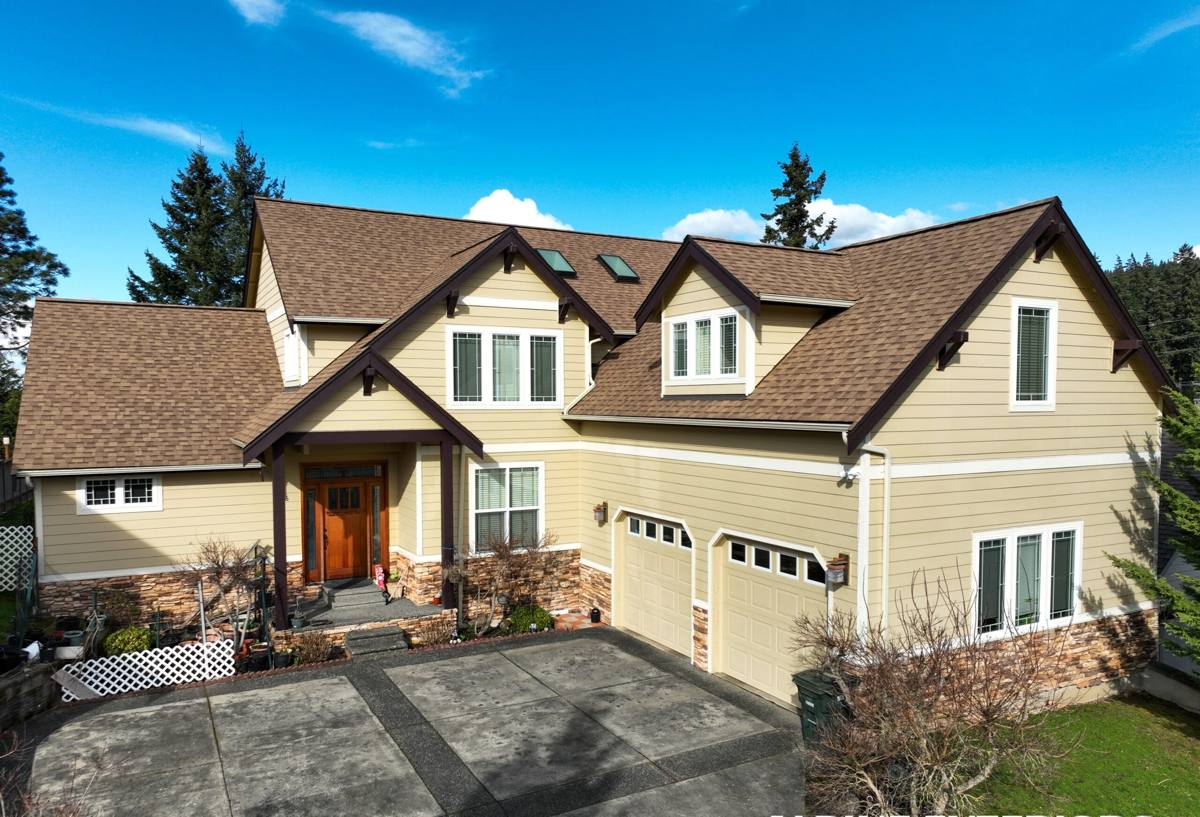
Signs a Deming Home Needs New Windows
- Visible condensation or fogging between the panes of a dual-pane window, which means the seal has failed and can't be repaired
- Soft, swollen, or spongy wood at the sill or lower corners of the frame
- Drafts you can feel with a hand near the frame on a windy day, even with the window latched shut
- Paint that's peeling or bubbling on the interior or exterior frame, often a sign moisture is already inside the wood
- Windows that are difficult to open, close, or lock, especially on older wood-frame units that have swollen or warped
- Visible moss, black staining, or mildew building up on the sill or exterior trim that keeps coming back after cleaning
- A noticeably colder room near a specific window compared to the rest of the house
Any one of these on its own might just need a repair. Several of them together, especially on a home with original windows, usually means it's time to talk about replacement rather than another round of caulk and touch-up paint.
What a Correct Window Installation Actually Involves
Measuring and Assessment
We start by measuring the actual opening, not going off the size printed on the old window's label. On older Deming homes especially, openings have often shifted slightly over the decades as the house has settled, and we check for square, level, and any rot or damage in the surrounding framing before ordering anything.
Removal and Opening Prep
The old unit comes out carefully so we can see the condition of the framing, sheathing, and any existing flashing underneath. This is where hidden problems usually turn up — soft framing, missing or failed house wrap, old flashing that was never sealed correctly. We'd rather find and fix that now than button a new window in over a problem that's just going to keep growing behind the wall.
Flashing and Weatherproofing
This is the step that decides whether a window performs for twenty years or starts leaking in five, and it matters more here than in a drier climate. Flashing gets sequenced so water sheds outward and downward at every layer — head flashing over the top, sill pan underneath to catch anything that gets past the seal, and side flashing that laps correctly into the surrounding weather-resistive barrier. Skipping or shortcutting this step is the single most common reason a window installation fails in a climate like ours.
Insulation and Air Sealing
The gap between the window frame and the rough opening needs to be sealed and insulated correctly — not packed too tight, which can bow the frame, and not left with gaps, which lets air and moisture through. Done right, this step is a big part of where the comfort and efficiency improvement actually comes from on an older Deming home.
Trim and Finish
Exterior trim gets reinstalled or replaced so the finished look matches the rest of the house, and every seam gets sealed with the right sealant for the material involved. On older farmhouses with existing trim profiles, we try to match what's already there rather than leaving a window that looks obviously swapped in.
Frame Material Options for This Climate
| Frame Material | How It Holds Up in Deming's Climate | Maintenance |
|---|---|---|
| Vinyl | Handles sustained moisture and humidity well; won't rot; performance varies a lot by manufacturer grade | Low — no painting, occasional cleaning |
| Fiberglass | Very stable through temperature swings and moisture exposure; strong long-term option for this valley climate | Low — durable finish, minimal upkeep |
| Wood | Best traditional look for older farmhouses; needs consistent upkeep to keep moisture from reaching bare wood | High — regular painting or sealing required |
| Wood-clad (wood interior, clad exterior) | Combines interior wood appearance with a lower-maintenance exterior shell; a solid middle ground for period homes | Moderate — exterior is low-upkeep, interior wood still needs occasional attention |
| Aluminum | Strong and slim-profile, but conducts cold and can condense more in this climate without a thermal break | Low — but check for a thermal break before choosing it here |
We don't push one frame material on every job. A wood-clad or fiberglass unit tends to be the right call on an older Deming farmhouse where the exterior look matters, while vinyl or fiberglass makes sense on a straightforward replacement where budget and low upkeep are the priority. We'll walk through the actual trade-offs for your house rather than defaulting to whatever's easiest to install.
Our Process, Start to Finish
- On-site assessment — we look at the existing windows, the condition of the framing, and note anything specific to your home before recommending anything
- Honest recommendation — full-frame replacement, insert replacement, or repair, explained with the reasoning, not just a quote
- Ordering — units are ordered to your exact measurements, with a realistic timeline for when they'll arrive
- Removal and inspection — old windows come out carefully, and we check the framing and existing flashing before moving forward
- Installation and flashing — the new unit is set, shimmed level and plumb, and flashed in a sequence built to shed water at every layer
- Insulation, trim, and finish — the gap is sealed correctly and exterior trim is finished to match the rest of the house
Cost Factors for Window Installation in Deming
| Factor | What It Does to the Cost |
|---|---|
| Full-frame vs. insert replacement | Full-frame costs more but is often necessary when the existing frame or sill is damaged |
| Number of windows done at once | Doing several windows in one visit generally lowers the per-window labor cost |
| Frame material | Vinyl is typically the lowest upfront cost; fiberglass and wood-clad run higher |
| Glass package | Double-pane is standard; upgraded low-E coatings or triple-pane add cost but improve comfort and efficiency |
| Condition of the existing opening | Rot or framing damage found during removal adds repair cost before the new window can go in |
| Custom sizing | Non-standard openings on older homes cost more than stock sizes and take longer to arrive |
We won't quote a real number without seeing the windows and the openings in person, but those are the factors that actually move the price on a Deming job, in roughly the order we see them matter.
Why a Local Deming Crew Matters
Manufacturer installation instructions are written for average conditions in a moderate climate, and Deming's river-valley weather doesn't always fit that description. A crew that has actually flashed windows on farmhouses and newer builds throughout this valley knows which parts of the standard installation guidance are worth extra time here — how much lap a flashing course needs given the wind direction storms tend to come from up the valley, which sill details hold up against sustained moss and mildew exposure, and where an older home's framing is likely to need attention before a new window can go in cleanly.
That's the kind of judgment that doesn't show up in a sales pitch. It shows up fifteen years later, in whether the window is still sealed tight or whether it's showing soft trim and drafts. We handle siding, roofing, windows, and decks throughout Deming and the rest of Whatcom County, and we'd rather do window work correctly the first time than get called back for a leak that proper flashing would have prevented.
What to Ask Before Hiring for Window Work
- Ask how they sequence flashing on the specific window opening, not just what brand of window they sell
- Confirm current Washington contractor licensing and insurance before any work starts
- Ask what happens if they find rot or framing damage once the old window is out
- Get a written scope of work and a realistic installation timeline before signing anything
- Ask how the window unit and the installation labor are each covered under warranty
If your Deming home has windows that are drafty, fogged, hard to operate, or just original to a house that's due for an upgrade, it's worth having someone look at the actual openings before you start comparing quotes. We offer free, no-pressure estimates for window installation in Deming and the surrounding area — use the form below to get a time on the schedule.