 Sudden Valley
 Window Replacement Built for Yew Street's Climate, Not Just Any Climate
Yew Street homes in Sudden Valley face a specific combination of weather that most window installers treat as an afterthought: salt-laden marine air pushing in off the Salish Sea, driving rain that comes at windows sideways during winter storms, and a moss season that can stretch across most of the year in Whatcom County's shaded, damp conditions. A window that performs fine in a drier inland climate can fail early here if it wasn't installed with this specific exposure in mind. This page covers what that means in practice for a Yew Street home, what a correct replacement job actually involves, and what to look for when you're hiring someone to do it.
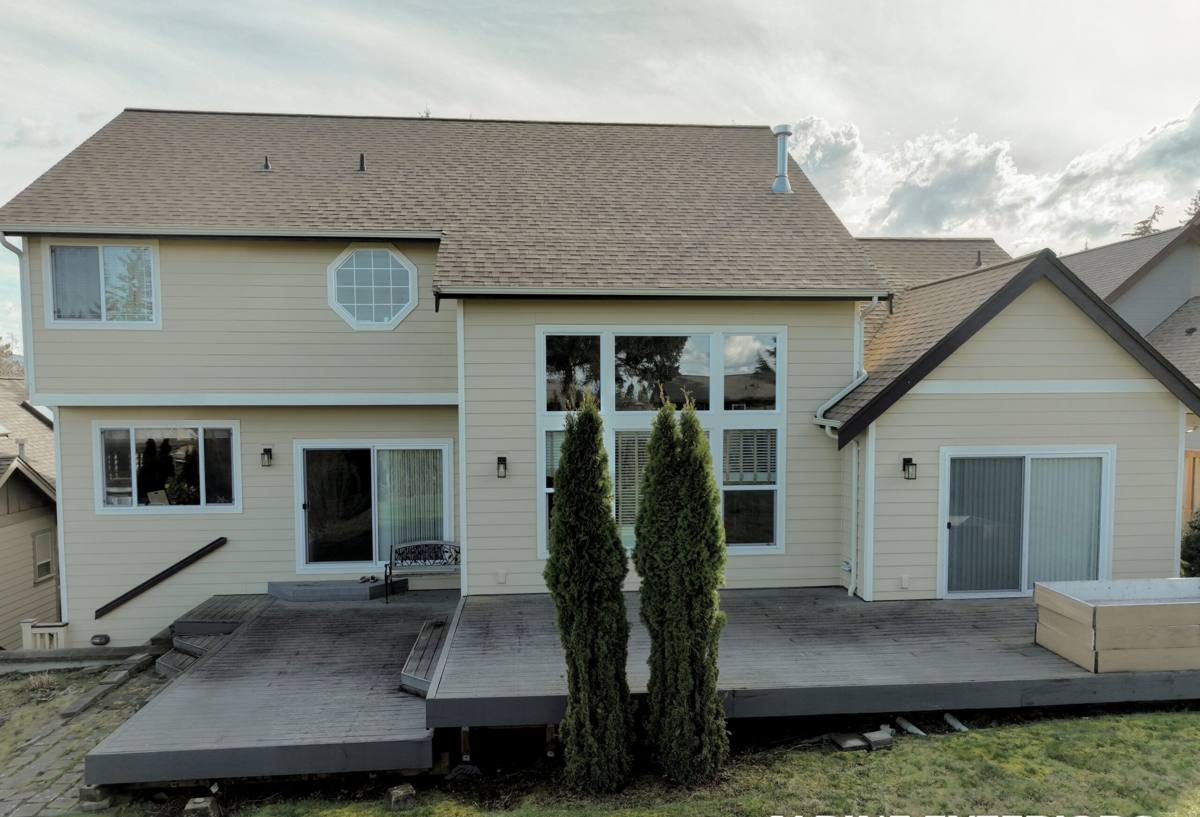
What Whatcom County's Climate Actually Does to Windows
It helps to understand the failure pattern before you understand the fix. Window problems in this area rarely show up as one dramatic issue — they build slowly, and by the time you notice them, moisture has usually already been working on the frame and sill for a season or two.
Moisture Intrusion at the Frame Edges
Driving rain doesn't just fall — it gets pushed horizontally into any gap in the flashing or sealant around a window frame. Over time, this forces water behind the trim and into the wall cavity, where it can sit and cause rot long before it's visible from inside the house.
Salt Air and Hardware Corrosion
Salt in the air accelerates corrosion on window hardware — hinges, locks, balance mechanisms, and metal cladding fasteners. Cheaper hardware finishes that hold up fine in a dry climate can start pitting and sticking within a few years here.
Wood Rot in Trim and Sills
Painted wood trim and sills are especially vulnerable when they sit in a shaded, moisture-heavy microclimate. Combined with moss and algae growth that holds moisture against the surface, wood components can soften and fail faster than the glass unit itself.
Seal Failure and Fogged Glass
Insulated glass units rely on a sealed edge to keep argon gas or dead air between the panes. Constant humidity cycling — wet mornings, drier afternoons, wet again overnight — puts extra stress on that seal. When it fails, you get the telltale fog or haze between the panes that no amount of cleaning will fix.
What a Correct Window Replacement Job Involves
Replacing a window is more than popping the old one out and setting a new one in the same opening. In this climate, most of what determines whether a window lasts 20 years or 5 happens in the details around the window, not the window unit itself.
Removal and Inspection
Once the old window is out, the opening gets inspected for hidden rot or water damage in the framing before anything new goes in. Installing a new window over a compromised opening just hides the problem for a while — it doesn't solve it.
Flashing and Moisture Barrier Detail
Proper flashing directs water down and away from the opening rather than into the wall assembly. This includes sill pan flashing, head flashing, and correctly lapped house wrap so water sheds outward at every layer, not just at the surface caulk line.
Air Sealing and Insulation
The gap between the window frame and the rough opening needs to be sealed with a product that stays flexible through temperature and humidity swings — not just packed with fiberglass insulation, which does nothing to stop air or moisture movement.
Exterior Sealant and Trim
The exterior caulk joint is the first line of defense against driving rain. It needs to be applied to clean, dry, primed surfaces and inspected as part of the job — not treated as a five-minute afterthought once the crew is already packing up.
Choosing the Right Window Material for This Climate
Every frame material has trade-offs. None of them are wrong choices in general — but some make more sense than others once salt air, rain, and moss are part of the equation.
| Frame Material | Moisture Resistance | Maintenance | Notes for This Climate |
|---|---|---|---|
| Vinyl | Good — won't rot | Low | Solid all-around choice; verify weld quality at corners, a common weak point |
| Fiberglass | Very good | Low | Dimensionally stable through wet/dry cycling; higher upfront cost |
| Wood (unclad) | Poor without diligent upkeep | High | Requires regular repainting/sealing; not our default recommendation here |
| Wood-clad (vinyl or aluminum exterior) | Good on exterior face | Moderate | Interior wood look with a protected exterior shell; watch cladding seams for gaps |
| Aluminum | Fair — prone to condensation | Low | Conducts cold and can sweat in humid conditions; usually not our first pick residentially |
Our standard recommendation for Yew Street homes leans toward vinyl or fiberglass frames with a quality low-E glass package. That's not a knock on wood — it's a maintenance-burden judgment call given how much rain and shade this area gets. A wood-clad option is a reasonable middle ground if you want a wood interior look without taking on full exterior wood maintenance.
Our Process, Start to Finish
- Walkthrough and measure — we look at every opening, not just the ones you've flagged, since problems often hide near sills and lower corners.
- Written estimate — clear line items for window units, labor, and any trim or flashing repair we expect to find.
- Scheduling around weather — openings only stay uncovered for as long as necessary; we plan installs to minimize exposure during wet stretches.
- Removal and opening inspection — old windows come out, framing gets checked, and you're told immediately if we find hidden damage before we go further.
- Flashing, insulation, and sealing — the moisture management layer goes in correctly, every time, not just when it's convenient.
- New window install and adjustment — units get set, shimmed level and plumb, and operated to confirm smooth function before final trim.
- Exterior finish and cleanup — trim, caulking, and paint touch-up as needed, with the site left clean.
Signs Your Windows Need Replacing Now
- Fogging or haze between the panes that doesn't clear with cleaning
- Visible soft or discolored wood at the sill or bottom corners of the frame
- Windows that are difficult to open, close, or lock
- Noticeable draft or cold spot near the frame on windy days
- Moss or dark staining building up on the sill or exterior trim
- Condensation forming on the inside of the glass regularly in cooler months
- Paint peeling or bubbling on the exterior trim around the window
- Rising heating bills with no other obvious explanation
One or two of these on their own might just need minor repair. Several together, especially combined with visible wood softening, usually means the window and its surrounding opening need a full replacement rather than a patch.
Cost Factors for Yew Street Window Replacement
Every home is different, so exact numbers depend on a walkthrough, but these are the main variables that move the price up or down.
| Factor | Why It Matters |
|---|---|
| Window size and style | Larger units and specialty shapes (bay, arched, sliding patio) cost more than standard double-hungs |
| Frame material | Vinyl is typically the most budget-friendly; fiberglass and wood-clad run higher |
| Glass package | Double-pane vs. triple-pane, plus low-E coatings, affects both cost and comfort |
| Hidden framing damage | Rot repair at the opening adds labor and material beyond the window itself |
| Number of windows | Doing a whole house at once is usually more cost-efficient per window than one-off replacements |
| Access and height | Second-story or hard-to-reach openings take more time and equipment |
As a broad range, homeowners in this area are typically looking at somewhere in the low-to-mid hundreds per window for standard vinyl replacements up into the low thousands for larger or higher-end units — but the only way to get a real number is a walkthrough of your specific windows and openings.
Why Hire a Crew That Already Works Yew Street
Window replacement in Sudden Valley isn't fundamentally different work than anywhere else — but knowing this specific area's exposure patterns saves time and prevents callbacks. A crew that's worked Yew Street knows which sides of a house typically take the worst of the driving rain, where moss buildup tends to accelerate sill damage, and which flashing details actually hold up through a full Whatcom County winter rather than just looking right on install day. That local pattern recognition is the difference between a job that gets redone in five years and one that doesn't.
Living With New Windows Through Moss Season
Even a correctly installed window benefits from a little seasonal attention in this climate. Keeping sills and tracks clear of moss and debris, checking that exterior caulk lines stay intact year to year, and making sure gutters and downspouts near windows are directing water away from the wall — not spilling onto it — all extend the life of the install well past what the window unit alone would give you.
If you're seeing any of the warning signs above, or you're just tired of fighting drafts and moss stains every winter, we're happy to take a look. Estimates are free and there's no pressure — use the form below to get one scheduled for your Yew Street home.