 Sudden Valley
 Building Decks That Hold Up in Acme
A deck in the Acme area lives outdoors twelve months a year under conditions that are harder on lumber and hardware than most homeowners realize. Between the tree cover common to this part of Whatcom County, the near-constant fall and winter rain, and the salt-laden air that moves inland off the Sound, a deck built with generic materials or shortcuts on flashing and fasteners will show problems within a few seasons — soft boards, rusting screws, green film on every horizontal surface, and a substructure that's rotting from the inside before the surface ever looks bad. We build and repair decks around Sudden Valley and Acme with those specific conditions in mind, not with a one-size-fits-all approach borrowed from a drier climate.
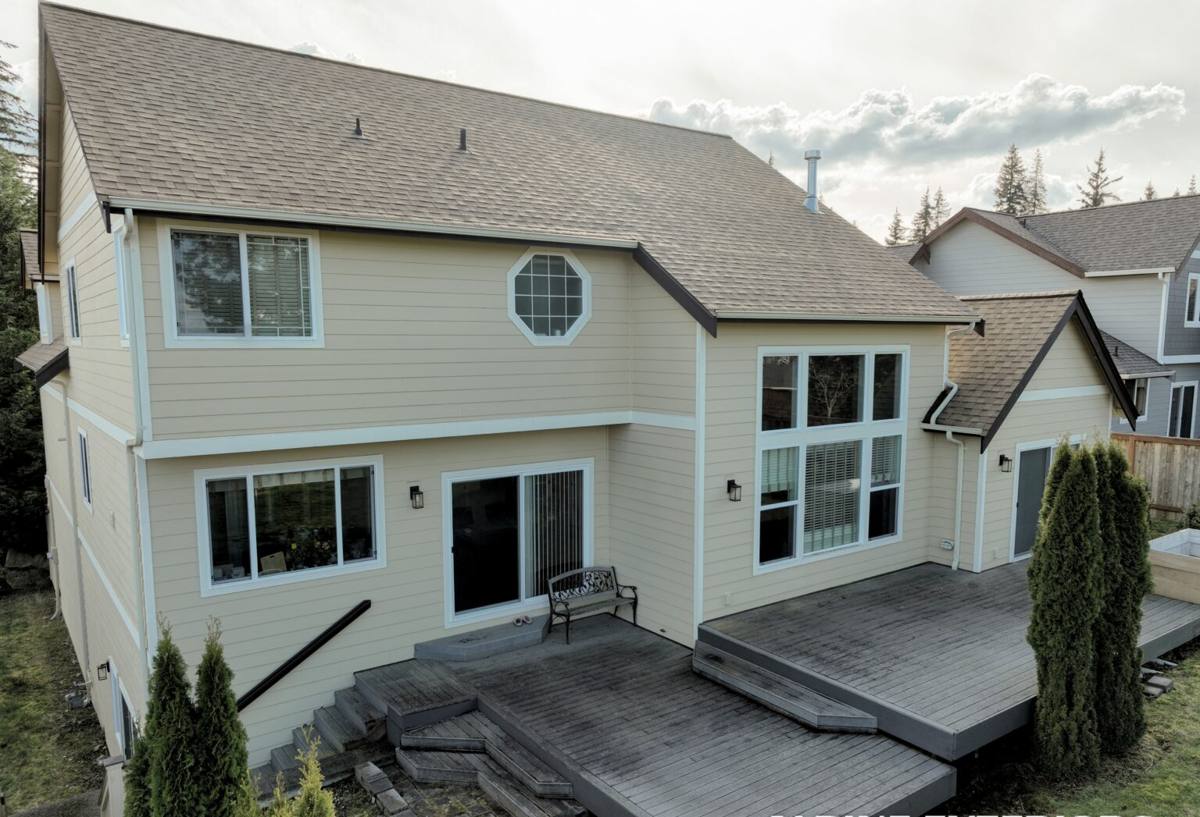
What This Climate Actually Does to a Deck
Moisture That Never Fully Dries
Long stretches of driving rain followed by short, often overcast breaks mean deck framing and decking boards rarely get a full dry-out cycle. Water finds its way into end grain, screw holes, and any spot where two pieces of wood meet without a drainage gap. Over time that trapped moisture is what causes rot — not a single storm, but months of boards staying damp longer than they should.
Moss and Algae Growth
Shaded yards and a long moss season mean deck surfaces, especially the north or tree-covered side of a house, develop a slick green film faster here than in more open, sun-exposed areas. That's not just cosmetic — moss and algae hold moisture against the board surface, which accelerates decay in wood decking and can make stairs and walking surfaces genuinely dangerous when wet.
Salt Air and Metal Corrosion
Fasteners, joist hangers, and other hardware take a beating from salt-carrying air even well inland from the water. Standard zinc-coated screws and nails can start rusting within a year or two in this environment, and once a fastener corrodes it loses holding strength long before it looks obviously bad. This is one of the most common causes of premature deck failure we see, and it's almost entirely preventable with the right hardware spec from day one.
Choosing Decking Material for an Acme Property
There's no universally "best" decking material — the right choice depends on your budget, how much upkeep you're willing to do, and how much shade and moisture your specific lot deals with. Here's how the common options actually perform in this climate:
| Material | Upfront Cost | Maintenance Needed | Moisture/Moss Resistance | Realistic Lifespan |
|---|---|---|---|---|
| Pressure-treated lumber | Lowest | Annual cleaning, re-sealing every 1-2 years | Fair — treatment resists rot but surface still holds moss | 15-20 years with upkeep |
| Cedar | Moderate | Regular sealing/staining to prevent graying and moisture uptake | Naturally rot-resistant but softer surface, moss-prone in shade | 15-25 years with upkeep |
| Composite decking | Higher | Occasional wash, no staining/sealing | Good — won't rot, though moss can still grow on the surface film | 25-30+ years |
| PVC/capped polymer | Highest | Occasional wash only | Best — fully non-organic surface, easiest to keep moss-free | 25-30+ years |
For heavily shaded Acme lots, we generally steer homeowners away from bare cedar or untreated wood on the low, tree-covered side of a house — it's simply fighting an uphill battle against moss. Composite and capped polymer cost more up front but remove the recurring maintenance burden that this climate otherwise demands. That said, plenty of homeowners are happy with treated lumber or cedar as long as they understand — and are willing to keep up with — the sealing schedule.
Framing Lumber and Hardware Are Not Optional Upgrades
Whatever decking surface you choose, the framing underneath and the hardware holding it together matter more for long-term durability. We spec stainless steel or heavy hot-dip galvanized fasteners and connectors as standard on Acme jobs, not as an upsell — in this air, anything less is a warranty problem waiting to happen.
What Correct Deck Construction Looks Like Here
A deck that's actually built to last in Whatcom County weather comes down to details that aren't visible once the project is finished:
Ledger Attachment and Flashing
Where the deck attaches to the house is the single most common failure point we find on older or poorly built decks. Proper flashing — installed so water sheds away from the ledger board and never behind the siding — is what prevents the slow, hidden rot that eventually shows up as a soft spot or a sagging deck edge years later.
Footings Set Below Frost and Drainage Depth
Footings need to be sized and set deep enough to stay stable through wet ground conditions, with concrete poured against undisturbed soil and proper drainage around the base so water doesn't pool against the post.
Gaps and Airflow
Decking boards need consistent gapping for water to drain through rather than sit on the surface, and the framing underneath needs enough clearance and airflow to actually dry out between rain events instead of staying damp all winter.
Stair and Guardrail Hardware
Stairs see the most foot traffic and, thanks to moss, the most slip risk. We use hardware and connection methods rated for the actual load, not just what's visually acceptable, and we pay particular attention to stair tread surfaces where moisture and shade overlap.
Our Process, Start to Finish
- On-site visit: We walk the property, look at sun/shade exposure, drainage patterns, and how the deck will tie into the house.
- Design and material discussion: We go over decking material options honestly, including trade-offs in cost and maintenance for your specific lot.
- Written estimate: A clear scope covering framing, footings, decking, railing, and hardware — no vague allowances.
- Permitting: We handle the permit process where required so the structure is inspected and code-compliant.
- Construction: Footings, framing, flashing, decking, and railing installed in sequence with attention to the moisture-management details that matter most here.
- Final walkthrough: We go over the finished deck with you, including basic care guidance specific to your yard's shade and exposure.
Maintenance Checklist for Whatcom County Decks
Regardless of material, a little seasonal attention goes a long way toward avoiding early repairs:
- Sweep leaves and debris off the surface regularly, especially in fall — trapped organic matter feeds moss and holds moisture
- Rinse or lightly scrub moss and algae film off the surface before it builds up, particularly on shaded sections
- Check and clear gaps between boards so water can drain through rather than pool
- Inspect fasteners and hardware yearly for rust staining or looseness
- Reseal or restain wood decking on the schedule appropriate to that product — don't wait until it's visibly graying or cracking
- Check the ledger board area and flashing where the deck meets the house for any signs of staining or soft wood
- Confirm gutters and downspouts near the deck aren't dumping extra water onto or under the structure
Repair, Rebuild, or New Build?
Not every aging deck needs to be torn out. The right call depends on where the problem actually is:
Repair usually makes sense when the framing and footings are sound but the decking surface has failed — cracked, splintering, or rotting boards on an otherwise structurally solid deck.
Rebuild is the right move when the framing, ledger connection, or footings show rot or corrosion damage, even if the visible decking still looks okay — because that's the part holding everything up.
New build makes sense when a deck is undersized for how the space is actually used, poorly located relative to sun and shade, or old enough that code requirements around railings, stairs, and structural connections have changed significantly since it was built.
A straightforward way to tell which category you're in: soft or spongy decking usually means surface-level repair; movement, sagging, or a deck that feels different underfoot near the house connection usually means the framing needs attention.
Why It Matters to Hire a Crew That Already Works This Area
Deck-building fundamentals don't change from town to town, but the specific combination of shade patterns, moss pressure, and salt-air corrosion around Acme and Sudden Valley is something a crew learns by working here repeatedly — which hardware actually holds up, which decking products handle the local moisture load without excessive upkeep, and which parts of a typical lot need extra drainage attention. A contractor unfamiliar with these conditions may build a deck that would perform fine in a drier or less shaded region and hand you a maintenance problem within a few years.
If you're planning a new deck or dealing with one that's showing its age, we're happy to take a look and put together a straightforward, no-pressure estimate — just fill out the form below.