 Sudden Valley
 Why Fairhaven Roofs Wear on Their Own Schedule
A roof in Fairhaven doesn't age the same way a roof does twenty miles inland. Sitting close to Bellingham Bay means homes here take on salt-laden air that speeds up corrosion on fasteners, flashing, and metal edge trim years before an inland roof would show the same wear. Add in the driving, wind-pushed rain that comes off the water during fall and winter storms, and you've got a roof that's constantly tested at every seam, valley, and penetration point. Then there's the tree canopy that shades so many Fairhaven lots — beautiful for the neighborhood, but it keeps roof surfaces damp and shaded for weeks at a time, which is exactly what moss and moss-related decking damage need to take hold.
None of this means Fairhaven homes need exotic materials or gimmicks. It means the fundamentals — deck condition, flashing detail, ventilation, and material selection — have to be done right the first time, because this climate has no patience for shortcuts. A new roof installed with inland assumptions will show problems here in a fraction of the time.
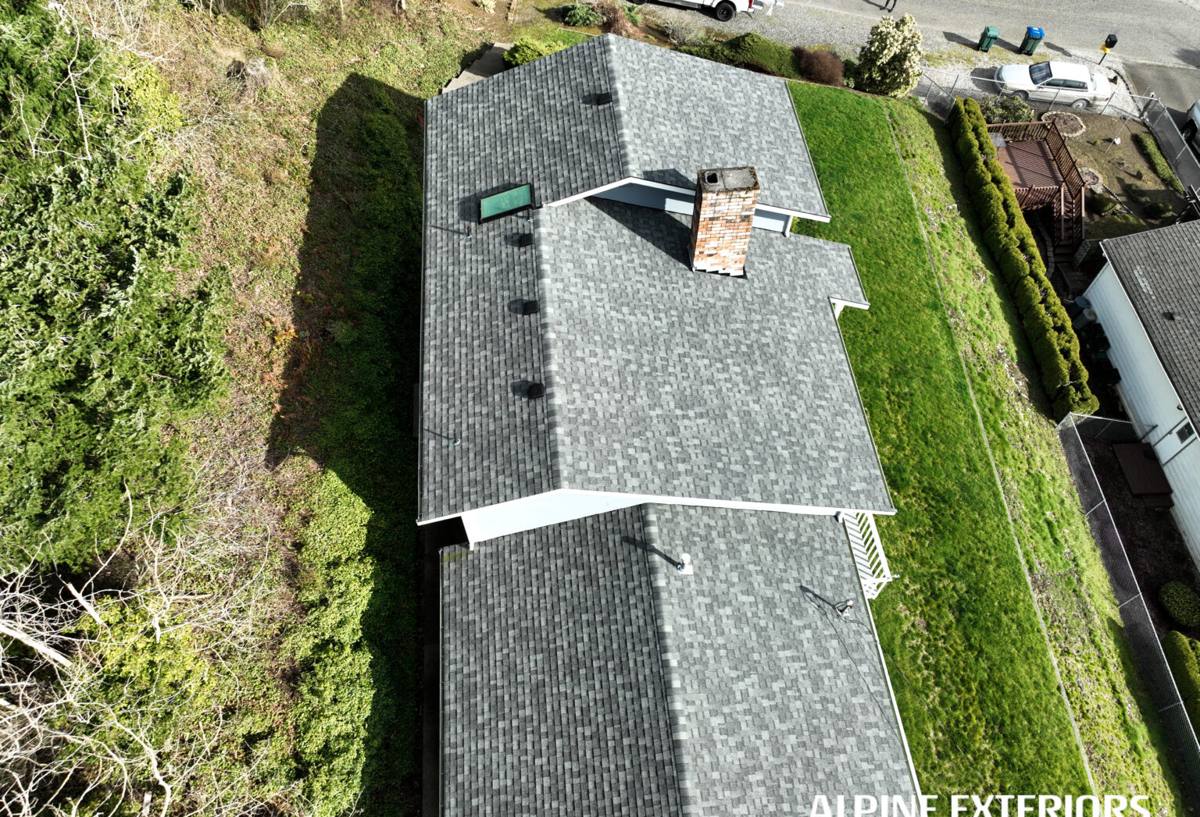
Signs a Fairhaven Home Actually Needs a New Roof
Not every roof problem calls for full replacement, but in this climate certain signs mean patching is just delaying the inevitable. Before we recommend a new roof over a repair, we look for:
- Granule loss heavy enough to see bald patches on asphalt shingles, especially on south- and west-facing slopes that take the worst of the storms
- Persistent moss growth that keeps coming back within a season or two of cleaning, a sign the roof stays wet longer than it should
- Soft or spongy decking felt underfoot during inspection, usually from long-term moisture intrusion under damaged shingles or flashing
- Rusted, lifted, or missing flashing around chimneys, skylights, and roof-to-wall transitions — common failure points in salt air
- Daylight or water staining visible in the attic along the roofline, valleys, or around vent penetrations
- A roof approaching or past 20-25 years old (for asphalt) with multiple repair visits already behind it
If a roof is showing two or more of these at once, repair work usually becomes a cycle of chasing leaks rather than solving the underlying problem.
What a Correct New Roof Installation Actually Involves
Tear-Off and Deck Inspection
We don't install over existing layers. A full tear-off lets us see the actual condition of the roof deck, which is the part homeowners never see and the part that determines how long everything above it lasts. Any water-damaged or delaminated sheathing gets replaced before a single new shingle goes down — this is non-negotiable in a climate where hidden moisture is the norm, not the exception.
Underlayment and Flashing
This is where a lot of the real weatherproofing happens, and it's invisible once the job is done. In valleys, eaves, and around every penetration, we use ice-and-water shield membrane rather than relying on standard felt alone, because wind-driven rain off the bay finds its way under shingles that aren't backed up properly underneath. Flashing at chimneys, skylights, sidewalls, and vents gets replaced with corrosion-resistant material and properly step-lapped — reused or patched flashing is one of the most common causes of "new roof" leaks we get called out to fix on other contractors' work.
Ventilation
A roof that can't breathe traps moisture in the attic, which shows up as premature deck rot, mildew, and shortened shingle life — all accelerated by our damp regional climate. Balanced intake at the soffits and exhaust at the ridge keeps air moving year-round, which matters as much in a moss-prone climate as insulation does.
Moss and Algae Management
Moss doesn't just sit on top of shingles — its root structure works into granules and seams and holds moisture against the roof surface. On a new installation we install zinc or copper strips near the ridge on shaded roofs, which release trace metals with rainfall that discourage regrowth, and we recommend algae-resistant shingle products where the roof geometry and tree cover make regrowth likely.
Choosing a Roofing Material for a Fairhaven Home
There's no single "best" material — it depends on the home's age, roof pitch, tree exposure, and budget. Here's how the common options actually compare for this specific climate:
| Material | Salt Air Durability | Moss Resistance | Maintenance | Typical Lifespan |
|---|---|---|---|---|
| Architectural asphalt shingle | Good with proper flashing | Good with algae-resistant granules | Low | 25-30 years |
| Standing seam metal | Excellent (with coated/marine-grade fasteners) | Excellent — sheds moss naturally | Very low | 40-50+ years |
| Cedar shake | Fair — needs treated fasteners | Poor without regular treatment | High | 20-30 years with upkeep |
| Composite/synthetic shake | Good | Good | Low | 30-40 years |
For most Fairhaven homes, architectural asphalt with proper flashing and ventilation offers the best balance of cost and durability. Metal is worth the extra upfront investment on heavily shaded lots or homes closest to the water, where its resistance to both salt corrosion and moss growth pays off over decades rather than years.
What Affects the Cost of a New Roof Here
Every estimate is specific to the home, but the factors that move the number most in this area are consistent:
- Roof pitch and access — steeper roofs and homes on tight or sloped Fairhaven lots take longer and require more safety setup
- Deck condition — hidden rot found during tear-off adds material and labor that can't be known until the old roof is off
- Material choice — asphalt, metal, and shake sit at very different price points, as shown above
- Number of penetrations — chimneys, skylights, and multiple roof valleys each add flashing labor
- Tear-off layers — removing two layers of old roofing costs more in disposal and labor than one
Honest ranges for a typical single-family roof in this area run from the low five figures for a straightforward asphalt tear-off and replacement up to significantly more for metal or a complex, steep, multi-valley roof. We won't give a real number without seeing the roof — anyone quoting a firm price over the phone hasn't seen your deck condition or your flashing details.
Our New Roof Installation Process
- On-site inspection — we get on the roof, check the deck where accessible, assess ventilation, and photograph problem areas
- Written estimate — a clear scope of work and material options, no pressure to decide on the spot
- Scheduling and material order — we confirm timing around Fairhaven's wetter months where possible, since a dry install window matters
- Tear-off and deck repair — full removal, deck inspection, and any needed sheathing replacement before moving forward
- Underlayment, flashing, and installation — the weatherproofing layers described above, then the roofing material itself
- Cleanup and magnetic nail sweep — the property is left clear of debris and stray fasteners
- Final walkthrough — we go over the finished roof and warranty coverage with you directly
Working Around Fairhaven's Older Homes and Tree Cover
Fairhaven has a mix of older homes with original framing and mature landscaping that shapes how a roofing job actually goes. Older rafters and decking sometimes need reinforcement or replacement sections that a newer subdivision roof wouldn't require, and roofs shaded by large trees need extra attention to ventilation and moss prevention from day one rather than as an afterthought. A crew that's replaced roofs in this specific neighborhood has already run into these conditions and knows what to check for before it becomes a change order mid-project.
Why It Matters to Hire a Crew That Already Works in Fairhaven
Roofing crews that mostly work drier, inland areas of Whatcom County sometimes underbuild for what this stretch of coastline actually experiences — standard fasteners instead of corrosion-resistant ones, felt instead of membrane in valleys, or no moss strategy at all. A crew with real time on Fairhaven roofs has seen which flashing details fail here, which materials hold up against salt air, and how much ventilation a shaded roof actually needs. That local track record shows up later as fewer callbacks and a roof that's still doing its job well past the ten-year mark.
After Installation: Keeping a New Roof Performing
A correctly installed roof still benefits from basic upkeep in this climate. Keep gutters clear so water doesn't back up under the eaves during heavy rain, have moss growth addressed at the first sign rather than after it spreads, and schedule a quick visual inspection every couple of years, especially after major windstorms. None of this is intensive maintenance — it's the small, regular attention that keeps a well-built roof reaching its full lifespan instead of falling short of it.
If your Fairhaven roof is showing its age or you're planning ahead for one that is, we're happy to take a look and give you a straight answer about what it needs. Fill out the form below for a free, no-pressure estimate.