 Sudden Valley
 Siding Replacement in Barkley: What Sudden Valley Homes Are Up Against
Barkley sits within the broader Sudden Valley area of Whatcom County, and homes here take on a specific kind of punishment that a lot of siding was never built to handle. It's not one bad storm a year — it's a steady grind of marine moisture, driving rain that comes in sideways more often than straight down, and a moss season that seems to run longer every year. Add in the salt-tinged air that moves through this part of the county, and you've got a climate that finds every weak point in a siding system: a loose seam, a missing piece of flashing, a caulk joint that was never meant to be a permanent fix.
A siding replacement done right in this area isn't just a cosmetic upgrade. It's the difference between a wall assembly that sheds water and dries out between storms, and one that stays damp long enough for rot, mold, and pest damage to set in behind the surface where you can't see it. This page covers what Barkley homeowners specifically need to know before replacing siding — what the climate demands, what a correct job looks like, and what to ask a contractor before you sign anything.
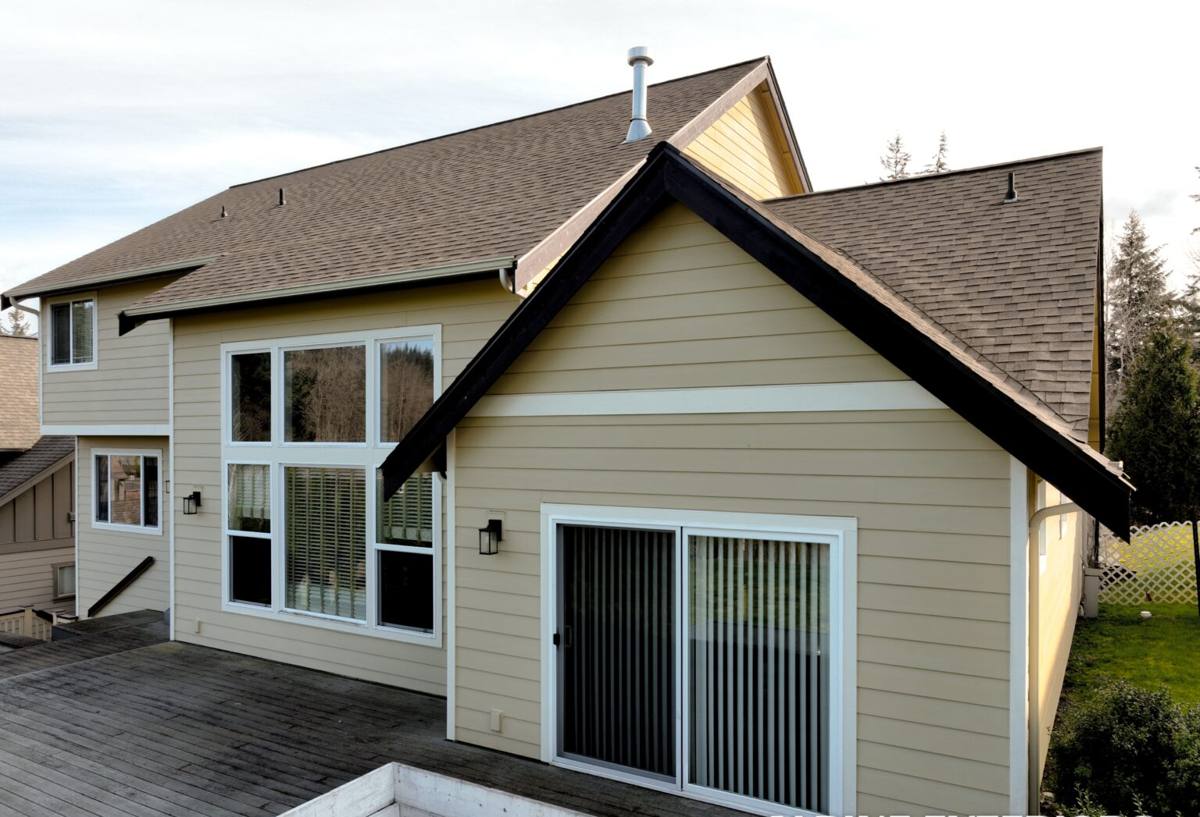
How Whatcom County's Climate Wears Down Siding
Driving Rain and Wind-Driven Moisture
Whatcom County doesn't just get rain — it gets rain pushed horizontally by wind off the water often enough that vertical surfaces take a beating most siding warranties don't fully account for. Wind-driven rain finds gaps at butt joints, corner boards, and window trim that would stay dry in a calmer climate. Over years, that repeated wetting is what breaks down siding that looks fine from the curb but is failing underneath.
Moss, Algae, and Constant Dampness
Shaded north and east-facing walls in this area can stay damp for days after a storm clears. That's exactly the environment moss and algae need to take hold. On some siding materials, that constant moisture doesn't just sit on the surface — it gets absorbed into the material itself, softening it from the outside in.
Salt Air and Slow Corrosion
The marine air common to this part of Whatcom County carries salt content that accelerates corrosion on fasteners, flashing, and any exposed metal trim. It's a slow process, which is exactly why it's easy to underestimate — by the time corrosion is visible, it's often been working on hidden fasteners for years.
Signs a Barkley Home Needs Replacement, Not Just Repair
Not every siding problem calls for a full replacement. But there's a point where patching stops being cost-effective and starts being a way to delay a bigger bill. Here's how to tell the difference.
| What You See | Likely Means |
|---|---|
| A few cracked or warped boards, isolated area | Localized repair may be enough |
| Soft or spongy spots when pressed | Moisture has reached the substrate — repair rarely holds |
| Persistent moss or dark staining across multiple walls | Chronic moisture exposure, likely widespread |
| Paint that won't hold or bubbles within a year or two | Moisture is moving through the siding from behind |
| Siding is original and 25+ years old | Even well-maintained siding is near end of service life |
If more than one or two of these apply, a full replacement usually costs less over time than another round of patchwork — and it lets you fix the water management layer underneath, which a repair almost never touches.
What a Correct Siding Replacement Job Involves
Tear-Off and Hidden Damage Inspection
Removing the old siding is the only point in the whole project where the sheathing, framing, and existing flashing are fully visible. A correct job treats this as an inspection step, not just a demolition step — any soft sheathing, rotted framing, or failed flashing gets found and addressed here, before anything new goes up.
Water-Resistive Barrier and Flashing
The siding itself is the least important layer for keeping water out of the wall — the house wrap, flashing at windows and doors, and kick-out flashing at roof-to-wall intersections do the real work. In a climate with this much wind-driven rain, gaps or shortcuts in this layer are what cause failures years down the road, long after the crew that installed it is gone.
Fastening and Manufacturer Specifications
Fiber cement siding has specific nailing patterns, fastener types, and clearance requirements — how far the bottom edge sits above a deck or grade, how siding meets trim, how it's fastened at studs versus blind-nailed. These specs exist because they've been tested against exactly the kind of moisture cycling this region produces. Skipping them is one of the most common ways a good product ends up performing badly.
Trim, Caulking, and Paint Lines
The small details — corner trim, caulk joints, and where factory-finished siding meets field-cut edges — are where a lot of long-term problems start. These spots need to be sealed and finished correctly the first time, because they're not easy to inspect or fix once the job is closed up.
Material Comparison: Why We Install Only James Hardie Fiber Cement
We only install James Hardie fiber cement siding. We don't install vinyl, LP SmartSide, or cedar, and homeowners deserve an honest reason why, not just a sales pitch.
| Material | How It Handles This Climate |
|---|---|
| Vinyl | Doesn't absorb water, but expands and contracts with temperature swings and can warp or crack under wind-driven rain and impact over time |
| LP SmartSide (engineered wood) | Wood-based core is vulnerable if moisture gets behind it or edges aren't sealed and maintained consistently |
| Cedar | Attractive but needs ongoing maintenance to resist moisture, moss, and rot in a wet climate like this one |
| James Hardie fiber cement | Non-combustible, dimensionally stable, engineered specifically for high-moisture climates, factory-finished to resist moss and fading |
Hardie's HZ5 product line is engineered for climates with exactly this profile — repeated wetting, humidity, and freeze-thaw cycling. The ColorPlus factory finish also matters here more than in drier climates: field-applied paint is one of the first things to fail under constant moisture and UV exposure, while a factory-baked finish holds up longer and carries its own warranty coverage. Combined with a strong transferable warranty, it's the product we're willing to put our name behind on every job.
Our Process for a Barkley Siding Replacement
- On-site inspection of existing siding, trim, and any visible moisture or damage
- Written estimate covering material, labor, and any anticipated repair work
- Full tear-off with inspection of sheathing and framing before covering anything up
- Repair of any damaged sheathing or framing found during tear-off
- Installation of house wrap and flashing at all penetrations, windows, and roof lines
- Hardie siding installed to manufacturer fastening and clearance specifications
- Trim, caulking, and final detail work
- Walkthrough with the homeowner before the job is considered complete
Every step in that list exists because skipping it is exactly how siding fails early in a climate like this one. We don't shortcut the tear-off inspection or the flashing details to save a day of labor — those are the parts of the job you're paying for even though they're invisible once it's done.
Why a Crew That Already Works Sudden Valley Matters
A contractor who already works in and around Sudden Valley and Barkley has seen how homes in this specific area age — which walls hold moss longest, which exposures take the worst of the wind-driven rain, where older homes tend to have flashing that was never installed correctly the first time. That's not something you get from a general contractor who does one job in the area and moves on.
It also matters for scheduling and accountability. A crew based locally isn't driving a long distance for a callback if something needs a second look after the first hard rain of the season, and they have a reputation in the area to protect — not just a one-time transaction to close.
What to Ask Before You Hire
- Will you inspect the sheathing and framing during tear-off, not just replace what's on the surface?
- What house wrap and flashing details do you use, and can you walk me through them?
- Are you installing to the manufacturer's specific fastening and clearance requirements?
- What's covered under the material warranty versus your workmanship warranty, and for how long?
- Have you worked on other homes in Barkley or Sudden Valley, and what issues did you run into?
- What's your plan for protecting landscaping and the site during tear-off and installation?
A contractor who answers these clearly and specifically — without vague reassurances — is a good sign. Vague answers about "standard installation" or "it'll be fine" usually mean the details haven't been thought through.
If your Barkley home's siding is showing its age or you're just trying to plan ahead before the next wet season sets in, we're happy to take a look and give you a straightforward, no-pressure estimate. There's no obligation — just an honest read on where things stand and what your options are.