 Sudden Valley
 Metal Roofing Built for Bellingham's Weather, Not Just Installed On It
Bellingham sits in a spot that's tough on roofs. You've got moisture rolling in off Bellingham Bay and the Salish Sea, driving rain that comes in sideways more often than straight down, and shaded, tree-covered lots that stay damp long after the rain stops. Add in a moss season that can run eight or nine months out of the year in the wetter neighborhoods, and you've got a climate that will find every weak point in a roofing system. Metal roofing can handle all of that better than most materials — but only if it's specified and installed with this specific climate in mind, not installed the same way a crew would install it in a dry inland town.
We work on homes throughout Whatcom County, and Bellingham roofs have their own personality: mature tree canopy, proximity to salt water in several neighborhoods, and a mix of steep older rooflines and lower-pitch additions. A metal roofing job here needs to account for all of that, not just the panel itself.
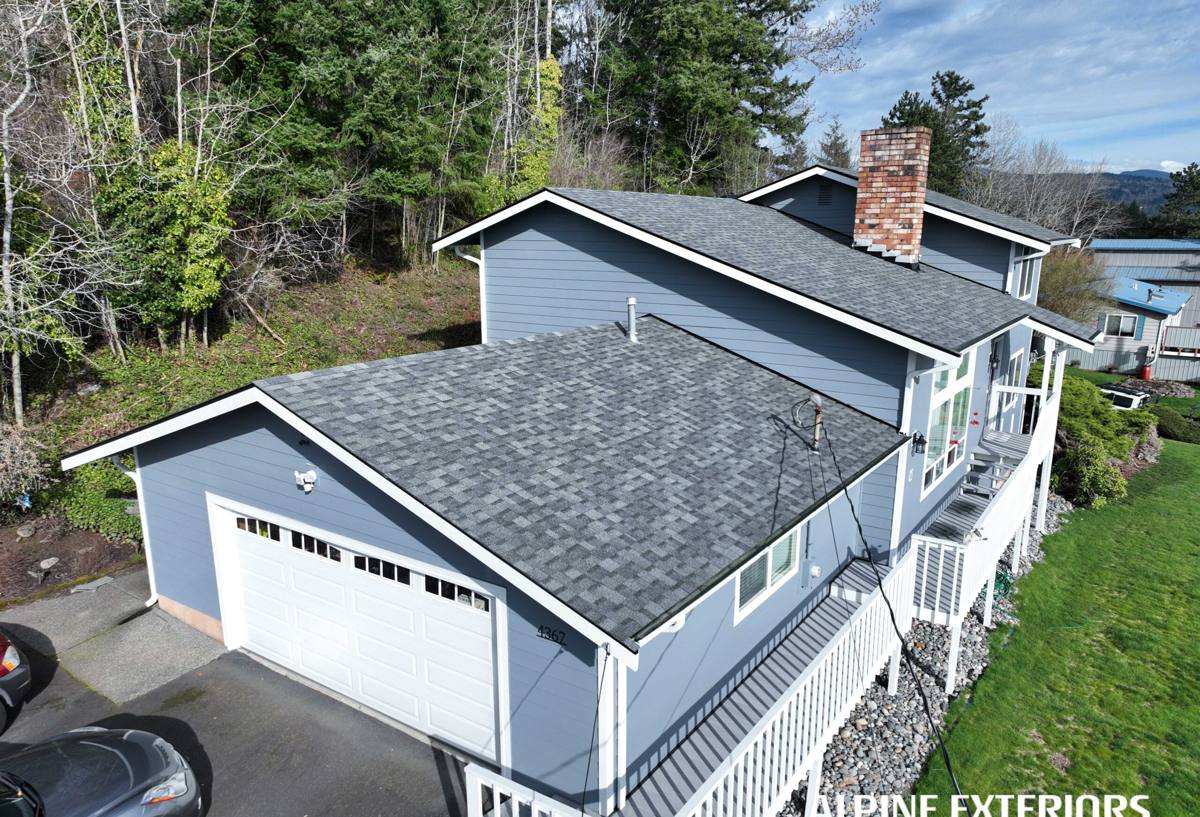
What Bellingham's Climate Actually Does to a Roof
Salt Air and Corrosion
Homes closer to the water pick up salt-laden moisture in the air, and that salt accelerates corrosion on unprotected metal, exposed fasteners, and lower-grade coatings. It's not dramatic — you won't see it happen — but over years it shows up first at cut edges, fastener heads, and any spot where the protective coating has been scratched or thinned during installation.
Driving Rain
Wind-driven rain doesn't just fall on a roof, it gets pushed sideways and upward under laps, around penetrations, and into any seam that wasn't detailed correctly. A roof that would shed water fine in a calm rain can leak in a Bellingham storm if the underlayment, flashing, and panel overlaps weren't built for wind-driven moisture specifically.
Moss and Organic Growth
Shaded, moisture-retaining roofs in this area grow moss aggressively. On asphalt shingles, moss lifts the mat and holds water against the roof deck. Metal doesn't give moss the same foothold, but debris — needles, leaves, seed pods — still collects in valleys and against obstructions, holds moisture against the panel, and can eventually stain or, in rare cases, contribute to localized corrosion if it's never cleared.
What a Correct Metal Roof Install Involves Here
A metal roof is only as good as the system underneath it. For Bellingham conditions, we treat the following as non-negotiable, not upgrades:
- High-temperature, self-adhering underlayment at eaves, valleys, and penetrations — standard felt isn't enough backup against wind-driven rain.
- Proper panel overlap and fastening pattern matched to the roof's exposure — a roof facing prevailing weather off the water needs tighter attention to lap direction and sealant placement than a sheltered rear slope.
- Corrosion-resistant fasteners and flashing that match the panel metal, to avoid galvanic corrosion between dissimilar metals.
- Ventilation that actually moves air — trapped moisture under a metal roof causes more long-term problems than moisture on top of it.
- Clean valley and penetration detailing around chimneys, skylights, and vents, since these are where the vast majority of roof leaks actually start.
Skipping any one of these doesn't usually cause an immediate failure — it causes a slow one, five or ten years down the road, which is exactly why cutting corners here is so common and so hard to catch until it's expensive.
Choosing the Right Metal Roofing System
Not every metal roofing product performs the same way in a wet, salt-influenced climate. Here's how the common options compare for a Bellingham home:
| System | Best For | Climate Considerations |
|---|---|---|
| Standing Seam | Main roofs, homes near the water, steeper pitches | Concealed fasteners mean fewer penetration points for water and salt air to attack over time; higher upfront cost, longest service life |
| Exposed Fastener Panel | Outbuildings, additions, budget-conscious projects | Lower cost, but exposed screws need periodic inspection and eventual replacement as washers age, especially with salt exposure |
| Metal Shingle/Shake Profile | Homes wanting a traditional look with metal durability | Interlocking design sheds wind-driven rain well; more seams overall than standing seam, so detailing quality matters more |
For most Bellingham homes, especially anything within a mile or two of the water or under heavy tree cover, we steer people toward standing seam on primary roof planes. It's not the cheapest option, but it has the fewest long-term maintenance headaches in this specific climate, and that's usually what homeowners actually care about once they've lived through a few wet seasons.
Steel vs. Aluminum
Both hold up well here when properly coated, but they behave differently. Steel is stronger and typically less expensive, and with a quality Galvalume or Galvalume-plus-paint coating it performs well even near the water. Aluminum won't rust by nature, which some homeowners prefer for extra peace of mind on coastal-influenced lots, but it's softer and costs more. We'll walk through the trade-off honestly based on your home's exposure rather than pushing one option across the board.
Maintenance: What Ongoing Care Actually Looks Like
Metal roofing is low-maintenance, not no-maintenance. In Whatcom County, that mostly means managing what the trees and weather deposit on the roof.
- Clear debris from valleys and low points once or twice a year, especially after fall leaf drop.
- Keep gutters clean so water isn't backing up under the eave edge during heavy rain.
- Trim overhanging branches that keep sections of roof shaded and damp longer than the rest.
- Have fasteners on exposed-fastener systems checked periodically — washers age faster with the on-again, off-again moisture cycle here than they would in a dry climate.
- Rinse off moss or algae staining with a gentle wash rather than pressure-washing, which can damage coatings and force water under laps.
Our Process for a Bellingham Metal Roofing Project
- On-site assessment — we look at pitch, exposure to wind and water, tree cover, existing ventilation, and the condition of the decking underneath.
- System recommendation — we walk you through panel type, gauge, and finish options suited to your home's specific exposure, with honest pricing for each.
- Tear-off or overlay decision — we'll tell you straight whether your existing roof can be built over or needs to come off, based on deck condition, not just what's faster for us.
- Underlayment and flashing detail — this is where most of the long-term performance is actually decided, and we don't rush it.
- Panel installation — fastened and lapped to match your roof's wind and water exposure.
- Final walkthrough — we go over ventilation, warranty paperwork, and what basic maintenance to expect in year one and beyond.
What Drives the Cost
Metal roofing costs more upfront than asphalt shingles, but the gap narrows over the life of the roof once you account for asphalt's shorter lifespan and moss-related maintenance in this climate. Actual pricing depends on several factors:
| Factor | Why It Matters |
|---|---|
| Roof pitch and complexity | Steep or cut-up rooflines with multiple valleys take more labor and flashing detail |
| Tear-off vs. overlay | Removing an old roof adds cost but lets us inspect and repair the deck underneath |
| Panel gauge and finish | Heavier gauge steel and premium coatings cost more but last longer, especially with salt exposure |
| Standing seam vs. exposed fastener | Concealed-fastener systems run higher on labor and material but lower on future maintenance |
| Access and site conditions | Steep driveways, tree cover, and tight lot access common in Sudden Valley and parts of Bellingham can affect setup and staging |
We'll give you a real number for your specific roof, not a generic per-square estimate that doesn't account for your home's actual conditions.
Why It Matters That We Already Work in This Area
A crew that only occasionally works in Whatcom County will detail a roof the same way they would anywhere else. A crew that works here regularly already knows how far wind-driven rain travels up under a lap on an exposed gable, how much debris a shaded valley collects by November, and which flashing details actually hold up through a full wet season near the water. That local pattern-recognition is the difference between a roof that looks right on installation day and one that's still performing the way it should ten winters later.
If you're weighing metal roofing for a Bellingham home, we're happy to take a look and give you a straight answer — including telling you if metal isn't the right fit for your specific situation. Reach out for a free, no-pressure estimate using the form below.