 Sudden Valley
 Building a Deck That Actually Holds Up in Alger
A deck in Alger has to deal with conditions that a lot of national "deck building" advice never mentions. You're close enough to the water for salt-laden air to reach fasteners and framing, you get driving rain that comes in sideways off storms instead of falling straight down, and you get a long stretch of the year — often five or six months — where shaded and north-facing surfaces stay damp enough to grow moss and algae. None of that is exotic to us. It's the normal working condition for outdoor structures anywhere near Sudden Valley and the rest of Whatcom County, and it's what we design around on every custom deck we build.
A deck that looks right on day one and starts showing soft spots, rust streaks, or slick green boards by year two usually wasn't wrong on the surface — it was wrong underneath, in the framing, fasteners, and drainage details nobody sees once the decking is down. That's where we spend most of our attention.
What Alger Properties Typically Need From a Deck
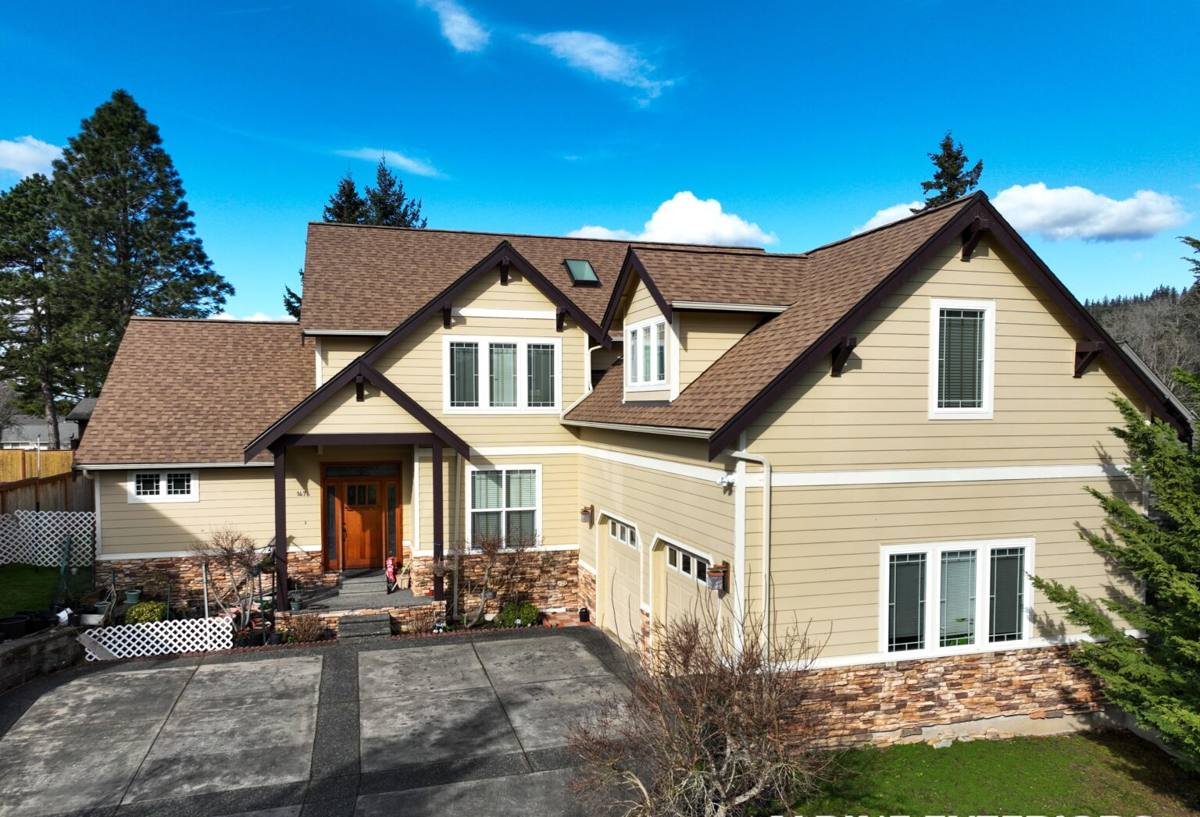
Alger lots tend to be wooded or sit near sloped terrain, which means shade patterns, tree cover, and water runoff vary a lot from one property to the next — sometimes from one side of the same house to the other. Before we design anything, we walk the site and look at where water actually goes during a heavy rain, how much direct sun the deck footprint gets across the season, and what's overhead in terms of tree canopy, because falling debris and shade both affect how a deck ages.
Grade, Drainage, and Ledger Attachment
The single most common failure point on older decks in this region is the ledger board — the piece that attaches the deck to the house — and the flashing around it. If water gets behind that flashing and sits there, it doesn't matter how good the decking is; the framing underneath rots from the inside out. We flash ledgers properly, slope the structure slightly away from the house, and make sure nothing traps standing water against wood framing.
Framing and Fasteners for Wet-Side Washington
Standard interior-grade hardware corrodes faster here than it would inland. We spec fasteners, joist hangers, and structural connectors rated for exterior and coastal exposure, and we don't mix metals in ways that cause galvanic corrosion between hardware and fastener types. It costs a little more up front and it's the difference between hardware that's still solid in fifteen years and hardware that's staining the framing by year five.
Decking Material Options for This Climate
There's no single "best" decking material — there's a best fit for your budget, your maintenance appetite, and how much sun and shade your particular deck gets. Here's how the common options actually perform under Whatcom County conditions:
| Material | Moisture Behavior | Maintenance | Typical Lifespan |
|---|---|---|---|
| Pressure-treated pine | Absorbs and releases moisture readily; needs sealing to control checking and cupping | Annual cleaning and re-sealing recommended, more in shaded areas | 15–20 years with upkeep |
| Cedar | Naturally moisture- and insect-resistant, but still an organic wood that moves with humidity | Periodic cleaning and finish renewal to hold color and resist mildew | 20–25 years with upkeep |
| Composite decking | Doesn't rot, but can retain surface moisture on shaded boards, which is where moss and algae take hold | Occasional cleaning, no sealing or staining | 25–30+ years, brand-dependent warranty |
| PVC / capped polymer | Fully moisture-resistant surface; best option for consistently shaded or damp deck areas | Lowest maintenance of the group; occasional wash-down | 25–30+ years, brand-dependent warranty |
In practice, a lot of Alger decks end up as a considered choice rather than a default: cedar or a quality composite where there's good sun exposure, and PVC or a mold-resistant composite line in the shaded, tree-covered sections where moss is going to be a persistent problem no matter what you do.
Substructure Matters More Than the Surface Boards
Homeowners naturally focus on decking color and style, but the framing underneath is what determines whether the deck is safe and solid in twenty years. We build substructures sized for real Pacific Northwest snow and wind loading, not the bare minimum, and we use joist tape or a comparable moisture barrier on top of the framing so the deck boards aren't the only thing standing between the wood structure and standing water. Footings are set below frost depth and sized to the soil conditions on your specific lot, since Alger's terrain isn't uniform from property to property.
Ventilation Underneath the Deck
Low-clearance decks that don't get airflow underneath trap moisture and stay damp long after a rain has passed, which accelerates rot in framing and encourages moss growth on the underside of boards. Where clearance allows, we build in enough airflow and, where it doesn't, we adjust material choice and detailing to compensate.
Moss, Algae, and Slip Resistance
A long moss season is just part of living this close to the water in Whatcom County, and it affects deck design in ways people don't always expect. Board spacing matters — gaps that are too tight trap debris and moisture between boards, while proper spacing lets water and organic material drain through instead of sitting on the surface. Surface texture matters too: a smooth, glossy finish looks nice on the showroom sample but turns slick fast in a shaded, damp corner, while a textured or brushed surface holds up better underfoot when it's wet, which in this climate is often.
We also talk with homeowners honestly about which parts of their yard are simply going to need more frequent cleaning regardless of material — usually the sections under tree cover or on the north side of the house — so there are no surprises after the build is done.
Our Process for a Custom Deck in Alger
- Site walk to assess grade, drainage, sun/shade exposure, and access for materials and equipment
- Design conversation covering layout, railing style, decking material, and how the deck ties into existing grade and entry points
- Written estimate with material options and a clear scope, so you know what you're comparing if you're getting more than one quote
- Permitting handled on our end where required, including structural details for inspection
- Framing built to coastal-grade fastener and hardware standards, with proper ledger flashing and drainage slope
- Decking installation with attention to board spacing and expansion gaps appropriate to the material
- Final walkthrough covering care and maintenance specific to the material you chose
We don't rush the framing stage to get to the visible decking faster. Everything that matters most for how long the deck lasts happens before a single finish board goes down.
Railings, Fascia, and Finish Details Built for Driving Rain
Wind-driven rain finds its way into gaps that vertical rain never would, which is why fascia boards, post bases, and railing connections need the same attention as the decking field. We detail post bases so water doesn't pool at the base of railing posts, and we use fasteners and trim details that shed water rather than channel it into end-grain wood, which is where rot starts fastest. These are small details, but they're the difference between fascia that looks clean for two decades and fascia that's delaminating in five years.
Maintenance Checklist for Alger Deck Owners
Whatever material you choose, a little seasonal attention goes a long way in this climate. A reasonable maintenance routine looks like this:
- Clear leaves, needles, and debris from board gaps and off the deck surface before fall rains set in
- Check and clear any drainage points or gaps at the ledger and perimeter so water isn't pooling against the house
- Wash down shaded and north-facing sections more often — this is where moss and algae establish first
- Inspect railing posts and stair stringers annually for movement, soft spots, or corrosion at hardware
- Re-seal or re-stain wood decking on the schedule recommended for your specific product — don't wait until it looks weathered
- Trim back overhanging branches where practical to reduce shade, debris, and moss pressure on the deck
Why Hire a Crew That Already Works in Alger and Sudden Valley
Deck-building advice that's written for a generic national audience misses the details that actually matter here — how much salt air affects hardware choice, how long moss season really runs, and how much shade a wooded Whatcom County lot can hold onto through a wet spring. We work this area regularly, so we're not guessing at local permitting requirements, typical soil and drainage conditions, or which materials hold up and which ones disappoint homeowners two or three winters in. That local familiarity shows up in fewer surprises during the build and a deck that's built for the climate it actually has to survive, not a generic one.
If you're planning a custom deck in Alger or elsewhere around Sudden Valley, we're happy to walk the site, talk through material options honestly, and put together a free, no-pressure estimate — just fill out the form below to get started.