 Sudden Valley
 Windows Built for the Edgemoor Exposure
Homes around Edgemoor sit in one of the more demanding window environments in Whatcom County. You've got salt-laden air moving off the water, wind-driven rain that hits window walls at an angle instead of falling straight down, and a long stretch of the year — fall through spring — when moss, algae, and standing moisture are just part of daily life. None of that is exotic. It's normal Pacific Northwest coastal weather. But it means a window that's fine in a drier inland neighborhood can start failing early here if it wasn't chosen or installed with this exposure in mind.
"Custom" in this context doesn't mean fancy shapes or high-end trim packages, although we do that too. Mostly it means windows sized, sealed, and detailed correctly for an older or architecturally specific home, installed in a way that actually holds up to salt air and driving rain year after year. That's a different job than swapping a standard unit into a standard opening in a new-construction subdivision.
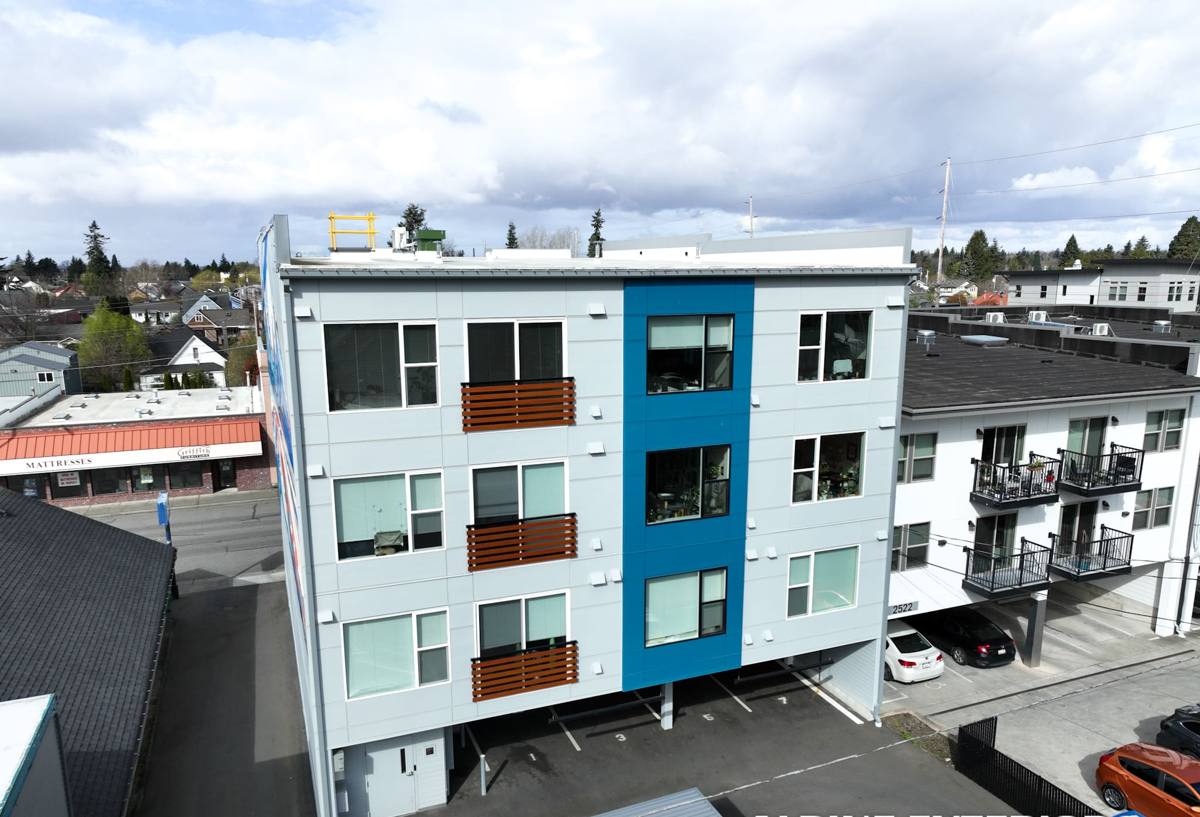
What Salt Air and Driving Rain Actually Do to a Window
Salt Air
Airborne salt is corrosive to exposed metal hardware — hinges, locks, cranks, and especially aluminum frame components that aren't specifically rated for coastal use. Over years, you'll see pitting, stiff or seized hardware, and white corrosion residue on fasteners. It doesn't happen overnight, but it happens faster the closer a home sits to open water and prevailing wind.
Driving Rain
Rain that comes in sideways during a windstorm tests the flashing and sealant detail around a window far more than a straight vertical downpour does. A window that's watertight in calm rain can still leak during a driving-rain event if the head flashing, sill pan, or side flashing wasn't lapped correctly during installation. This is one of the most common causes of hidden rot we find behind older window trim in this area — not a bad window, a poorly detailed installation.
Moss Season
Shaded, moisture-heavy conditions for much of the year mean wood trim, sills, and even vinyl cladding around windows stay damp longer than they would in a sunnier spot. That extended dampness is exactly what moss, algae, and mildew need to take hold, and it's harder on any wood component that isn't sealed or clad well.
Frame Material Comparison for This Climate
There's no single "best" window material for every home — it depends on your home's age, architecture, budget, and how much upkeep you want to do. Here's how the common options actually perform in a salt-air, high-moisture setting like Edgemoor.
| Material | Salt Air Performance | Moisture/Moss Resistance | Upkeep |
|---|---|---|---|
| Vinyl | Very good — won't corrode or pit | Good; won't rot, but frame corners can trap grime | Low — occasional washing |
| Fiberglass | Excellent — highly stable, doesn't corrode | Excellent — very low moisture absorption | Low |
| Aluminum (standard) | Poor unless marine-rated — prone to pitting and corrosion near salt exposure | Fair | Moderate to high near water |
| Wood, clad exterior | Good on the clad side; interior wood needs protection from condensation | Good with proper cladding; poor if cladding is compromised | Moderate — watch cladding seams |
| Wood, unclad | Requires diligent maintenance and refinishing | Weak without regular sealing, especially in shaded/damp spots | High |
For most Edgemoor-area homes, we lean toward vinyl or fiberglass for straightforward replacements because they shrug off salt air and don't need refinishing. Where a home's architecture calls for a wood look — older craftsman or traditional coastal styles — a well-clad wood window can still make sense, but we'll be honest with you up front about the added maintenance that comes with it.
What a Correct Custom Window Job Actually Involves
A lot of window problems we get called out to fix aren't product failures — they're installation shortcuts. Getting it right in this climate means paying attention to details that don't show up until years later:
- Precise field measurement of each opening, since older homes rarely have perfectly square or uniform openings
- A properly sloped sill pan so any water that gets past the glass drains outward, not into the wall cavity
- Correctly lapped flashing at the head, jambs, and sill — this is the single biggest factor in whether a window survives a wind-driven rain event
- Marine-appropriate or corrosion-resistant fasteners and hardware where salt exposure is a factor
- Continuous, compatible sealant beads — not just caulk smeared over gaps — at every penetration point
- Insulation and air-sealing around the frame, not just at the visible trim line
- Weep holes kept clear so the frame can shed the small amount of water it's designed to handle
Skip any one of these and the window itself can be top quality and still leak, fog, or corrode early. This is why we treat installation detail as at least as important as the window brand itself.
Our Process for Edgemoor-Area Homes
1. On-Site Assessment
We look at each opening individually — condition of existing framing, any signs of past water intrusion, sun and wind exposure on that side of the house, and what's actually causing problems with your current windows before we recommend anything.
2. Measuring and Material Selection
We measure every opening by hand rather than assuming uniformity, and walk you through frame material, glass package, and hardware options based on your home's exposure and your budget — no upselling toward a product that doesn't fit the situation.
3. Fabrication and Scheduling
Custom units are built to your exact openings. We schedule installation around weather windows when possible, since a dry install day makes for a cleaner, more reliable seal.
4. Installation
Old windows come out, framing is inspected and repaired if we find hidden rot or water damage, and new units go in with full flashing, sealing, and insulation detail — not just caulk around the trim.
5. Cleanup and Walkthrough
We clear debris, walk you through the new windows' operation and any care specifics, and make sure everything opens, closes, and locks the way it should before we call the job done.
Signs Your Current Windows Are Losing the Fight
Homeowners often live with slow-developing problems longer than they need to, since window failure rarely happens all at once. Watch for:
- Fogging or condensation between panes — a sign the seal on a double- or triple-pane unit has failed
- Soft, discolored, or moss-covered wood trim around the frame
- Hardware that's stiff, corroded, or hard to lock
- Drafts you can feel even with the window fully closed
- Visible daylight or gaps around the frame edge
- Musty smell or peeling paint on interior trim near the window
- Noticeably higher heating bills without another clear cause
Any one of these on its own might just need a repair. Several together on the same window, especially on a wall that takes direct wind and rain, usually means it's time to talk about replacement before hidden damage spreads into the surrounding wall framing.
Living With Custom Windows in a Salt Air, High-Moisture Climate
Even a well-installed window benefits from a little seasonal attention here. A rinse of the exterior frame a couple of times a year cuts down on salt residue buildup, especially on hardware and lower corners where it collects. Keeping weep holes clear of debris and moss lets the frame drain the way it's designed to. And on shaded elevations where moss growth is heaviest, an occasional gentle cleaning of the surrounding trim keeps moisture from sitting against the frame longer than it should. None of this is heavy maintenance — it's the kind of small upkeep that adds years to a window's service life in this environment.
Why It Matters That We Already Work in This Area
Whatcom County covers a lot of different microclimates, and Edgemoor's combination of salt air exposure, wind-driven rain off the water, and heavy seasonal shade isn't the same as what a window crew deals with a few miles inland. A crew that's already worked homes in this area knows which elevations tend to take the worst weather, what kind of hidden rot to expect behind older trim, and which materials actually hold up here versus which ones look fine on a spec sheet but struggle in practice. That local pattern-recognition is worth something — it's the difference between a window install that's technically correct and one that's actually built for the house it's going into.
Get a Straight Answer on Your Windows
If your windows are fogging, drafting, or just showing their age, we're happy to take a look and give you an honest read on repair versus replacement — no pressure, no upsell. Reach out for a free estimate and we'll walk your home's specific exposure with you before recommending anything.