 Sudden Valley
 Deck Replacement Built for Geneva's Conditions
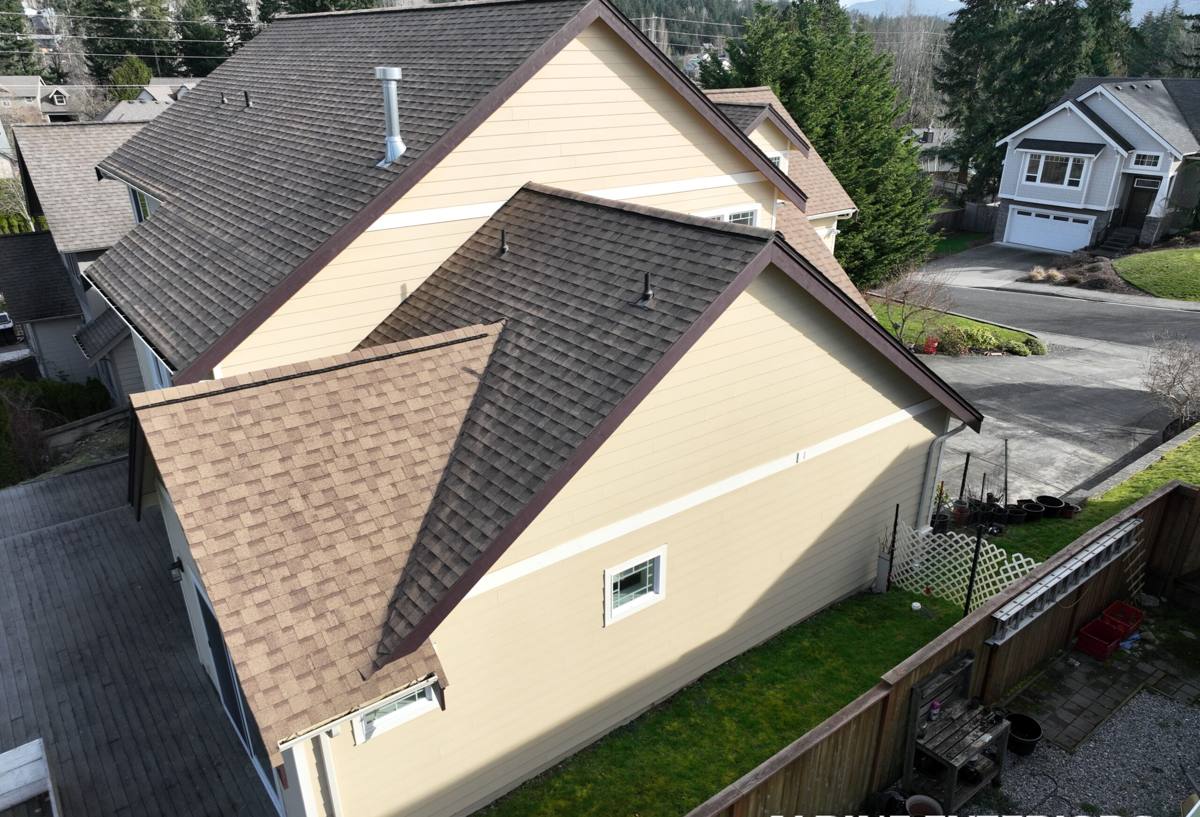
Homes in the Geneva area near Sudden Valley sit close to Lake Whatcom, tucked into tree cover that keeps everything shaded, damp, and slow to dry. That combination is hard on decks. Between the driving rain that blows in off the water, the salt-tinged marine air common to Whatcom County, and a moss season that can stretch from October through May, a deck out here works harder than one built on the dry side of the state. When it's time to replace a deck in this neighborhood, the goal isn't just a new surface — it's a structure built to actually hold up to what this specific microclimate throws at it year after year.
We've worked on homes throughout Sudden Valley and the surrounding Geneva-area streets long enough to know which failure points show up first here: ledger boards that were never properly flashed, joists that trap moisture against the house, and decking that looks fine from the yard but is soft and delaminating underneath. A correct replacement addresses all of that, not just the boards you can see.
Why Decks Fail Faster Here Than in Drier Parts of the State
Most deck failure isn't dramatic — it's slow. Water gets into a joint, doesn't dry out for weeks because of shade and humidity, and the wood or fastener underneath starts breaking down long before anyone notices from the surface. In Geneva's setting, three things accelerate that process:
Persistent moisture and slow drying
Tree cover and proximity to the lake mean decks here rarely get the kind of steady sun exposure that lets wood dry out completely between rain events. Moisture sits in end grain, in fastener holes, and under boards that were installed tight against each other without gapping for airflow.
Moss and organic buildup
A long moss season isn't just cosmetic. Moss and algae hold water against the decking surface and structure, and on wood decking they create a slick, slowly rotting layer that can mask decay underneath. On composite decking, buildup in the grooved surface can trap moisture against fastener clips.
Salt-influenced air
Whatcom County's marine-influenced air accelerates corrosion on fasteners, joist hangers, and any hardware that isn't rated for exterior, coastal-adjacent exposure. A deck built with standard interior-grade hardware will show rust and weakening years before one built with the correct fastener spec.
What a Correct Deck Replacement Actually Involves
Tearing off old decking and screwing down new boards is the easy part. The work that actually determines how long a deck lasts happens underneath and at the connection points.
- Ledger board and flashing: The connection where the deck meets the house is the single most common source of hidden rot. Proper flashing directs water away from the house framing instead of letting it wick in behind the siding.
- Joist protection: Joist tape or an equivalent moisture barrier on top of every joist keeps water from sitting directly on cut lumber, which is where rot typically starts even on decks that look structurally sound from below.
- Fastener and hardware grade: Coastal-rated, corrosion-resistant fasteners and joist hangers matter more here than in drier inland areas. This is not a place to save money on hardware.
- Proper board spacing: Gapping between boards for airflow and drainage matters more in a shaded, high-moisture setting than it does in full sun.
- Footings and post bases: Older decks in this area often have posts set directly in soil or concrete without a proper standoff base, which keeps end grain wet for months at a time.
- Ventilation underneath: Low-clearance decks with poor airflow underneath are some of the worst performers we see in shaded, tree-covered lots — addressing grading and skirting airflow at replacement time pays off.
Decking Material Options for This Climate
There's no single "best" decking material for every home — it depends on budget, maintenance appetite, and how much sun the deck actually gets. Here's how the common options hold up specifically in a shaded, moisture-heavy, moss-prone setting like Geneva.
| Material | Performance in shade/moisture | Maintenance | Typical lifespan |
|---|---|---|---|
| Pressure-treated wood | Good if properly sealed and re-coated; prone to moss and graying without upkeep | Annual cleaning, re-sealing every 1-2 years | 15-20 years with upkeep |
| Cedar | Naturally rot-resistant but still needs sealing in shaded, damp spots | Sealing every 1-2 years, moss treatment | 15-20 years with upkeep |
| Composite decking | Handles moisture well; grooved profiles need periodic cleaning to prevent moss buildup in shade | Occasional washing, no sealing | 25-30+ years |
| PVC/capped polymer | Best moisture resistance of the group; performs well in low-sun, high-moss settings | Occasional washing | 30+ years |
We install all of the above and will give you an honest read on which one fits your specific lot — a deck that gets afternoon sun through a break in the trees behaves differently than one that stays shaded all day, even on the same street.
A note on composite and PVC decking
Composite and capped polymer products have come a long way, but they're not install-and-forget. Board expansion and contraction, proper fastener spacing, and hidden fastener systems all need to be installed to the manufacturer's spec or you end up with buckling, gapping, or clip failure down the road. We follow manufacturer installation guidelines closely rather than treating composite like wood decking with a different surface — the fastening systems and expansion gaps genuinely are different, and skipping that is where DIY and unfamiliar-crew composite decks tend to go wrong.
Our Replacement Process
- On-site assessment: We look at the existing deck's framing, ledger connection, footings, and drainage — not just the surface boards — to understand what's actually driving the wear you're seeing.
- Honest scope conversation: Sometimes a full tear-off and rebuild is warranted; sometimes the framing is sound and only decking and railing need replacing. We tell you which situation you're in.
- Material selection: We walk through the options above based on your budget, sun exposure, and how much maintenance you actually want to do.
- Tear-off and structural correction: Old decking, and any compromised framing, ledger flashing, or footings, gets addressed before a single new board goes down.
- Installation to spec: Joist protection, coastal-rated fasteners, correct board spacing, and manufacturer-specified fastening systems for composite or PVC decking.
- Final walkthrough: We go over the finished deck with you, including basic maintenance guidance specific to your material choice and your lot's sun exposure.
What to Check Before You Replace (Or Before You Hire Someone Who Won't)
Whether you're evaluating your own deck or a contractor's proposal, these are the things that actually predict how long a replacement will last in this area:
- Does the scope include ledger board flashing, or just new decking screwed onto the existing ledger?
- Is joist tape or an equivalent moisture barrier included over the framing?
- Are the fasteners and hardware rated for coastal or high-moisture exposure, or standard-grade?
- Is there a plan for airflow underneath the deck, especially if it sits low to the ground or in heavy shade?
- For composite or PVC decking, is the crew following the manufacturer's specific fastening and expansion-gap requirements?
- Are post bases and footings being inspected or replaced, not just reused as-is?
Why Local Experience with This Area Matters
A deck built for a sunny, open lot in a drier part of Washington doesn't need the same detailing as one built in the shaded, moisture-heavy conditions around Sudden Valley and Geneva. Crews that mostly work drier or more exposed sites can underestimate how much moss buildup, prolonged dampness, and salt-influenced air affect fastener choice, spacing, and drainage detailing. Working this neighborhood regularly means we've seen which decks in this specific setting hold up and which ones start failing at the five-year mark, and we build accordingly rather than applying a generic spec everywhere.
It also means we're familiar with the site conditions common to this part of Whatcom County — sloped, tree-covered lots, limited equipment access on some properties, and the drainage patterns around homes near the lake — so we can plan the job accurately instead of running into surprises mid-project.
Get a Straightforward Estimate
If your deck is showing soft spots, moss buildup that won't clean off, rust staining around fasteners, or just isn't holding up the way it should, we're happy to take a look. We'll give you a clear read on what's actually going on underneath, what your material options are, and what a proper replacement would cost — no pressure, no hard sell. Use the form below to request a free estimate.