 Sudden Valley
 Edgemoor's Weather Is Harder on Siding Than It Looks
Edgemoor homes take a different kind of beating than siding twenty minutes inland. Being close to the water means salt-laden air working on every exposed metal fastener, every painted surface, and every seam in the siding system, day after day, year after year. Add in Whatcom County's driving rain — wind-driven storms that push water sideways into laps and joints instead of just running down the wall — and you've got a climate that finds every weak point in a siding job within a few winters, not a few decades.
Then there's the moss. Shaded lots, mature tree cover, and near-constant damp from fall through spring mean algae and moss don't just grow on the roof — they colonize north-facing walls, fence lines, and any siding that stays wet and shielded from sun for weeks at a time. A siding material and installation that can't shed water fast and dry out between storms will show green streaking and soft spots long before a homeowner expects to be re-siding.
None of this is unusual for Whatcom County. It's just concentrated in Edgemoor by the combination of water exposure and tree cover that makes the neighborhood attractive in the first place. The siding has to be chosen and installed with that combination in mind, not treated like a generic Western Washington job.
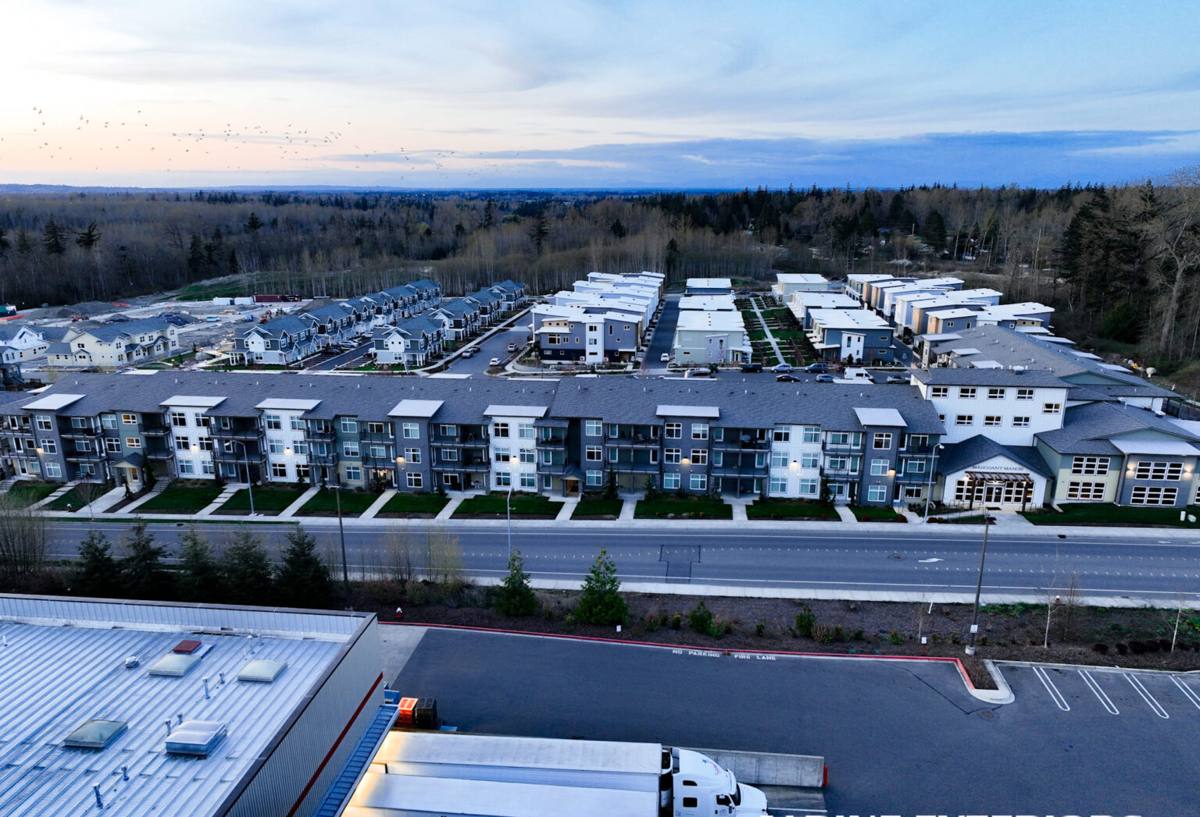
Why Fiber Cement Holds Up Where Other Materials Struggle
We install James Hardie fiber cement exclusively, and Edgemoor is a good example of why. Fiber cement doesn't rot, doesn't feed moss the way raw wood fibers can, and doesn't warp or delaminate when it takes on moisture the way some engineered wood products can if a seam fails. It's also non-combustible, which matters less for salt air specifically but is part of why we standardized on it across every job we take.
The bigger advantage in a salt-air, high-moisture climate is the factory finish. James Hardie's ColorPlus finish is baked on under controlled conditions and backed by its own finish warranty — it holds color and resists the chalking and fading that field-applied paint shows first when it's up against salt air and UV. A siding job that leans on ColorPlus panels and trim, with field-caulked and field-touched-up cut edges kept to a minimum, ages a lot more evenly on a water-facing elevation than one relying on site-applied paint for its primary protection.
What a Correct Fiber Cement Install Actually Involves
Fiber cement is only as good as the assembly behind it. On an Edgemoor home, three details matter more than they would on a sheltered inland lot.
Flashing and the Weather-Resistive Barrier
Every window, door, deck ledger, and roof-to-wall transition needs flashing that's actually integrated with the weather-resistive barrier underneath — lapped correctly, sealed at the right layer, and never relying on caulk alone to do a flashing detail's job. Driving rain finds the one penetration that was flashed wrong; it's usually not the flat field of siding that leaks.
A Rainscreen Gap
Fiber cement performs best with a drainage gap — furring strips or a purpose-built rainscreen product — behind the siding rather than face-nailed directly to the weather barrier. That gap lets any wind-driven moisture that gets behind the cladding drain and the wall assembly dry out between storms, instead of staying damp against the sheathing. In a climate with Edgemoor's rain load, this is one of the details we won't skip to save labor.
Fasteners and Hardware
Salt air corrodes the wrong fastener faster than most homeowners expect. Hot-dip galvanized or stainless fasteners, installed per Hardie's fastening schedule (not just "close enough" spacing), keep corrosion from telegraphing through the finish as rust streaks a few years down the road.
Choosing the Right Hardie Line for a Water-Facing Home
Western Washington falls in Hardie's HZ5 climate zone, and the HZ5 formulation is engineered for exactly this combination of moisture and moderate freeze-thaw. Beyond the base product, the decision on an Edgemoor home usually comes down to profile and finish approach:
- Lap siding (traditional plank reveal) — the most common choice, works with most architectural styles in the neighborhood, straightforward to maintain
- Panel systems with battens — a cleaner, more modern look, fewer horizontal seams for wind-driven rain to test
- Shingle-profile siding — used selectively for gables or accent areas, higher labor cost but strong shadow-line detail
- ColorPlus factory finish vs. primed-for-field-paint — we push clients toward ColorPlus on water-facing and shaded elevations specifically because it holds up better against salt air and moss staining than a field-applied coat
The right call depends on the home's exposure — a wall that takes direct spray off the water gets treated differently than a shaded, tree-covered north wall even on the same house.
Fiber Cement Against the Alternatives, in This Specific Climate
| Material | Salt Air Resistance | Moss / Algae Resistance | Moisture Behavior | Typical Maintenance |
|---|---|---|---|---|
| James Hardie fiber cement | Strong with correct fasteners | Good — dense surface, doesn't feed growth like raw wood | Doesn't rot or swell; sheds water when installed with a drainage gap | Occasional wash; ColorPlus finish rarely needs repainting |
| Vinyl | Fair — can become brittle faster near salt exposure | Fair — moss still grows on the surface in shaded areas | Can warp or buckle; seams are a moisture path | Low, but panels can crack and aren't repairable piece by piece |
| Cedar / wood | Poor without diligent upkeep — salt accelerates weathering | Poor — organic material, prime moss habitat when damp | Absorbs water; rot risk if finish fails anywhere | High — regular refinishing and rot inspection |
| Engineered wood siding | Fair — dependent on edge sealing holding up | Fair to poor if edges take on moisture | Vulnerable at cut edges and seams if not maintained | Moderate to high — edge and seam inspection needed |
This isn't a knock on any single product across every climate — it's specific to what a water-adjacent, moss-prone, driving-rain neighborhood does to a wall over ten or twenty years. It's also the reasoning behind why we only put James Hardie on the homes we work on.
Our Process for an Edgemoor Job
We start every quote with an actual look at the existing wall condition, not just a measurement of square footage. On older Edgemoor homes especially, that means checking for hidden moisture damage behind the current siding before pricing the job, since sheathing repair (if needed) has to happen before new siding goes on, not after.
- Walk-through and moisture check of the existing exterior, wall by wall
- Written estimate that separates tear-off, any sheathing repair, and the new siding install
- Tear-off and disposal, with sheathing repaired or replaced where the walk-through flagged it
- Weather-resistive barrier, flashing at every penetration, and rainscreen gap installed
- James Hardie siding installed to manufacturer fastening and clearance specs
- Caulking, trim, and touch-up per Hardie's finish requirements
- Final walk-through and cleanup
What Should Be in Your Quote
Whoever you hire, this is the minimum a fiber cement quote should spell out in writing before work starts:
- Tear-off and haul-away of existing siding, priced separately from new install
- Sheathing inspection and repair terms — how it's priced if rot or damage is found
- Weather-resistive barrier product and installation method
- Flashing at every window, door, and roof-to-wall transition, called out specifically
- Rainscreen or furring strip detail, not just direct-to-barrier attachment
- Fastener type — hot-dip galvanized or stainless, not standard coated fasteners
- ColorPlus factory finish vs. field paint, and what's covered under warranty either way
- Cleanup and disposal included in the final price, not billed as an add-on
Why Local Experience in Edgemoor Actually Matters
A crew that already works this neighborhood knows the exposure differences that show up wall to wall on the same house — a water-facing elevation that needs extra attention to flashing and fastener choice, and a shaded north wall twenty feet away that needs more attention to drainage and moss resistance than to salt exposure. That's not something you learn from a spec sheet; it's something you learn from doing the work here repeatedly and seeing which details actually fail first in this specific climate. It also means fewer surprises on permitting, waste disposal, and access on the tighter, tree-lined lots that are common in the neighborhood.
Maintenance After the Job Is Done
Fiber cement with a ColorPlus finish is low-maintenance, not no-maintenance. In Edgemoor specifically, that means an occasional gentle wash to knock back salt residue and early moss growth on shaded walls, a yearly look at caulking around windows and trim, and keeping vegetation trimmed back from any wall that stays damp and shaded most of the year. None of that is heavy lifting, but skipping it is how a well-installed job still ends up looking tired early.
If you're weighing a siding project on an Edgemoor home, we're glad to walk the exterior with you, point out what your specific walls are dealing with, and put together a straightforward, no-pressure estimate — use the form below to get started.