 Sudden Valley
 Why Siding Choice Matters More in Sunnyland Than It Does Elsewhere
Homes in and around Sunnyland don't sit in a mild, forgiving climate. Whatcom County's marine weather pattern brings salt-laden air off the water, long stretches of driving rain that hits siding sideways instead of straight down, and a moss season that can run most of the year on north- and west-facing walls. Any siding material you put on a house here is going to be tested constantly — not by one bad storm, but by cycle after cycle of wet-to-dry, freeze-to-thaw, and shade-to-sun. That's the environment we design every installation around.
Fiber cement siding, specifically James Hardie's engineered product line, is the material we've standardized on for homes in this region because it's built to take that punishment without the maintenance spiral that wood and some composite products fall into. This page is about what that looks like specifically for a Sunnyland home — not a generic rundown of siding materials.
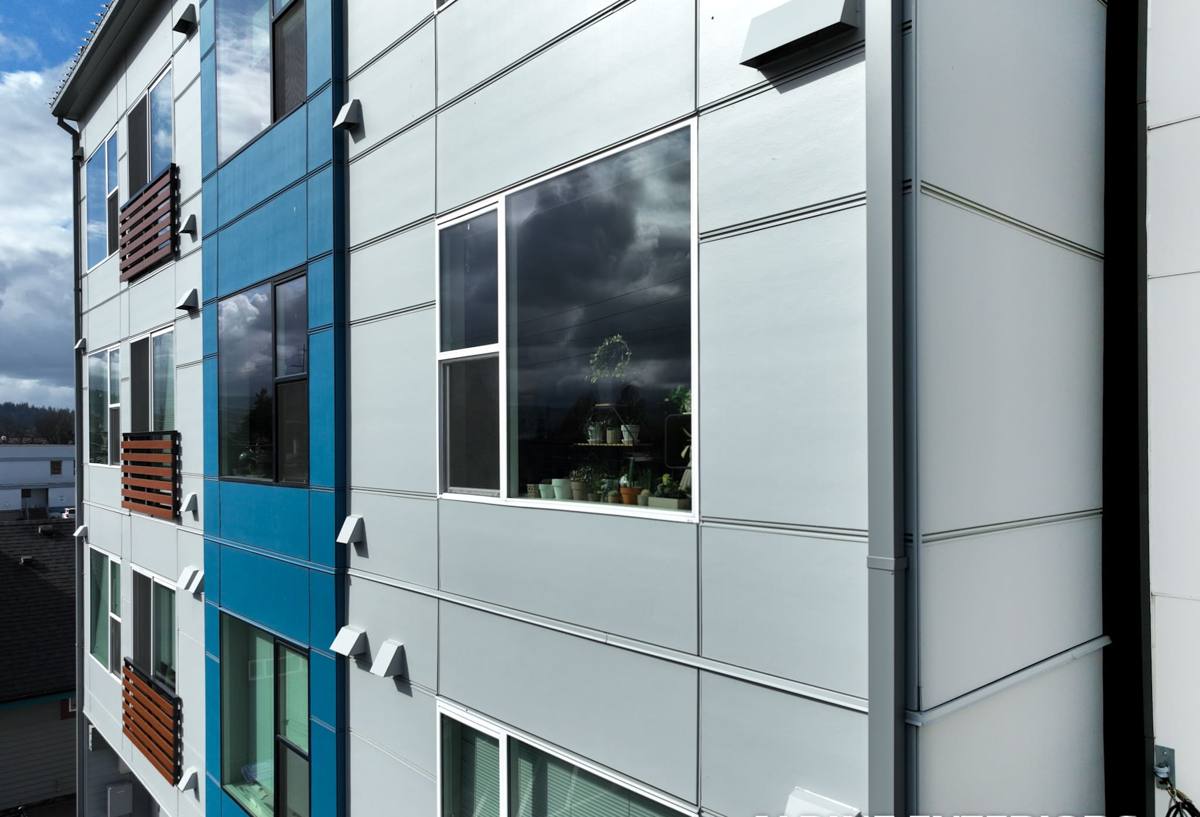
What This Climate Actually Does to Siding
Salt Air and Corrosion
Coastal and near-coastal air carries fine salt particles that accelerate corrosion on fasteners, flashing, and any metal trim. Over years, this is what causes streaking, rust bleed, and premature failure at seams and joints if the wrong hardware or an unsealed system was used.
Driving Rain and Wind-Driven Moisture
Rain here doesn't fall straight down often enough. Wind pushes it up under laps, into unsealed joints, and behind poorly flashed windows and trim. Siding that isn't installed with a proper water-managed drainage plane behind it will eventually let moisture into the wall assembly, regardless of how good the surface material is.
Moss, Algae, and Prolonged Dampness
Shaded and north-facing walls in this area can stay damp for weeks at a stretch during the fall and winter. That's exactly the environment moss and algae need. Porous or paint-dependent materials feed that growth and stain over time; a factory-cured, non-porous surface resists it far longer.
Why We Only Install James Hardie Fiber Cement
We get asked why we don't offer vinyl, LP SmartSide, or cedar. It's not that those products have no place anywhere — it's that we've made a professional call about what holds up, with the least maintenance burden, in this specific climate. Here's the honest comparison:
| Material | Moisture/Rot Resistance | Moss & Algae Behavior | Maintenance Over 15+ Years |
|---|---|---|---|
| James Hardie Fiber Cement | Non-combustible, engineered core resists moisture-driven swelling and rot | Dense, factory-finished surface resists growth better than porous materials | Periodic wash; ColorPlus finish holds color without repainting for many years |
| Cedar / Primed Wood | Absorbs moisture, prone to cupping, checking, rot at end grain and laps | Porous surface holds moisture, feeds moss and algae readily | Regular repainting/staining and caulking to stay ahead of failure |
| Vinyl | Won't rot, but can warp, crack in impact, and gap at seams over time | Grime and algae film build on the surface, especially in shade | Low, but color fades and panels aren't repairable — full section replacement |
| LP SmartSide (engineered wood) | Better than raw wood, but still a wood-strand product vulnerable at cut edges and unsealed penetrations | Can hold moisture at damaged spots if edges aren't kept sealed | Requires vigilant caulk/paint maintenance at joints and edges |
Every one of these products can perform reasonably well when installed perfectly and maintained diligently. Our issue is what happens in the real world — after 10 or 15 years of Whatcom County weather, missed maintenance windows, and normal wear. Fiber cement gives homeowners the widest margin for error and the least ongoing upkeep.
What a Correct Fiber Cement Job Involves
The material is only half the equation. A huge share of siding failures we see on older homes — regardless of material — trace back to installation shortcuts, not the product itself. A correct James Hardie installation for a Sunnyland home includes:
- A weather-resistant barrier (house wrap) installed and lapped correctly, with all seams taped
- Rainscreen or proper drainage gap where conditions call for it, so any moisture that gets behind the siding can drain and dry
- Correct flashing at every window, door, and roof-to-wall transition — the places driving rain actually finds its way in
- Manufacturer-specified fastener type and spacing, chosen with salt-air corrosion resistance in mind
- Proper clearance between siding and grade, decks, and roof lines to keep splash-back and standing moisture away from the bottom course
- Factory-applied ColorPlus finish kept intact — field-cut edges primed and sealed per Hardie's specifications
Skip any one of these and you can end up with premature failure even on a top-tier product. This is where hiring based on price alone usually costs homeowners more down the road.
James Hardie's Climate Engineering, Applied Here
James Hardie engineers its siding by climate zone under its HardieZone system, and the products specified for the Pacific Northwest are formulated for colder, wetter regions like ours — different from the formulations sold in the Southeast or Southwest. For a Sunnyland home, that means a product line built with this rainfall, humidity, and freeze-thaw pattern already accounted for, not a one-size-fits-all national product.
The ColorPlus finish, baked on at the factory under controlled conditions, is also a meaningful advantage in this climate specifically: it resists the fading, chipping, and peeling that field-applied paint struggles with under constant damp-to-dry cycling. That's fewer repaint cycles over the life of the siding, which matters most on the shaded, moss-prone elevations that get the least sun to dry out.
Our Process for Sunnyland Homes
- On-site assessment — we look at existing siding condition, moisture damage, trim, and any problem areas specific to your home's exposure (which walls take the worst wind-driven rain, which stay shaded and damp).
- Tear-off and sheathing check — old siding comes off and we inspect the sheathing underneath for rot or hidden moisture damage before anything new goes on. This step gets skipped by corner-cutting crews and it's where problems hide.
- Weather barrier and drainage plane — house wrap, flashing, and drainage details installed to manage water before the first piece of siding goes up.
- Installation to manufacturer spec — Hardie panels, planks, or trim installed with correct fastening, clearances, and sealed cut edges.
- Final walkthrough — we go over the completed job with you, including how the ColorPlus finish is warrantied and what little maintenance it actually needs.
What Drives Cost on a Sunnyland Siding Job
We don't post fake per-square-foot numbers because every home is different, but these are the real factors that move a quote up or down:
| Factor | Why It Matters |
|---|---|
| Tear-off and sheathing repair | Homes with hidden moisture damage under old siding need repair before new siding can go on correctly |
| Home size and wall complexity | More corners, dormers, and trim details mean more cutting, flashing, and labor time |
| Hardie product line chosen | Lap siding, panel systems, and shingle-style products carry different material and labor costs |
| Trim and accessory work | Fascia, soffits, and trim boards done at the same time affect both cost and how well the whole exterior sheds water |
| Access and site conditions | Sloped lots, mature landscaping, and tight setbacks near the lake affect staging and labor time |
Why a Crew That Already Works This Area Matters
A contractor who works Sudden Valley and the surrounding Whatcom County neighborhoods regularly already knows which walls in this kind of setting take the worst weather, how local permitting and inspection typically goes, and how to sequence a job around the region's rain patterns instead of fighting them. That familiarity shows up in fewer surprises mid-project and a finished job that's flashed and drained correctly for what this climate actually does to a house, not just what a general install manual assumes.
It also means we're not disappearing after the job is done. Warranty support, questions about the ColorPlus finish, or a follow-up on a trim detail are handled by a crew that's still working in your neighborhood, not a company that moved on to the next region.
Signs Your Sunnyland Home May Need New Siding
- Persistent moss or algae staining that comes back within weeks of cleaning
- Paint that's peeling, bubbling, or needing repainting more often than every few years
- Soft or spongy spots when you press on wood siding, especially near the bottom courses
- Visible gaps, warping, or cracking at panel seams and corners
- Rising energy bills that may point to a wall assembly no longer sealing properly
- Musty smells or interior wall staining that could indicate moisture getting behind the siding
If you're seeing any of these, it's worth having the siding — and what's underneath it — actually looked at rather than just cleaned or repainted again.
If you're weighing options for a Sunnyland home, we're happy to walk the property, take a real look at your siding's condition, and put together a free, no-pressure estimate for James Hardie fiber cement siding done right for this climate. Use the form below to get started.