 Sudden Valley
 Composite Decking in Happy Valley: What the Climate Actually Demands
Happy Valley sits inside the same weather pattern as the rest of Sudden Valley and Whatcom County — long stretches of steady rain, damp air that never fully dries out between storms, and shade from mature trees that keeps decks wet longer than homeowners expect. Add in salt-laden air moving through the region and a moss season that can run half the year, and you have conditions that are hard on any outdoor structure. Composite decking holds up well here, but only when it's specified and installed with this specific climate in mind, not treated like a generic product dropped onto any lot.
The failures we get called out to fix are rarely about the composite boards themselves. They're almost always about what's underneath or around them: framing that trapped moisture, fasteners that weren't rated for wet exposure, or a board layout that gave algae and moss a place to take hold. A composite deck built for Happy Valley needs to manage water first and look good second — get the first part right and the second takes care of itself for decades.
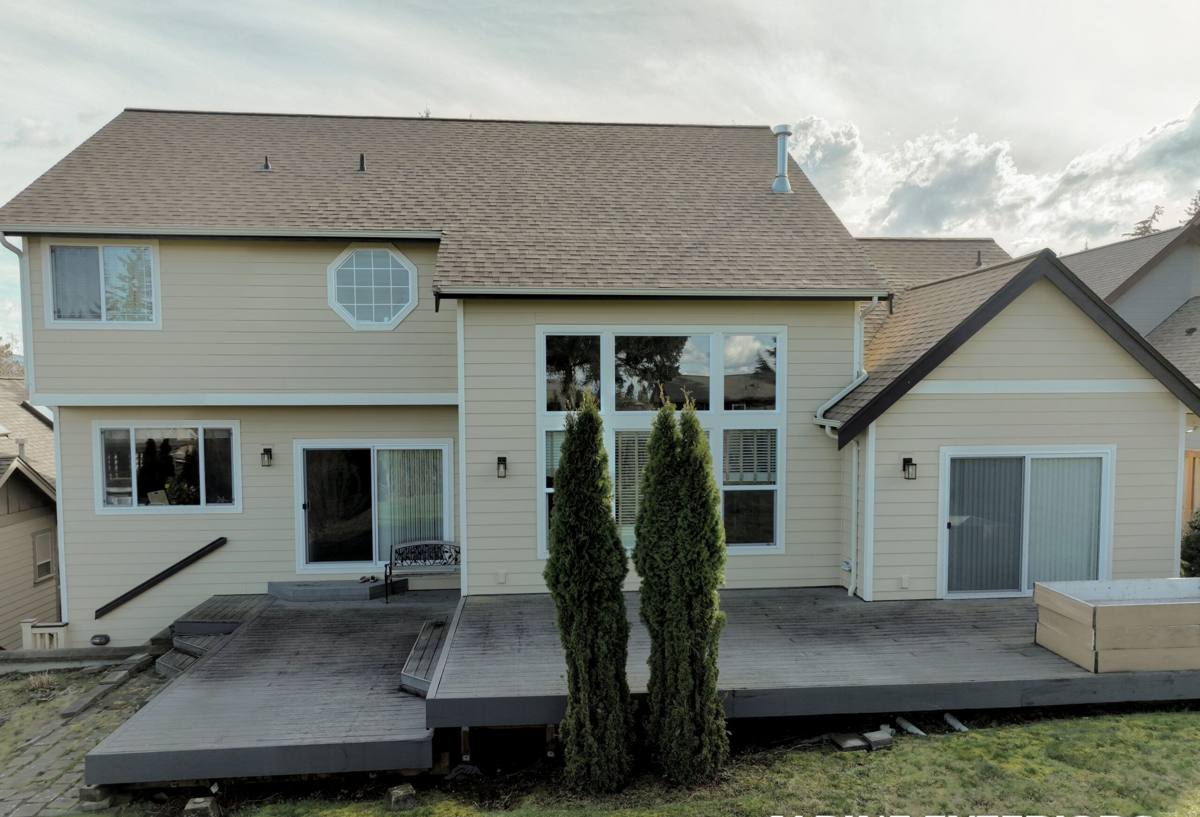
What a Correct Composite Deck Installation Involves
Composite boards are only as good as the structure they sit on. A correct job addresses the substructure, the drainage path, and the fastening system as deliberately as it addresses board color and style.
Substructure and Ledger Attachment
Where a deck attaches to the house, that ledger board connection is the single most common source of hidden rot in this climate. Proper flashing — installed so water sheds out and away from the house rather than behind the ledger — is non-negotiable. Pressure-treated joists rated for ground or wet contact, spaced to the composite manufacturer's specification (often tighter than dimensional lumber spacing to prevent flex), are the baseline, not an upgrade.
Drainage and Airflow Underneath
Composite doesn't rot, but the framing beneath it still can if water and moss get trapped with nowhere to go. Joist tape over every joist top, a slight slope away from the house, and clearance for airflow underneath all matter more here than in a drier climate. On lots with heavy tree cover, which describes a lot of Happy Valley, keeping the space under the deck ventilated is what keeps moss and mildew from building up unseen.
Fastening and Hidden Clip Systems
Most composite boards today use hidden clip fastening rather than face screws, which gives a cleaner look and eliminates screw-head water pooling. The clips and screws need to be stainless or otherwise corrosion-resistant — in an environment with regular damp, salt-tinged air, standard coated fasteners can corrode well before the decking itself shows any wear.
Choosing the Right Composite Board for This Weather
Capped vs. Uncapped Composite
Capped composite has a polymer shell wrapped around the wood-plastic core, which is what actually resists moisture absorption, staining, and mold growth. Uncapped composite (or older-generation boards) lets moisture into the core over years of exposure, which in a wet climate like this one shortens its service life and increases the chance of surface mold. Our standard for Happy Valley installs is capped composite — it costs more up front, but it's the version actually built for a climate this wet, and it carries a stronger stain and fade warranty as a result.
Color, Heat, and Slip Resistance
Darker composite colors show less dirt and blend with wooded lots, but they also absorb more heat on the rare sunny days and can get warm underfoot. Lighter and mid-tone colors hide less debris but stay cooler and often show pollen and organic buildup more clearly, which some owners actually prefer because it tells them when it's time to clean. Surface texture matters just as much as color: a board with a low-gloss, textured finish holds up better against the slickness that comes with a long moss season than a smooth, high-sheen board.
| Material | Moisture Behavior | Maintenance | Typical Lifespan Here |
|---|---|---|---|
| Capped composite | Sheds water, resists staining and mold on the surface | Periodic wash, no sealing or staining | 25–30+ years |
| Uncapped composite | Can absorb moisture at cut edges and fastener holes over time | Occasional cleaning, watch cut edges | 15–20 years |
| Pressure-treated wood | Absorbs and releases moisture constantly, prone to cupping and splitting | Annual cleaning, re-staining or sealing | 10–15 years before major repair |
| PVC decking | Fully moisture-resistant, no organic content to feed mold | Low, but can look more synthetic | 25–30+ years |
Our Process for Happy Valley Decking Projects
The process is straightforward, but the details are where a deck earns its keep in this climate.
- On-site assessment of the existing deck or build area, including drainage, tree cover, and how water currently moves across the lot.
- Structural check of ledger attachment, footings, and joist condition if we're replacing an existing deck rather than building new.
- Design and material walkthrough — board brand, color, railing style, and layout, with straight talk about trade-offs for this specific site.
- Permit handling where the project requires it, including any setback or height rules that apply to the lot.
- Framing and flashing work first, inspected before a single composite board goes down.
- Composite installation with hidden fasteners, followed by railing, stairs, and any trim or fascia work.
- Final walkthrough covering board spacing, fastener check, and basic care so the deck starts its life dry and clean.
Why Hiring a Crew That Already Works Happy Valley Matters
A composite deck built to a generic spec sheet and one built for a specific Happy Valley lot can look identical on installation day and age very differently five years later. A crew that regularly works this part of Sudden Valley already knows which lots hold moisture longer under tree cover, which slopes need extra attention to drainage, and how the moss season here actually behaves month to month — not from a manual, but from having pulled up boards on decks that were built without that knowledge.
That local pattern recognition also matters for permitting and lot-specific quirks. Setbacks, height limits near property lines, and how a county inspector expects flashing and ledger work documented can vary in small but real ways. A crew that has already pulled permits and passed inspections in this area moves through that process without guesswork, which keeps the project on schedule instead of stalling on a paperwork detail that a first-timer to the area wouldn't have anticipated.
Composite Decking Maintenance in a Wet, Mossy Climate
Composite is low-maintenance compared to wood, but "low" isn't "none," especially here. A short seasonal routine keeps a deck looking and performing the way it's supposed to for its full service life.
- Sweep debris — needles, leaves, seed pods — out from between boards regularly so it doesn't hold moisture against the surface.
- Wash the deck surface at least once or twice a year with a mild soap-and-water solution or a composite-safe cleaner; avoid pressure washing at close range, which can damage the cap layer.
- Check for moss or algae buildup in shaded corners and low-airflow areas, and treat early rather than letting it establish.
- Keep gutters and downspouts near the deck clear so runoff isn't dumping extra water directly onto the deck surface or the ledger connection.
- Glance underneath once a year to confirm joist tape and flashing are intact and there's no standing water or trapped debris.
- Check hidden fasteners and railing hardware periodically for any early corrosion, especially on decks closer to open, wind-exposed areas.
What Drives the Cost of a Composite Deck Here
Composite decking costs more per square foot than pressure-treated wood up front, but the honest comparison has to include the maintenance and replacement cycle wood requires in this climate. Beyond the board choice itself, several site-specific factors move the number for a Happy Valley project more than they would in a drier, flatter climate.
| Cost Factor | Why It Matters Here |
|---|---|
| Deck size and layout | Larger footprints and multi-level designs need more framing and drainage planning |
| Board tier (capped vs. entry-level) | Capped composite costs more but resists this climate's moisture and mold pressure far better |
| Substructure condition | Existing rot, undersized joists, or poor ledger flashing add repair work before decking can go down |
| Site drainage and grading | Sloped or low-lying lots may need extra grading or drainage work to keep water moving away from the structure |
| Railing and stair complexity | Composite or metal railing systems, especially on multi-level decks, add material and labor |
| Site access | Wooded or tight-access lots, common in this area, can add time for material staging and equipment |
If you're weighing a new composite deck or replacing an aging wood one in Happy Valley, we're glad to come take a look, walk the site with you, and give you a straightforward, no-pressure estimate — just fill out the form below to get started.