 Sudden Valley
 South Hill's Climate Is Harder on Siding Than Most Homeowners Realize
South Hill sits in a part of Whatcom County where siding takes a slow, steady beating year-round. It's not one dramatic storm that wears out a wall — it's the combination of marine-influenced salt air, months of driving rain, and long stretches of shade and dampness that let moss and algae get a foothold and never really let go. Add in wide swings between soggy winters and warm, dry summer stretches, and you've got a set of conditions that will expose weak siding within a few years and forgive almost nothing in the way it was installed.
Homes here don't fail because siding is a bad product category. They fail because a product wasn't engineered for this specific mix of moisture, salt, and shade, or because it went up without the water-management details that this climate demands. That's the lens we use on every South Hill project.
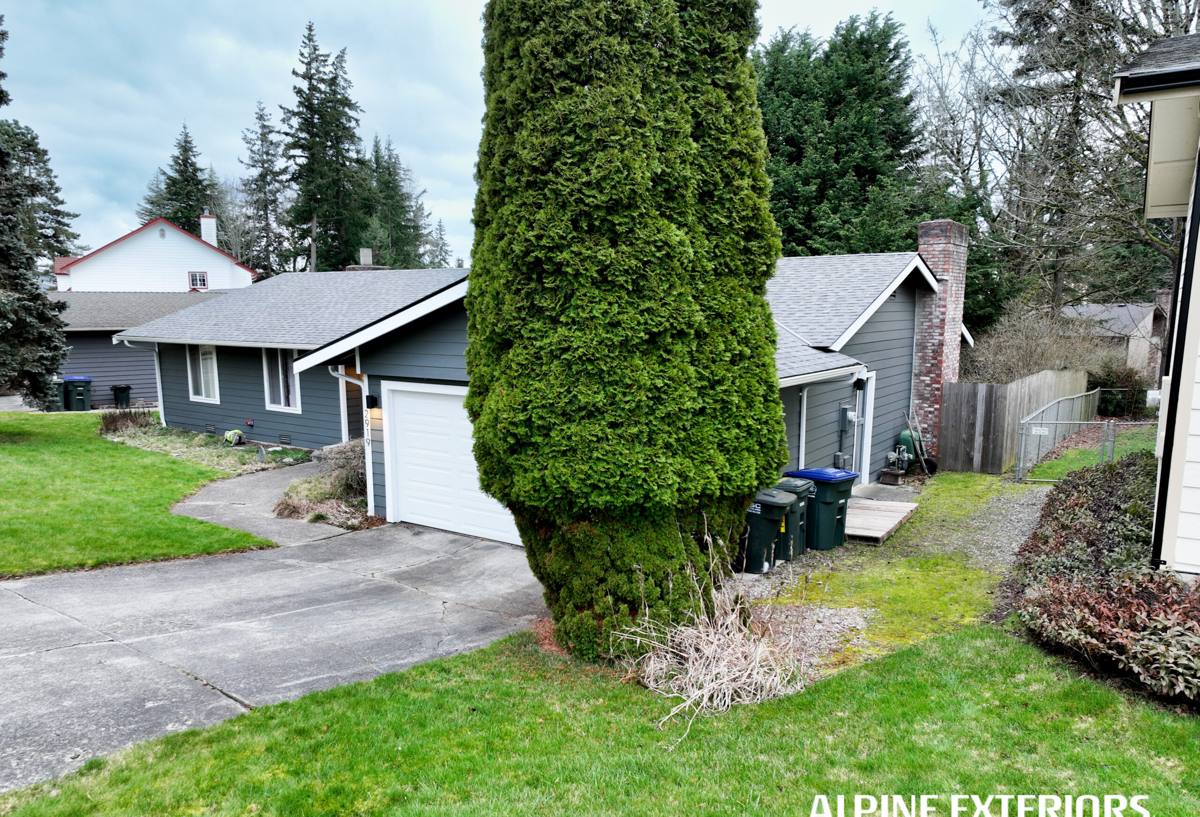
Why We Install Only James Hardie Fiber Cement in This Area
We standardized on James Hardie for South Hill homes because fiber cement behaves fundamentally differently than wood, engineered wood, or vinyl in a wet, salt-touched climate. It doesn't absorb and swell the way wood-based products can, it won't soften or deteriorate from prolonged moisture contact the way untreated or primed wood trim does, and it holds its shape and finish through repeated wet-dry cycling far better than lighter-weight materials.
HZ5 Engineering for Pacific Northwest Conditions
James Hardie makes region-specific formulations, and the HZ5 line is engineered for climates like ours — places with sustained rain exposure and freeze-thaw cycling rather than the dry-heat or hurricane conditions other HZ lines are built around. That matters more than it sounds like it should. A siding product engineered for a desert climate and one engineered for the Pacific Northwest are not interchangeable, even if they look identical on a sample board.
ColorPlus Factory Finish vs. Field Painting
Most South Hill installs go up with Hardie's ColorPlus factory-applied finish rather than field-applied paint. The finish is baked on in a controlled environment, which gives it more consistent coverage and better fade and moisture resistance than a paint job applied on-site in variable weather. In a climate with this much rain, cutting corners on finish quality is one of the fastest ways to end up repainting siding within a handful of years.
What a Correct James Hardie Installation Actually Involves
The material is only half of what determines how siding performs here. The other half is installation detail — and this is where a lot of siding jobs, on any product, quietly go wrong.
Water Management Comes First
Correct installation starts before a single piece of siding is hung: a properly lapped weather-resistive barrier, correctly flashed windows and doors, and drainage space behind the siding so any moisture that does get in can escape instead of sitting against the wall. In a climate with as much sustained rainfall as this one, these hidden layers matter more than the visible finish.
Common Mistakes That Show Up in Wet Climates
The failures we see most often in this region trace back to a short list of installation shortcuts: siding nailed too tight against the framing with no room to handle seasonal movement, panels installed with insufficient clearance above rooflines and decks, caulking used to "fix" a flashing detail instead of correcting it, and butt joints left unsealed where wind-driven rain can work its way in. James Hardie publishes specific fastening, clearance, and flashing requirements for exactly this reason — following them isn't optional if you want the product to perform the way it's designed to.
- Minimum clearance maintained between siding and roofing, decking, and grade
- Weather-resistive barrier lapped correctly, shingle-style, top to bottom
- Flashing installed at every window, door, and horizontal trim transition
- Fasteners set to manufacturer spacing and depth, not overdriven
- Joints and seams sealed with a product rated for long-term exterior exposure
- Drainage plane behind the siding left clear, not blocked by trim or foam
Signs a South Hill Home's Siding Is Falling Behind
Because failure here is gradual, it's easy to miss the early signs. Watch for these:
- Dark streaking or persistent moss growth on shaded walls that comes back within weeks of cleaning
- Paint or finish that's chalking, peeling, or visibly duller on the sides that face prevailing wind and rain
- Soft or spongy spots when you press on siding near the bottom edge or around windows
- Visible gaps, warping, or separated joints at corners and trim boards
- A musty smell or discoloration on interior walls that back up to exterior siding
Any one of these on its own might be minor. Several together usually mean moisture has been getting behind the siding for a while, not just sitting on the surface.
How Our Process Works
We keep the process straightforward and don't push products we don't stand behind:
- Assessment — we look at the existing siding, the wall assembly behind it where visible, and the specific exposure your home has to wind, rain, and shade.
- Product and color selection — we walk through Hardie's lap, panel, and shingle profiles and ColorPlus color options that fit your home and the neighborhood's general look.
- Tear-off and moisture check — old siding comes off and we check the sheathing underneath for rot or existing moisture damage before anything new goes up.
- Water-resistive barrier and flashing — this layer gets done right the first time, since it's the part you won't see again once siding is installed.
- Installation to Hardie's published spec — correct fastening, clearances, and joint treatment, not shortcuts to save a day of labor.
- Final walkthrough — we go over the finished job with you before we consider it done.
What Affects the Cost of a James Hardie Project in South Hill
| Factor | Why It Matters |
|---|---|
| Condition of existing sheathing | Rot or moisture damage found during tear-off adds repair work before new siding can go on |
| Siding profile (lap, panel, shingle) | Labor time and material cost vary by profile and how much trim detail is involved |
| Home shape and trim complexity | Dormers, multiple gables, and lots of corners take more cutting, flashing, and time |
| Access and site conditions | Slopes, tight lot lines, or limited staging area affect setup and labor efficiency |
| ColorPlus vs. field-primed options | Finish choice affects both upfront cost and long-term repainting needs |
We give a written estimate that breaks these factors down for your specific home rather than a flat per-square-foot number that doesn't account for what your project actually needs.
Why Hiring a Crew That Already Works in South Hill Matters
A crew that's worked repeatedly in South Hill and the wider Sudden Valley area has already seen how the local exposure plays out on real homes — which walls take the worst of the driving rain, which shaded sides grow moss fastest, and how existing siding in the area typically fails. That experience shows up in small decisions during installation: where to be extra careful with flashing, which details are worth the extra time given what this climate does to a wall over ten or fifteen years. It also means fewer surprises around scheduling — a crew used to Whatcom County's wet stretches plans installation windows around the weather instead of fighting it.
Maintenance in a Moss-Prone, Salt-Influenced Climate
James Hardie siding cuts down on maintenance compared to wood, but "low-maintenance" doesn't mean "no-maintenance" here. A few habits go a long way:
- Keep gutters and downspouts clear so water isn't sheeting down the siding face
- Rinse moss or algae growth on shaded walls with a garden hose rather than a pressure washer, which can force water behind joints and damage the finish
- Check caulking at trim and joints every year or two and re-seal if it's cracked or pulling away
- Trim back vegetation that keeps a wall shaded and damp longer than it needs to be
These are small tasks, but skipping them is how even a good installation ends up looking tired years before it should.
Get a Straight Answer for Your Home
Every South Hill home carries siding a little differently depending on its exposure, age, and what's underneath the current cladding. If you want an honest look at where your siding stands and what a correct James Hardie installation would involve for your specific home, we offer a free, no-pressure estimate — use the form below to get started.