 Sudden Valley
 Why Geneva Roofs Wear Differently Than You'd Expect
Geneva sits along Lake Whatcom in a part of Whatcom County that gets hit from more than one direction at once. Wind-driven rain moves in off the water and off Bellingham Bay, tree canopy keeps roof surfaces shaded and damp for long stretches, and a long moss season settles in every fall and doesn't fully let go until late spring. On top of that, homes closer to the water pick up a steady dose of salt-laden air that's harder on exposed metal than most homeowners realize. None of this means a roof here is doomed — it means a roof here has to be installed with this specific combination of conditions in mind, not installed the way it would be in a drier, more open part of the state.
A roof that's correctly built for Geneva accounts for moisture that lingers instead of evaporating quickly, fasteners and flashing that need to resist corrosion rather than just rust-proofing basics, and a roof deck that stays cool and shaded most of the year, which changes how it dries out after a storm. Get those details right at installation and a roof will do its job quietly for decades. Skip them, and you're often looking at moss intrusion, soft decking, or leaks well before the shingles themselves are actually worn out.
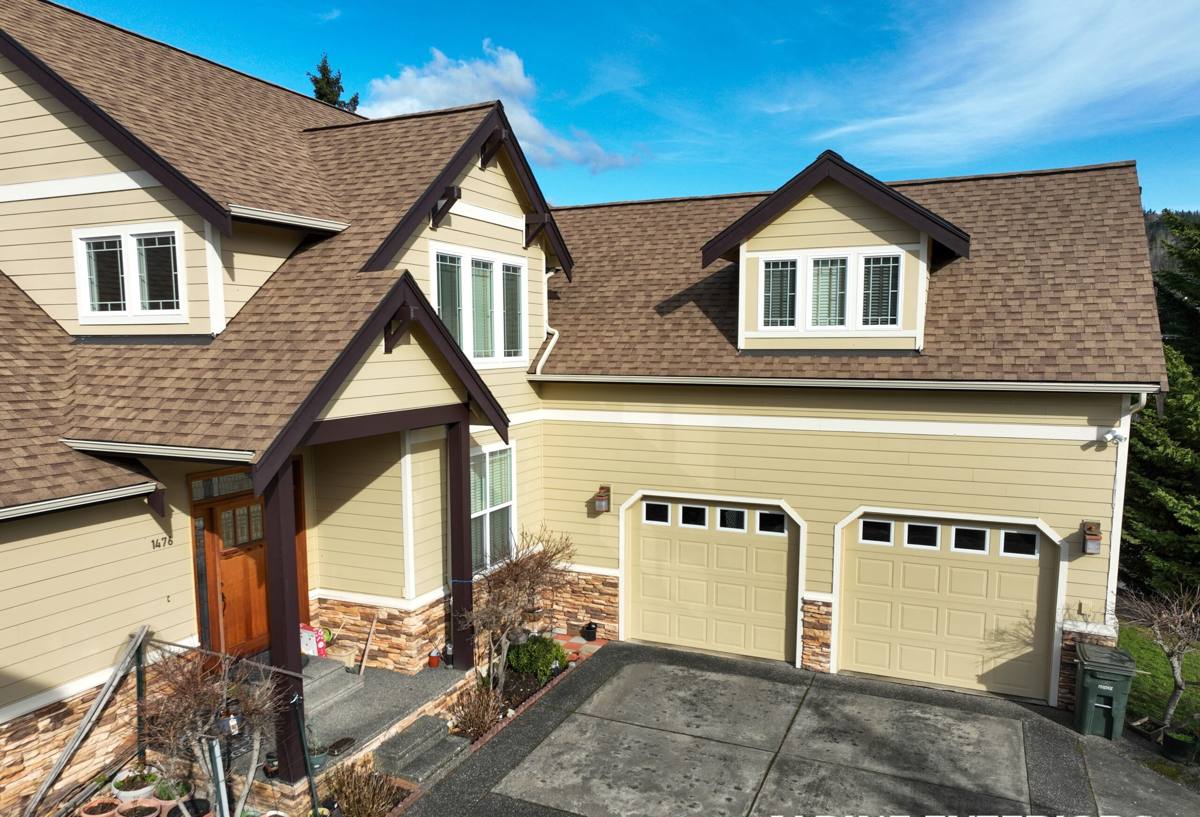
Signs Your Geneva Home Needs a New Roof
Roofs rarely fail all at once — they show warning signs first, and in this climate those signs can be easy to write off as normal weathering. A few of the most common ones we see on homes around Geneva and Sudden Valley:
- Granule buildup collecting in gutters or at downspout outlets, a sign shingles are wearing thin
- Moss or algae streaking that keeps returning within a season or two of cleaning
- Shingles that are cupping, curling at the edges, or visibly cracked
- Soft or spongy spots underfoot near valleys, chimneys, or skylights
- Daylight visible through the attic roof deck, or damp insulation below it
- Flashing around vents, chimneys, or wall intersections that's rusted, lifted, or caulked over repeatedly instead of properly resealed
- A roof that's approaching or past the manufacturer's expected service life for its material
Any one of these on its own might just call for a repair. Several at once, or a roof that's already had multiple patch jobs, usually means it's cheaper in the long run to replace it correctly than to keep chasing individual leaks.
What a Correctly Installed Roof Actually Involves
Tear-Off and Deck Inspection
We don't install over old roofing, and we're cautious about anyone who offers to. A full tear-off is the only way to actually see the deck — and in a climate that keeps roofs damp for long stretches, deck condition matters more here than in drier regions. Any plywood or sheathing that's soft, delaminating, or stained from a past leak gets replaced before anything new goes down. Installing new shingles over a compromised deck just hides the problem for a year or two.
Underlayment and Ice-and-Water Protection
Underlayment is the roof's real waterproofing layer — shingles are the weather-resistant top coat, but underlayment is what keeps water out if wind drives rain up under a shingle edge, which happens regularly during Pacific storm systems. We use synthetic underlayment across the field of the roof for its tear resistance and consistent water shedding, with self-adhering ice-and-water membrane at the eaves, valleys, and any roof-to-wall transitions where moisture is most likely to find a way in.
Flashing Details
Flashing failures cause more leaks than worn-out shingles do, and they're almost always an installation issue rather than a product issue. Every penetration — chimneys, plumbing vents, skylights — and every valley and sidewall needs flashing that's properly layered with the underlayment and shingles, not just caulked at the seams. Given the salt exposure closer to the lake and the bay, we pay particular attention to flashing and fastener material so it isn't the first thing to corrode.
Ventilation
A roof deck that can't breathe stays wetter longer, which feeds moss growth and can shorten the life of the shingles from underneath. Balanced intake and exhaust ventilation matters as much here as any other part of the installation — more on that below.
Choosing the Right Roofing Material for This Climate
There's no single "best" roofing material — there's the right material for a given roof's exposure, budget, and how long the homeowner plans to stay. Here's how the main options compare for a Geneva-area home:
| Material | How It Handles This Climate | Typical Lifespan | Maintenance Load |
|---|---|---|---|
| Architectural (dimensional) asphalt shingle | Good moisture and wind resistance when properly installed; wide range of ratings for wind and impact | 25–30 years | Periodic moss treatment and gutter clearing |
| 3-tab asphalt shingle | Thinner profile, less wind and impact resistance; more prone to curling in prolonged damp shade | 15–20 years | More frequent inspection recommended |
| Standing seam metal | Sheds moss and moisture well due to smooth surface, but fasteners and cut edges need corrosion-resistant coatings in salt-air exposure | 40–50+ years | Low, but panel and fastener quality matters more than with shingles |
| Synthetic/composite shingle | Resists moisture absorption and moss better than asphalt in many cases; higher material cost | 30–50 years | Low to moderate |
For most homes in Geneva we lean toward a quality architectural asphalt shingle rated for high wind and algae resistance, or standing seam metal on roofs with steep pitches or heavy tree cover where shedding moss and debris matters more. We don't push a single brand or product on every home — the right call depends on your roof's pitch, sun exposure, and how close you are to the water.
Cost Factors Worth Understanding
Roofing quotes vary for real reasons, and it's worth knowing what actually drives the number before you compare bids:
| Factor | Why It Matters |
|---|---|
| Roof pitch and complexity | Steep roofs, multiple valleys, and dormers take more labor and safety equipment |
| Deck condition | Rotten or soft sheathing found at tear-off adds material and labor not visible in an initial walk-around estimate |
| Material choice | Asphalt, synthetic, and metal carry different material and installation costs per square |
| Tear-off layers | Removing multiple existing roof layers costs more than a single-layer tear-off |
| Access and tree cover | Lakeside lots with mature trees or steep driveways can affect staging and disposal logistics |
Broadly speaking, a full asphalt shingle replacement on an average-sized home runs into the mid-to-upper five figures depending on these factors, with metal roofing typically costing more upfront but less over the life of the roof. We'll walk through exactly what's driving your number during the estimate — no vague lump-sum pricing.
Our New Roof Installation Process in Geneva
- On-site inspection of the existing roof, attic ventilation, and any signs of active moisture or deck damage
- A written estimate that spells out material, scope, and any deck repair allowances
- Scheduling that accounts for the wet-weather window common to this part of Whatcom County, so tear-off and dry-in happen on a realistic timeline
- Full tear-off, deck inspection, and repair of any compromised sheathing
- Installation of underlayment, ice-and-water membrane, and all flashing details
- Ventilation installation or correction where the existing system is inadequate
- Shingle or panel installation to manufacturer specification, which matters for both performance and warranty coverage
- Final walkthrough and cleanup, including magnetic sweep for stray fasteners around the property
We don't skip steps to move faster, and we don't quote a job without seeing the roof in person first — too much of what actually determines cost and scope only shows up once tear-off starts.
Ventilation and Moisture Management
This is the part of a roof system homeowners think about least and that causes the most trouble in a climate like this one. A roof deck needs balanced airflow — intake at the eaves, exhaust at or near the ridge — to let moisture escape instead of condensing under the shingles or in the attic. In a shaded, damp lake environment like Geneva, inadequate ventilation shows up as premature shingle aging from underneath, musty attic odors, and in colder snaps, ice damming at the eaves even though this area doesn't see the deep freezes some inland regions do. We check and correct ventilation as part of every full roof installation, not as an upsell — it's part of doing the job right the first time.
Why a Crew That Already Works Sudden Valley and Geneva Matters
A roofing crew that mostly works drier, more open parts of the state doesn't always think about moss-resistant shingle ratings, corrosion-resistant fasteners near the water, or how much shade a lakeside tree canopy actually holds onto moisture. Crews that work this specific stretch of Whatcom County regularly know the difference between a roof that just meets code and one that's actually built for salt air, driving rain, and a moss season that runs half the year. That local pattern recognition shows up in the small decisions — flashing material, underlayment placement, ventilation sizing — that don't show up on a spec sheet but do show up ten years later.
It also matters for the practical side of the job: understanding typical access on lakeside and forested lots, knowing how Whatcom County permitting and inspection works for roofing projects, and scheduling around the wet-weather patterns that are part of living here rather than treating them as an inconvenience.
Protecting Your Investment After Installation
A correctly installed roof still benefits from basic upkeep in this climate. A few habits go a long way:
- Clear gutters and downspouts at least twice a year, more often under heavy tree cover
- Have moss growth treated before it spreads under shingle edges, not after
- Trim back overhanging branches to reduce shade, debris, and abrasion on the roof surface
- Schedule a visual inspection after any major windstorm
- Keep an eye on attic ventilation — blocked soffit vents undo the benefit of a well-designed system
If you're weighing whether your current roof needs a repair or a full replacement, or you're ready to move forward with a new roof built for what Geneva's climate actually demands, we're happy to take a look and give you a straight answer. Use the form below to request a free, no-pressure estimate.