 Sudden Valley
 New Roofs Built for Happy Valley's Climate, Not a Catalog
Happy Valley sits inside the Sudden Valley community on the shores of Lake Whatcom, and that setting cuts both ways. The lake and tree cover make it one of the prettier places to own a home in Whatcom County, but they also create a roofing environment that's tougher than what a generic installation crew is used to. Between the moisture coming off the lake, the shade from mature conifers, and the salt-laden air drifting in from the nearby coast, roofs here age differently than roofs in a dry subdivision twenty miles inland. A new roof installation done right in Happy Valley accounts for that from the first shingle to the last flashing detail — not just the manufacturer's spec sheet.
We install roofs across Sudden Valley regularly, and Happy Valley's mix of wooded lots, lake proximity, and older homes means we see the same failure patterns over and over. That repetition is useful. It means we're not guessing at what holds up here — we're building on what we've already watched succeed and fail on roofs a few doors down.
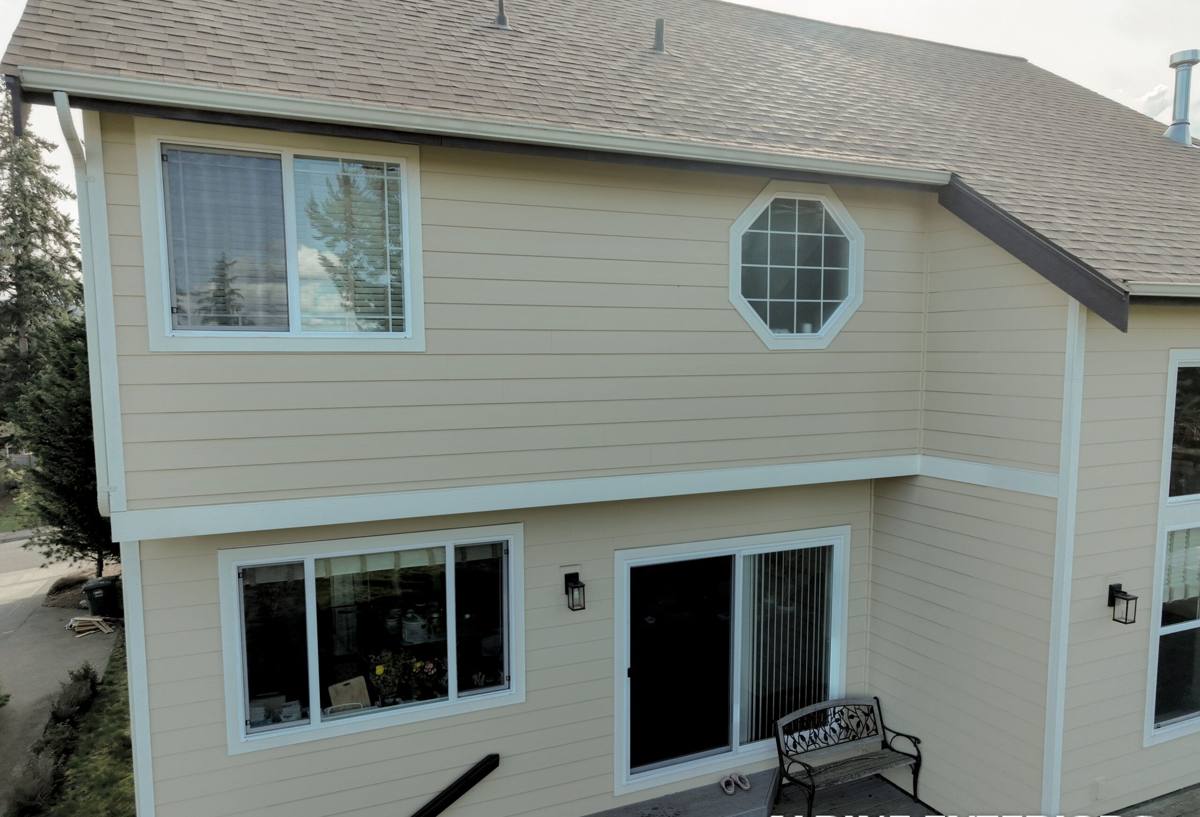
What Driving Rain, Salt Air, and a Long Moss Season Do to a Roof
Whatcom County doesn't get the heaviest rainfall in the state, but Happy Valley's exposure to wind coming off the lake means rain often arrives sideways rather than straight down. That matters for roofing because driving rain finds its way under poorly lapped shingles, undersized flashing, and old-style nailing patterns that were fine for calm weather but weren't built for wind-driven water. A roof that would be perfectly adequate in a sheltered inland neighborhood can leak here simply because the installer didn't treat wind-driven rain as the default condition.
Salt air is the second factor, and it's easy to underestimate this far from the ocean. Marine air moving in off the Salish Sea reaches inland enough to accelerate corrosion on exposed metal — fasteners, flashing, gutter hardware, and vent stacks. Standard galvanized fasteners and thin-gauge flashing corrode faster here than their ratings suggest, and once a fastener head rusts through, it stops sealing and starts leaking.
Then there's moss. Tree cover around Lake Whatcom keeps many Happy Valley roofs shaded for a large part of the day, and shade plus moisture is exactly what moss needs. Moss doesn't just look bad — it lifts shingle edges as it grows, holds water against the roofing material long after the rest of the neighborhood has dried out, and works its way into nail holes and laps. A roof installed without moss-resistant strategy in a shaded Happy Valley lot will often show moss again within two or three years, right back where it started.
Why This Combination Is Harder Than Any Single Factor Alone
Any one of these conditions — rain, salt, or shade — is manageable on its own. Together, they compound. Moss holds moisture against the deck; that moisture works on corroding fasteners faster; corroded fasteners loosen their seal against wind-driven rain. A correct installation breaks that chain at multiple points rather than treating it as a single problem to solve with one product choice.
What a Correct New Roof Installation Actually Involves
"New roof" gets used loosely, but a proper installation is a sequence of decisions, and skipping or rushing any one of them is where most premature failures start.
Tear-Off and Deck Inspection
We remove the old roofing down to the deck rather than layering over it. This is the only point in the whole job where the sheathing underneath is actually visible, and on a Happy Valley home with a history of moss or slow leaks, it's common to find soft or delaminated plywood that needs to be replaced before anything new goes down. Roofing over a compromised deck guarantees problems later, no matter how good the shingles are.
Underlayment Selection
Given the rain exposure here, we lean toward synthetic underlayment with proper ice-and-water shield at eaves, valleys, and any low-slope transitions — the areas where wind-driven rain is most likely to work backward under the roofing material. This is a place where cutting to a thinner or cheaper underlayment shows up as a leak within a few wet seasons, not immediately.
Flashing and Fasteners
Because of the salt air, we favor corrosion-resistant flashing and fastener specifications over the minimum the manufacturer allows. This is a small cost difference at install time and a large difference in how the roof performs ten and fifteen years out, particularly around chimneys, skylights, and any valley where metal-to-metal contact is unavoidable.
Ventilation
Proper intake and exhaust ventilation keeps the underside of the deck dry and reduces the temperature swings that shorten shingle life. On shaded, tree-covered lots like much of Happy Valley, ventilation also helps the roof dry out faster after the region's long damp stretches, which directly reduces how much moss gets a foothold.
Final Roofing Material Installation
Only after the deck, underlayment, flashing, and ventilation are correct does the final shingle, metal, or membrane installation happen — following the manufacturer's nailing pattern and exposure specs exactly, since those specs are what keep the warranty valid.
Choosing a Roofing System for a Happy Valley Home
There's no single "best" roofing material — the right choice depends on how shaded the lot is, how much moss pressure the home already has, and the homeowner's budget and timeline for the next reroof.
| Roofing System | Moss Resistance | Salt Air / Corrosion Behavior | Typical Lifespan Range |
|---|---|---|---|
| Standard asphalt composition shingle | Moderate — improves with algae-resistant granules | Fasteners need corrosion-resistant spec | 20–30 years |
| Premium/impact-rated composition shingle | Good with copper or zinc strip options | Better fastener and flashing packages available | 30–40 years |
| Standing seam metal | Very good — sheds moisture, little for moss to grip | Requires marine-grade coatings near the lake | 40–60 years |
| Synthetic/composite shake | Good — resists organic growth better than wood | Fastener spec still matters | 30–50 years |
For heavily shaded lots close to the lake, we usually push harder on moss-resistant strategy — copper or zinc control strips, better ventilation, and a shingle line with algae-resistant granules — even if it costs a bit more upfront, because the alternative is moss treatment and premature granule loss within a few years.
Our Installation Process, Step by Step
- On-site assessment — we walk the roof, check the attic or crawlspace for existing moisture or ventilation issues, and look at tree cover and drainage patterns specific to the lot.
- Written estimate — covering material choice, tear-off scope, expected deck repair contingency, and a firm timeline.
- Material delivery and site protection — landscaping, siding, and driveways get protected before tear-off begins.
- Tear-off and deck repair — old roofing removed, deck inspected and repaired as needed.
- Underlayment and flashing installation — including ice-and-water shield at vulnerable points.
- Final roofing material installation — per manufacturer spec, with attention to ventilation components.
- Cleanup and final walkthrough — magnetic sweep for nails, debris haul-away, and a walkthrough so the homeowner can see the finished work.
Why a Crew That Already Works Happy Valley Matters
A roofing crew that hasn't worked this specific area will often price and spec the job as if it were a standard inland roof — because that's the experience they're drawing from. A crew that already works Happy Valley and the rest of Sudden Valley has already seen what moss pressure looks like on a north-facing, tree-shaded roof here, already knows which fastener grades hold up against the salt air coming off the water, and already understands how the local permitting and access logistics work for lakeside lots. That familiarity shows up as fewer surprises during tear-off, more accurate estimates, and a roofing spec that's matched to this environment instead of a generic one.
It also matters for something less obvious: accountability. A contractor who works this neighborhood regularly has a reputation here worth protecting, and a roof they installed last year is one they may see again driving down the same road. That's a different incentive than a crew passing through from out of the area for a single job.
Signs a Happy Valley Home May Need a New Roof
- Granule loss showing up in gutters or at the base of downspouts
- Moss or algae streaking that keeps returning after cleaning
- Curling, cupping, or cracked shingles, especially on sun-exposed slopes
- Soft spots or noticeable sagging when walking the roof or viewing from the attic
- Daylight visible through the roof deck from inside the attic
- Rusted or deteriorating flashing around chimneys, vents, or skylights
- A roof approaching or past 20–25 years old with no major work done
- Water stains on interior ceilings, particularly near valleys or chimneys
Maintenance That Protects a New Roof Against Moss and Moisture
Even the best installation benefits from basic upkeep, especially given how long the moss season runs in this part of Whatcom County. Keeping gutters clear so water doesn't back up under the roof edge, trimming back branches that keep a section of roof shaded and damp, and having the roof inspected every couple of years for early moss growth are the three things that do the most to extend a new roof's life here. None of this is complicated, but it's often skipped, and skipping it is how a well-installed roof still ends up with a moss problem five years in.
Permits, Warranty, and What to Expect
Reroofing in Whatcom County typically requires a building permit, and we handle that as part of the job rather than leaving it to the homeowner. On warranty, it's worth understanding that manufacturer material warranties and workmanship warranties are two different things — a great shingle installed with a poor nailing pattern or wrong underlayment can still fail and void coverage, which is exactly why the installation details earlier in this page matter as much as the material choice itself. We'll walk through what's covered, for how long, and what voids it before any work starts.
If your Happy Valley home is due for a new roof, or you're just not sure whether repair or replacement makes more sense, we're glad to take a look. Use the form below for a free, no-pressure estimate — we'll assess the roof honestly and tell you what we'd actually do if it were our own house.