 Sudden Valley
 Why Sehome Homes Need Siding Built for This Climate
Sehome sits in the same wet, moss-prone corner of Whatcom County as Sudden Valley and the rest of the Lake Whatcom area, and the siding on these homes takes a beating that siding in drier parts of the country never has to deal with. Between salt-laden air moving in off the water, long stretches of driving rain, and a moss season that can run most of the year, the exterior of a house here is under near-constant moisture pressure. That's the lens we use on every Sehome siding job — not just what looks good, but what actually survives here.
Salt Air and Coastal Moisture
Even a few miles inland, salt-carrying air moves through the region and settles on exterior surfaces. Salt is hygroscopic — it pulls moisture out of the air and holds it against whatever it lands on. On wood-based siding products that means slow, steady moisture uptake at the surface, which shows up first as dulling paint, then soft spots, then rot at seams and butt joints. Fiber cement doesn't feed on that moisture the way wood-based sidings do, which is a big part of why it holds up in this kind of air.
Driving Rain and Wind-Driven Exposure
Rain here rarely falls straight down. Wind pushes it sideways into wall assemblies, which means the details that keep water out — flashing, laps, caulk joints, house wrap integration — matter more in Sehome than they would in a calmer, drier climate. A siding product can be excellent and still fail on a house if those details are done wrong. This is where most siding problems we get called out on actually start: not bad material, bad water management.
The Long Moss Season
Between the tree cover common in this part of Whatcom County and the extended damp season, north-facing and shaded wall sections stay wet longer than homeowners often realize. Moss and algae need sustained moisture to establish, and once they do, they hold even more water against the siding surface underneath them. Fiber cement with a factory-applied finish resists that buildup far better than bare wood or repainted wood siding, and it's a lot easier to clean without damaging the finish underneath.
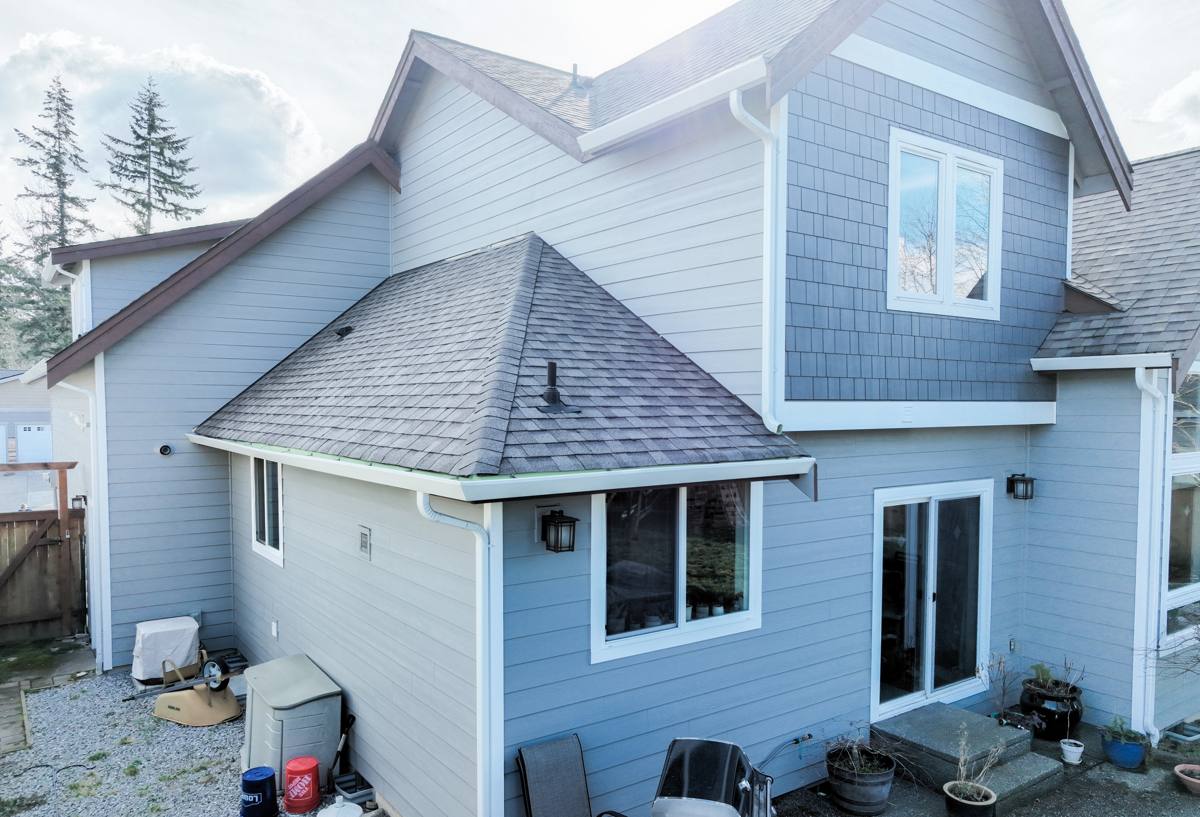
What Correct Fiber Cement Installation Actually Involves
Fiber cement siding is only as good as the installation behind it. The material is engineered to handle this climate — but a rushed or spec-cutting install can undo most of that advantage. Here's what we consider non-negotiable on every job.
Flashing and Water Management
Every window, door, and horizontal trim transition needs proper flashing integrated with the house wrap — not caulk used as a substitute for flashing. Butt joints get flashed or backed, not just butted and caulked over. This single detail is the biggest factor in whether a wall assembly stays dry over 20-plus years in a climate like this one.
Fastening and Manufacturer Spec
James Hardie publishes specific fastener patterns, clearances, and gapping requirements by product line and climate zone. Nailing too tight, skipping the gap at butt joints, or using the wrong fastener type will void warranty coverage and can cause buckling or cracking as the material expands and contracts with temperature and moisture swings through the year.
Finish and Field-Cut Sealing
ColorPlus factory-finished panels arrive with a baked-on finish that's more consistent and more durable than field-applied paint. Every field cut, though, needs to be sealed with the correct touch-up product so raw edges aren't left exposed to the weather. Skipping this step is a common shortcut that shows up as edge staining and premature wear within just a few years.
Why We Install Only James Hardie Fiber Cement
We don't install LP SmartSide, vinyl, Cemplank, Allura, or bare cedar siding, and that's a deliberate standard, not a lack of options. Each of those products has genuine strengths — LP SmartSide is engineered wood with real impact resistance, vinyl is inexpensive and low-maintenance up to a point, cedar has a look some homeowners want regardless of the upkeep it demands. But in a climate defined by salt air, driving rain, and a long moss season, we've settled on the one product we're willing to stand behind on every job.
James Hardie fiber cement is non-combustible, doesn't feed the kind of moisture-driven rot that engineered wood products can be prone to at cut edges and seams, and comes with a factory ColorPlus finish backed by its own finish warranty separate from the product warranty. Hardie also engineers its HZ5 and HZ10 product lines specifically for climate zones like this one, which means the product itself is matched to the moisture and temperature swings this region produces year-round. That's not marketing — it's the reason we quote it, install it, and warranty it, and it's why we turn down other products even when a homeowner asks for one by name.
Our Process for Sehome-Area Projects
The process is the same discipline whether the job is a small accent wall or a full re-side, because the climate risk doesn't scale down just because the job is small.
- On-site assessment. We walk the exterior, check for existing moisture damage at trim, corners, and butt joints, and look at how the house is currently shedding water.
- Written estimate. Scope, product line, color, and a clear cost breakdown — no vague allowances that turn into change orders mid-job.
- Tear-off and substrate check. Old siding comes off and sheathing gets inspected for rot before anything new goes up. Hidden damage gets flagged and priced before we cover it, not after.
- House wrap and flashing. Water-resistive barrier and flashing details go in first and get checked before siding installation starts.
- Hardie installation to spec. Correct fastener pattern, gapping, and clearances for the specific product line and this climate zone.
- Trim, caulking, and touch-up. Field cuts get sealed, joints finished, and the site cleaned up.
- Final walkthrough. We go over the finished work with the homeowner in person before calling the job done.
Comparing Siding Options for This Climate
Homeowners in Sehome and around Sudden Valley often ask us to compare options directly. Here's the honest breakdown by the factors that matter most in this specific climate.
| Material | Moisture Performance Here | Maintenance Burden | Typical Lifespan |
|---|---|---|---|
| James Hardie Fiber Cement | Strong — doesn't absorb and swell the way wood-based products do | Low — occasional wash, no repainting on the ColorPlus finish | 30+ years with correct installation |
| LP SmartSide / Engineered Wood | Good if edges stay sealed; vulnerable at cuts and seams over time | Moderate — edge sealing and paint upkeep as it ages | 15-25 years, install and maintenance dependent |
| Vinyl | Doesn't rot but can warp or crack with temperature swings; seams can trap moisture behind panels | Low, but limited repair options once damaged | 15-25 years, fades with UV exposure over time |
| Cedar / Wood | Weakest option in sustained damp conditions without diligent upkeep | High — regular refinishing and moss or mildew treatment | Highly variable, often under 20 years without consistent upkeep |
Cost Factors on a Sehome-Area Siding Project
Every home is different, so we don't quote sight-unseen — but a few factors consistently drive cost up or down on projects in this part of Whatcom County.
Home Size and Story Count
More square footage and multi-story walls mean more material and more time spent on staging and lift access, which is a bigger cost factor here than it would be on a single-story home.
Substrate Condition
If sheathing underneath the old siding has taken on moisture damage — more common on older homes with a history of caulk-only water management — that repair gets priced separately from the siding itself. It's the single biggest source of surprise cost on older homes in a wet climate like this one.
Trim and Detail Complexity
Homes with a lot of window trim, dormers, or architectural detail take more time to flash and fit correctly than a simple rectangular wall, and that labor time is where most of the cost difference between two similarly sized homes comes from.
Tear-Off vs. Overlay
We don't recommend installing new siding over old, damaged material — it just traps existing moisture problems behind the new wall instead of solving them. A full tear-off costs more upfront but is the only way to actually verify and fix what's underneath, and that matters more in a climate this consistently damp.
Signs Your Current Siding Is Struggling in This Climate
Most siding failures we see start small and get ignored because they're easy to miss from the ground. Watch for:
- Soft or spongy spots when pressed, especially near the bottom courses and around window trim
- Persistent moss or dark streaking that comes right back shortly after cleaning
- Paint that's peeling or bubbling rather than just fading evenly
- Visible gaps or separation at butt joints and corner trim
- Warping or bowing panels, especially on north-facing or shaded walls
- A musty smell near exterior walls inside the house — often a sign moisture has already gotten past the siding
Any one of these is worth a closer look before it turns into sheathing damage, which costs a lot more to fix than the siding itself ever would.
Maintenance After Installation
Correctly installed Hardie siding is genuinely low-maintenance, not maintenance-free. A yearly rinse to knock off pollen, moss spores, and road film goes a long way in this climate, and it's worth checking caulked joints every couple of years since caulk has a shorter service life than the siding itself does. Beyond that, there's no repainting cycle to plan around the way there is with wood — the ColorPlus finish is designed to hold its color for the life of its warranty period without a repaint.
Why Hiring a Crew That Already Works This Area Matters
Siding installation isn't uniform across climates, and a crew that mostly works drier, inland regions doesn't build the same instincts around flashing details, gapping tolerances, and moisture management that a crew working Whatcom County's wet side does day in and day out. We already know how water moves across a house in this kind of weather, what moss pressure looks like on a shaded wall, and where salt-air exposure tends to show up first. That local pattern recognition is part of what a homeowner is actually paying for when they hire a crew that already works this specific area regularly, rather than one passing through on a single job.
If you're weighing a re-side or want a second opinion on siding that's already showing wear, we're happy to take a look and give you a straightforward, no-pressure estimate — no upsell into a product we don't stand behind ourselves.