 Sudden Valley
 Why Decks Take a Beating in South Hill
A deck in South Hill lives outside year-round, and the weather here doesn't do it any favors. Driving rain works its way into every seam and fastener hole. Salt-tinged coastal air speeds up corrosion on hardware that would last decades somewhere drier. And the long moss season — often stretching from fall through spring — turns any shaded or north-facing deck surface into a slick, green problem if it isn't built and maintained with that in mind. We see the same failure patterns over and over on decks in this part of Whatcom County: rotted ledger boards where the deck meets the house, rusted-through fasteners, and boards that cup or split because moisture had nowhere to go.
None of that is unusual for the Pacific Northwest — it's just what happens to a deck that wasn't detailed for it. A deck replacement done right for this climate isn't just "new boards on old framing." It's a chance to fix the underlying moisture and drainage issues that caused the failure in the first place.
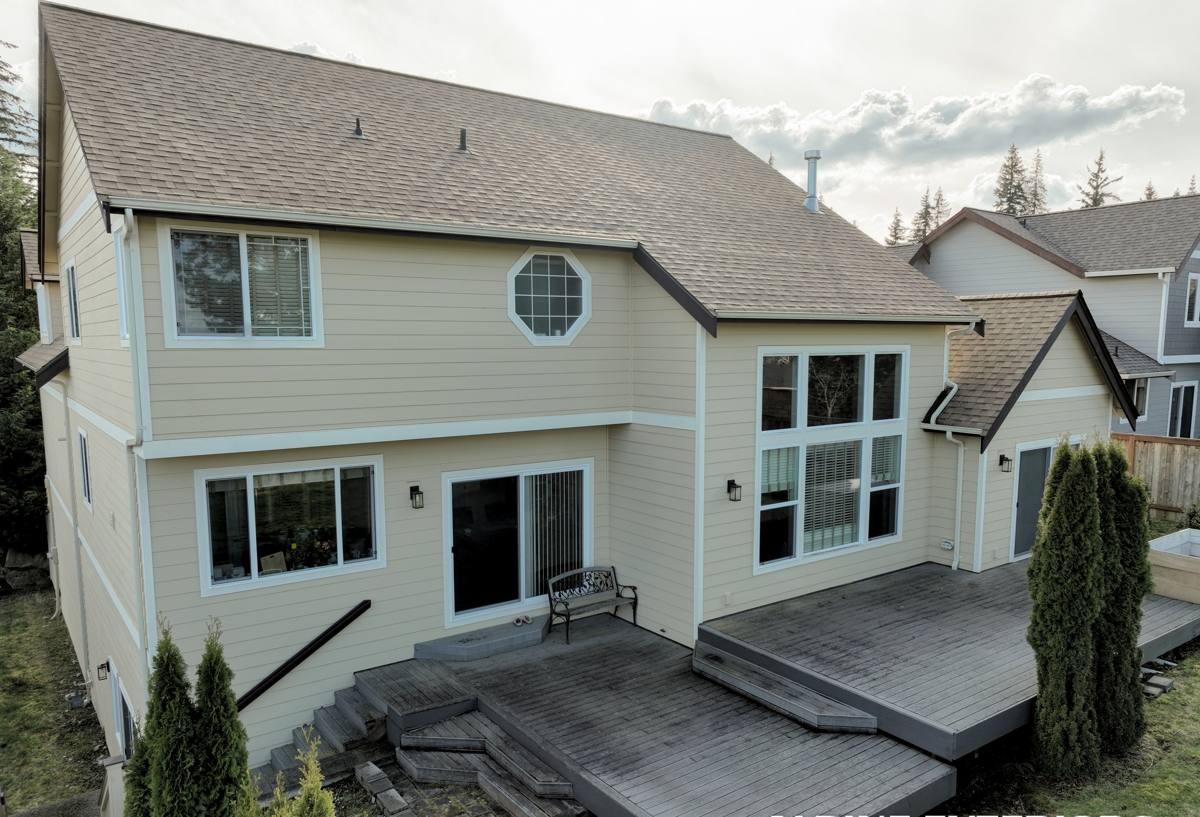
Repair, Resurface, or Full Replacement?
Signs Your Deck Has Reached the End
Not every tired-looking deck needs to come out. But there are signs that point toward replacement rather than patching:
- Soft, spongy, or dark-stained boards, especially near the house or in shaded corners
- Rust streaks running down posts or under fastener heads
- A ledger board (the piece bolted to your house) that's soft, discolored, or pulling away
- Persistent moss or black staining that comes back within weeks of cleaning
- Wobble in the railing or stairs, or joists that flex more than they used to
What a Real Replacement Includes (Not Just New Boards)
A proper deck replacement means pulling the decking, inspecting and repairing or replacing the framing underneath, correcting any flashing or drainage problems at the house connection, and only then installing new decking, railings, and stairs. Swapping old boards for new ones on top of rotten or under-flashed framing just hides the problem for a season or two — it doesn't fix it.
Building for This Specific Climate
Ledger Board Flashing — Where Most Failures Start
The single most common point of deck failure we find isn't the decking itself — it's the ledger board where the deck attaches to the house. If that connection isn't properly flashed to shed water away from the wall, rain gets behind it and rots the ledger, the house sheathing, and sometimes the framing behind the siding. Because we work on siding as much as decks, we pay close attention to this detail specifically: proper flashing, correct fastener spacing, and a small gap or drainage plane so water has somewhere to go instead of sitting against the house.
Joist Tape and Framing Protection
Bare cut ends and the tops of joists are where wood soaks up water fastest, since the end grain acts like a straw. We use self-adhering flashing tape over joist tops and cut ends before decking goes down. It's a small material cost that adds years to the life of the framing underneath — framing you won't be able to inspect again without pulling the deck apart.
Fasteners and Hardware That Won't Corrode
Standard hot-dip galvanized fasteners can start rusting within a few years in this climate, especially on decks that get salt-laced wind or sit in near-constant dampness. We build with stainless steel or coated fasteners rated for ground contact and coastal exposure, along with structural hardware (post bases, joist hangers, hurricane ties where used) rated for the same conditions. Rust streaks on a deck aren't just cosmetic — they're a sign the connection underneath is weakening.
Choosing a Decking Material That Can Handle Moss and Moisture
There's no single "best" decking material — there's a best material for your budget, your maintenance appetite, and how much shade and moisture your specific deck deals with. Here's how the common options actually compare in a wet, moss-prone climate:
| Material | Moisture Resistance | Moss/Algae Resistance | Maintenance | Typical Lifespan |
|---|---|---|---|---|
| Pressure-treated lumber | Good if sealed regularly | Needs periodic cleaning | Annual cleaning/sealing recommended | 10–15 years |
| Cedar | Naturally decay-resistant, but surface still absorbs water | Susceptible to staining in shade | Sealing every 1–2 years to hold color | 15–20 years |
| Capped composite | Very good — cap layer blocks moisture absorption | Good; textured caps can still hold spores in deep shade | Occasional washing, no sealing | 25–30 years |
| PVC decking | Excellent — no wood fiber to absorb water | Best of the group in shaded, damp spots | Occasional washing, no sealing | 30+ years |
Pressure-treated wood and cedar cost less up front but ask more of you over time — sealing, cleaning, and watching for soft spots. Composite and PVC cost more initially but are a better fit for a deck that sits in shade most of the day or backs up to trees and moisture, which describes a fair number of lots around South Hill. We'll walk you through the honest trade-offs for your specific site rather than pushing one product line.
Our Deck Replacement Process
- On-site assessment — we look at the existing deck, the ledger connection, framing condition, and drainage before quoting anything
- Design and material selection — size, layout, railing style, and decking material based on your budget and how the deck is used
- Permit and planning — we handle the paperwork for anything requiring a permit so you don't have to chase it down
- Tear-out and framing repair — old decking removed, framing inspected and repaired, ledger flashing corrected
- Decking, railings, and stairs installed — with proper fastening, joist protection, and hardware for this climate
- Final walk-through — we go over the finished deck with you, including basic care so it holds up between seasons
Permits, Footings, and Code Considerations in Whatcom County
Most structural deck replacement work in Whatcom County requires a building permit, particularly when framing, footings, or railings are involved — even if the footprint stays the same as the old deck. Footings generally need to be set below frost depth and sized for the load they're carrying, and guardrails and stair railings need to meet current code height and spacing requirements. We handle the permit application and coordinate inspections as part of the job, so you're not the one figuring out which forms to file or when an inspector needs to see the work.
If your property in South Hill falls under an HOA or community association with rules about exterior materials or colors, we're happy to work within those guidelines — just let us know upfront so we can plan the material and finish selection accordingly.
Keeping a New Deck Looking Good Through Moss Season
Even a well-built deck needs a little seasonal attention in this climate. A few habits go a long way toward getting the full lifespan out of your investment:
- Sweep leaves and debris off the deck regularly — trapped organic matter is what feeds moss and holds moisture against the boards
- Keep nearby trees and shrubs trimmed back so sun and air can reach shaded areas of the deck
- Check and clear gutters and downspouts near the deck so runoff isn't draining directly onto it
- Clean composite or PVC decking with a soft-bristle brush and mild cleaner rather than an aggressive pressure washer setting
- If you have wood decking, reseal on the schedule recommended for that product — don't wait until it looks gray and dry
- Do a quick yearly check of the ledger flashing and any visible fasteners for rust or gaps
Why Hire a Crew That Already Works in South Hill
A deck built to a generic spec sheet doesn't always hold up to Whatcom County weather — driving rain and a long, damp moss season expose shortcuts that wouldn't show up in a drier climate. We've built and replaced decks throughout South Hill and the surrounding Sudden Valley area long enough to know which details actually matter here: how much flashing is enough at the ledger, which hardware holds up against the salt-tinged air, and which spots on a given lot are going to stay damp and shaded no matter what material you pick. That local pattern recognition is the difference between a deck that needs attention again in five years and one that doesn't.
If your deck is showing its age — soft boards, rust streaks, a ledger connection you're not sure about — we'll take a look and give you a straight answer on whether it needs a full replacement or just targeted repair. Fill out the form below for a free, no-pressure estimate on your South Hill deck replacement.